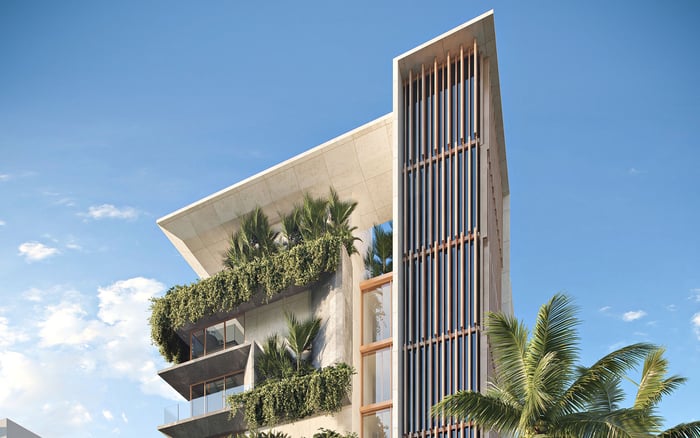
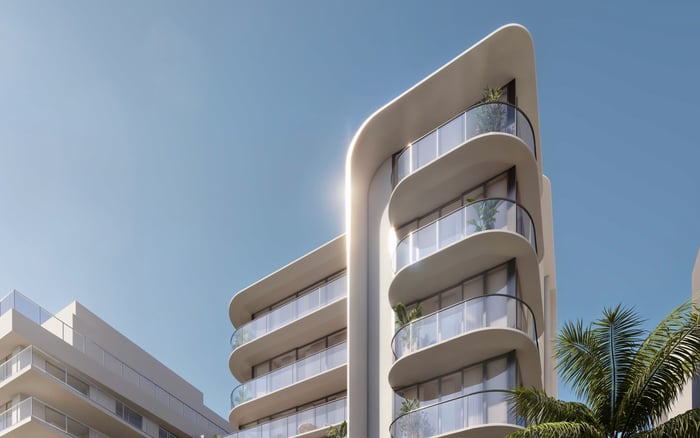
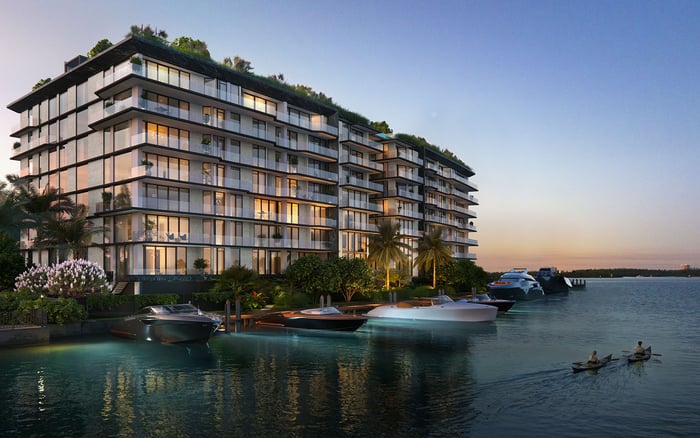
A buyer-focused comparison of La Maré Bay Harbor Islands and Onda Bay Harbor through the lens of sustainable materials, tropical landscaping, flood resilience, and luxury positioning in Bay Harbor Islands.
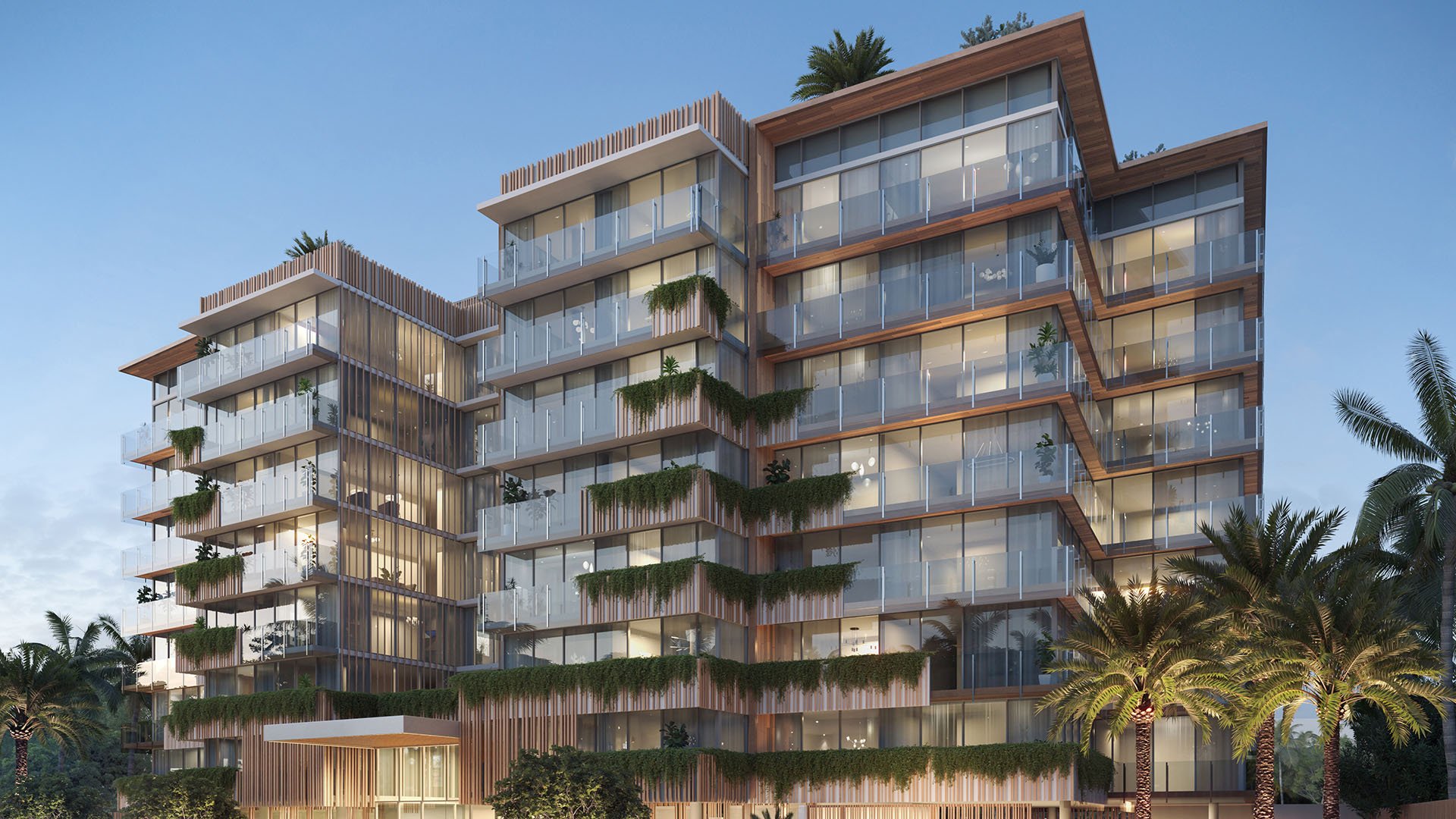
In South Florida, sustainability in upper-tier residential design has evolved beyond a simple efficiency narrative. For today’s waterfront buyer, it is tied to durability, comfort, landscape intelligence, and a more refined sense of place. In Bay Harbor Islands, that shift is especially visible in the contrast between La Maré Bay Harbor Islands and Onda Bay Harbor, two boutique waterfront addresses that express different versions of luxury living.
Both projects position sustainability as part of the premium experience rather than a utilitarian add-on. Materials, glazing, building systems, drainage strategies, and planting palettes are folded into a broader lifestyle proposition. For buyers comparing new construction in Bay Harbor Islands, the question is less whether either project uses green language and more how that language is translated into architecture, landscape, and everyday waterfront living.
La Maré is framed around a quieter, more island-specific expression of resilience. Its design language is described as Mediterranean meeting modern, and its environmental story follows the same logic: elevated structures, high-performance windows, energy-efficient HVAC, low-VOC finishes, and smart-home features oriented toward energy management. The landscaping approach reads as maritime and ecological, with native or salt-tolerant planting and buffer strategies suited to a marine setting.
Onda, by contrast, feels more urban in its sustainability narrative. The emphasis is not only on the building envelope and materials, but also on how the site absorbs, channels, and softens water. Permeable pavements and bioswales are central to the concept, and the planting strategy introduces tropical native species such as cocoplum and buttonwood into shared and private green spaces. Its material story also extends to reclaimed wood accents, recycled aggregate in concrete, and a solar-ready roof design, alongside LEED-aligned positioning and building-management systems intended to support greener operations.
For the buyer, this creates a clear divide. La Maré speaks to coastal calm and discreet resilience. Onda speaks to design-forward sustainability integrated into a more contemporary urban luxury profile.
At La Maré, the materials conversation is best understood through interior wellness and envelope performance. Low-VOC finishes suggest a healthier indoor environment, while high-performance windows and efficient HVAC systems point to thermal comfort and energy moderation, especially important in South Florida’s intense sun and humid climate. These are quiet, high-value decisions that support a more polished day-to-day ownership experience.
That approach will resonate with buyers also following boutique Bay Harbor Islands inventory such as Alana Bay Harbor Islands and The Well Bay Harbor Islands, where the market increasingly rewards a blend of design restraint, wellness, and performance. In that sense, La Maré aligns with a broader boutique trend: sustainability expressed through calm interiors, durable detailing, and reduced environmental stress rather than overt visual messaging.
Onda’s materials narrative is more visibly expressive. Reclaimed wood accents immediately convey texture and provenance. Recycled aggregate in concrete supports a lower-impact construction story, while a solar-ready roof design suggests future-facing adaptability. This is the kind of materials package that often appeals to buyers who want sustainability to read clearly as part of the design identity.
Neither strategy is inherently superior. The distinction is tonal. La Maré feels filtered and residential. Onda feels edited, contemporary, and slightly more declarative.
Landscaping is where the projects separate most elegantly. In South Florida, tropical planting is no longer simply about lushness. At the luxury level, it increasingly points to native or adapted species that can lower irrigation demand, tolerate waterfront exposure, and contribute to local habitat value.
La Maré interprets this through a marine-edge sensibility. Its planting concept is framed around native Florida species, buffer planting, and sensitivity to waterfront ecology. The result, at least in design intent, is a landscape that belongs to the shoreline. It is a softer, more habitat-aware expression of luxury, one in which greenery does not compete with the water but mediates between residence and bay.
Onda takes a different route. Its landscape strategy appears more structured around private and shared outdoor rooms, urban canopy, and stormwater performance. Species such as cocoplum and buttonwood support the tropical character, but the larger idea is that the landscape should also function as infrastructure. The plantings are not merely decorative; they are part of how the site manages runoff and enhances permeability.
Buyers who have been tracking nearby Bay Harbor Islands projects like La Baia North Bay Harbor Islands may recognize this as an increasingly important local conversation. In premium waterfront development, landscape architecture now carries aesthetic, climatic, and hydrological responsibilities at once.
For any waterview residence in Bay Harbor Islands, flood strategy is not a background issue. It is central to long-term confidence in the asset.
La Maré’s resilience story is built primarily around elevation and salt-tolerant waterfront planting. This approach is intuitive for buyers who want the building itself and the immediate landscape edge configured for coastal exposure. Elevated design can support peace of mind, while salt-tolerant and native planting can perform more reliably in a marine environment where ornamental landscapes often struggle.
Onda’s strategy focuses more explicitly on what happens across the site when heavy rain arrives. Permeable pavement systems and bioswales are designed to help water move into and through the landscape rather than collect inefficiently on harder surfaces. In practical terms, this can make the development feel more attuned to South Florida’s rainfall realities.
The difference is subtle but meaningful. La Maré is strongest for buyers who prioritize the waterfront edge and architectural elevation. Onda is strongest for buyers who value site-wide water management and landscape-led drainage as part of a contemporary green profile.
La Maré may suit the purchaser seeking a more secluded island expression of ultra-modern waterfront living, softened by Mediterranean references and a landscape concept that feels native to the shoreline. It is a persuasive choice for the second-home buyer who wants design quality, calm surroundings, and resilience features that remain understated.
Onda may be the more compelling fit for the purchaser who prefers a sharper urban-luxury cadence. Its LEED-aligned posture, visible material strategy, and site-level stormwater thinking create a sustainability narrative that is easier to read at first glance. For buyers who see green design as part of cultural sophistication, that can be especially appealing.
Ultimately, this is not a contest between eco-conscious and non-eco-conscious luxury. Both projects understand that in South Florida, sustainability has become part of what defines elite residential design. The real decision is whether one prefers maritime discretion or urban environmental polish.
What is the main sustainability difference between La Maré and Onda? La Maré emphasizes elevated coastal resilience and salt-tolerant waterfront planting, while Onda places more emphasis on permeable surfaces, bioswales, and site drainage.
Which project has a more ecology-oriented landscape concept? La Maré appears more maritime and habitat-aware, with native planting and buffer strategies tied closely to the waterfront edge.
Which project presents a more urban sustainability profile? Onda does, especially through its LEED-aligned positioning, building-management systems, and stormwater-mitigation features.
Are both projects in Bay Harbor Islands? Yes. Both are positioned as waterfront residential developments in Bay Harbor Islands.
What kinds of materials are associated with La Maré? La Maré is linked to low-VOC finishes, high-performance windows, energy-efficient HVAC, and smart-home systems for energy management.
What kinds of materials are associated with Onda? Onda is associated with reclaimed wood accents, recycled aggregate in concrete, and a solar-ready roof design.
How does tropical landscaping differ between the two? La Maré leans toward native coastal planting, while Onda uses tropical native species within a more structured, stormwater-conscious landscape plan.
Which project may appeal more to a quieter lifestyle buyer? La Maré is positioned for buyers seeking a calmer island-style waterfront setting.
Which project may appeal more to a design-forward urban buyer? Onda is framed for buyers who want a more contemporary and urban luxury profile.
Why does sustainability matter so much in this segment now? In South Florida luxury real estate, it increasingly signals resilience, design intelligence, and long-term waterfront livability.
For a confidential assessment and a building-by-building shortlist, connect with MILLION Luxury.
If branded residences are on your mind — as a home or as an allocation — we would be glad to share what we are seeing, privately.
Begin a quiet conversation