A discreet, buyer-oriented guide to protecting South Florida luxury property through hurricane season, from knowing your evacuation zone to hardening building systems, optimizing insurance, and accelerating post-storm recovery.
South Florida’s hurricane season runs from June 1 through November 30. For luxury homeowners, the objective isn’t merely getting through a storm event - it’s continuity. That means protecting the asset, preserving interiors and collections, maintaining privacy, and returning to a fully functional residence as quickly as possible.
The most effective readiness plans follow a simple principle: make the high-judgment decisions long before the forecast tightens. When evacuation-zone clarity, insurance structure, and key hardening upgrades are handled in advance, the final 72 hours becomes disciplined execution - not improvisation.
Evacuation decisions in coastal counties are often tied to storm surge planning zones. In Miami-Dade, those zones are published as A through E and used for evacuation decision-making and surge-risk communication. The luxury takeaway is straightforward: a waterfront address, a high floor, and a premium building do not automatically exempt you from evacuation orders.
Before each season, confirm your evacuation zone and define what “leave” looks like for your household. Your plan should cover where you’ll go, how you’ll transport essential documents and valuables, and how you’ll secure the residence. Guidance emphasizes checking your zone before a storm and following local emergency management instructions, since orders can change with track and intensity.
For second-home owners who may be out of state, this is where a trusted local representative becomes essential - someone who can close shutters, move terrace furniture, coordinate a generator service call, and confirm the home is secured before conditions deteriorate.
Florida’s unified statewide building code was created after Hurricane Andrew and is updated on a recurring cycle. In practice, it has shaped construction norms across the region, particularly for wind and impact protection.
Miami-Dade and Broward sit within the High-Velocity Hurricane Zone (HVHZ), where wind and impact requirements for products can be stricter than in other parts of the state. If you’re purchasing or upgrading windows, doors, shutters, or similar components, the right question isn’t only “hurricane-rated?” - it’s “approved for HVHZ use?” In many cases, hurricane-rated products in HVHZ must carry a Miami-Dade Notice of Acceptance (NOA) to demonstrate code compliance.
For buyers evaluating a resale home, verification is part of due diligence: ask what openings were installed, whether permits were pulled, and whether the products were appropriate for HVHZ when applicable. For new construction or high-end condo ownership, confirm what the building controls versus what the unit owner controls - responsibility can be split between association-managed façade systems and owner-managed terrace or entry components.
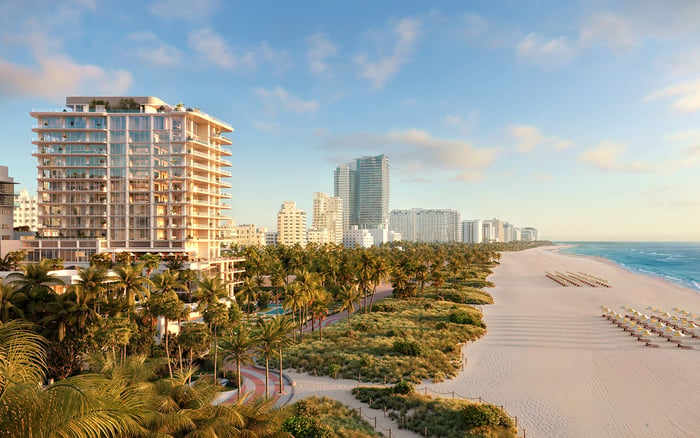
In Miami Beach, residences designed for service-driven lifestyles often pair building resilience with operational support. Properties such as Setai Residences Miami Beach and The Ritz-Carlton Residences® Miami Beach reflect the market’s preference for high-touch living, where preparedness is ideally embedded in building management routines.
Luxury homes are complex systems. The storm upgrades that matter most are the ones that manage pressure changes, keep water out, and reduce the risk of progressive structural failure.
Impact-resistant windows are a signature upgrade in South Florida for good reason: they help protect the building envelope from windborne debris and limit internal pressurization. Installed costs can run roughly in the low-thousands per window in South Florida, with total project budgets varying widely by home size, product specifications, and installation complexity.
Hurricane shutters remain a viable alternative, with pricing that varies by shutter type and installation complexity. For some owners, shutters are the strategic choice when a design-forward window package isn’t feasible, or when a mix of opening types complicates a full impact retrofit.
The luxury lens: prioritize the most exposed openings first, and make the system easy to deploy. Protection that depends on last-minute, labor-intensive installation is inherently less reliable when travel schedules, staffing, or forecast timing shifts.
Your roof system is only as strong as its weakest connection. Roof-to-wall connectors - often called hurricane clips or straps - help secure the roof structure to the walls and reduce uplift-related failures.
When replacement is already on the table, metal roofs are commonly priced on a per-square-foot basis in Florida, with meaningful variation by system type (such as corrugated versus standing seam). The right choice blends aesthetics, durability, and engineered performance, aligned with the home’s architecture and the local wind environment.
For single-family properties, a wind-rated garage door can be a major hardening upgrade. Costs vary based on size and wind rating, but the rationale is consistent: a failed garage door can rapidly increase internal pressure and intensify structural damage.
In Florida, hurricane deductibles are often separate from the standard homeowners deductible and are typically calculated as a percentage of the dwelling limit. Insurers are required to offer specific hurricane deductible options - commonly including 2%, 5%, and 10%, and sometimes $500 depending on circumstances.
For luxury owners, the priority is to treat the deductible as a real liquidity event. A percentage deductible on a high-value dwelling can translate into a significant out-of-pocket requirement, and it should be paired with an emergency reserve plan.
Flood coverage is the other critical conversation. Standard homeowners insurance generally does not cover flood damage, so flood risk typically requires a separate flood policy. Flood insurance may also be required by lenders for homes in high-risk flood areas, with requirements that vary by mortgage type and flood zone.
There is also a clear incentive to document upgrades: mitigation discounts are provided for certain hurricane loss-mitigation features, when protections are properly documented. Keep permits, product approvals, and paid invoices organized so you can secure any available credits.
A luxury home can be impeccably appointed and still vulnerable during a utility outage. The practical approach is to build a supply posture that assumes limited services for several days.
Emergency supply checklists emphasize the essentials, and a common baseline recommendation is at least 1 gallon of water per person per day, planned across multiple days. A municipal-style emergency kit approach also prioritizes water, nonperishable food, first aid supplies, flashlights and batteries, and a battery-powered radio.
For larger households, staff, and multi-structure properties, approach this as an inventory system - not a one-time shopping trip. Rotate batteries, refresh medical items, test flashlights, and confirm chargers and backup power options are functioning.
Safe room guidance explains that purpose-built shelters are designed to provide near-absolute protection from extreme winds and windborne debris. In many South Florida luxury residences - especially condominiums - a traditional safe room may not be practical. The principle still holds: identify an interior refuge area with minimal exposure to exterior glazing.
In oceanfront condo living, the strategy is often a blend of building protocols and personal planning: understand whether the building has designated refuge spaces, how management communicates during storm preparations, and what unit-level steps are expected.
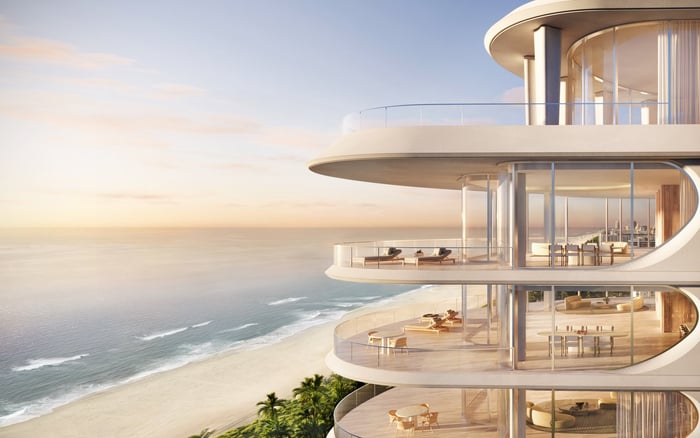
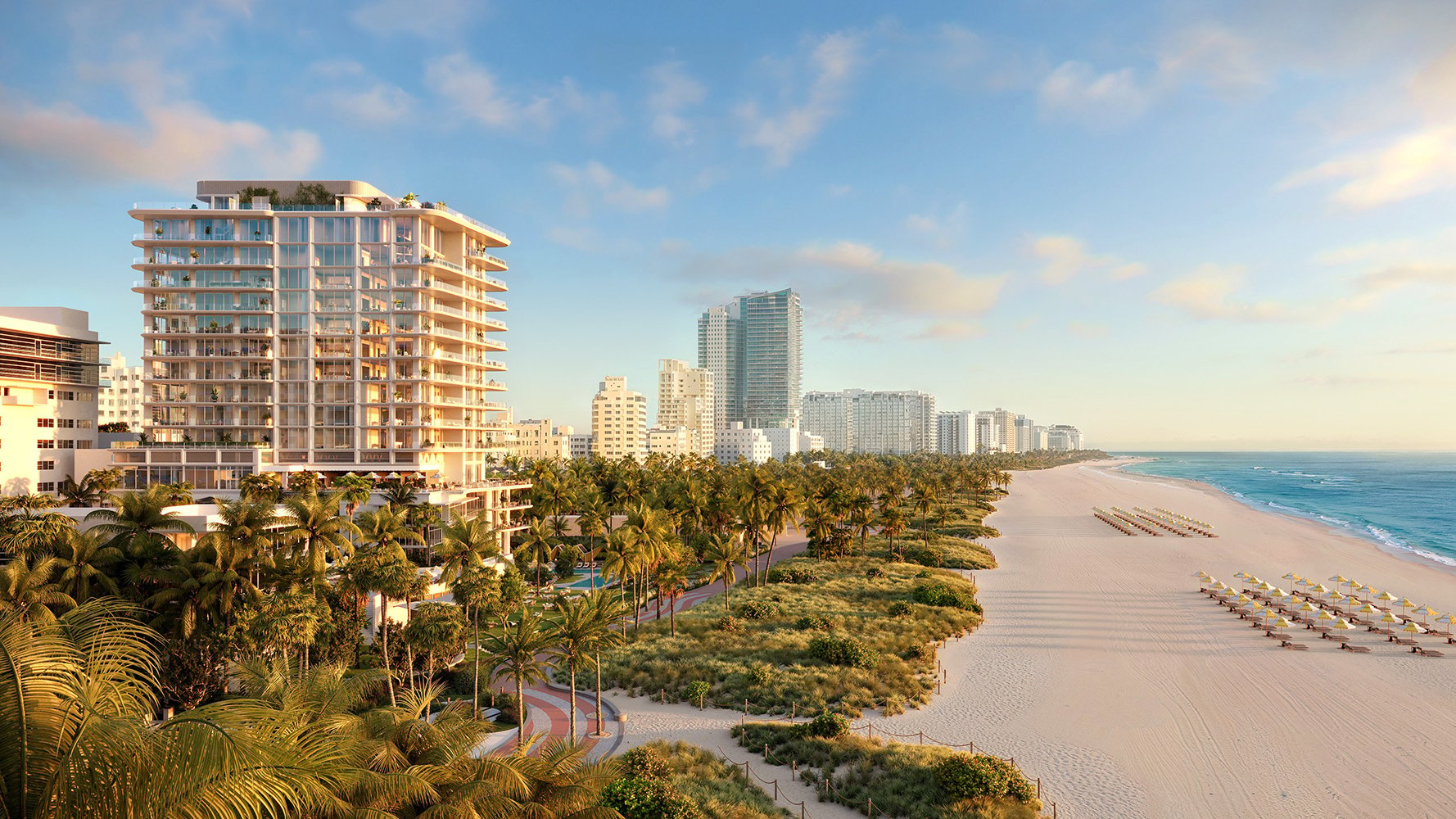
In Miami Beach’s newer oceanfront landscape, buyers often gravitate toward buildings where architectural ambition is paired with modern envelope performance. In that context, 57 Ocean Miami Beach sits within the broader conversation around contemporary oceanfront living - where the value proposition includes both experience and risk-aware design.
Storm prep isn’t only structural. Tree management affects both safety and property damage. Proper pruning reduces risk, while harmful practices like “topping” are discouraged because they can weaken trees and increase failure.
For luxury properties with curated landscaping, the seasonal plan should include:
After a storm passes, the priorities are sequential: safety first, then documentation, then stabilization.
Start by watching for hazards such as downed lines and unstable structures. Before non-emergency repairs, document damage for insurance claims. Photos and videos captured immediately - paired with dated notes - help establish the condition of interiors, windows, ceilings, and mechanical systems.
Then move quickly on moisture. In Florida’s climate, mold can begin developing soon after water intrusion, so rapid drying and mitigation are critical. Engage professional mitigation early if you see seepage, wet drywall, or persistent humidity. For condo owners, coordinate with building management to confirm whether water intrusion is unit-specific or tied to common elements, since that can affect scope and responsibility.
Service-centric buildings may offer operational advantages during recovery. In Miami Beach, the market’s appetite for branded residential experiences - such as Casa Cipriani Miami Beach and Faena House Miami Beach - reflects a broader preference for managed living. During storm season, that can mean clearer communication, more structured procedures, and faster coordination of vetted vendors, even though policies vary by building.
The best plans are simple enough to execute and specific enough to eliminate guesswork.
Readiness, done well, becomes part of ownership culture. It protects the residence, preserves the lifestyle, and reduces the friction storms impose - on everything from travel to staffing to restoration timelines.
When is hurricane season in Florida? Hurricane season runs from June 1 through November 30 each year.
How do I know whether I should evacuate? Evacuation orders are typically tied to local storm surge zones and official instructions, so confirm your zone before storms approach.
What are Miami-Dade storm surge zones? Miami-Dade publishes storm surge planning zones labeled A through E to support evacuation and surge-risk communication.
What is HVHZ and why does it matter for renovations? HVHZ is an area with stricter wind and impact requirements in South Florida, affecting which windows, doors, and shutters can be used.
Do hurricane-rated products need special approvals in South Florida? In HVHZ, many products commonly need a Miami-Dade Notice of Acceptance to demonstrate code compliance.
Is flood damage covered by a standard homeowners policy? Generally no; flood damage typically requires a separate flood policy.
How does a hurricane deductible work in Florida? It is often separate from your standard deductible and usually calculated as a percentage of the dwelling limit.
Can hurricane upgrades lower my insurance premium? Mitigation discounts are provided for certain documented hurricane loss-mitigation features.
How much water should I store before a storm? A common baseline is at least 1 gallon per person per day, planned for multiple days.
What should I do first after a hurricane passes? Prioritize safety, document damage for insurance, and begin drying quickly to reduce mold risk.
For a confidential assessment and a building-by-building shortlist, connect with MILLION Luxury.
If branded residences are on your mind — as a home or as an allocation — we would be glad to share what we are seeing, privately.
Begin a quiet conversation