A buyer-focused look at how prior water intrusion can reshape the economics of a South Florida branded residence, from carrying costs and reserves to resale confidence and negotiation strategy.

In South Florida, the most elegant residence is often also the most exposed. Salt air, wind-driven rain, intense sun, high water tables, terraces, glass walls, rooftop amenities, parking podiums, and marine-adjacent settings all make water management central to long-term ownership. For buyers of branded residences, that history is not a technical footnote. It can quietly reshape the true cost of ownership.
A branded address may deliver hospitality-level service, collectible design, and exceptional privacy, but the building remains a physical asset with a maintenance record. If a property has a history of water intrusion, even if remediated, the financial conversation extends beyond price per square foot. The sharper questions are practical: what happened, how often, where it occurred, how it was repaired, whether the repair addressed the cause, and how the association has budgeted for future protection.
This is why water intrusion history belongs inside every serious buyer's guide discussion for South Florida luxury real estate. It affects not only what a buyer pays at closing, but what the residence may cost to insure, maintain, finance, renovate, and eventually resell.
The visible premium in a branded residence is easy to understand. Buyers pay for location, architecture, service culture, amenity depth, security, design credibility, and the assurance of a curated daily experience. The less visible premium is operational. It sits inside monthly carrying costs, capital planning, insurance assumptions, and association discipline.
When a building has experienced water intrusion, a buyer should determine whether the issue was isolated or systemic. A single repaired leak around a window is different from recurring moisture across multiple lines of exposure. A one-time plumbing event is different from repeated façade or roof vulnerability. The distinction matters because repeat patterns can influence future repair budgets and owner confidence.
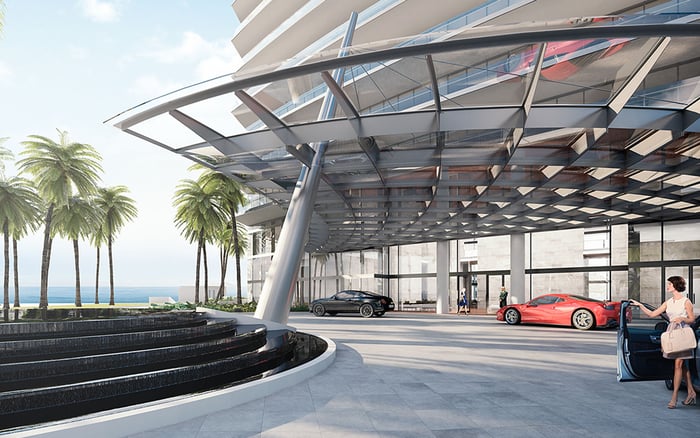
In Brickell, for example, buyers comparing urban luxury options such as St. Regis® Residences Brickell or 888 Brickell by Dolce & Gabbana should think beyond the name on the porte cochère. Brand value may elevate the experience, but building performance protects the investment.
The strongest buyers approach water history as a layered review. The first layer is disclosure. Has there been past intrusion in the residence, in neighboring units, in common areas, on amenity decks, in garages, or through exterior assemblies? The second layer is documentation. Were repairs completed, inspected, warrantied, and paid for from reserves, insurance proceeds, special assessments, or owner contributions?
The third layer is recurrence. A repaired incident can be part of ordinary building life. A pattern suggests a deeper underwriting question. Buyers should ask their advisors to look for repeated references to moisture, leaks, waterproofing, drainage, sealants, balcony thresholds, roof membranes, mechanical penetrations, or façade repairs in the materials available for review.
The fourth layer is governance. A disciplined association typically addresses building-envelope issues with transparency, planning, and professional oversight. A less disciplined association may defer decisions until the cost becomes unavoidable. In a luxury tower, deferral can be expensive because finishes, access logistics, engineering review, and resident disruption all carry premium implications.
Water intrusion can affect the cost of ownership through several channels. Insurance may become more sensitive to prior claims or perceived exposure. Reserves may need to be strengthened if the association expects future waterproofing, façade, roof, garage, or terrace work. Special assessments may become more likely if current funds do not match the scale of needed repairs.
For an ultra-premium buyer, the issue is not simply whether a building has had a leak. Many coastal assets require maintenance. The issue is whether the financial plan is mature enough to support the asset without surprise. A building with clear budgeting, credible repairs, and a realistic reserve posture may be more attractive than a building with a pristine narrative but thin documentation.
This is where pricing trends can mislead when viewed too narrowly. A comparable sale may show a strong number, but it may not reveal pending repair conversations, insurance pressure, or owner sentiment. The real cost is not only the negotiated price. It is the combined burden of acquisition, carrying cost, future capital exposure, and liquidity risk.
Luxury buyers are not only purchasing shelter. They are purchasing confidence. In the resale market, uncertainty can become a discount. If a prospective buyer hears that a building has had water intrusion but cannot quickly understand the scope, repair quality, and future exposure, the buyer may pause, negotiate harder, or move to a cleaner alternative.
This is especially important in waterfront settings, where the romance of the view must be balanced against the durability of the structure. A direct water view can be one of South Florida’s great luxuries, but a building’s maintenance history helps determine whether that view remains financially graceful over time.
In Miami Beach, a buyer touring residences such as The Perigon Miami Beach should evaluate design, service, and setting alongside questions about drainage, exposure, materials, and long-term stewardship. In Sunny Isles Beach, where vertical oceanfront living is a defining part of the market, a residence such as Bentley Residences Sunny Isles belongs in the same disciplined conversation: lifestyle first, but never without building intelligence.
A sophisticated buyer does not need to avoid every building with a water event. Instead, the buyer should price the risk with precision. The starting point is to distinguish incident from pattern. Next, determine whether the cause has been corrected or merely patched. Then review whether the association has funded the response in a way that protects owners from abrupt capital calls.
The buyer’s team should also consider interior implications. Water history may affect flooring, millwork, drywall, stone, built-ins, closets, electrical components, and air quality management. In a high-design residence, restoration can be more complex than the repair itself because exact materials and finishes may be difficult to match.
Negotiation should be equally precise. A buyer may request credits, escrows, repair obligations, expanded inspection periods, or documentation before moving forward. In some cases, the correct response is not a lower price, but a better understanding of future exposure. In others, the most elegant decision is to step away.
The best South Florida buildings are not defined by the absence of maintenance. They are defined by how intelligently maintenance is anticipated, documented, funded, and executed. For branded residences, the expectation is even higher because the ownership experience is supposed to feel seamless.
Water intrusion history can change that equation. It can turn a trophy purchase into a more complex investment, or it can confirm that a building has been responsibly managed through normal coastal realities. The difference lies in the record, the repair quality, and the financial architecture behind the association.
For buyers, the lesson is simple: do not let the brand obscure the building. A great name can enrich daily life, but disciplined due diligence protects capital.
Does any water intrusion history make a branded residence a bad purchase? No. The key is whether the issue was isolated, properly repaired, and supported by credible documentation.
What is the first question a buyer should ask about water intrusion? Ask what happened, where it occurred, how often it occurred, and whether the underlying cause was corrected.
Can water intrusion affect monthly costs? Yes. It may influence insurance, reserve planning, maintenance budgets, and the possibility of future assessments.
Is a newer branded residence automatically safer from water issues? Not automatically. Newer construction may offer modern systems, but buyers should still review performance, warranties, and maintenance protocols.
Why does water history matter for resale? Buyers often discount uncertainty. Clear documentation can preserve confidence, while vague answers can reduce liquidity.
Should buyers rely only on the visual condition of a residence? No. Fresh finishes can hide prior repairs, so documents and specialist inspections are essential.
Can a strong brand offset building-envelope concerns? A brand may support desirability, but it does not eliminate physical, financial, or insurance-related risk.
What professionals should be involved in the review? Buyers commonly involve real estate counsel, inspectors, engineers, insurance advisors, and experienced local representation.
How should a buyer price water-intrusion risk? Consider repair quality, recurrence, reserve strength, possible assessments, insurance implications, and future resale perception.
What is the best mindset for a luxury buyer? Treat water history as part of asset underwriting, not as a reason for panic or complacency.
When you're ready to tour or underwrite the options, connect with MILLION.
If branded residences are on your mind — as a home or as an allocation — we would be glad to share what we are seeing, privately.
Begin a quiet conversation