Setai Residences Miami Beach makes a precise argument for buyers who want Collins Avenue walkability, direct beachfront living, and a calmer private domain within South Beach.

For a certain buyer, Miami Beach is not difficult because it lacks convenience. The challenge is that convenience can quickly become exposure. Restaurants, retail, cultural venues, nightlife and the beach all contribute to the area’s magnetism, but the best residential choice must determine how much of that energy follows a buyer home.
That is why Setai Residences Miami Beach belongs on a serious shortlist. Its Collins Avenue location places residents in an urban-oceanfront setting, close to the daily rhythm of South Beach while still oriented toward direct beachfront access. The central buyer argument is clear: Setai offers walkability without requiring residents to accept a home environment that feels constantly public.
The appeal is not isolation. It is editing. Setai is most compelling for buyers who want to step easily into the neighborhood, then return to a residence that feels composed, discreet and intentionally separated from the surrounding pace.
Walkability in Miami Beach has a particular meaning. It is not merely the ability to run errands without a car. It is the possibility of treating dining, shopping, entertainment, culture and the shoreline as part of daily life, without turning every outing into a logistical event.
Setai’s location supports that car-light lifestyle. For buyers who split time between South Florida and other major cities, this matters. A walkable address creates spontaneity: a dinner reservation without a driver, a morning on the sand without planning, an evening out without turning the garage into a staging area.
Beach access is central to the value proposition because the residence does not force a choice between neighborhood convenience and oceanfront living. Buyers comparing Miami Beach options often study 57 Ocean Miami Beach as part of the broader conversation around beach proximity, residential tone and ease of access. Setai’s specific advantage is the way it pairs Collins Avenue immediacy with the privacy mechanisms needed for daily comfort.
Privacy at Setai is best understood as layered separation. The property’s mixed hotel-and-residential format is part of the lifestyle proposition, but the residential experience is not meant to dissolve into public hospitality traffic. The design strategy emphasizes a clear distinction between public-facing hotel areas and private residential domains.
That distinction matters in a place as visible as South Beach. Resident-only spaces help preserve a more private atmosphere, while controlled circulation supports the sense that residents move through a separate sequence rather than through the same spaces as guests and visitors. Service protocols and discretion also contribute to the privacy value proposition.
This is why Setai can be especially relevant for privacy-focused buyers who do not want a secluded address in the conventional sense. The goal is not to be far from the action. The goal is to have a residence that absorbs the benefits of proximity while filtering public energy before it reaches the home.
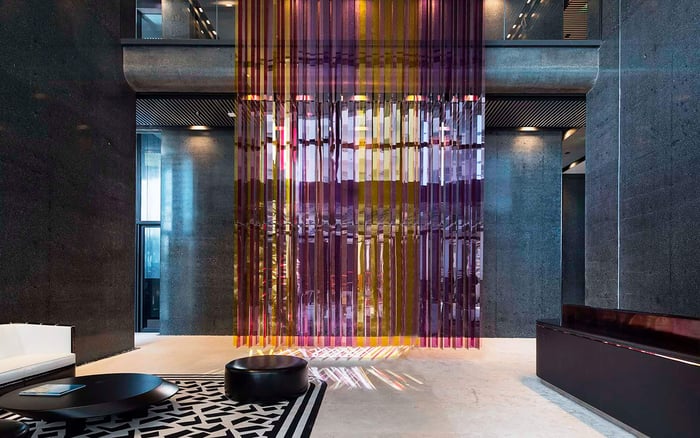
Oceanfront living in Miami Beach can sometimes become theatrical. Setai takes a different posture, using an Asian-inspired internal atmosphere to create a calmer counterpoint to the surrounding South Beach energy. For buyers sensitive to mood, this is not a decorative detail. It is part of the daily transition from city to sanctuary.
The wider Miami Beach market offers many ways to live near the water. Buyers surveying the field may also evaluate Faena House Miami Beach, where the conversation may center on how each address frames access, privacy and residential identity. Setai’s distinction is the combination of beachfront immediacy, neighborhood walkability and a more inward residential calm.
That combination matters because it resolves a familiar Miami Beach tradeoff. A buyer can choose vibrancy and risk losing quiet, or choose quiet and lose the daily pleasure of the neighborhood. Setai aims for the middle ground: close enough to participate, separated enough to retreat.
Setai is not for every luxury buyer, which is precisely why the buyer profile matters. It should rank high for those who want South Beach nearby but do not want their private life to feel staged in public. It also suits buyers who value service and hospitality, provided those benefits are supported by discreet residential separation.
The practical question is whether the residence supports the day a buyer actually imagines. If that day includes walking to dinner, spending time on the beach, returning without friction and maintaining a calm private base, Setai’s case becomes strong.
Buyers comparing South Beach residences may also look at The Ritz-Carlton Residences® South Beach to understand how different luxury formats approach service, location and privacy. The point is not to choose the loudest address. It is to identify which building best protects the way a buyer wants to live.
The right evaluation should focus less on spectacle and more on daily boundaries. How does one move from the street to the residence? Where do residents feel separated from hotel or public-facing areas? Does the building make the beach feel accessible without making home feel exposed? Does the surrounding walkability enhance life without overwhelming it?
Setai’s strongest answer is that it does not make buyers choose between a vibrant neighborhood and a quieter home environment. For buyers prioritizing walkability without losing privacy, that balance is why it belongs on the shortlist.
Why is Setai Residences Miami Beach relevant for walkability-focused buyers? Its Collins Avenue location supports a car-light lifestyle near dining, shopping, entertainment, culture and the beach.
Does Setai Residences Miami Beach offer direct beachfront access? Yes. Direct beachfront access is part of the residence’s appeal for buyers who want both walkability and oceanfront living.
How does Setai support privacy in a busy Miami Beach setting? Its privacy value comes from layered separation, resident-only spaces, controlled circulation and discreet service protocols.
Is Setai isolated from South Beach activity? No. Its advantage is not isolation, but the ability to live close to South Beach activity while returning to a calmer private environment.
What role does the hotel-and-residential format play? The mixed format is part of the lifestyle proposition, provided the residential areas remain distinct from public hospitality spaces.
Who is the ideal buyer for Setai Residences Miami Beach? The ideal buyer wants proximity to South Beach, direct beach access and a residence that still feels composed and private.
Is Setai more about convenience or discretion? It is about the combination. The building’s appeal is that convenience is filtered through privacy-supporting design and service layers.
Why does interior atmosphere matter at Setai? The Asian-inspired atmosphere creates a calm contrast to the energy outside, helping the residence feel like a retreat.
Should buyers compare Setai with other Miami Beach residences? Yes. Comparing Setai with other Miami Beach options can clarify how each building balances access, privacy and residential mood.
What is the best way to shortlist comparable options for touring? Start with location fit, delivery status, and daily lifestyle priorities, then compare stacks and elevations to validate views and privacy.
When you're ready to tour or underwrite the options, connect with MILLION.
If branded residences are on your mind — as a home or as an allocation — we would be glad to share what we are seeing, privately.
Begin a quiet conversation