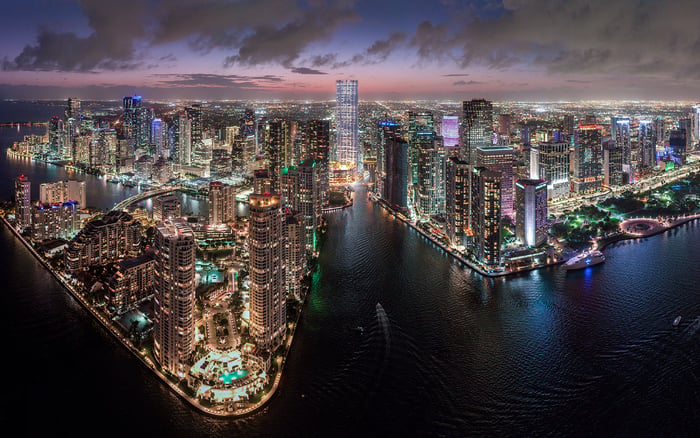
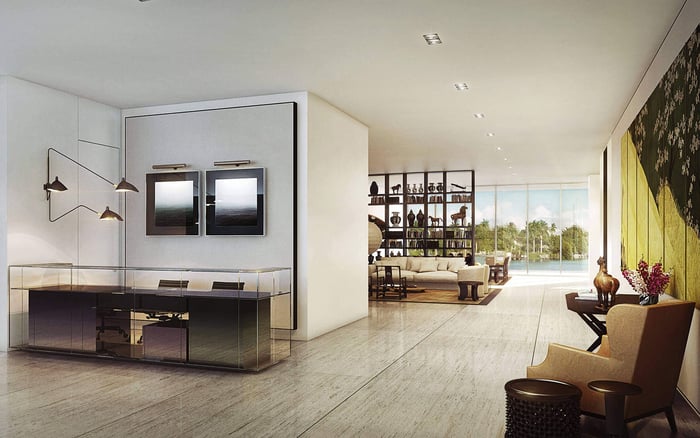
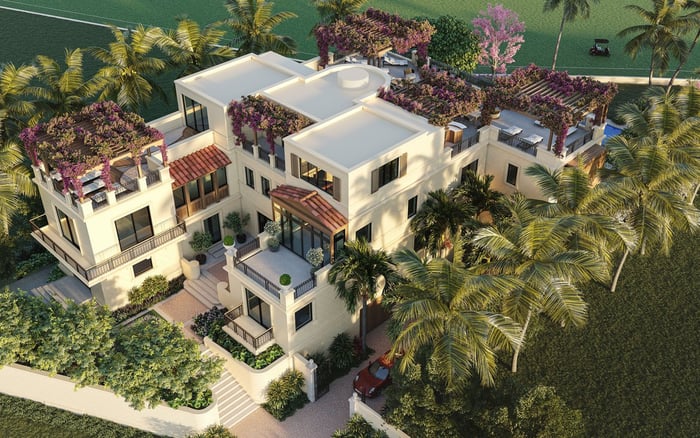
A buyer-focused look at how brand licensing language can influence the total ownership cost of South Florida bayfront and waterfront residences.
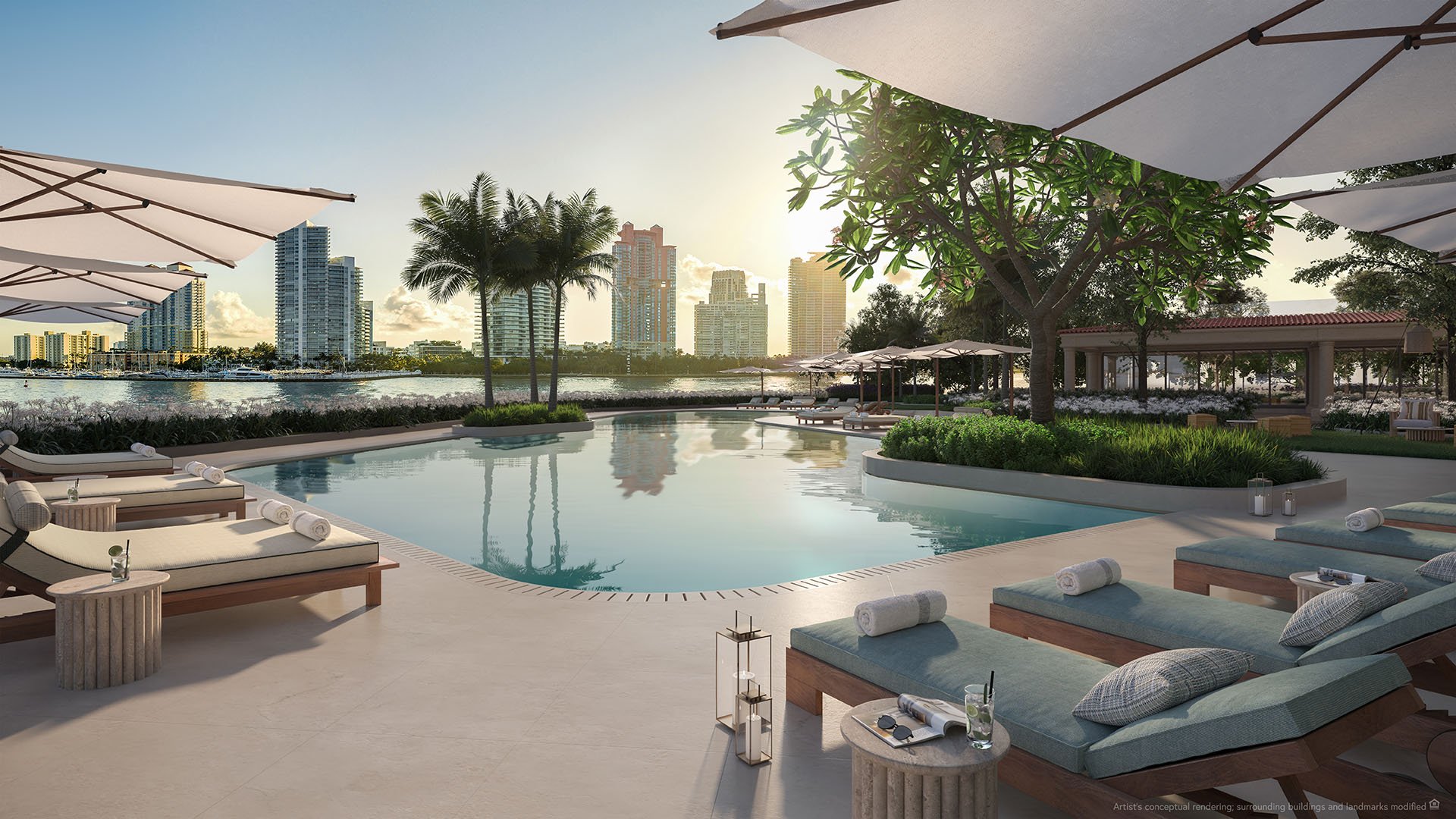
In South Florida, the most coveted bayfront residences are often judged first by what the eye can measure: the waterline, the terrace width, the arrival sequence, the lobby quality, the marina adjacency, the sunset orientation. Yet for buyers considering Branded Residences, the quieter document can be as consequential as the view. Brand licensing terms can shape what an owner pays, what the association must maintain, how the property can be marketed, and how much flexibility the building retains decades after closing.
The distinction is subtle but important. A residence may carry a celebrated hospitality, fashion, automotive, design, or culinary name, but that name typically exists through contractual rights. Those rights can include standards, approvals, fees, operating protocols, intellectual property rules, and renewal mechanics. The brand is not simply decorative. It can become part of the financial architecture of ownership.
For a buyer comparing a bayfront address in Brickell with an ocean-facing home in Miami Beach or a tower in Sunny Isles Beach, the question is not whether a brand adds allure. It often does. The sharper question is whether the licensing terms align with how the owner will live, hold, finance, rent, renovate, and eventually resell the residence.
The purchase price is the most visible number, but it is not the full cost of a branded bayfront residence. A sophisticated buyer should separate the visible premium from the contractual obligations that may follow ownership. That includes monthly assessments, brand-related service standards, design compliance, reserve expectations, replacement protocols, and rules governing the use of branded spaces or marks.
Consider a buyer evaluating 888 Brickell by Dolce & Gabbana. The brand is part of the lifestyle proposition, but the meaningful review begins with the offering documents and association structure. What must remain consistent with the brand? Who decides when a space must be refreshed? Are certain vendors, materials, uniforms, signage, programming, or service levels required? Each answer can affect the ongoing cost of maintaining the property at the standard promised at purchase.
This is where Waterfront ownership becomes more complex. Bayfront buildings already carry demanding maintenance profiles because salt air, wind exposure, mechanical systems, glazing, balconies, pools, docks, seawalls, and exterior finishes require disciplined stewardship. If brand standards add another layer of required quality, the result may support long-term presentation, but it can also reduce the owner base's ability to defer or economize.
Brand licensing may appear through several financial pathways. Some costs may be embedded in common charges. Others may connect to management, marketing, intellectual property use, residential services, or future approvals. The important point is not the label. The important point is whether the buyer understands which fees are recurring, which are event-driven, and which may change over time.
A careful review should determine whether the brand fee is fixed, variable, percentage based, indexed, or subject to renegotiation. It should also address whether fees continue if the brand relationship changes, whether the association has approval power over renewals, and whether special assessments could arise from brand-mandated upgrades.
This analysis is especially relevant in dense luxury corridors such as Brickell, where branded and design-led residences compete within a compact market. A buyer comparing Baccarat Residences Brickell with a non-branded bayfront tower should not stop at floor plan and view. The ownership documents may reveal different cost behavior over a long hold period, even when the initial residence price appears comparable.
A strong brand protects consistency. That can be valuable. It can preserve the feel of arrival, the language of service, the quality of shared spaces, and the overall identity of the building. But consistency is not free. It requires control.
Buyers should understand who has approval rights over interior modifications, lobby changes, amenity refreshes, signage, marketing materials, staff presentation, food and beverage concepts, spa programming, and other visible elements of the property experience. A brand may have the right to approve or reject changes that would otherwise be decided by an association or developer-controlled board.
For some owners, that control is the point. They want the residence to remain disciplined, recognizable, and coherent. For others, it may feel restrictive, especially if they intend to personalize extensively or if future association leadership wants more discretion. The real cost is not merely monetary. It can be the cost of reduced flexibility.
In Miami Beach, for example, a buyer looking at The Perigon Miami Beach may be drawn to a refined coastal setting and architectural identity. The prudent next step is to understand which elements of that identity are protected by contract, which are governed by association rules, and which can evolve with owner priorities.
The most overlooked question in branded residential purchasing is what happens after the initial licensing term. A brand agreement may have a defined duration, renewal rights, termination provisions, default remedies, and transition rules. These clauses matter because a residence can be owned for many years, while the commercial relationship behind the name may be subject to future events.
A buyer should ask whether the brand can leave, whether the association can vote to continue or discontinue the relationship, whether a replacement brand is permitted, and how the property may be described if the license ends. If the name changes, the building may retain its physical quality, but the marketing narrative could shift. If the license renews, the building may face new cost requirements tied to refreshed standards.
The more prominent the brand, the more essential this review becomes. In a market where identity can influence resale perception, ambiguity around renewal or termination can become a hidden valuation issue. It is not enough to love the current presentation. Owners need to know whether that presentation is durable, optional, or conditional.
Brand licensing terms can also affect how owners use and monetize their residences. Rules may address rental periods, approved channels, marketing language, guest access, hospitality services, and the use of the brand name in private listing materials. These terms can shape investor math, seasonal flexibility, and second-home convenience.
For a primary resident, restrictions may be perfectly acceptable. For a buyer planning selective rental use, they can be central. A project with refined service standards may protect quiet enjoyment, but it may also limit high-frequency turnover or informal guest arrangements. In this sense, the license can support exclusivity while narrowing certain revenue strategies.
The same applies to resale. If an owner later sells, the ability to describe the residence, show branded amenities, use approved photography, and reference the name accurately may be governed by brand rules. A well-run brand framework can strengthen presentation. A poorly understood one can complicate marketing.
The bayfront premium is easiest to justify when the licensing terms support daily life rather than simply decorate it. A brand should make the building feel more intentional, not merely more expensive. It should clarify service, design, programming, maintenance, and identity in a way that owners value enough to fund over time.
In Sunny Isles Beach, a buyer considering Bentley Residences Sunny Isles may naturally focus on the strength of the name and the residential experience it suggests. The more important exercise is to connect the name to the documents: what is required, what is optional, what is reserved for brand approval, and what financial obligations follow the association after turnover.
The best branded bayfront purchase is not the one with the loudest logo. It is the one where the license, governance, maintenance plan, service model, and owner expectations all point in the same direction.
Before reserving or closing on a branded residence, review the licensing agreement, association documents, budget, rules and regulations, management agreement, reserve approach, rental policy, and any brand standards that bind the property. The goal is not to find a reason to avoid the purchase. The goal is to understand what kind of ownership the brand creates.
Ask how brand-related costs are disclosed, how they may change, who approves annual budgets, and whether owners have voting rights on major brand decisions. Ask whether renovations require brand consent. Ask whether the name can be used in resale marketing. Ask what happens if the brand relationship ends. Ask whether the service standard is funded realistically, not simply promised elegantly.
A bayfront residence is often purchased for emotion, privacy, light, and permanence. The brand can add ceremony to that experience. But the licensing terms decide whether the ceremony remains graceful, affordable, and controllable over the life of ownership.
What is a brand license in a residence? It is the contractual right for a development or association to use a brand name, identity, standards, and related elements under defined conditions.
Does a brand license always increase owner costs? Not always, but it can introduce costs tied to standards, approvals, management, services, marketing, or future renewals.
Why does this matter more for bayfront property? Bayfront buildings already require careful maintenance, and brand standards may add another layer of quality expectations.
Should I focus more on the brand fee or the monthly dues? Review both, then look at how the license may influence reserves, services, refresh cycles, and special assessments.
Can a brand leave a residential building? The answer depends on the licensing agreement, including term, renewal, default, and termination provisions.
Can owners vote on brand renewals? Sometimes owner or association consent may be relevant, but the specific documents control the answer.
Do brand rules affect renovations? They can, particularly when changes touch visible design standards, branded areas, or building-wide presentation.
Can licensing terms affect resale value? Yes, because the name, service model, costs, and renewal certainty can influence how future buyers evaluate the property.
Are branded residences mainly for investors? No, many buyers are end users, and the best fit depends on lifestyle, rental plans, holding period, and cost tolerance.
What is the best way to shortlist comparable options for touring? Start with location fit, delivery status, and daily lifestyle priorities, then compare stacks and elevations to validate views and privacy.
If you'd like a private walkthrough and a curated shortlist, connect with MILLION.
If branded residences are on your mind — as a home or as an allocation — we would be glad to share what we are seeing, privately.
Begin a quiet conversation