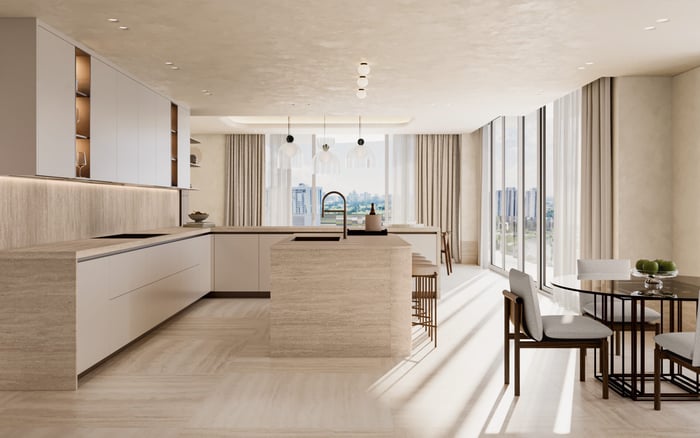
A practical luxury-buyer guide to planning sports-gear storage across South Florida residences, with emphasis on lifestyle, access, finishes, and resale-minded organization.

In South Florida luxury real estate, sports-gear storage is rarely just a closet question. It is a choreography question. The most graceful homes anticipate how a resident returns from the water, the course, the club, the court, the marina, the gym, or the bike lane without allowing private interiors to become a staging area.
For buyers comparing Miami, Fort Lauderdale, and Palm Beach, the best lens is not simply square footage. It is sequence. Where does gear enter? What can be rinsed, aired, charged, hung, locked, displayed, or hidden? How much of the household’s sporting life should remain visible, and how much should disappear into service spaces?
This is especially relevant for a buyer considering a high-rise lifestyle in Brickell, a waterfront routine in Fort Lauderdale, or a club-oriented rhythm in Palm Beach. A polished residence should support sport without reading like a locker room. That balance is where thoughtful storage becomes a mark of quiet luxury.
Before evaluating cabinetry or dedicated rooms, define the household’s real routines. A family with golf, tennis, boating, cycling, paddleboarding, and children’s athletics needs a different plan from a couple focused on beach access and occasional club play. The labels matter: Golf, Marina, Boat-slip, Pool, and Terrace are not just amenities or search terms. They indicate how equipment will move through the home.
A Miami buyer looking at 2200 Brickell may be considering an urban residence where gear must be exceptionally controlled, especially when elevators, parking, and private entry sequences shape daily life. In a vertical setting, storage is less about one large utility room and more about compact, deliberate zones that do not interrupt the elegance of the residence.
In Fort Lauderdale, the conversation often becomes more water-oriented. A buyer comparing residences near boating culture, such as St. Regis® Residences Bahia Mar Fort Lauderdale, should examine what happens immediately after arrival from the waterfront or beach. The right residence makes it easy to separate wet, sandy, or oversized items from formal living areas.
In Palm Beach and its northern luxury markets, club life, golf, tennis, wellness, and weekend entertaining can shape storage priorities. At The Ritz-Carlton Residences® Palm Beach Gardens, for example, due diligence should include how neatly the residence can accommodate sport between morning activity and evening entertaining.
The most successful sports-storage plan usually has more than one zone. A single closet often becomes overwhelmed because different categories of gear have different needs. Shoes, rackets, clubs, helmets, bags, towels, coolers, fins, rods, and cycling accessories should not all compete for the same shelf.
The first zone is the arrival zone, where everyday gear should pause before it enters the home. In a condominium, this may be a carefully outfitted entry closet, a laundry-adjacent cabinet, or storage assigned outside the residence. In a single-family home, it may be a mudroom, garage wall, cabana bath corridor, or service vestibule.
The second zone is the care zone, where items can dry, air, charge, or be reorganized. It should be practical, durable, and easy to clean. The third zone is the long-term zone. Seasonal, duplicate, guest, and specialty equipment belongs here, ideally in a place that does not need to be accessed every day.
Finally, consider a display zone for beautiful items. Some gear is visually compatible with luxury design: leather golf bags, vintage rackets, polished boards, or limited-edition bicycles. Display should be intentional, not accidental. A sculpture-like bike in a study can be chic; three damp helmets on a breakfast counter cannot.
Miami residences often reward restraint. When the home is high-design, the storage system should be almost invisible. Buyers should look for entry sequences that allow quick editing before the main living area. If every beach tote, gym bag, and racket case must cross a formal salon, the plan may not fit the lifestyle.
In Miami Beach, buyers comparing a refined coastal address such as The Perigon Miami Beach should consider how beach equipment, fitness bags, and guest gear can be handled without crowding primary closets. The question is not whether a residence has storage. The question is whether the storage sits where the lifestyle actually creates mess.
For urban Miami and Brickell, charging and compact organization are increasingly important. Cycling lights, watches, headphones, fitness devices, and recovery tools all need a home. A drawer with outlets, a ventilated cabinet, or a designated tech shelf can preserve the serene look of the bedroom, den, and kitchen.
Fort Lauderdale buyers should be especially disciplined about the path from water to residence. Even when the residence itself is pristine, the lifestyle can involve towels, bags, deck shoes, fishing accessories, snorkeling items, coolers, and boating extras. The best homes provide a transition sequence that protects interiors.
Look for surfaces and locations that can withstand repetition. A storage room far from the arrival point may look adequate during a showing but fail in daily use. Gear will naturally stop wherever the resident first becomes tired of carrying it. That is why the closest practical storage location often becomes the true storage location.
For condominium buyers, evaluate how private storage, parking access, service elevators, and staff circulation support sporting life. For house buyers, study the garage, side entries, outdoor storage, laundry route, and bath access. A luxurious plan keeps sport near the action and away from the entertaining core.
Palm Beach storage tends to be judged through a lens of polish. The question is not only whether gear can fit, but whether the residence remains composed before and after a club morning, a children’s lesson, or a weekend guest routine.
Buyers should think about duplicate sets and guest use. Extra rackets, hats, towels, golf shoes, sun accessories, and pool items can quickly overtake linen closets if they are not assigned a specific home. In larger residences, it may be worth creating a sport pantry: a quiet, beautifully finished room or cabinet system that supports club life without feeling utilitarian.
If the household entertains frequently, keep sports circulation separate from guest circulation whenever possible. The ideal plan allows a resident to return from activity, reset, and re-enter the social spaces without dragging the morning’s equipment through the evening’s atmosphere.
During a showing, do not only admire the view. Walk the gear path. Begin at the parking area, lobby, dock, beach access, garage, or side entry. Then move toward the place where equipment would realistically land. If the path feels awkward when empty, it may feel worse after a full day outside.
Open the storage doors. Look at depth, height, lighting, airflow, and adjacency. Tall items need height. Wide items need real width, not just theoretical square footage. Small accessories need drawers or bins; otherwise, they migrate into bowls, countertops, and bedside tables.
Ask whether the residence allows enough separation between pristine wardrobe storage and active gear storage. Luxury closets are not always the right answer for sporting equipment. A custom dressing room can be compromised if it becomes the default location for shoes, wet bags, or outdoor accessories.
Also consider serviceability. The best storage systems can be cleaned, reconfigured, and edited over time. Families evolve. Sports change. Guests arrive. Children grow. A rigid system may look beautiful on day one and become frustrating by year three.
Storage rarely photographs as dramatically as a skyline view or oceanfront terrace, but sophisticated buyers notice it. A residence that can absorb active living while remaining calm feels more expensive. It suggests that the property has been designed around real life, not only presentation.
For sellers, editing sports gear before listing is essential. Keep only the pieces that reinforce lifestyle. Remove clutter, duplicate equipment, and anything that makes the home feel undersized. A buyer should imagine ease, not logistics.
For buyers, the strongest residences are those where sporting life can expand without visual noise. The goal is not to hide the fact that the household is active. The goal is to make activity feel curated, natural, and beautifully supported.
What is the first thing to evaluate for sports-gear storage? Start with the arrival path. The best storage is located where gear naturally enters the home.
Is a large closet enough for an active South Florida household? Not always. Multiple zones usually work better than one overfilled closet.
How should condo buyers think about sports equipment? Study parking, elevator access, private storage, entry closets, and laundry adjacency as one system.
What matters most for waterfront gear? Prioritize separation from formal interiors and a practical place for wet or bulky items to pause.
Can sports gear be displayed elegantly? Yes, but only when it is intentional. Select pieces can read as design objects when curated.
What should golfers look for in a residence? Look for tall, accessible storage that keeps clubs, shoes, and accessories organized but discreet.
How can families keep children’s gear under control? Assign each sport or child a defined zone so equipment does not drift through the home.
Does storage affect resale appeal? Yes. Orderly, well-located storage helps a residence feel more livable and more refined.
Should primary closets hold sports gear? Only selectively. Active gear is usually better kept apart from wardrobe and formal accessories.
What is the luxury standard for sports storage? It should be convenient, durable, discreet, and aligned with the way the household actually lives.
When you're ready to tour or underwrite the options, connect with MILLION.
If branded residences are on your mind — as a home or as an allocation — we would be glad to share what we are seeing, privately.
Begin a quiet conversation