A practical due-diligence guide for luxury buyers assessing seawalls, drainage, flood planning, maintenance obligations, and long-term resilience before purchasing a waterfront condominium or residence in South Florida.
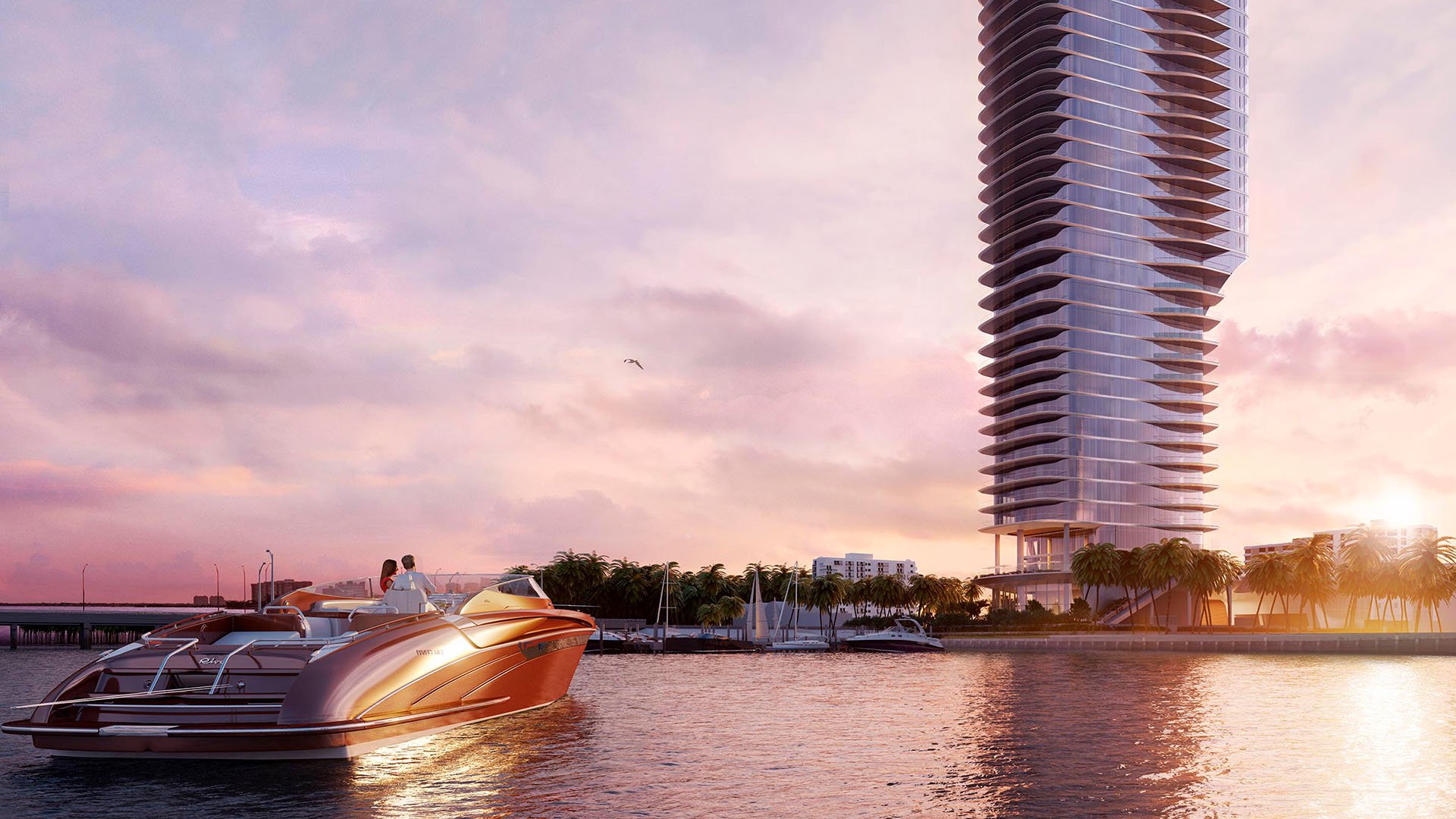
For South Florida’s luxury buyer, waterfront living is often the most emotional part of the search. The light, privacy, terrace, boat traffic at sunset, and quiet drama of an open bay view can make a residence feel singular before the documents are even reviewed. Yet sophisticated purchasers understand that a waterfront building is not only an architectural object. It is an engineered edge between land and water.
That edge deserves careful scrutiny. A seawall, drainage system, and flood-mitigation plan may not photograph as beautifully as stone flooring or a private elevator foyer, but they can shape the ownership experience, insurance conversations, future capital planning, and resale confidence. A buyer who understands these systems is not being cautious for caution’s sake. They are protecting the elegance of the purchase.
This is especially true when comparing addresses across Brickell, Miami Beach, Sunny Isles, Fort Lauderdale, Bay Harbor, Surfside, and other waterfront enclaves. Whether the conversation begins with Una Residences Brickell, a bayfront boutique building, or an established oceanfront tower, the question is the same: how well has the building planned for water?
A seawall should be evaluated as a building system, not a landscape detail. Buyers should request the most recent seawall inspection, any engineering opinions, repair history, maintenance plans, and documentation of future work under consideration. If the association or developer cannot clearly explain the wall’s condition, useful-life assumptions, and budget philosophy, that lack of clarity deserves attention.
The review should go beyond whether the wall looks clean from the promenade. Surface appearance can be misleading. A qualified professional may assess alignment, visible cracking, joint conditions, tiebacks, cap condition, erosion behind the wall, drainage penetrations, and evidence of settlement. A buyer does not need to become an engineer, but engineering questions should receive engineering answers.
For a luxury purchaser, the ideal response is not theatrical reassurance. It is documentation. A concise seawall history, current assessment, and capital plan can be more valuable than a verbal promise that “everything is fine.” In waterfront real estate, precision is a form of discretion.
Before focusing on technical condition, confirm responsibility. In some waterfront condominium settings, seawall maintenance may sit with the association. In other cases, responsibility can involve a layered relationship among the association, a master association, a marina component, an adjacent parcel, or another controlling entity. The governing documents matter.
A buyer should ask: who maintains the seawall, who pays for ordinary repairs, who approves major work, and how are assessments allocated? If a marina, dockage area, or waterfront amenity is involved, the ownership structure should be especially clear. Ambiguity can become expensive when repairs are no longer theoretical.
This is also where the reserve study, budget, meeting minutes, and pending project discussions become relevant. The question is not simply whether there is a wall. The question is whether the building has a credible financial and administrative plan for maintaining it.
Drainage rarely sells a residence, but it can define how a property performs. Buyers should request the site drainage plan, any recent drainage evaluations, pump or sump information if applicable, maintenance records, and a clear explanation of how water is intended to move across the property during routine rain events.
A thoughtful drainage review considers the garage, lobby threshold, loading areas, drive courts, pool deck, landscaping, pedestrian paths, and any lower-level amenities. Water management should be legible. Where does water collect? Where is it directed? What systems need power? Which components require scheduled maintenance? Who monitors them?
At the premium level, buyers often focus on finishes, views, and service. Those details matter, but a building that manages water elegantly creates a different kind of luxury: calm operation. When touring coastal properties such as The Perigon Miami Beach or other Miami Beach residences, the drainage conversation should sit alongside the design conversation, not after it.
A flood-mitigation plan should not read as boilerplate. It should describe practical protections, operational protocols, equipment considerations, access planning, emergency procedures, and maintenance expectations. The strongest plans are understandable to a buyer, actionable for building management, and connected to the property’s actual layout.
Ask how the plan addresses critical building systems. Mechanical, electrical, life-safety, elevator, garage, and access systems should be part of the conversation. The most refined residences often conceal infrastructure beautifully, but concealment should not create mystery. A buyer should understand what is protected, what remains exposed, and what procedures are followed before, during, and after severe weather.
For new-construction offerings, request the developer’s resilience narrative and supporting technical documents. For resale buildings, ask how the plan has evolved over time. In both cases, the goal is the same: separate marketing language from operational readiness.
The highest-quality waterfront comparison is not limited to price per square foot, terrace depth, ceiling height, or brand affiliation. Those metrics have their place, but infrastructure discipline belongs in the same conversation.
A buyer comparing St. Regis® Residences Sunny Isles with another oceanfront property should look at the seawall file, drainage plan, flood procedures, maintenance culture, reserve philosophy, and management responsiveness. The same approach applies when reviewing Riva Residenze Fort Lauderdale, a riverfront address, or a bayfront condominium with private marina elements.
A polished amenity deck can be replaced. A weak culture of infrastructure planning is harder to correct. Buyers should pay close attention to how quickly and completely a building team responds to technical questions. The manner of response often reveals as much as the answer itself.
A disciplined waterfront document request should include seawall inspection history, engineering opinions, repair proposals, capital improvement discussions, drainage plans, pump and maintenance logs where applicable, flood procedures, insurance summaries, reserve materials, budgets, meeting minutes, and any current or anticipated special assessment discussions.
The buyer’s attorney, engineer, insurance advisor, and real estate advisor should review these materials together. Each professional sees a different risk. The attorney reads responsibility, the engineer reads condition, the insurance advisor reads exposure, and the real estate advisor reads marketability.
If a seller or association resists reasonable document requests, that resistance should be interpreted carefully. There may be an innocent explanation, but serious buyers should not proceed on charm alone. Waterfront ownership rewards clarity.
During a showing, ask where water is intended to go during heavy rain. Ask which areas have experienced standing water. Ask where pumps, drains, backflow devices, or other mitigation components are located, if present. Ask when the seawall was last reviewed and whether work is being discussed.
Also observe the property with discipline. Look at low points in the garage, staining at walls, drain placement, surface slopes, door thresholds, landscaping edges, and the relationship between the pool deck and waterfront edge. None of these observations should replace professional review, but they can guide better questions.
The best private tours are not interrogations. They are quiet, informed conversations. A serious buyer can remain elegant while being exacting.
In South Florida, the luxury waterfront buyer is increasingly fluent in resilience. That does not mean every purchase must be approached with suspicion. It means beauty and durability should be evaluated together. The most compelling residences are those where architecture, service, setting, and infrastructure feel aligned.
A residence may offer rare light, generous terraces, and an exceptional sense of arrival. Still, the seawall, drainage, and flood-mitigation plan help determine whether that lifestyle is supported by a durable ownership structure. For the discreet buyer, that is the real luxury: confidence that extends beyond the closing table.
What is the first document to request when evaluating a waterfront building? Start with the most recent seawall inspection or engineering summary, then review drainage and flood-mitigation materials.
Should a buyer hire an engineer for a condominium purchase? For a waterfront building, an independent engineering review can add valuable perspective, especially when seawall or drainage questions arise.
Is a newer building automatically safer from flood concerns? Not automatically. New construction should still be reviewed for design intent, maintenance obligations, and operational procedures.
What should I ask about the seawall budget? Ask who is responsible for maintenance, whether reserves contemplate future work, and whether any major repairs are being discussed.
Can drainage issues affect resale value? They can influence buyer confidence, inspection negotiations, insurance discussions, and perceptions of long-term building quality.
Where should I look during a building tour? Observe garage low points, drains, waterfront edges, lobby thresholds, loading areas, and any visible staining or standing water patterns.
Are flood procedures as important as physical improvements? Yes. A strong plan should explain how management protects systems, communicates with residents, and restores normal operations.
Should amenity areas be part of the review? Yes. Pool decks, waterfront promenades, gardens, garages, and lower-level amenities can all reveal how water is managed.
What if the association cannot answer technical questions? Request written materials and professional clarification before proceeding. Unclear answers should lead to deeper diligence.
How should I compare two waterfront buildings? Compare documentation, maintenance culture, reserves, seawall condition, drainage design, flood protocols, and management responsiveness.
For a tailored shortlist and next-step guidance, connect with MILLION.
If branded residences are on your mind — as a home or as an allocation — we would be glad to share what we are seeing, privately.
Begin a quiet conversation