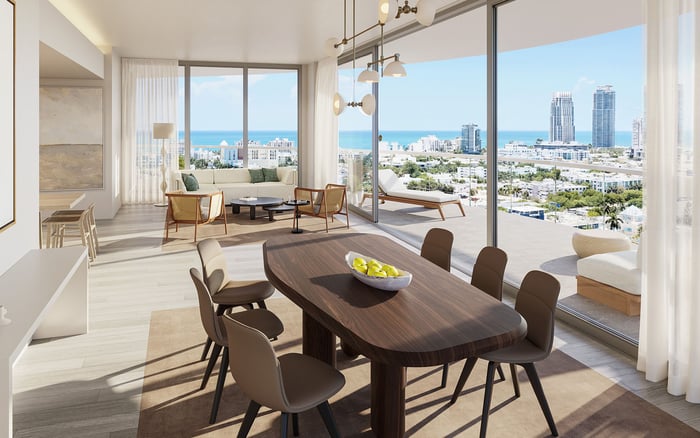
A discreet buyer’s guide to assessing pool seating during a private showing, with attention to comfort, privacy, service flow, sun, sightlines, and long-term livability.
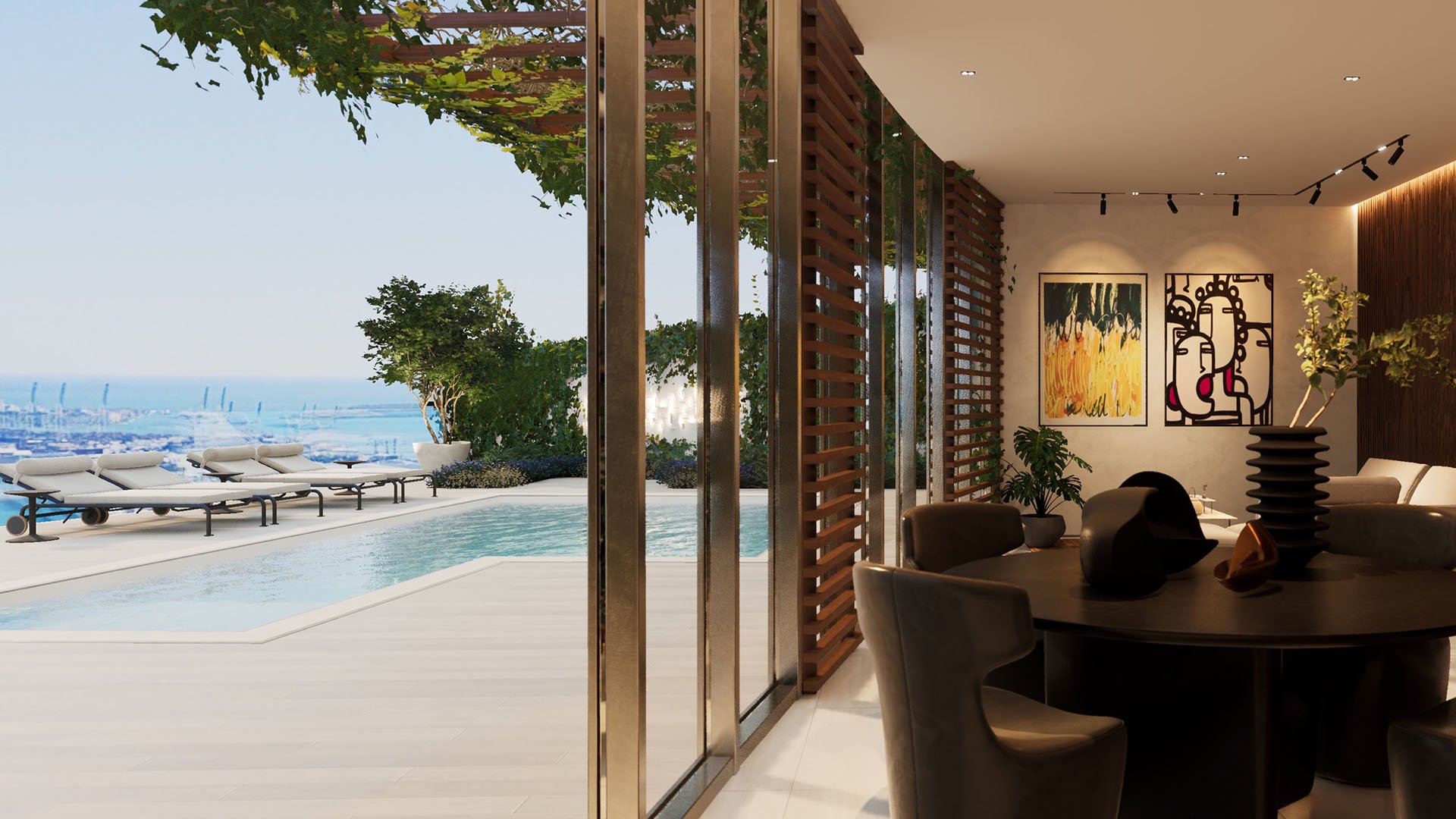
During a private showing, the pool area is often presented at its most photogenic: cushions aligned, towels folded, water still, and sunlight catching the surface at precisely the right angle. For a serious South Florida buyer, that is only the first impression. The more important question is whether the seating supports the way you intend to live.
Pool seating is not decoration. It is daily-use infrastructure for quiet mornings, family afternoons, sunset cocktails, weekend guests, and the private rituals that make a residence feel complete. A beautiful Pool that is uncomfortable at 2 p.m., exposed to neighboring sightlines, or awkwardly disconnected from the Terrace may photograph well and still underperform.
The right approach is calm and tactile. Sit down. Stay seated. Look around without rushing. A private showing gives you permission to test the outdoor room as if you already live there.
Most buyers instinctively walk to the point with the most dramatic view. That may be the waterline, the skyline angle, or the open edge of an Oceanfront setting. Begin there, but do not stop there. The best seat is not always the most cinematic one. It is the one you will choose naturally, again and again.
Select the main lounge chair or conversational grouping and sit for several minutes. Notice the pitch of the backrest, the height of the arms, and whether a side table is reachable without leaning. Ask whether the layout invites actual repose or simply frames the pool for a marketing photograph.
From that seat, study what is directly in front of you. Is the pool edge visually serene, or does the eye land on mechanical doors, service paths, walls, or parked furniture? In high-end living, the difference between a view and a composed view is often the difference between occasional use and daily pleasure.
South Florida light is an asset, but it must be managed. During a showing, note the time of day and the direction of the sun. A lounge position that feels perfect in the late morning may become too exposed by midafternoon. A shaded banquette may be ideal for lunch and too dim for evening reading.
Do not rely only on umbrellas or movable shade. Consider where the architecture itself provides relief. Overhangs, covered loggias, pergolas, deep terraces, and landscaping can create a more consistent experience than accessories alone. If the Pool is connected to a Terrace, observe whether shaded seating and sun seating are both available without forcing guests to rearrange the entire setting.
Glare matters as much as heat. Sit facing the water and look at the surface. If you immediately squint, imagine doing so every weekend. Reflections from glass railings, pale stone, or neighboring facades can make a glamorous pool deck less usable than expected.
Privacy is not a single condition. It changes by chair, angle, level, and time of day. During the showing, move from the chaise to the dining seat, then to the shaded corner, then to any sun shelf or in-pool perch. Each position may tell a different story.
Ask yourself what can be seen from adjacent residences, upper levels, nearby paths, or the home’s own interior rooms. In a Miami Beach or Sunny Isles search, buyers often prioritize views, but the most successful outdoor spaces balance exposure with retreat. A pool should feel connected to its surroundings without making the seated person feel displayed.
Also consider privacy among your own guests. A refined pool setting usually provides more than one social tempo: a place for conversation, a place to read, a place for children to remain visible without dominating the scene, and a place where someone can step away without leaving the outdoor environment entirely.
A private showing is visual, but the pool deck should also be evaluated by sound. Sit in the main conversation area and speak at a normal volume. Can another person hear you comfortably from the opposing chair? Are seats too far apart, forcing voices to carry? Are they too close, making the arrangement feel more hotel cabana than private residence?
Listen for water features, equipment, traffic, elevators, service doors, neighboring activity, or wind. Some sound is pleasant and atmospheric. Other sound becomes fatigue. The goal is not silence, but control. A luxury outdoor room should allow conversation without effort.
If there is a Balcony overlooking the pool, test the relationship between upper and lower levels. Can someone above speak to someone below without shouting? Does the balcony create a desirable overlook, or does it make the pool seating feel observed? These small dynamics often influence how naturally the family uses the space.
Pool seating should be judged as part of a sequence. Walk from the kitchen, salon, or primary entertaining room to the pool area while imagining a tray, a towel, or a child in motion. The path should be intuitive. Doors should open cleanly. Furniture should not interrupt the most natural line of movement.
Pause at thresholds. A strong layout offers a graceful transition from conditioned interior space to open air. If the seating feels stranded from the home, the pool may become a special-occasion feature rather than a daily extension of living.
Service flow is equally important. Where do towels go? Where are drinks placed? Can wet guests reach a bath or cabana area without crossing formal rooms? Can staff circulate discreetly during a gathering? These practical details are rarely glamorous, but they are central to ease.
During a showing, pool furniture may be staged to flatter proportions. Look beyond the style and study the scale. A large deck with small furniture can feel exposed. A compact deck with oversized loungers can feel congested. The ideal arrangement respects both architecture and human movement.
Walk behind each chair. There should be enough clearance to pass without disturbing someone seated. Pull out a dining chair if outdoor dining is part of the plan. Open and close nearby doors. If the furniture must be angled awkwardly to function, the space may not be as generous as it first appears.
Material choice also matters, even if furnishings are not included. Consider whether the deck surface feels comfortable underfoot, whether cushions sit securely, and whether the arrangement appears durable for salt air, sun, humidity, and frequent use. You are not merely judging what is there. You are testing what the space can support.
A great pool area performs at two scales: intimate and social. Imagine a quiet weekday morning with one person reading, then imagine eight guests arriving for drinks. The seating should not require a complete reinvention to accommodate both.
Look for layered zones. A chaise grouping, a shaded sofa, a dining table, and a perch near the water can each serve a different mood. If every seat faces the same direction, the setting may be better for viewing than gathering. If every seat is clustered tightly, it may lack the calm expected in a premium residence.
For buyers focused on long-term enjoyment, the most valuable pool seating is adaptable without feeling temporary. It should feel composed when empty, natural when occupied by two people, and gracious when entertaining.
Before leaving the pool area, ask the showing team to slow down. Return to the seat you liked most and reconsider it after walking the property. Does it still feel like the place you would choose? Does the outdoor room support morning, afternoon, and evening use? Does it feel private enough, shaded enough, and connected enough?
The best pool seating test is not about perfection. It is about alignment. A buyer who swims daily will judge proximity and towel flow differently from a buyer who hosts dinners outdoors. A family with children will value visibility and safety differently from a couple seeking quiet resort-level calm. Precision begins with knowing which life the seating must serve.
How long should I sit in the pool area during a private showing? Spend at least several uninterrupted minutes in each primary seating zone so your body, eyes, and ears can register the space.
Should I test pool seating at a specific time of day? If possible, see the property when you are most likely to use the pool, especially late morning, afternoon, or sunset.
What is the most overlooked pool seating issue? Glare is often overlooked because the space may look beautiful while still being uncomfortable for reading, dining, or conversation.
How do I judge privacy around the pool? Sit in every major chair and look outward and upward, then consider what neighboring residences or internal rooms may see.
Is outdoor furniture included in the evaluation? Even if furnishings are not included, their placement reveals circulation, scale, shade, and the practical capacity of the deck.
How should families evaluate pool seating? Families should look for clear sightlines to the water, comfortable supervision points, and separate zones for different ages.
What matters most for entertaining? Conversation distance, side tables, shaded gathering areas, and discreet service routes often matter more than the number of chairs.
Should I compare the pool deck to the Terrace? Yes. The Pool, Terrace, and interior entertaining rooms should feel like one coherent living sequence.
Does an Oceanfront pool need a different test? Yes. Oceanfront seating should be checked carefully for wind, glare, privacy, and whether the view remains comfortable while seated.
Can pool seating affect long-term enjoyment? Yes. If the best seats are uncomfortable, exposed, or poorly connected, the pool may be used less than expected.
For a tailored shortlist and next-step guidance, connect with MILLION.
If branded residences are on your mind — as a home or as an allocation — we would be glad to share what we are seeing, privately.
Begin a quiet conversation