A discreet buyer’s guide to separating polished arrival promises from practical valet performance in South Florida luxury condominium living.
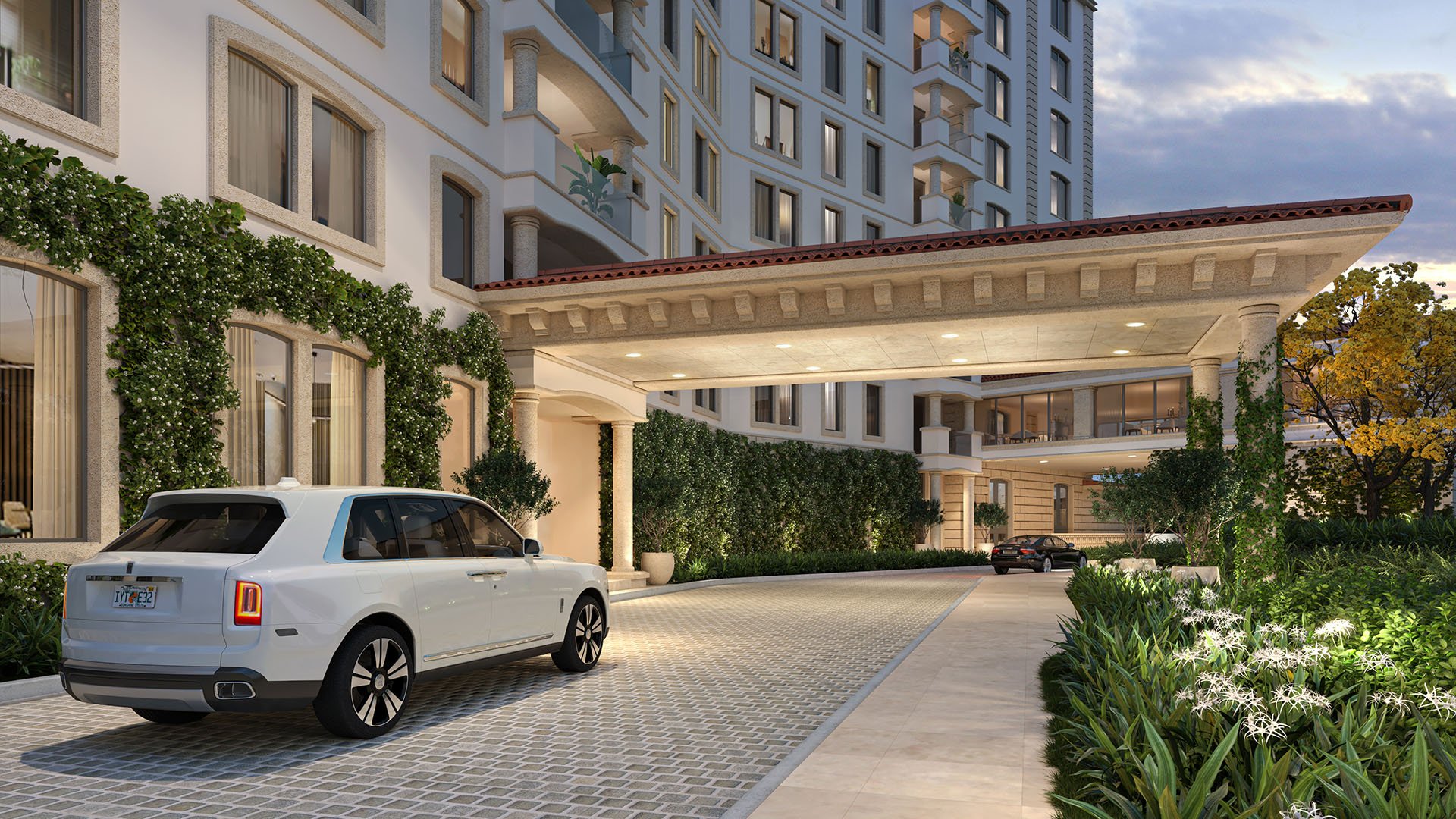
In South Florida luxury real estate, the first minute of arrival carries unusual weight. A shaded porte cochere, a crisp valet stand, a scented lobby, and a calm handoff can make a building feel quietly complete before a buyer ever reaches the elevator. That theater has value. It signals order, hospitality, and discretion.
The question is whether the performance can survive daily life.
Valet queuing becomes marketing theater when the promise of seamless arrival is presented without enough operational substance behind it. A rendering may show one elegant vehicle, two attendants, and a clear path to the lobby. Real ownership brings dinner-hour surges, weekend guests, private drivers, delivery conflicts, rideshare stacking, event nights, rain, service vehicles, and residents who expect immediacy because the building has been positioned at the top of the market.
For buyers comparing Brickell, Miami Beach, Sunny Isles, Coconut Grove, Fort Lauderdale, and new-construction residences, valet is not a minor detail. It is part of the choreography of privacy. If it fails, the inconvenience is public, repetitive, and difficult to fix after completion.
A beautiful arrival court is architecture. A functioning valet system is operations. The best buildings understand both.
Design answers what the eye sees: ceiling height, driveway finish, lighting, planting, canopy coverage, door placement, and the procession from car to lobby. Operations answer what actually happens: how many vehicles can wait without blocking circulation, how keys are managed, where attendants stand during peak periods, how residents retrieve cars, and where overflow goes when several people arrive at once.
The distinction matters because luxury buyers often tour under controlled conditions. Sales galleries, model visits, and quiet weekday appointments rarely replicate the intensity of a Friday evening, holiday weekend, school-pickup return, or stormy morning. A buyer should not judge valet solely by the serenity of the presentation. Serenity is the minimum promise. Capacity is the proof.
A serious arrival plan should feel almost boring in its clarity. There should be a defined drop-off sequence, an obvious path for vehicles that are waiting, separation between pedestrian movement and car movement, and a logical answer for what happens when everything is busy.
The first warning sign is vague language. Phrases such as effortless arrival, white-glove service, or resort-style valet may sound polished, but they do not explain throughput. Ask what those phrases mean in physical terms. Where do cars queue? How many can be staged without interrupting entry? What is the resident retrieval process? Who supervises peak periods?
The second warning sign is a driveway that appears impressive in images but constrained in plan. Long stone surfaces and dramatic lighting can distract from tight turning movements or limited stacking room. A buyer does not need to become a traffic engineer, but the basic question is simple: can multiple cars arrive, wait, unload, and leave without improvisation?
The third warning sign is a valet podium treated as an amenity rather than a system. A podium is furniture. A system includes staffing, storage, communication, weather protocols, guest handling, and escalation when the entrance becomes saturated.
The fourth warning sign is no clear distinction between residents, guests, delivery vehicles, and rideshare. The most polished buildings reduce friction by separating uses where possible, or by managing them with obvious rules. If every vehicle category is expected to share the same narrow moment at the front door, the arrival court may photograph better than it functions.
Ask to see the arrival plan, not just the rendering. Focus on the route a car takes from the street to the valet point, then to storage or exit. Notice whether the path is intuitive. Confusing circulation is often a preview of future friction.
Ask how peak periods are handled. The answer should be specific enough to inspire confidence, even if final staffing will depend on building operations. Listen for practical thinking: attendants added during known surges, guest protocols, communication between lobby and valet, and procedures for wet weather.
Ask where overflow occurs. This is one of the clearest tests of seriousness. Every luxury building can describe the ideal arrival. Better buildings can describe the imperfect one. If three residents arrive with drivers while two guests are unloading and a delivery vehicle is present, where does each car go?
Ask how the valet experience changes for owners who use their residence seasonally. South Florida’s luxury buildings often serve buyers whose routines are concentrated into particular months, weekends, or social calendars. A system that works on a quiet Tuesday may feel very different during a high-occupancy evening.
Ask who controls the front-door experience. In a truly refined building, arrival is not left to chance. The doorman, valet captain, concierge, and security presence should feel coordinated, not like separate actors sharing a stage.
A credible valet story is precise without being overcomplicated. It may explain that the entrance has been planned for multiple simultaneous arrivals. It may describe how vehicles are directed before they reach the lobby door. It may show how residents can request cars in advance. It may identify a management philosophy that prioritizes quiet movement rather than visible busyness.
The tone is usually telling. Marketing theater leans on adjectives. Operational competence leans on sequence. If the response begins and ends with how luxurious the arrival feels, keep asking. If the response walks through who does what, where vehicles go, and how congestion is prevented, the conversation is moving in the right direction.
The best arrival courts also respect privacy. Not every owner wants a dramatic entrance. Many prefer to arrive without being observed, delayed, or forced into conversation. A strong valet plan protects that preference by keeping the handoff clean and the lobby threshold calm.
Arrive unannounced to the extent possible within the norms of a scheduled showing. Watch the curb before you look at finishes. Are cars lingering awkwardly? Are attendants leaving their posts to solve problems out of view? Are pedestrians weaving between vehicles? Is the entrance quiet because it is well managed, or because the building is simply not busy at that moment?
Look for evidence of wear. Scuffed corners, improvised cones, temporary signs, and informal stopping patterns can reveal how residents actually use the space. In completed buildings, the valet area often tells the truth faster than the lobby.
In pre-construction or new-development settings, study the plan with the same skepticism you would bring to ceiling heights or view corridors. Arrival is not an accessory. It is part of the residence’s daily utility, especially for buyers who entertain, travel frequently, keep drivers, or split time between properties.
Valet should never be dismissed as mere convenience. In the upper tier of South Florida condominiums, it is a daily interface between private life and public architecture. When it is done well, it disappears into the rhythm of the building. When it is overpromised, it becomes a recurring reminder that hospitality was staged rather than engineered.
The most discerning buyers do not reject theater. They simply require the machinery behind it. A beautiful entrance can still matter deeply, but it should be supported by queue depth, staff logic, weather thinking, guest rules, and a credible plan for pressure moments.
In that sense, valet queuing is a revealing test. It shows whether a property understands luxury as an image, or as a lived standard.
What is valet queuing? It is the way vehicles line up, move, unload, and clear the arrival area when residents and guests use valet service.
Why does valet queuing matter in a luxury condominium? It affects privacy, convenience, curb appeal, and the daily rhythm of arriving home or hosting guests.
What is the easiest sign of valet marketing theater? Overly polished language without a clear explanation of traffic flow, staffing, overflow, and resident retrieval.
Should I trust a beautiful rendering of the porte cochere? Treat it as a visual introduction, not proof of performance. Ask how the space works when multiple vehicles arrive at once.
What should I ask during a sales presentation? Ask where cars queue, how overflow is handled, how residents request vehicles, and who manages peak periods.
Is valet more important in dense neighborhoods? Yes, tighter streets and busier arrival patterns can make front-door circulation more visible and more consequential.
Can a small arrival court still work well? It can, if the circulation, staffing, and rules are disciplined. Size alone does not guarantee performance.
How can I evaluate valet in a completed building? Visit during busier hours, observe the curb, and watch whether attendants manage movement calmly without improvisation.
Is valet a lifestyle amenity or an operational necessity? In the luxury tier, it is both. It should feel gracious while functioning with the rigor of essential infrastructure.
What is the best way to shortlist comparable options for touring? Start with location fit, delivery status, and daily lifestyle priorities, then compare stacks and elevations to validate views and privacy.
For a tailored shortlist and next-step guidance, connect with MILLION.
If branded residences are on your mind — as a home or as an allocation — we would be glad to share what we are seeing, privately.
Begin a quiet conversation.jpg&width=700&height=438&fit=cover)