A disciplined framework for judging resale liquidity, choosing a strong residence line, and pricing the durability of a view in Palm Beach Gardens.
A luxury residence can be compelling on arrival yet prove difficult to resell. For a 2026 buyer considering Palm Beach Gardens, the more durable approach is to establish an exit thesis before focusing on finishes, amenities, or a particular outlook. That thesis should address three questions: how many plausible buyers might want the home later, how readily its floor plan can be understood, and how difficult its view would be to replicate.
This is not an argument for buying the most conventional residence. It is a case for knowing precisely where a home falls on the spectrum between broadly desirable and highly personal. The strongest acquisition may be distinctive, but that distinction should remain legible to a future buyer.
Resale depth reflects the number and quality of realistic alternatives surrounding a residence, together with the breadth of buyers likely to consider it. It cannot be inferred from one listing, one closing, or one attractive asking price. A proper review should examine comparable homes at several levels: within the same building, among nearby properties, and across the wider Palm Beach luxury corridor.
Start with direct substitutes. Identify residences with a similar bedroom count, scale, outdoor space, privacy profile, parking arrangement, and view orientation. Then consider near substitutes whose trade-offs could appeal to the same buyer. A home may have few exact matches yet face substantial competition from larger residences with weaker views or newer residences with less generous proportions.
The relevance of The Ritz-Carlton Residences® Palm Beach Gardens should therefore be assessed at the residence level, not merely by the project name. Buyers should request a complete picture of current offerings, withdrawn listings, prior resales where available, and meaningful differences among lines.
The essential distinction is between scarcity and thinness. Scarcity can support value when several buyers recognize the same advantage. Thinness describes a market in which few comparable trades exist and the future buyer pool may also be narrow.
In condominium language, a line is more than a repeated floor plan. It combines orientation, exposure, adjacency, vertical position, arrival sequence, and the relationship to the building's shared spaces. Two homes of similar interior size can deliver very different ownership experiences.
First, evaluate the plan without furniture. Trace the route from the entry to the living areas, kitchen, primary suite, secondary bedrooms, and terrace. Look for circulation that consumes excessive space, bedroom doors exposed to entertaining areas, limited walls for art, awkward furniture depths, or outdoor areas that appear generous but are difficult to use.
Next, study adjacency. Confirm what sits above, below, and beside the residence, including elevators, service areas, mechanical spaces, amenity zones, and access points. Consider privacy from both inside and outside: sightlines from neighboring terraces, exposure across the water, and whether interior rooms remain comfortable after dark.
Vertical position warrants a separate premium analysis. Higher floors may improve separation and outlook, while lower floors may offer a stronger connection to the landscape or water. Neither is inherently superior. The question is whether the price difference corresponds to an enduring experiential advantage that a future buyer can immediately perceive.
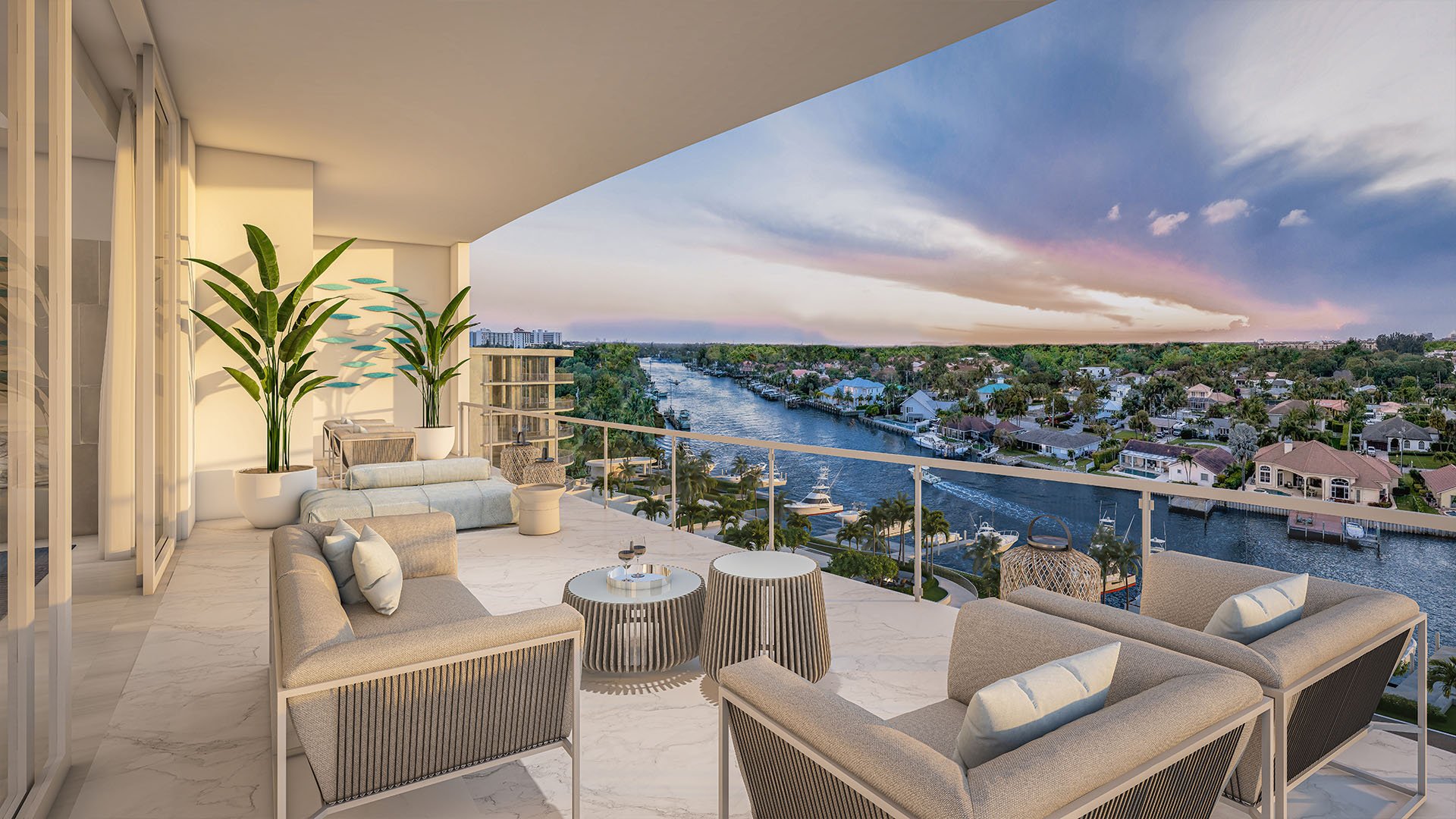
A water view should never be treated as a single label. Break it into components: width, distance, angle, foreground, horizon, privacy, and visibility from the rooms used most often. A broad view from a narrow terrace may be less valuable than a framed outlook enjoyed from the living room, kitchen, and primary suite.
Visit at more than one time of day when possible. Observe glare, interior brightness, reflections, shade, and the relationship between indoor and outdoor living. Review the outlook while seated as well as standing. Photography can privilege the most flattering vantage point in a room, while daily life unfolds from sofas, dining chairs, beds, and work surfaces.
For waterfront property, physical proximity to water and visual access to it are separate attributes. Buyers should independently investigate the land, structures, approvals, and rights that could affect a view corridor. No premium should be described as protected without documentation supporting that conclusion.
View scarcity is strongest when the outlook is difficult to reproduce and attached to a residence with a practical plan. A rare view paired with compromised circulation may narrow the resale audience. Conversely, a highly usable line with a less dramatic but consistent outlook may offer greater long-term liquidity.
A useful comparison set should test the buyer's assumptions rather than confirm them. Begin locally, then compare the same capital allocation with selected alternatives elsewhere in Palm Beach County. The purpose is not to declare one location superior, but to identify precisely what the price is purchasing.
A buyer might contrast Palm Beach Gardens opportunities with The Ritz-Carlton Residences® West Palm Beach and Forté on Flagler West Palm Beach, then widen the exercise to Glass House Boca Raton. These are not automatic comparables. They are reference points for testing preferences around geography, building identity, plan efficiency, and perceived scarcity.
Normalize each candidate before comparing prices. Account for interior area, usable exterior area, floor position, exposure, parking, storage, condition, carrying costs, and any work required after closing. Avoid assigning equal value to nominal square footage when one plan converts that area into better rooms and more efficient circulation.
For an investment-minded buyer, liquidity should be modeled conservatively. Consider who would purchase the residence if personal circumstances required a sale sooner than expected. A credible answer should define the future buyer, the competing inventory, and the residence's clearest differentiator without relying on generalized optimism about Palm Beach.
An offer should reflect both the home's visible strengths and the uncertainty the buyer is assuming. Where resale evidence is limited, a wider valuation range may be more honest than a precise point estimate. The appropriate response is not necessarily to avoid the purchase, but to require a larger margin of safety or a more compelling ownership benefit.
Separate durable attributes from replaceable ones. Orientation, structure, ceiling conditions, privacy, and view geometry are difficult or impossible to change. Decorative finishes, lighting, furnishings, and some interior configurations can be altered. Capital should generally favor what cannot be recreated.
Before signing, ask counsel and qualified specialists to review the governing documents, financial obligations, insurance considerations, physical condition, title matters, and any restrictions relevant to the intended use. A refined purchase process is not adversarial; it is the mechanism that allows conviction to rest on clear assumptions.
What does resale depth mean for a luxury buyer? It describes the breadth of plausible future demand and the number of competing alternatives a buyer may face when selling.
Is a rare residence always easier to resell? No. Rarity supports liquidity only when future buyers recognize and value the same attributes.
How should I compare two lines in the same building? Compare plan efficiency, orientation, privacy, adjacency, outdoor usability, and the view from the primary living spaces.
Are higher floors automatically more valuable? Not automatically. The premium should correspond to a meaningful improvement in outlook, privacy, light, or separation.
Can lower floors offer better value? Yes, when they provide a desirable connection to the landscape or water without unacceptable privacy or noise trade-offs.
How do I test whether a view premium is justified? Evaluate its width, angle, foreground, visibility from key rooms, and the evidence concerning future obstruction risk.
Should terrace size be valued like interior area? No. Outdoor space should be judged by its shape, depth, exposure, privacy, and realistic year-round usability.
What belongs in a Palm Beach comparison set? Include direct local substitutes and selected Palm Beach County alternatives competing for the same capital and buyer profile.
How should limited resale evidence affect an offer? Use a valuation range, apply conservative assumptions, and seek compensation for uncertainty through price or superior utility.
What should happen before contract execution? Engage appropriate legal, financial, and technical advisers to review documents, obligations, condition, and intended-use restrictions.
For a discreet conversation and a curated building-by-building shortlist, connect with MILLION.
If branded residences are on your mind — as a home or as an allocation — we would be glad to share what we are seeing, privately.
Begin a quiet conversation