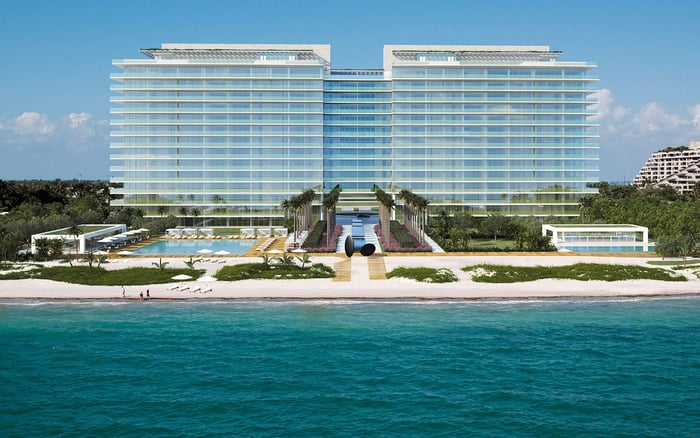
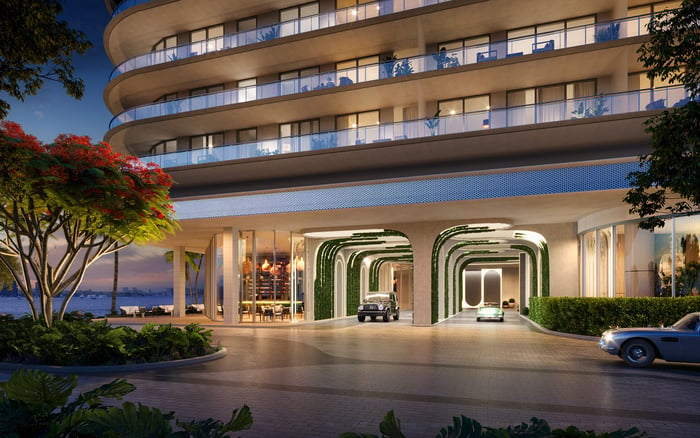
A buyer-focused guide to evaluating parking rights, electric-vehicle readiness, and private-driver logistics when comparing Continuum Club & Residences North Bay Village, Forté on Flagler West Palm Beach, and Oceana Key Biscayne.

In ultra-prime South Florida, some of the most revealing questions are asked below the lobby. A residence may have the right view, the right finish palette, and the right social atmosphere, yet still create friction every time an owner arrives, charges an electric vehicle, or sends a driver for a family member or guest. Parking is no longer a simple count of spaces. It is a layered property right, a daily operations issue, and, increasingly, a resale signal.
That is why a comparison among Continuum Club & Residences North Bay Village, Forté on Flagler West Palm Beach, and Oceana Key Biscayne should move beyond the surface language of convenience. Serious buyers should ask how parking is documented, how EV charging is managed, and how private-driver movement is handled when the building is busy, discreet arrivals matter, or multiple vehicles are in rotation.
The practical geography reads as North Bay Village for bay-to-city movement, West Palm Beach for Flagler Drive routines, and Key Biscayne for island privacy. Each setting can be compelling. The more important question is which mobility model best fits your household.
The first distinction is between a parking privilege and a parking right. In luxury condominium purchasing, language matters. A buyer should determine whether a space is deeded, assigned, licensed, limited common element, valet-controlled, or subject to association rules that may change over time. These distinctions can shape both everyday control and future marketability.
A deeded or clearly assigned space may appeal to the owner who values predictability: the same vehicle in the same location, with minimal reliance on staff. A valet-forward model may appeal to the owner who prefers service over self-parking, especially when the building’s culture is built around a refined arrival sequence. Neither approach is automatically superior. The key is alignment with lifestyle.
Ask whether spaces transfer with the residence, whether additional spaces can be acquired or leased, whether guest parking is separate from resident parking, and whether oversized vehicles are accommodated. Also ask how parking is handled during peak social periods. A building that feels effortless on a quiet Tuesday can perform very differently during holiday weekends, dinner-party hours, or seasonal occupancy peaks.
Electric-vehicle readiness should not be reduced to the phrase “EV available.” Buyers should understand whether charging access is individual, shared, metered, waitlisted, or subject to installation approval. The most elegant solution is not always the most visible one. It is the system that gives residents predictable access without creating operational tension.
For a primary resident with one or more EVs, the questions should be both technical and practical. Is charging tied to a specific space? Who pays for electricity? Can the association approve additional capacity? Is installation limited by garage infrastructure? Are chargers controlled by a vendor platform? Is there a policy for idle vehicles that remain connected after charging is complete?
For the second-home buyer, the issue is different. The priority may be battery management during absences, guest use, and coordination with valet or building staff. For collectors and multi-vehicle households, the concern is whether the charging model scales gracefully. One charger may be adequate today and insufficient tomorrow.
Because technology and ownership habits evolve quickly, the strongest buildings will be those with clear rules, transparent billing, and a board or management structure prepared to address future demand. A residence that treats EV charging as infrastructure, rather than novelty, will feel more durable over time.
Private-driver service depends on timing, sightlines, and control. The most polished buildings understand that a driver is not simply another car in the queue. A driver may be waiting for a principal, retrieving luggage, meeting a child, accepting packages, or coordinating with aviation and marina schedules. The architecture of that interaction matters.
Buyers should observe the arrival experience in person whenever possible. Is there a porte cochere or sheltered drop-off? Can a driver wait without blocking circulation? Is there a discreet place for staff coordination? How does the building separate residents, guests, deliveries, ride-hail vehicles, and service providers? Can the front desk communicate efficiently with valet and security?
Privacy is also a form of luxury. A building with a beautiful lobby but a chaotic curb may not suit a family that uses drivers frequently. Conversely, a highly serviced arrival model can be ideal for owners who rarely self-park and prefer the residence to function like a private club, with staff managing each transition.
The best private-driver logistics feel invisible. The car appears when expected. Luggage moves without interruption. Guests are received without confusion. The principal never has to explain the routine twice.
At Continuum Club & Residences North Bay Village, the mobility conversation naturally centers on connectivity. A buyer considering this address should think about how often the household moves between Miami Beach, the mainland, airports, restaurants, schools, marinas, and cultural districts. In a bay-oriented setting, parking and driver logistics become part of the bridge between resort feeling and urban access.
At Forté on Flagler West Palm Beach, the buyer lens is different. Flagler Drive living often appeals to those who want composed waterfront routines, proximity to the established Palm Beach and West Palm Beach rhythm, and an arrival experience that feels residential rather than hurried. Here, the parking analysis should focus on daily ease: owner vehicles, guest reception, seasonal visitors, and whether the building’s arrival sequence supports a calm Palm Beach lifestyle.
At Oceana Key Biscayne, the island context reframes the issue again. Key Biscayne buyers often prioritize privacy, retreat, and family-oriented routines. The parking and driver questions should reflect that cadence: school runs, club visits, beach days, visiting family, domestic staff, and the need for simplicity when guests arrive from the mainland. A building that supports relaxed but controlled movement can preserve the island experience.
Before contract, request the condominium documents, parking schedule, association rules, and any EV charging policies available for review. Confirm the legal character of each parking space and whether the rights are transferable with the unit. If parking is valet-managed, ask what is guaranteed, what is customary, and what is subject to operational discretion.
Tour the parking area, not only the model residence. Note ramp widths, ceiling heights, turning radii, lighting, elevator proximity, pedestrian paths, and the feeling of security. If you own larger vehicles, do not rely on assumptions. Ask specific questions early.
For EV charging, request clarity on installation, metering, costs, approval timelines, vendor involvement, and future capacity planning. If the answer is informal, keep asking until the policy is legible. A luxury purchase deserves more than verbal reassurance.
For private-driver service, arrive at different times of day. Watch how cars stack, how staff communicate, and whether the drop-off feels calm under pressure. The most useful due diligence is often observational. It reveals what the brochure cannot.
Lead with parking rights if you own multiple vehicles, have a collector mentality, prefer self-parking, or view parking as part of long-term resale value. In this case, clarity and control matter more than theatrical arrival.
Lead with EV charging if the household already drives electric or expects to transition soon. The right building will provide not only access, but a framework that can handle more residents making the same choice.
Lead with private-driver logistics if your lifestyle depends on staff coordination, frequent entertaining, family movement, airport transfers, or discreet arrivals. For this buyer, the garage is less important than the choreography between curb, lobby, elevator, and residence.
The ideal residence balances all three. Yet most buyers have one dominant use case. Identifying it early prevents expensive compromises and clarifies which building feels effortless after the closing, not only during the showing.
Should parking rights be reviewed by counsel before purchase? Yes. The legal status of a parking space can affect control, transferability, and resale expectations.
Is valet parking always less desirable than assigned parking? No. Valet can be highly convenient when the building is staffed and operated to a luxury standard.
What is the most important EV charging question? Ask whether charging is tied to your specific space and how electricity is billed and managed.
Can EV charging policies change after purchase? Association rules can evolve, so buyers should review current policies and understand approval processes.
Why do private-driver logistics matter in a condominium? They determine whether arrivals, departures, luggage, guests, and staff movement feel seamless or exposed.
Should second-home buyers care about parking details? Yes. Absence, guest use, and vehicle storage can make parking structure especially important.
Is guest parking part of the luxury experience? It often is. Guest arrival affects entertaining, family visits, and the overall perception of service.
How should owners with larger vehicles approach due diligence? They should confirm clearance, turning space, ramp comfort, and any vehicle-size restrictions early.
Which is more valuable, parking or EV readiness? It depends on your household. Traditional parking control and future-ready charging solve different problems.
What should a buyer observe during a property tour? Watch the arrival court, valet flow, elevator access, garage lighting, and staff coordination at busy times.
When you're ready to tour or underwrite the options, connect with MILLION.
If branded residences are on your mind — as a home or as an allocation — we would be glad to share what we are seeing, privately.
Begin a quiet conversation