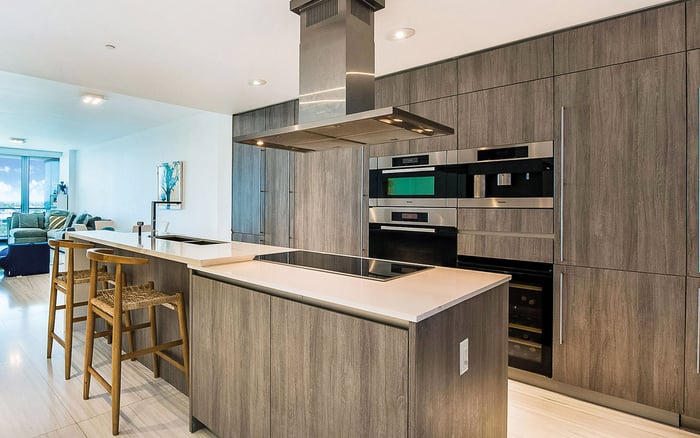
A buyer-focused comparison of Oceana Key Biscayne and Setai Residences Miami Beach, centered on ownership structure, shared-space privacy, building scale, service rhythm, and the daily social texture of ultra-luxury condominium living.
For many South Florida buyers, the question is not simply whether Key Biscayne feels quieter than Miami Beach. The more revealing distinction is ownership architecture: a residential compound designed around long-term owner use versus a hotel-integrated condominium model shaped by hospitality, branded service, and a more fluid daily population.
That is the most useful lens for comparing Oceana Key Biscayne with Setai Residences Miami Beach. Both hold rare coastal positions and appeal to sophisticated buyers, but they answer different questions. Oceana Key Biscayne is centered on low-density oceanfront living, generous grounds, quiet, and resident familiarity. Setai Residences Miami Beach operates within a luxury condo-hotel environment where South Beach energy, five-star service, and brand cachet are part of the ownership experience.
For a buyer focused on building scale, lobby privacy, and whether the same faces appear over time, that distinction matters more than a simple neighborhood preference.
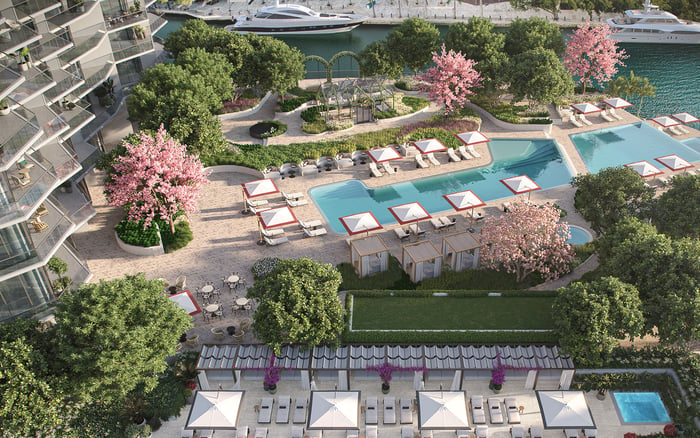
Oceana Key Biscayne creates its sense of luxury through space. Its appeal rests on a large oceanfront site, a relatively modest residence count, setbacks, open grounds, gardens, pool areas, and direct beach access. The result is not merely architectural privacy inside the residence. It is a broader spatial experience in which the property feels less crowded because movement is diffused across lawns, outdoor amenities, and beachside circulation.
This is the type of scale that appeals to buyers who read luxury through breathing room. The arrival does not need theatrical velocity. The property’s rhythm is slower, and the residential-only model supports a feeling of permanence. In portfolio shorthand, Oceana Key Biscayne sits naturally within the Key-biscayne, Oceanfront category of South Florida ownership.
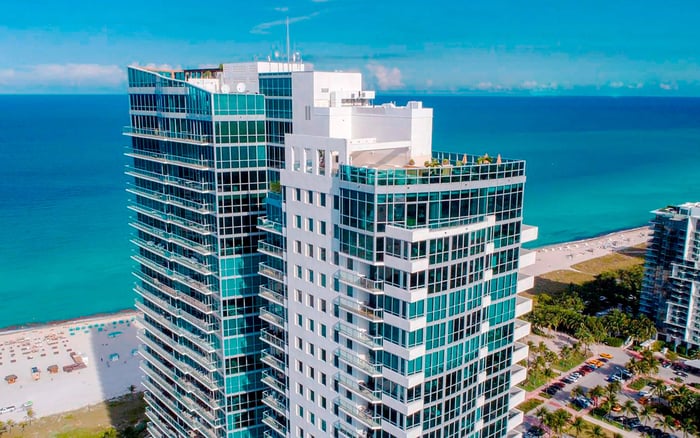
Setai Residences Miami Beach approaches scale differently. Its vertical tower format trades a lower-density ground plane for height, views, and urban glamour. The ownership experience is embedded within South Beach hospitality, so the building’s energy is more cosmopolitan by design. Buyers considering Setai are often drawn to the feeling of connection to a larger cultural and service ecosystem, rather than being buffered from it.
That does not make one model superior in an absolute sense. It makes the daily experience distinct. Oceana’s scale is horizontal, private, and compound-like. Setai’s scale is vertical, polished, and animated by the life of Miami Beach.
For ultra-premium buyers, lobby privacy is not only a question of finishes, security, or ceiling height. It is an operational question: who passes through the arrival sequence, how often, and for what purpose?
At Oceana, the residential-only programming means the lobby and shared spaces are primarily used by residents and their guests. That creates a more predictable rhythm. Staff may come to understand patterns. Neighbors are more likely to become recognizable. Guests generally arrive in relation to specific residences, not as part of a broader hotel environment.
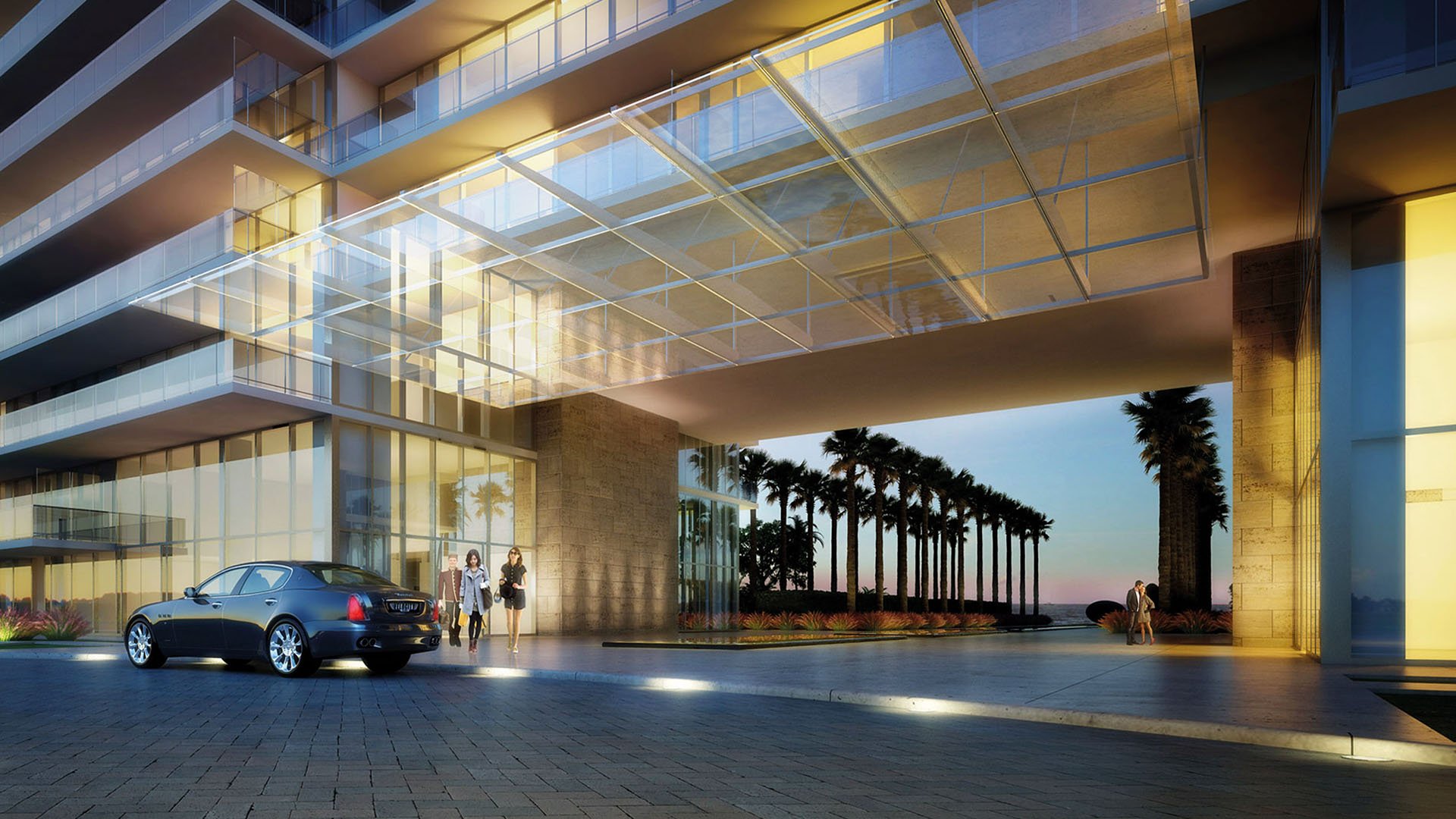
Setai’s lobby experience is inherently different because hotel operations are part of the building ecosystem. Residents, hotel guests, visitors, service teams, and hospitality activity contribute to a more active arrival sequence. For some buyers, that is precisely the attraction: the building feels alive, serviced, and internationally legible. For others, the additional movement can feel less private than a residential-only condominium.
This is the core privacy distinction. Oceana offers privacy through residential restriction and a quieter daily population. Setai offers service intensity within a Condo-hotel framework, but that framework naturally brings more shared-space traffic.
Resident familiarity is one of the least discussed, yet most important, aspects of luxury ownership. A buyer may love a lobby on the first visit, but the deeper question is what that lobby feels like after six months of ownership.
Oceana Key Biscayne is better aligned with primary-home or long-duration second-home buyers who want to recognize neighbors and avoid hotel-style turnover. Its lower-density, owner-oriented model supports repeat encounters. The sense of community is not forced. It is produced by consistency: the same residents returning to the same pool areas, gardens, beach access points, and common spaces.
Setai Residences Miami Beach supports a more transient and cosmopolitan social pattern. The building’s hospitality environment creates a daily flow of residents, guests, and visitors. That can be compelling for buyers who enjoy a global hotel atmosphere, branded service, and the pulse of South Beach. It is less aligned with buyers who want the quiet social continuity of a purely residential compound.
This is where the decision becomes personal. Some buyers want to be known. Others want to be served. Some want a building that feels like a private club of repeat residents. Others want the energy of a grand hotel address without giving up condominium ownership.
Setai belongs to a broader Miami Beach luxury conversation in which brand, hospitality, and lifestyle presence can be as important as residential seclusion. Buyers studying Setai may also look at highly visible Miami Beach addresses such as The Perigon Miami Beach, 57 Ocean Miami Beach, or Apogee South Beach, though each represents its own distinct model of privacy, service, and location.
The comparison is useful because it separates two ideas that are often blended together. Miami Beach can offer privacy, and Key Biscayne can offer prestige, but the ownership model still determines the day-to-day feeling of the building. A residential-only condominium can feel quiet even in a desirable coastal location. A hotel-integrated building can feel vibrant even when the residence itself is serene.
For the Setai buyer, the surrounding energy is not an inconvenience. It is part of the value proposition. Restaurants, arrivals, hospitality rituals, branded service, and the visual language of South Beach all contribute to the atmosphere. The building is not trying to disappear into silence. It is offering a curated version of metropolitan beachfront living.
Oceana is the stronger fit for the buyer who prioritizes operational privacy, long-term resident familiarity, and a quieter residential pattern. This buyer may be relocating full time, spending long seasons in South Florida, or maintaining a second home that should feel like a private refuge rather than a hotel suite.
The Oceana buyer tends to value the understated power of land, spacing, and repetition. The same approach to the beach. The same familiar entrance. The same quieter lobby rhythm. The building’s appeal lies in the way the grounds, gardens, pool areas, and beach access reduce crowding and create a gentler cadence.
For families, long-duration owners, and buyers who place a premium on recognizing neighbors, this model has real weight. It is not about being removed from luxury. It is about defining luxury as calm, continuity, and control.
Setai is the more natural fit for the buyer who values five-star hospitality, branded identity, and the energy of South Beach. This buyer may prefer a residence that feels connected to a larger service world, where the building’s activity is part of its character.
The Setai model suits owners who see staff presence, guest movement, and hospitality infrastructure as advantages. The lobby is less private than in a residential-only building, but it offers a different form of luxury: immediacy, service, glamour, and a sense of international arrival.
For buyers who travel frequently, entertain selectively, or want Miami Beach as a polished lifestyle base, Setai’s hotel-integrated format can be compelling. The right owner will not merely tolerate the movement through shared spaces. They will read it as part of the address’s social and service value.
The practical decision begins with three questions. First, do you want your building to feel primarily residential, or do you want hotel operations to shape the experience? Second, is lobby privacy defined by quiet and familiarity, or by managed service and polished arrival? Third, do you want to recognize the people around you, or do you prefer the anonymity and motion of an international hospitality setting?
If the answers point to quiet, repeat encounters, open grounds, and a residential-only environment, Oceana Key Biscayne is the cleaner fit. If the answers point to service intensity, South Beach glamour, and the energy of a branded luxury hotel ecosystem, Setai Residences Miami Beach becomes more persuasive.
The best choice is not the most expensive-sounding address. It is the building whose operating model matches how the owner wants to live when no one else is watching.
Is Oceana Key Biscayne more private than Setai Residences Miami Beach? For buyers focused on lobby privacy, Oceana’s residential-only model offers a quieter and more predictable shared-space rhythm.
Is Setai Residences Miami Beach a residential-only condominium? No. Setai is best understood as a luxury condo-hotel ownership model integrated with a South Beach hospitality environment.
Which building is better for recognizing neighbors over time? Oceana is better aligned with resident familiarity because its lower-density, owner-oriented model supports repeat encounters.
Which building has stronger hospitality service? Setai is the stronger fit for buyers who prioritize branded service intensity and a five-star hotel atmosphere.
Does building scale feel different between the two? Yes. Oceana emphasizes grounds, setbacks, and open space, while Setai emphasizes vertical presence, views, and urban glamour.
Is the choice mainly Key Biscayne versus Miami Beach? Not entirely. The more important distinction is residential compound ownership versus hotel-integrated luxury ownership.
Who is the ideal Oceana buyer? A primary-home or long-duration second-home buyer who values quiet, privacy, open grounds, and familiar shared spaces.
Who is the ideal Setai buyer? A buyer who wants South Beach energy, brand cachet, hospitality service, and a more cosmopolitan daily flow.
Does hotel activity affect lobby privacy? Yes. Hotel guests, visitors, and service operations create more movement than a residential-only condominium typically has.
Can both models be considered ultra-luxury? Yes. They simply define luxury differently: Oceana through residential calm, Setai through hospitality, service, and urban presence.
If you'd like a private walkthrough and a curated shortlist, connect with MILLION.
If branded residences are on your mind — as a home or as an allocation — we would be glad to share what we are seeing, privately.
Begin a quiet conversation