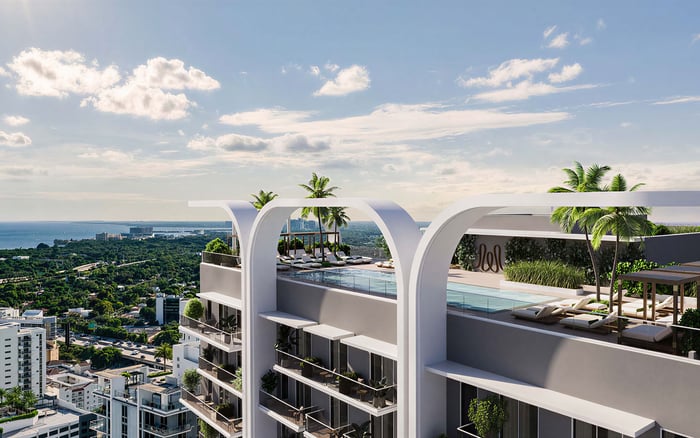
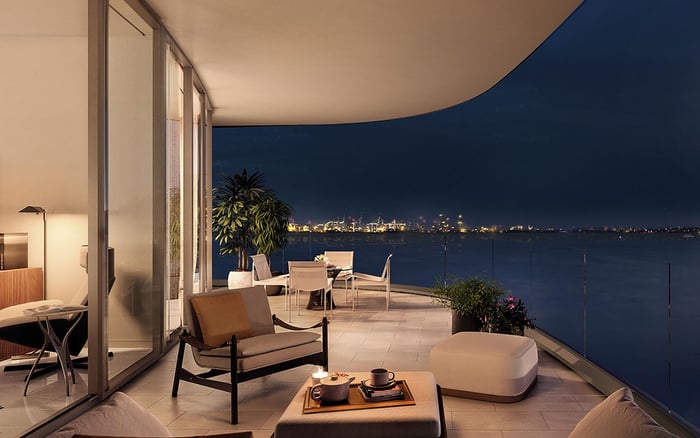
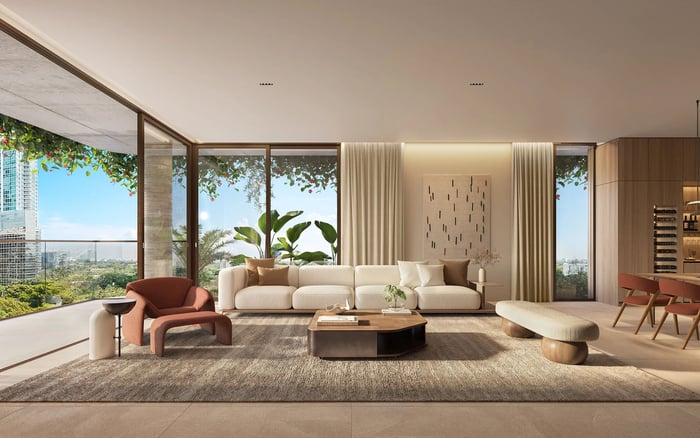
A South Florida buyer’s guide to separating truly livable rooftop decks from attractive but underused amenity space, with emphasis on heat, shade, wind, access, maintenance, and daily rituals.
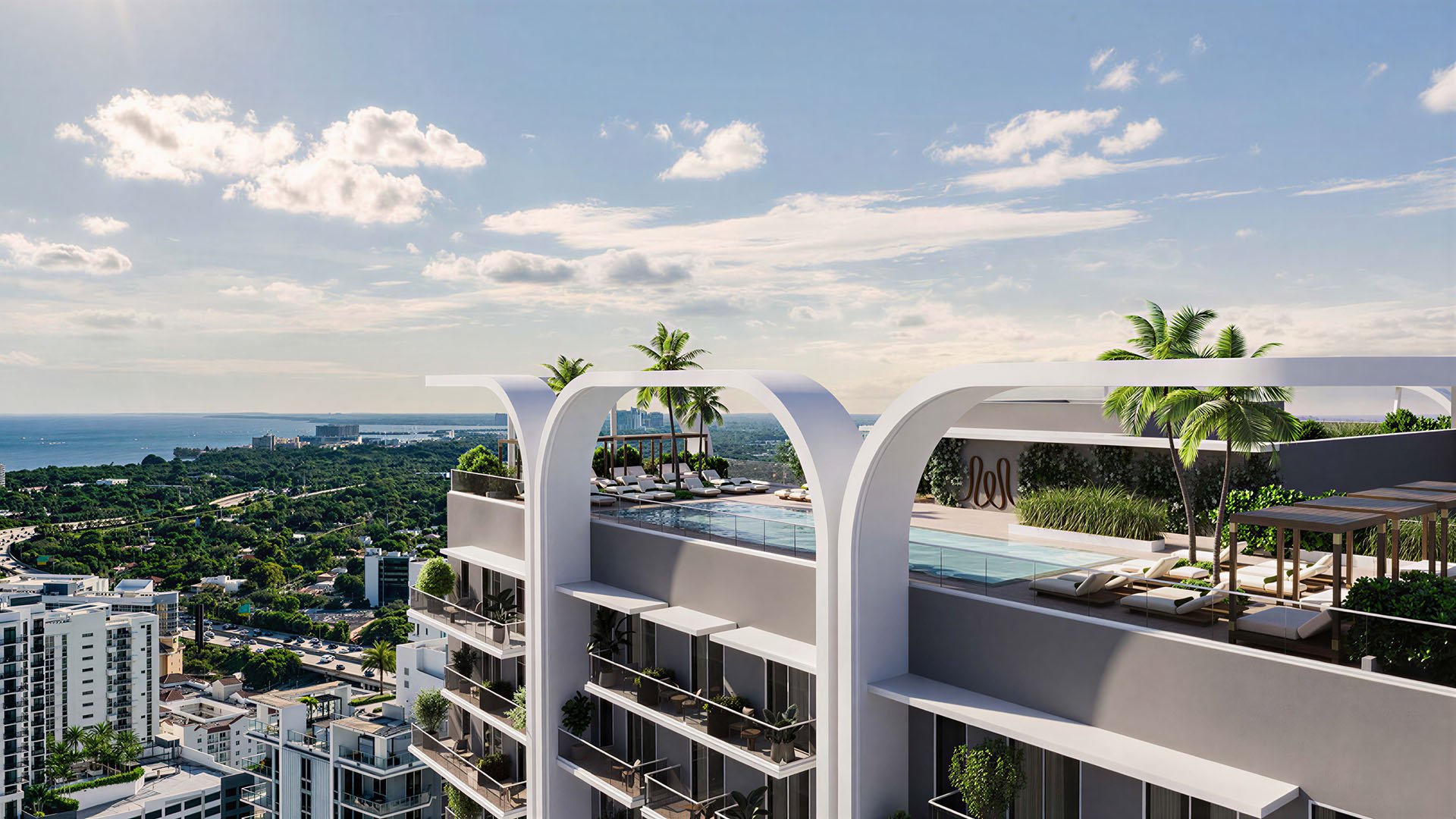
In South Florida luxury real estate, the rooftop deck is one of the easiest amenities to admire and one of the hardest to live with consistently. A rendering can make almost any roof feel cinematic: sunset, pale stone, upholstered seating, a tray of drinks, a clean horizon line. The better question is whether you will actually go upstairs on an ordinary Tuesday in August.
That is the buyer’s test. A rooftop deck should not be judged as square footage in the sky, but as a lifestyle hypothesis that must survive heat, glare, wind, humidity, access friction, maintenance, and the realities of your household. If those conditions are not solved, the deck becomes brochure filler: attractive during a showing, rarely used after closing.
For buyers comparing a The Residences at 1428 Brickell residence with a waterfront or beach-market alternative, the rooftop question should sit alongside views, privacy, building services, and floor-plan logic. The most valuable outdoor space is not always the largest. It is the one you use without negotiation.
Extreme heat is a serious local climate risk in South Florida, which means any exposed roof should be evaluated as a seasonal-use space unless its design proves otherwise. Shade, hydration access, airflow, and cooling are not luxuries on a South Florida roof. They are the baseline for recurring daytime use.
Do not rely on a morning tour or winter showing. Visit in the hot season, preferably mid-afternoon, and sit for 10 to 15 minutes. Notice whether your shoulders tense, whether the seating surface radiates heat, whether the floor is comfortable underfoot, and whether glare makes conversation or reading unpleasant. A deck that feels elegant at 9 a.m. may become punishing by 3 p.m.
Permanent shade matters more than movable umbrellas. High UV conditions increase sun-exposure risk, and frequent daytime use requires a structure that works at different times of day. West-facing exposure with no canopy is a particular warning sign. So is any space where the only shade strategy is loose furniture that must be repositioned, stored, or removed before storms.
Coastal South Florida rooftops are shaped by wind as much as by sun. Higher or more exposed decks need protection if they are expected to support dining, lounging, or work-from-outdoors. Without mitigation, a beautiful table setting becomes theatrical but impractical: cushions migrate, napkins fly, glassware feels vulnerable, and conversation competes with gusts.
Look for parapets, screens, planted buffers, protected seating pockets, and anchored furniture. The goal is not to eliminate air movement. In humid climates, airflow can improve comfort. The goal is to avoid a roof that feels either stagnant and hot or so exposed that no one wants to linger.
This is especially important when comparing high-rise lifestyles across Brickell, Miami Beach, and Sunny Isles. A buyer studying Five Park Miami Beach, Bentley Residences Sunny Isles, or similar vertical offerings should ask how outdoor spaces are protected from both daily breezes and storm-season preparation demands.
The decks that become part of life have a job. They are set up for breakfast, sunset drinks, grilling, lounging, yoga, laptop work, small dinners, or watching the skyline change at dusk. The weaker ones are described as “flex space,” which often means the buyer is expected to imagine a lifestyle the architecture has not actually supported.
Ask yourself what you would do there three times a week. If the answer is dining, where is the serving path from the kitchen? If it is lounging, is there permanent shade and storage for cushions? If it is entertaining, where do guests circulate, where is the bathroom, and what are the rules for music, food, and guest count? If it is wellness, does the surface stay cool enough for bare feet, and is there privacy from neighboring buildings?
A terrace can be spectacular and still fail this test if it requires too much setup. The same is true of a balcony or a penthouse roof. Luxury is not effort disguised as possibility. Luxury is when the space is ready before you have to think about it.
Thermal comfort depends on more than shade. Surface temperature, humidity, glare, air movement, and material selection all influence whether people actually occupy outdoor spaces. Light-colored, sealed, low-maintenance surfaces are generally more practical in hot, humid climates than dark materials that retain heat, stain easily, or demand frequent refinishing.
Walk the deck slowly. Check whether the flooring feels slippery, scorching, uneven, or fragile. Look for hose bibs, drains, storage, lighting, outlets, and a furniture plan. Weather-resistant furniture already scaled to the deck encourages spontaneous use. An empty roof that requires chairs to be hauled upstairs discourages even motivated owners.
Lighting is another quiet indicator. A roof meant for real life should feel usable after sunset, when temperatures may be more forgiving. Layered lighting, not harsh floodlighting, supports dinners, reading, and low-key entertaining. Pest management also belongs in the conversation, especially during humid and wet-season conditions. If there is no screening, fan strategy, treatment plan, or maintenance protocol, comfort may decline precisely when the space should be most appealing.
The best rooftop decks feel connected to the home’s daily rhythm. The worst require a small expedition. A long walk from the kitchen, an indirect elevator route, a stair that discourages older guests, or no nearby bathroom can turn a glamorous roof into a special-occasion space.
Test the route with a practical scenario. Imagine carrying coffee, a laptop, a bottle of wine, or dinner for four. Imagine returning for ice, napkins, sunscreen, or a forgotten phone. If each trip feels inconvenient during a tour, it will feel more inconvenient after move-in.
This is where plan logic often matters as much as finish level. In Coconut Grove comparisons, for example, a buyer may look at Vita at Grove Isle and other residences through the lens of how indoor and outdoor rituals connect. The question is not only what the amenity promises, but how naturally it fits the day.
If the deck is shared, the amenity depends on management. Review the association or building plan for cleaning, landscaping, furniture replacement, storm preparation, waterproofing history, and rules enforcement. A shared roof can be exceptional when maintained with discipline. It can also decline quickly if cushions fade, planters fail, guests overuse the space, or furniture is not replaced on schedule.
For an investment buyer, privacy and differentiation matter. A private or clearly distinctive rooftop can help a residence stand out, particularly if it supports a memorable view or a specific lifestyle. Generic shared space is less likely to justify a major premium by itself unless it is beautifully maintained and meaningfully integrated into the building’s daily culture.
New-construction buyers should still ask operational questions. Who secures loose items before storms? How are roof membranes protected? When was waterproofing last reviewed? What happens after a major weather event? The answers are not decorative, but they are central to long-term ownership.
A practical rooftop evaluation comes down to four non-negotiables: shade, wind protection, durable surfaces, and a specific activity plan. If any one is missing, the deck may still be beautiful, but its everyday utility drops.
Then add the personal test: view quality. A compelling water, skyline, or sunset view gives owners a recurring reason to go upstairs. A hot deck with obstructed views must work harder through function, comfort, and service. In a market where outdoor amenities influence perception and listing appeal, usability is what protects value.
What is the best time to tour a rooftop deck? Mid-afternoon in the hot season is the most revealing because it exposes heat, glare, wind, and shade performance.
Is permanent shade really necessary in South Florida? For frequent daytime use, yes. Movable umbrellas rarely provide the same reliability as integrated shade.
How long should I sit on the deck during a showing? Sit for 10 to 15 minutes. Comfort problems often appear only after the first impression fades.
What wind features should I look for? Look for parapets, screens, anchored furniture, protected seating zones, and layouts that soften gusts without blocking airflow.
Are private rooftop decks more valuable than shared ones? They can be more marketable when they are usable, private, and differentiated, but condition and design still matter.
What are the biggest red flags? No permanent shade, no lighting plan, loose furniture only, poor access, weak drainage, and restrictive use rules.
Should I review HOA rules before valuing a shared deck? Yes. Rules on guests, food, music, hours, maintenance, and storm procedures can materially affect enjoyment.
Do materials affect rooftop comfort? Yes. Light-colored, sealed, low-maintenance surfaces tend to perform better than dark or heat-retaining materials.
How important is access from the kitchen? Very important. If serving food or drinks requires repeated long trips, the deck will be used less often.
Can a rooftop deck justify a premium? It can when comfort, views, maintenance, and a clear use case support real daily or seasonal use.
If you'd like a private walkthrough and a curated shortlist, connect with MILLION.
If branded residences are on your mind — as a home or as an allocation — we would be glad to share what we are seeing, privately.
Begin a quiet conversation