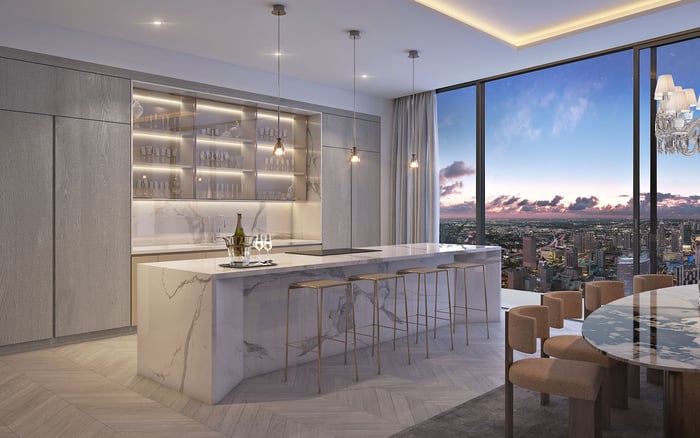
A guest-friendly South Florida condo is defined less by headline square footage than by privacy, rules, parking, amenity access, financial health, and day-to-day livability. For buyers planning to host adult children or extended visitors, the real test is whether the residence functions gracefully within the association’s framework.

In South Florida, many luxury condos photograph beautifully and live very differently. A residence that truly works for adult children and long-stay guests is not simply a large unit with an extra sleeping corner. It requires real separation of space, a layout that lets adults keep independent schedules, and enough privacy that a two-week visit does not feel like sharing a hotel room.
The first test is practical. Prioritize at least two true bedrooms, distinct living zones, and a plan where a guest can wake early, work late, or take calls without overrunning the household. A den may add flexibility, but it is not a substitute for a properly enclosed suite if the goal is dignified, repeatable hosting.
In 2200 Brickell, buyers drawn to more layered family living should look past the renderings and ask how bedroom placement, circulation, and elevator arrival shape day-to-day privacy. In Arbor Coconut Grove, the appeal of a quieter, more residential setting also invites a closer reading of how space is divided for multigenerational use.
Even in a beautifully planned condo, the governing documents can determine whether the residence actually suits extended family use. Florida associations may regulate occupancy, guest access, leasing, parking, and amenity privileges more tightly than many buyers expect. That means the declaration, bylaws, and rules deserve the same scrutiny as the kitchen finishes.
Ask for the full condominium documents before closing and read them with one question in mind: what, precisely, can an owner allow an adult child or long-stay guest to do here? Some buildings limit guest duration. Others distinguish between invited guests, approved occupants, and tenants. Still others are less concerned with family use than with anything that begins to resemble short-term or repeated rental activity.
This distinction matters in markets where lifestyle buildings and investment-minded buyers often overlap, including Brickell, Miami Beach, and Sunny Isles. If the residence may occasionally be used by non-family visitors, or if an adult child might stay independently for long periods, clarify whether the association treats that as ordinary owner use or as something requiring registration, approval, or lease documentation.
Luxury buyers tend to notice views first, but guest comfort often turns on sound. Noise transmission between bedrooms, proximity to service corridors, and the building’s approach to complaints all shape whether a condo feels gracious or merely impressive.
For adult children in particular, acoustic privacy is central. A split-bedroom layout can be excellent on paper and disappointing in practice if one suite backs onto elevators, the trash room, or a busy neighboring wall. Visit at different times of day. Listen from the secondary bedroom, not just the primary suite. Test balcony doors, hallway noise, and how much of the living room carries into the guest wing.
In oceanfront settings such as 57 Ocean Miami Beach or The Perigon Miami Beach, buyers often focus on exposure and views. For long-stay hospitality, however, the more refined question is whether each bedroom can function as a retreat with its own sense of calm.
A building may have a polished wellness program, an elegant pool deck, and beautifully staffed common areas, yet still offer limited access for guests. For owners who expect adult children or extended visitors to enjoy the property, confirm guest privileges in writing.
Do not stop at asking whether the building has a gym, spa, pool, or lounge. Ask whether guests may enter unaccompanied, whether overnight visitors must be registered, whether restricted hours apply, and whether reservation systems or fees are involved. Some amenities are effectively owner-only at peak times. Others are accessible only to registered occupants.
This question becomes especially relevant in service-rich projects such as St. Regis® Residences Brickell, where hospitality is part of the appeal, and in wellness-oriented communities like The Well Bay Harbor Islands, where the lifestyle proposition may be compelling but should still be tested against the actual guest rules.
Parking is one of the clearest ways to tell whether a condo is genuinely guest-ready. Confirm how many deeded spaces come with the residence, what guest parking exists, and whether overnight or extended guest parking is restricted. A condo can seem perfectly suited to family use until an adult child arrives with a car and discovers that valet is temporary, street parking is impractical, and guest spaces are tightly controlled.
Equally important is how guests arrive and move through the building. A residence feels more comfortable for longer stays when access is intuitive, elevators are well managed, and guests do not need repeated owner intervention to use the building properly. In boutique environments, that may be seamless. In larger towers, it may involve more rules than expected.
For buyers in Aventura, Bay Harbor, or Fort Lauderdale, these details are often the difference between a residence that supports family visits elegantly and one that becomes operationally tiresome.
Many buyers assume they can purchase a larger unit and then refine it for guest use by enclosing a den, adding kitchen features, or creating a more independent suite. In condominium living, those changes may require association approval, and some may not be permissible at all.
Any plan that makes part of the unit function like a separate dwelling deserves scrutiny before purchase. Separate entrances, added kitchen components, or modifications that change occupancy patterns can create association and legal complications. If your strategy depends on customizing the layout for an adult child, verify the board’s process and the building’s appetite for such alterations before you commit.
This is particularly important in resale buildings where past owner modifications may suggest flexibility that no longer exists, and in new-construction purchases where buyers may overestimate how much post-closing tailoring will be allowed.
A condo that is delightful for guests still has to make sense financially. Monthly HOA fees matter because the cost of keeping a unit comfortable for several adults is not limited to the purchase price. Associations with higher service levels may also carry more substantial monthly obligations.
Reserve strength is equally important. Underfunded associations are more vulnerable to special assessments, which can quickly change the economics of a residence intended for recurring family use. Request audited financials, reserve information, and recent meeting minutes. They reveal not only the building’s stability but often its culture: whether it is measured and well managed, or rigid and reactive around guest, leasing, and occupancy issues.
If the condo is leasehold rather than fee simple, give that structure extra attention. The remaining ground-lease term can affect financing, resale flexibility, and the long-term practicality of buying for stable family use.
If a lender views the condo as an investment or income-producing property, financing terms can shift. Be candid about any plan that extends beyond straightforward owner occupancy. The same applies to insurance. Policies may be written around expected occupancy patterns, and undisclosed rental or quasi-rental use can create problems later.
Tax treatment also matters if non-family guest use produces income. Even occasional monetized stays should be evaluated in advance so the ownership structure, reporting, and insurance position remain aligned.
The most successful residences for adult children and long-stay guests share one trait: they feel calm, legible, and easy to inhabit. Bedrooms are genuinely private. Climate control is flexible enough for South Florida heat. Guests can park, use the building, and keep their own rhythm without constant negotiation. And the association’s rules support, rather than frustrate, the intended lifestyle.
That standard applies whether you are considering a waterfront tower in Brickell, a quieter address in Coconut Grove, or a more intimate building in Bay Harbor. The polished version of guest-friendliness is not excess space. It is well-structured independence.
What is the first sign a condo works for adult children or long-stay guests? A true second bedroom suite and clear separation between living zones are usually more valuable than raw square footage.
Do condo rules really matter that much for family guests? Yes. Associations may regulate guest stays, occupancy, parking, leasing, and amenity access in ways that materially affect everyday use.
Should I treat a den as a guest room solution? Only with caution. A den may add flexibility, but it rarely delivers the privacy and acoustic separation adults typically need.
Why should I ask about amenities in writing? Because a pool, gym, or lounge is only useful if guests are actually permitted to access it under the building’s rules.
How important is parking for extended visitors? It is essential. Deeded spaces, guest parking limits, and overnight rules often determine whether longer stays feel convenient.
Can I remodel a unit to create a more independent guest suite? Possibly, but many associations require approval for alterations, and some changes may not be allowed.
Does noise control really affect resale and livability? Absolutely. Sound transfer, elevator proximity, and hallway activity can make a guest room feel either serene or compromised.
What financial documents should I review before buying? Ask for audited financials, reserve information, and recent meeting minutes to assess stability and rule-enforcement culture.
Could financing or insurance change if I host non-family guests? Yes. Any use that resembles rental or income activity can affect both underwriting and insurance coverage.
What is the simplest definition of a guest-friendly luxury condo? It is a residence where privacy, rules, amenities, parking, and finances all support longer adult stays without friction.
When you're ready to tour or underwrite the options, connect with MILLION.
If branded residences are on your mind — as a home or as an allocation — we would be glad to share what we are seeing, privately.
Begin a quiet conversation