A collector-focused guide to choosing a South Florida residence with climate stability, service access, transport planning, and long-term art stewardship in mind.
For serious collectors, South Florida is often evaluated through the lens of access: access to fair weeks, galleries, advisors, private dinners, airport connections, and the social choreography surrounding a major acquisition. Yet for a collection that depends on climate stability, the more important question is quieter and more technical: can the residence support the work after fair week ends?
During Art Basel season, a buyer may be drawn to the most convenient address or the most glamorous view. That instinct is understandable, but it should not drive the decision. Art does not respond to prestige. It responds to temperature, humidity, light, vibration, handling, and the consistency of the environment around it. A South Florida base should be judged as a private operating system for stewardship, not merely as a place to receive guests.
The right residence can still be beautiful, social, and close to the circuit that matters. The distinction is that the collector’s due diligence begins behind the walls. Mechanical systems, backup procedures, elevator logistics, service access, storage options, and professional support deserve the same scrutiny as architecture and water views.
Collectors often think in terms of rooms: the salon wall, the library niche, the primary corridor, the sculpture terrace. A stronger starting point is the envelope. Before deciding where a piece might live, the owner should understand how air moves through the residence, how light enters it, how long conditions remain steady as occupancy changes, and how building staff handle deliveries, maintenance, and emergencies.
This is especially important for owners who travel often. A second home may sit quiet for long stretches, then suddenly host dinners, advisors, installers, and guests. That rhythm can place stress on a collection if the residence has not been planned accordingly. Doors open, crews arrive, climate settings shift, and art that felt secure in a showroom becomes part of a living environment.
In Brickell, for example, a collector considering Baccarat Residences Brickell should look beyond skyline convenience and ask how the residence would function on installation day, during an extended absence, and after a fair-week acquisition arrives. The same principle applies across South Florida: the building is only one layer. The private residence, staff protocol, storage plan, and conservation team complete the system.
There is no single correct South Florida base for every collector. The right answer depends on how the owner uses the region. Some want immediate access to Miami’s social and cultural calendar. Others prefer a more private pattern, with fewer interruptions and a slower daily cadence. Some collections are primarily paintings and works on paper. Others involve sculpture, design, photography, or mixed media, each with its own handling and environmental priorities.
A Miami Beach address may appeal to buyers who want proximity to the energy of the collector calendar while preserving a residential retreat. When evaluating The Perigon Miami Beach, the art-focused buyer should think carefully about light exposure, privacy during deliveries, and whether the chosen residence can support both display and discretion. The question is not whether the setting is desirable. It is whether the setting can remain controlled.
Coconut Grove can offer a different residential sensibility, one that may suit collectors who value a quieter daily rhythm. At Four Seasons Residences Coconut Grove, a buyer should approach the decision through the lens of long-term living: where work would be displayed, where overflow would be stored, how installers would move through the residence, and how service visits would occur without disrupting the household.
For some collectors, Palm Beach creates the desired balance of privacy, tradition, and measured pace. A residence such as The Ritz-Carlton Residences® West Palm Beach should be assessed not only for lifestyle fit, but also for how comfortably it can support a collector’s preferred degree of formality, staff involvement, and seasonal use.
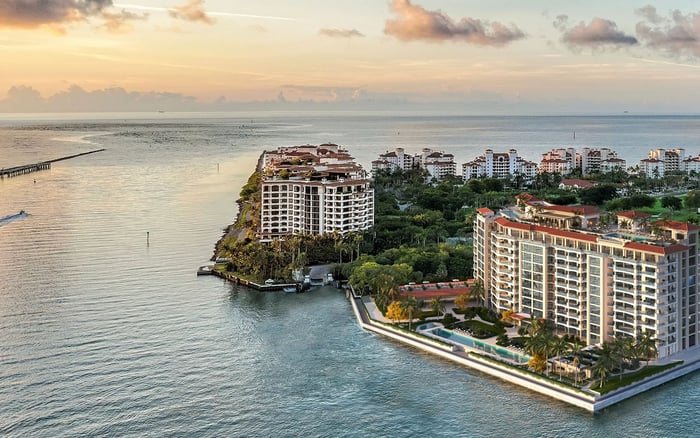
Others may prioritize seclusion and controlled access above all else. In that context, The Residences at Six Fisher Island may enter the conversation as part of a broader privacy strategy. The art question remains constant: can advisors, installers, conservators, insurers, and trusted staff operate with precision while preserving the owner’s discretion?
Before committing to a residence, collectors should assemble a practical checklist with their advisor, designer, conservator, and insurance team. The checklist does not need to be theatrical. It should be direct, technical, and specific to the works that will live in the home.
Ask how climate is managed within the private residence and whether conditions can be monitored when the owner is away. Ask how art deliveries are scheduled, where crates can be received, how elevator access works, and whether service routes allow discreet movement. Ask whether there is an appropriate place for temporary holding before installation, and whether the residence can accommodate professional lighting, specialized hanging systems, or sculpture placement without compromising the interior.
Collectors should also consider human behavior. A home filled with guests, children, pets, catering teams, florists, and event staff is a different environment from a controlled gallery. If the residence will host during fair week, the owner should decide in advance which rooms remain public, which remain private, and which works should be relocated or protected before entertaining begins.
A useful exercise is to imagine the residence during a major collector fair from morning to midnight. An advisor calls about a work that needs quick review. A dinner is scheduled. A shipping conversation begins. Guests arrive. The owner leaves town the next day. In that compressed window, the weaknesses of a residence become visible.
The best base is one where these movements feel orderly rather than improvised. There is a place to receive information, a plan for documents and condition materials, a trusted team for access, and a clear distinction between living beautifully and managing valuable objects responsibly. The ideal home does not turn the owner into a registrar. It quietly supports the owner’s standards.
This is where luxury becomes operational. Finish quality matters, but so does repeatability. Views matter, but so does light management. Amenities matter, but so does the ability to bring the right specialist into the home without friction. For collectors, elegance is not only what is seen. It is what works reliably in the background.
A South Florida base should be selected for the collection the owner expects to have, not only the collection that exists today. Fair weeks tend to sharpen ambition. A buyer who begins with a few important works may soon need a more deliberate plan for rotation, storage, conservation, and insurance documentation.
That evolution should be anticipated early. The right residence allows the owner to grow without constantly renegotiating the home’s limitations. It offers enough flexibility for changing display priorities and enough privacy for professional support. Most importantly, it allows the collector to enjoy the region without treating every acquisition as a logistical exception.
The strongest decision is rarely the loudest one. It is the address that lets art, architecture, family life, and professional care coexist with the fewest compromises.
Should collectors choose a residence closest to the fair venue? Not necessarily. Proximity is useful, but climate stability, access protocol, and long-term stewardship may matter more.
What is the first art-related question to ask about a residence? Ask how consistently the private residence can maintain appropriate interior conditions when occupied and unoccupied.
Do views create issues for art placement? They can influence placement decisions because light exposure and heat gain should be considered before hanging sensitive works.
Should a conservator review the home before purchase? For significant collections, a conservator’s input can help identify display, storage, and environmental priorities early.
Is building staff experience important? Yes. Delivery coordination, service access, and discretion can be essential when valuable works enter or leave the residence.
Can a second home safely hold important works? It can, if monitoring, access control, maintenance routines, and emergency procedures are planned in advance.
Should collectors keep storage outside the residence? Some do. The decision depends on the collection, frequency of rotation, insurance expectations, and available home conditions.
How should entertaining affect art planning? Owners should define guest areas, protect vulnerable works, and avoid last-minute changes during major social weeks.
Is a new residence automatically better for climate stability? Not automatically. Buyers should evaluate the specific systems, protocols, and residence layout rather than relying on age alone.
What makes a South Florida base collector-ready? It combines stable conditions, discreet logistics, professional support, and a lifestyle pattern that respects the collection.
When you're ready to tour or underwrite the options, connect with MILLION.
If branded residences are on your mind — as a home or as an allocation — we would be glad to share what we are seeing, privately.
Begin a quiet conversation