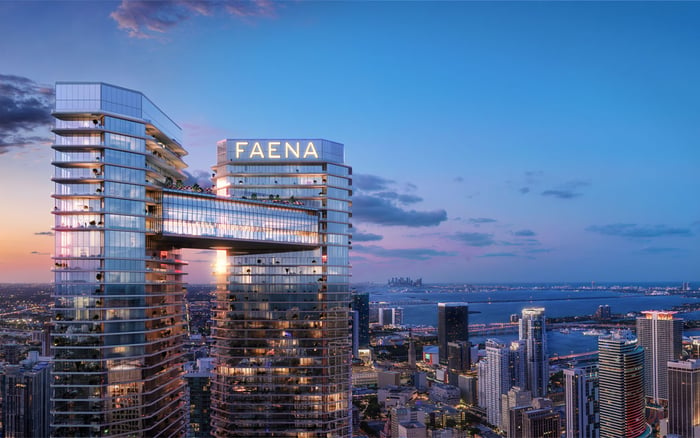
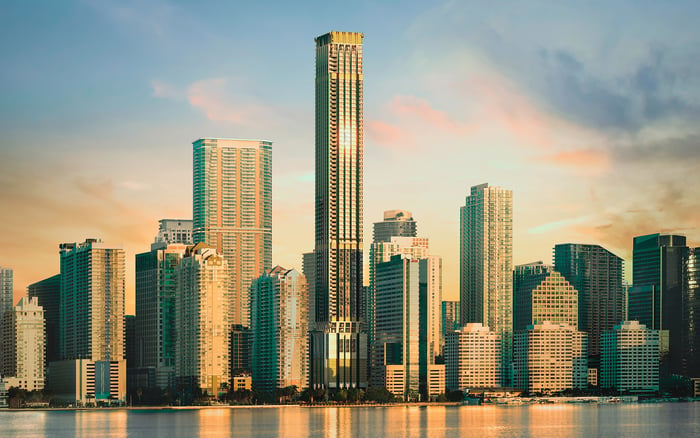
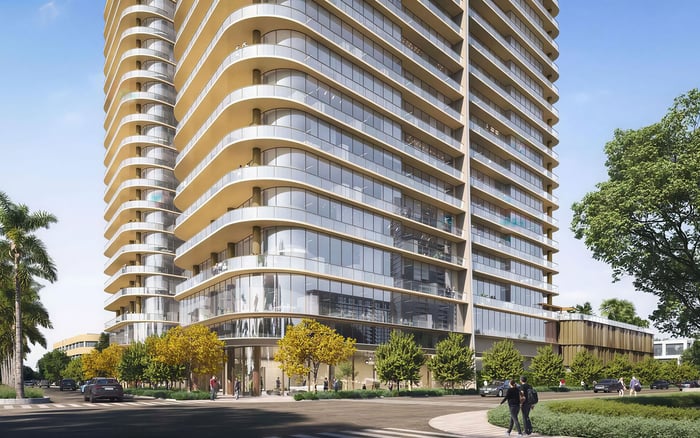
A practical full-time owner guide to evaluating The Cove Residences Edgewater and Baccarat Residences Brickell through daily livability, amenity demand, elevator performance, and governance control.

For full-time residents comparing The Cove Residences Edgewater and Baccarat Residences Brickell, the central question is not whether a tower looks luxurious. It is whether it performs at 8:15 on a Monday morning, after dinner on a Saturday, during a delivery window, and on the first stormy day when every resident decides to stay home.
That is the difference between buying a beautiful address and buying a livable home. In South Florida’s premium condominium market, amenities, elevators, and governance are not secondary details. They shape privacy, predictability, and the quiet sense of control affluent owners expect when a residence becomes a primary home rather than an occasional retreat.
Baccarat Residences Brickell sits within the Brickell and Downtown conversation, where vertical living, services, dining, offices, and waterfront access converge. The Cove Residences Edgewater belongs to a different Miami rhythm, associated with a residential waterfront corridor, cultural proximity, and quick access to the urban core. The neighborhoods differ, but the ownership questions are remarkably similar.
In new-construction and pre-construction purchases, buyers often receive abundant imagery before they understand the operating reality. A disciplined owner should therefore study three practical issues before committing: amenity density, elevator wait times, and owner control.
Amenity density is the relationship between shared spaces and the number of people likely to use them at the same time. A tower can advertise an impressive menu of offerings, but the daily experience depends on how those spaces absorb demand. A pool deck, fitness center, spa area, lounge, private dining room, children’s room, pet area, and valet approach all have peak-use moments.
For a full-time owner, the question is not simply, “What amenities are included?” The sharper question is, “When will I use them, and who else will be using them at the same time?” Morning fitness, sunset pools, weekend cabanas, holiday guests, and private event spaces all create pressure points.
At Baccarat Residences Brickell, the practical review should remain focused on crowding, vertical movement, and building operations rather than brand language alone. The same principle applies at The Cove Residences Edgewater. The daily value of an amenity is measured by availability, maintenance, staff responsiveness, and whether the experience feels composed when the building is active.
Buyers should ask how reservations are handled, whether private rooms can be monopolized by repeat users, how guest access is controlled, and whether any amenity is shared with nonresidential components. Even without hard numbers, these questions reveal whether the building has been planned for full-time living or primarily for presentation.
In high-rise condominium living, elevators are the invisible amenity. They determine how easily an owner leaves for a meeting, returns with guests, sends a pet downstairs, receives groceries, or coordinates a furniture delivery. When elevator performance is poor, even a magnificent residence can feel inconvenient.
The issue is especially important in dense urban settings such as Brickell and Downtown, where residents may rely on vertical transportation multiple times per day. A full-time owner should look beyond the presence of high-speed elevators and ask how many passenger and service elevators are assigned, how destination dispatch works, how staff and vendors circulate, and what happens during maintenance or move-ins.
The most revealing questions concern conflict. Are service elevators separated from resident elevators? Are deliveries scheduled tightly or loosely? How are housekeeping teams, pet walkers, caterers, and contractors managed? Are there rules for peak-hour move-ins? Can large deliveries block circulation at the loading area or lobby?
At The Cove Residences Edgewater, the same diligence matters because waterfront serenity does not eliminate vertical demand. A building can feel calm from the terrace and still become congested at the elevator bank if operating rules are weak. For full-time owners, consistency is a luxury feature.
Owner control begins long before the first association meeting. It is embedded in the condominium documents, budgeting philosophy, reserve planning, rental policies, guest rules, vendor management, and the transition from developer control to owner governance.
For a primary resident, governance determines whether the building protects quiet enjoyment or gradually drifts toward hotel-like turnover. It affects how disputes are resolved, how assessments are handled, how staff standards are maintained, and whether amenities remain elegant after the opening years.
Baccarat Residences Brickell should be evaluated through this practical lens. The attraction of a branded or design-forward project should not distract from basic ownership mechanics. Who controls key operating decisions? How transparent is the budget? What discretion does management have over rules, staffing, fees, and access? How are short-term use patterns discouraged or permitted?
In Edgewater, owner control can be equally consequential because many buyers seek a more residential tone while remaining close to Miami’s core. The governing documents should align with that expectation. If an owner intends to live in the residence year-round, lenient guest policies, frequent transient use, or unclear amenity rules may be more damaging than a modest design compromise.
Brickell offers energy, office proximity, dining, and a metropolitan pace. Edgewater offers a waterfront residential setting with fast access to central Miami. Both can appeal to full-time owners, but neither neighborhood can compensate for a building that feels overburdened.
A buyer deciding between The Cove Residences Edgewater and Baccarat Residences Brickell should separate location preference from building performance. Love the skyline, the bay, the brand, or the neighborhood, but inspect the operating model with the sobriety of someone who will live there on ordinary Tuesdays.
The most durable luxury residences tend to share a few traits: clear access rules, sufficient staff, well-managed deliveries, thoughtful elevator separation, disciplined amenity reservations, and a board culture that values privacy. These traits are not always visible in renderings, yet they become the backbone of daily satisfaction.
A serious full-time buyer should request specific answers to a concise operating checklist. How many residences will share the primary amenity areas? Which amenities require reservations? Are outside guests limited? Are private events capped? What is the elevator strategy during morning and evening peaks? How are service providers routed? What are the rules for pets, packages, rideshare arrivals, and food delivery?
Governance questions should be equally direct. When does owner control begin? What expenses are projected in the association budget? How are reserves approached? Are there restrictions on leasing? What approval rights exist for renovations? How are complaints handled? Who has authority to change amenity rules?
The best answers are not necessarily the most glamorous. They are precise, consistent, and operationally mature. For a full-time owner, that level of clarity is often more valuable than another lounge, another treatment room, or another cinematic rendering.
The Cove Residences Edgewater and Baccarat Residences Brickell speak to buyers who want Miami living with a high level of finish, access, and identity. Yet the true measure of either ownership experience will be daily friction, or the absence of it.
Amenity density determines whether shared spaces feel private or crowded. Elevator planning determines whether a tower feels effortless or delayed. Owner control determines whether the building matures gracefully or becomes reactive. In a luxury market where visual presentation is increasingly sophisticated, these practical questions are where sophisticated buyers can still find an edge.
For the owner who plans to live in the residence, the winning choice is not simply the more dramatic address. It is the building whose rules, circulation, and governance protect the rhythm of daily life.
Why should full-time owners focus on amenity density? Because the number of amenities matters less than how available and comfortable they feel during peak use.
Is Baccarat Residences Brickell relevant for primary residents? Yes. It is framed as a Brickell and Downtown condominium project where daily livability deserves close attention.
Can The Cove Residences Edgewater be compared directly with Baccarat? Buyers should compare them through livability questions, while reviewing project-specific claims carefully before deciding.
What is the most important elevator question to ask? Ask how passenger, service, vendor, move-in, and delivery traffic are separated during peak periods.
Do more amenities always mean better value? No. A smaller but well-managed amenity program may feel more luxurious than a larger crowded one.
Why does owner control matter in a luxury condo? It shapes rules, budgets, staffing, maintenance standards, access policies, and long-term residential culture.
What should buyers ask about guest access? They should ask how guests, events, private rooms, pools, and shared spaces are monitored and limited.
Are rental policies important for full-time residents? Yes. Rental rules can influence privacy, lobby traffic, amenity crowding, and the overall tone of the building.
Should neighborhood preference come before building operations? Location matters, but weak operations can diminish even the most desirable Miami address.
What is the simplest test for livability? Imagine using the building every day for work, guests, deliveries, pets, storms, and weekends.
When you're ready to tour or underwrite the options, connect with MILLION.
If branded residences are on your mind — as a home or as an allocation — we would be glad to share what we are seeing, privately.
Begin a quiet conversation