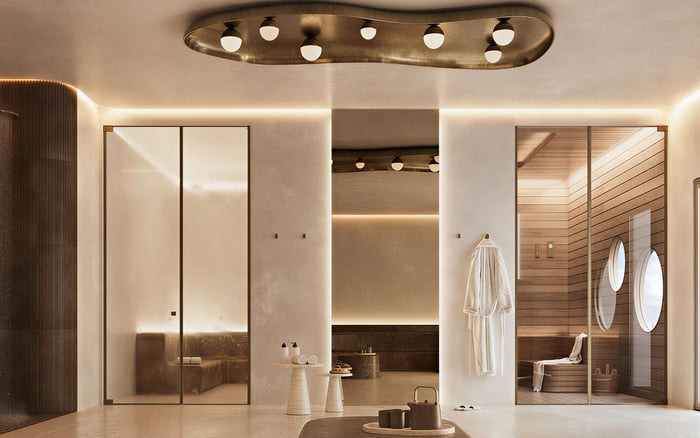
A discreet buyer guide to evaluating spa-floor crowding risk at Faena Residences Miami Downtown before contract, with emphasis on wellness capacity, access rights, booking rules, guest policies, and the difference between advertised amenity language and usable resident experience.

For buyers considering Faena Residences Miami Downtown Miami, the wellness offering should not be treated as a decorative amenity. It can become part of the daily value proposition, especially for owners who expect a private, highly managed rhythm at home. The question is not whether the spa sounds impressive in a presentation. The more precise question is whether the wellness floor is planned and operated in a way that can serve residents comfortably once the building is active.
That distinction matters in Downtown Miami, where high-design towers compete on lifestyle as much as skyline position. A spa floor that feels serene in marketing materials can feel different when residents, guests, staff, treatments, peak-hour workouts, and private programming converge. That does not mean crowding will occur. It means crowding risk should be evaluated before contract, while a buyer can still request documents, clarifications, and written explanations.
Any practical spa-capacity review begins with the number of residences that may rely on the amenity. Buyers should verify the current residence count in the offering materials, contract exhibits, and governing documents rather than relying on a verbal presentation.
The next question is how the wellness area is defined. If a presentation uses a large amenity figure, ask whether that number refers only to resident-accessible spa areas or whether it also includes fitness space, corridors, reception, locker rooms, staff areas, service routes, offices, storage, mechanical areas, or other operational zones. A large wellness headline can be meaningful, but it is not the same as usable capacity.
The distinction is consequential. A spa can feel constrained if the most desired zones have limited seats, limited rooms, limited appointment supply, or restricted hours. Buyers should focus on the parts of the wellness floor they expect to use most often, not only on the overall amenity narrative.
Before signing, request plans that do more than convey atmosphere. The useful version labels each room and discloses the operating counts behind the experience. Ask for locker counts, lounge seating, treatment-room counts, reception capacity, circulation routes, staff areas, and any spaces reserved for operations rather than direct resident use.
Thermal and relaxation areas deserve particular attention because they are often space-sensitive. A buyer should ask how many residents can use each area at one time, whether access is scheduled or first-come, how long sessions may last, and how reservations are prioritized during peak periods.
Private treatment rooms also need a hard count. Room count alone is not enough. Buyers should ask about expected staffing, hours of operation, cancellation policies, and whether treatment availability depends on third-party providers or building management.
The most elegant wellness floor can disappoint if the rules are loose, changeable, or heavily tilted toward non-owner access. Buyers should request written policies for booking windows, cancellation rules, guest access, peak-hour limits, resident priority, private events, and paid upgrades that could affect everyday use.
Guest access is a central question. Are amenities exclusive to residents, or can they also serve guests, invitees, members, or other non-owner categories? If outside categories are permitted, buyers should ask whether they are capped, what times they may use the spa, and whether resident reservations take priority.
Event programming is another subtle issue. Wellness spaces can be used for private classes, treatments, brand programming, and social experiences. Those uses can add richness to a building, but they can also restrict ordinary access if policies are not clearly defined. In a new-construction or pre-construction purchase, the safest approach is to understand the future operating framework before accepting the amenity narrative at face value.
Pool programming should also be reviewed if spa routines connect to aquatic or relaxation areas. Even when a pool is not physically part of the treatment suite, scheduling, guest policies, and peak-hour demand can influence the broader wellness experience.
Contract review should focus on whether spa access is part of ownership or left to rules that an association, operator, or management team can later revise. Buyers should look for language addressing resident rights, guest limitations, operational discretion, fee authority, service availability, and the ability to close or repurpose portions of the wellness floor.
The goal is not to freeze a building in time. Luxury buildings need operational flexibility. The goal is to avoid discovering after closing that key elements are subject to broad discretion with little owner protection. If the spa, treatment rooms, lounges, or recovery spaces are central to the purchase decision, the contract and governing documents should be read with that reliance in mind.
This is where counsel can distinguish between marketing language and enforceable obligations. A wellness sanctuary may be a compelling phrase, but the enforceable question is what the buyer is actually entitled to use, under what rules, and subject to whose authority.
Buyers often compare Downtown Miami with Brickell, Miami Beach, and waterfront enclaves where wellness has become a defining residential amenity. Those comparisons are useful only when they move beyond renderings. A quieter spa experience may come from fewer users, stricter guest policies, more treatment rooms, longer operating hours, or better circulation, not simply from a larger headline area.
For Faena Residences Miami Downtown, the practical benchmark is not whether the offering is ambitious. It is whether the operating details support the lifestyle being sold. The strongest buyer position is calm, specific, and documentary: verify the numbers, map usable capacity, understand the rules, and read the contract for access rights.
Ask for the current residence count and wellness-area definition in writing. Confirm whether quoted amenity space includes only resident-accessible wellness areas or a broader mix of amenity, service, and operational space. Request room-by-room plans with counts for lockers, lounges, treatment rooms, thermal areas, reception, and staff-only zones.
Then request the rules. Booking windows, guest permissions, cancellation terms, resident priority, fees, private events, and peak-hour restrictions should all be visible before contract. Finally, review whether access is protected as an ownership benefit or can be materially altered later. Spa-floor crowding is not a conclusion to assume. It is a risk to underwrite with the same discipline a buyer would bring to views, maintenance obligations, reserves, and resale positioning.
Is Faena Residences Miami Downtown Miami known to have spa crowding? No conclusion should be drawn without usage, occupancy, and operating data. The point is to evaluate crowding risk before contract.
Why does the residence count matter? It helps a buyer understand how many owners may rely on the wellness floor. The current count should be verified in project documents.
Is a large wellness area automatically enough? Not necessarily. Total area is less useful than knowing how much space is resident-accessible and how it is allocated.
What should I ask for before signing? Ask for current plans, room labels, capacity counts, access rules, reservation policies, and any language governing future changes.
Why are treatment-room counts important? Treatment availability depends on both room count and staffing. A beautiful room is not useful if appointment supply is limited.
Can guest access affect resident experience? Yes. Guests or other permitted users can materially change demand if access is not capped or clearly prioritized for residents.
What contract language matters most? Focus on whether spa access is an ownership benefit or subject to rules that can be changed by management, an operator, or the association.
Should I rely on marketing renderings? Renderings can show design intent, but they do not establish capacity, staffing, hours, guest limits, or enforceable access rights.
How should I compare this spa floor with other Miami luxury buildings? Compare operating details such as reservation rules, guest policies, room counts, hours, and circulation, not only design imagery.
Should spa review happen before or after signing? Before signing is preferable because buyers can still request plans, policies, and clarifications.
For a discreet conversation and a curated building-by-building shortlist, connect with MILLION.
If branded residences are on your mind — as a home or as an allocation — we would be glad to share what we are seeing, privately.
Begin a quiet conversation