A discreet, buyer-oriented guide to evaluating high-rise arrivals in Miami, from porte-cochères and service corridors to valet choreography, garage access, and staff protocols that protect privacy without sacrificing ease.
In Miami, a “celebrity entrance” is rarely a secret door. It is an intentional arrival sequence: architecture, operating policies, and circulation paths that keep residents out of view without adding friction. The most private buildings do not market privacy. They make it simple to come and go with minimal exposure, fewer decision points, and limited opportunities for the public to intersect with resident movement.
For buyers who value anonymity, the goal is not a dramatic back-of-house entry. It is to identify developments where the everyday mechanics of arriving home are quietly protected: covered approaches, controlled sightlines, direct vertical circulation, and staff who can handle guests, vendors, and media curiosity calmly and consistently.
A discreet high-rise starts with architecture. When you tour, look past the finishes and track how people actually move.
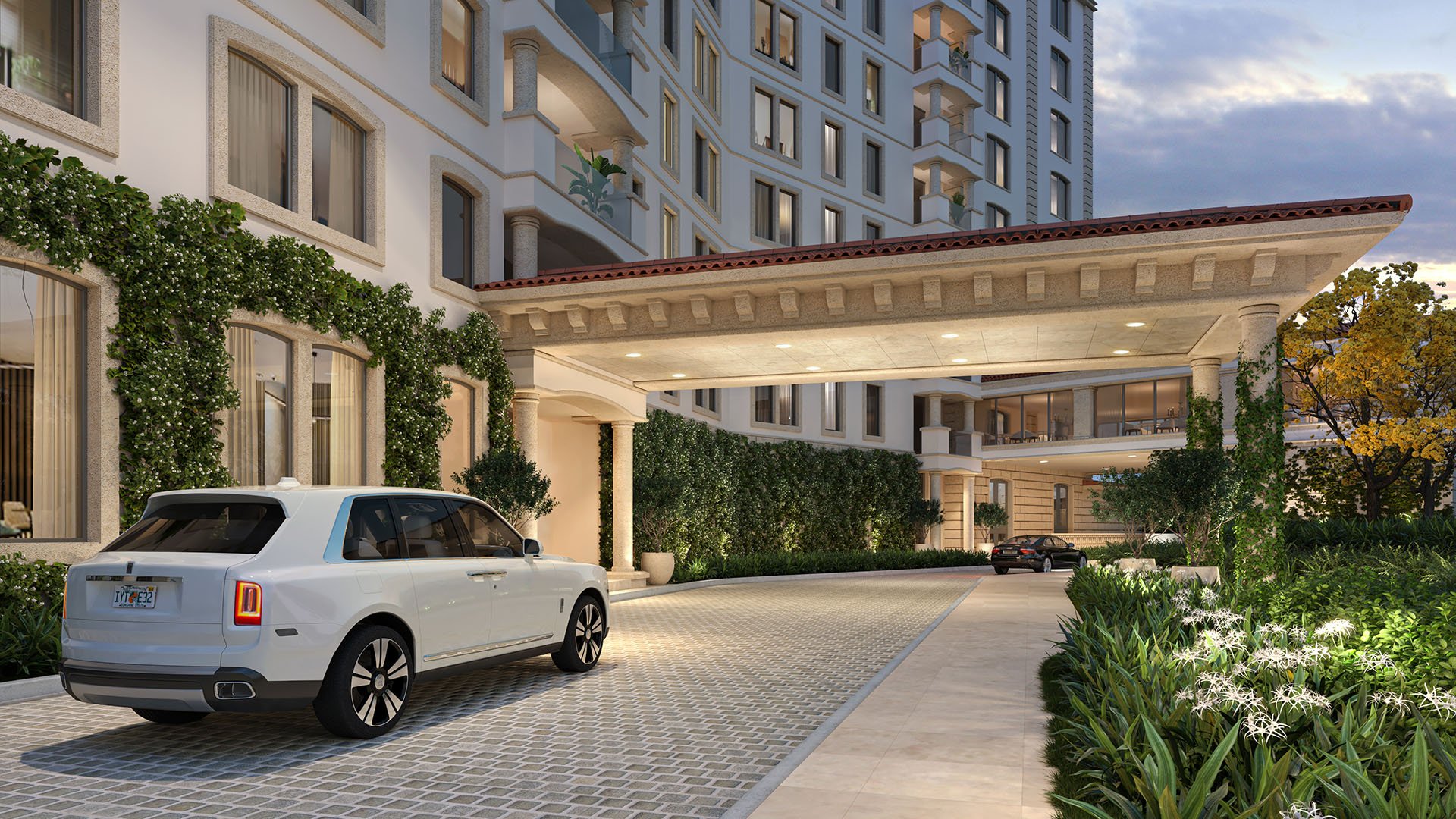
First, prioritize a deep, covered arrival zone. A porte-cochère that truly functions-with depth, stacking space for vehicles, and real weather protection-reduces curbside idling. Just as important, it keeps faces and license plates out of open street view.
Second, evaluate sightlines. Stand at the property line and map what the public can see. If lobby doors are visible from the street, or the valet stand sits in full view, privacy depends on staff improvisation. The strongest designs break sightlines with landscaping, walls, or a turn in the drive so entry never becomes a public moment.
Third, look for layered thresholds. A single set of glass doors can be visually striking, but discretion improves when the building uses sequence: arrival court to vestibule to lobby, or lobby to elevator bank with controlled access. That layering buys time and reduces the chance of being “caught” between spaces.
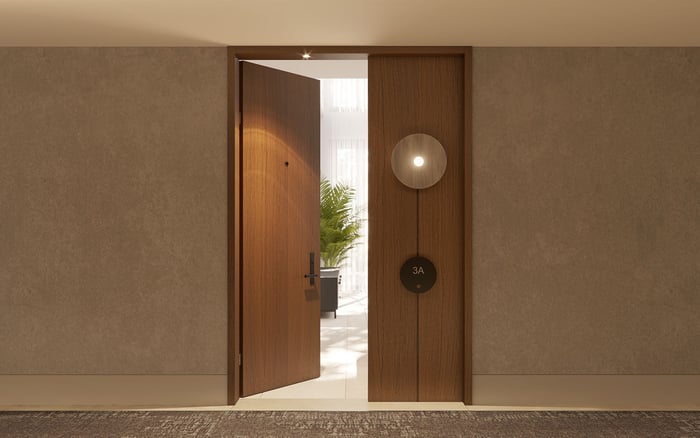
Fourth, ask about private vertical circulation. Many high-end towers highlight dedicated elevator banks, resident-only corridors, and secured access points. What matters is whether the routes you will use most-from car to elevator and elevator to residence-minimize shared spaces.
Fifth, pay attention to back-of-house separation. The most discreet buildings route deliveries, contractors, and service traffic separately. That reduces unfamiliar faces near resident circulation and lowers the odds of chance encounters.
Architecture sets the conditions. Operations determine the lived result. In Miami’s luxury market, two buildings can look equally “private” on paper and perform very differently on a Saturday night.
Start with valet choreography. Ask where cars queue, where keys are handled, and how long vehicles typically wait at peak times. Strong operations reduce dwell time at the front and prevent bottlenecks that spill into the street. Discretion breaks down when arrivals back up.
Next, confirm how guests are handled. The most privacy-forward properties know how to route visitors without turning the lobby into a checkpoint. Ideally, guest management is structured, consistent, and respectful-with a clear distinction between a resident returning home and a visitor checking in.
Then, review camera placement and access control without getting pulled into gadget talk. Focus on outcomes: do staff have clear visibility into entry points, and do systems prevent casual access to resident areas? The best buildings feel calm because control is embedded, not because they feel like a security set.
Finally, evaluate culture. A discreet building is one where staff treats privacy as part of service. Notice how conversations are conducted at the desk, how names are spoken, and whether the environment supports quiet professionalism.
If you do only one privacy inspection, do this: arrive exactly as you would as a resident.
Drive in, park where residents park, and walk to the elevator you would typically use. Count the doors, turns, and public intersections along the way. Note whether you cross loading areas or high-traffic amenities.
A private-feeling garage route is not necessarily a “secret” route. It is controlled, well lit, and designed to discourage lingering. When garage access is cleanly separated from public arrivals, residents can choose their visibility level-from a formal lobby entrance to a quieter path-depending on the day.
In Brickell, where traffic and drop-offs can feel performative, a building like 2200 Brickell naturally rewards this kind of evaluation: you are not only buying a residence; you are buying a daily approach pattern. The right pattern makes discretion feel effortless.
Some parts of Miami make discreet entrances easier to execute because of street conditions, setbacks, and the way the neighborhood moves.
In Brickell and Downtown, privacy is often a matter of precision. Towers sit in energetic corridors where the public realm is close. The best outcomes come from controlled arrival courts, structured valet flow, and a clear separation between hotel-like activity and residents.
If you are drawn to icon-level addresses, tour with an operational mindset. In a branded vertical environment like 888 Brickell by Dolce & Gabbana, ask how resident arrivals stay quiet even when the building’s social energy runs high. The design can be dramatic while the movements remain discreet.
On Miami Beach, discretion often reads as distance: deeper setbacks, heavier landscaping, and a calmer transition from street to lobby. Oceanfront sites can be exposed in one direction and protected in another, so it is worth evaluating which side is truly private-and which side is inherently public.
In North Beach and along quieter oceanfront stretches, developments such as 57 Ocean Miami Beach can be instructive for buyers who want a residential cadence rather than a constant scene. What matters is how arrivals and departures are buffered from the public beach rhythm.
In South of Fifth, privacy expectations are uncompromising. Buyers often want a building that operates like a private club: controlled access, fewer units, and a lobby that feels more like a discreet salon than a public thoroughfare.
A property like Apogee South Beach belongs in any privacy conversation-not for theatrics, but because the neighborhood and building profile tend to reward low-friction, low-visibility living.
Discretion is a sensitive topic. You can still get clear answers with practical, buyer-normal questions.
Ask, “Which entrance do residents use most often?” Then follow with, “Can we walk it the way an owner would at night?” If the tour only highlights a staged front door, request the everyday route.
Ask, “Where do deliveries go, and how do they reach residences?” You are not only protecting privacy; you are protecting peace.
Ask, “How are short-term guests handled?” Even if you do not plan to rent, policies around transient traffic strongly correlate with entrance discretion.
Ask, “What happens during peak arrivals?” A building can feel private at 2 p.m. and exposed at 8 p.m. when vehicles stack and the lobby becomes a pass-through.
Certain warning signs show up across price points.
A shallow drop-off that forces cars to stop on the street is the most common failure. Another is a lobby designed as a visual showcase-fully transparent to the sidewalk-with a concierge desk positioned for optics rather than control.
Be cautious when amenity layouts require residents to cross public-facing social spaces to reach elevators. It can feel glamorous, but it increases the odds of being recognized, approached, or photographed.
Also watch for mixed circulation where residents, vendors, and visitors converge at a single choke point. Even with excellent staff, the building will feel porous.
The most discreet entry is the one that matches your routine. If you entertain often, you may prefer a building where guest arrivals are polished but controlled. If you travel frequently, you will value a garage route that minimizes touchpoints and keeps departures quiet. If you maintain a public profile, you may prioritize layered thresholds and staff culture over architectural spectacle.
Miami offers every version of luxury. At the top end, the difference is not only materials and views. It is the calm certainty that you can arrive, disappear into your own world, and re-emerge on your terms.
What is a “discreet celebrity entrance” in a Miami high-rise? It is typically a private-feeling arrival sequence-not a hidden door-designed to limit public exposure.
Is a separate garage entrance always more private than the main lobby? Often, yes-but only if the garage-to-elevator route is controlled and avoids public intersections.
Do boutique buildings tend to be more discreet than larger towers? They can be, because fewer residents and guests typically means fewer chance encounters in common areas.
What should I look for at the curb during a showing? Confirm vehicles can stack under cover and that the entry is shielded from street sightlines.
How do I evaluate lobby privacy without asking about “celebrity” needs? Ask to tour the most common resident route and observe how guests, vendors, and residents are separated.
Are all-glass lobbies a privacy problem? Not automatically, but full transparency increases exposure unless setbacks and landscaping break views.
What building policy issues can affect discretion? Rules around guest access, deliveries, and transient occupancy can change daily traffic at the entrance.
Does 24/7 staffing matter for privacy? Yes. Consistent staffing supports predictable access control and reduces ad hoc handling of arrivals.
Can a very “iconic” building still feel discreet? Yes, if resident circulation is layered and separated so daily movement stays calm and controlled.
When is the best time to tour for a realistic sense of privacy? Visit during peak arrival hours to see whether the entrance stays orderly when activity is highest.
For a discreet conversation and a curated building-by-building shortlist, connect with MILLION Luxury.
If branded residences are on your mind — as a home or as an allocation — we would be glad to share what we are seeing, privately.
Begin a quiet conversation