In Coral Gables, school choice is rarely a footnote. For many buyers, it is the organizing principle of a home search, shaping commute patterns, neighborhood preference, and the premium they are willing to pay for a property that makes daily life effortless. When a highly sought-after private school develops meaningful waitlists, that pressure does not disappear, it relocates into housing decisions: families move earlier, rent longer, widen their geographic radius, or pay more for a turnkey home that de-risks the transition. This is the anatomy of “school-driven value” in a market like Coral Gables: a mix of scarcity, lifestyle, and time. Below, MILLION Luxury unpacks how waitlists can translate into pricing power, what characteristics buyers prioritize, and how to evaluate a purchase when admissions timing remains uncertain.

In most luxury markets, the premium attaches to a view, a floor plan, or a brand-name building. In Coral Gables, a different premium often emerges: one attached to time. When families are navigating competitive private-school admissions and meaningful waitlists, the home becomes part of the plan-and a leisurely search can quickly turn decisive.
That urgency is not always dramatic. It can look like prioritizing a property that is truly move-in ready so a family can settle ahead of the school year, or choosing a micro-location that reduces daily variables: traffic, drop-off timing, after-school commitments, and the cadence of work meetings. In practice, these are luxury considerations every bit as tangible as marble and millwork.
The result is a buyer pool that often values certainty over novelty. A home that removes friction from an already complex family calendar can attract stronger interest, support cleaner negotiations, and absorb faster-even when broader market sentiment is cautious.
Coral Gables is unusually positioned to convert school demand into real estate value because the neighborhood reads as a finished product. Mature streetscapes, architectural coherence, and a sense of long-term stewardship create a non-replicable environment that many families are willing to pay for. The setting feels permanent-and permanence is a form of security.
For a household balancing private-school admissions, work travel, and a desire for privacy, Coral Gables can function as a logistical hub. Buyers are not only purchasing a beautiful residence; they are buying a daily system that works. That is why value discussions here so often center on travel time, ease of access to major corridors, and the ability to protect a calm routine.
The same logic is why nearby areas such as Coconut-grove can remain on the “school-first” search map for some buyers. A residence like Four Seasons Residences Coconut Grove represents a different lifestyle expression-vertical, serviced, and lock-and-leave-but it speaks to the same desire: predictability and ease during a high-stakes life phase.
School-driven demand tends to reward homes that deliver a very specific kind of livability. These are not always the largest residences or the most historic. They are the ones that make the family’s week simpler.
Common “premium features” in a waitlist environment include:
A floor plan that supports family life and work-from-home privacy without constant reconfiguration.
A truly move-in ready condition that avoids renovation timelines, permits, and contractor uncertainty.
Outdoor space that is usable year-round, not simply decorative.
Storage, parking, and drop-zone functionality that reduces daily friction.
This is why the top of the market can sometimes favor a crisply renovated home over a larger but more demanding property. When a family is trying to align a move with admissions outcomes, the renovation calendar becomes another variable-and variables get priced.
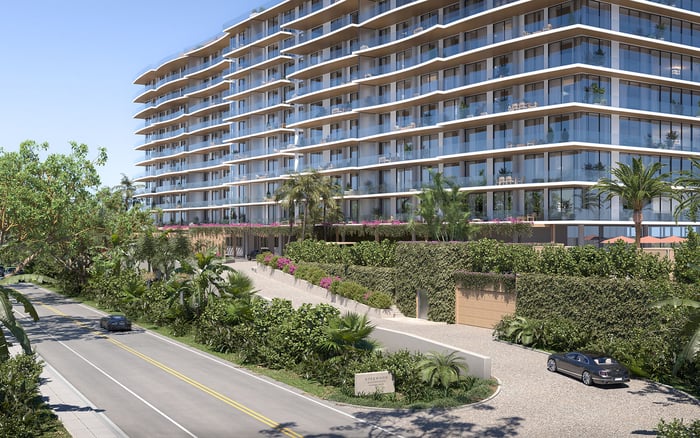
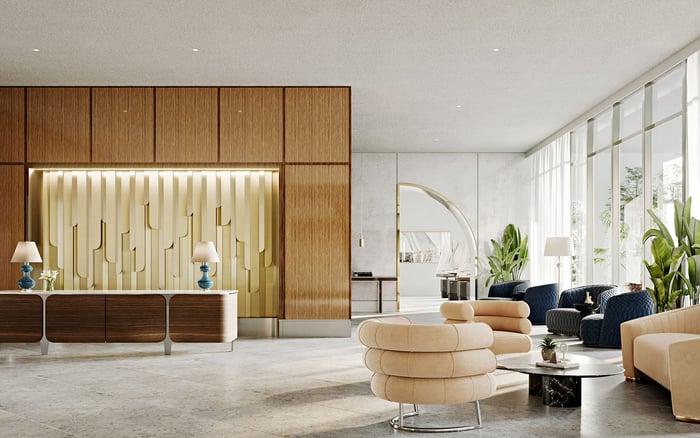
For some buyers, the answer is newer, amenity-forward product that competes on convenience rather than land. In Coral Gables, opportunities such as Ponce Park Coral Gables and Cora Merrick Park can appeal to households that want refined design with a lower operational burden, particularly in years when a child’s schedule sets the household rhythm.
Waitlists often create a transitional period where a family needs optionality. Rather than committing immediately to a forever home, some buyers rent to keep decision-making flexible while uncertainty resolves. That rental choice can have a knock-on effect: it can reduce inventory for other would-be renters, tighten competition for high-quality single-family leases, and ultimately push more households toward purchasing earlier than they otherwise would.
In a market like Coral Gables, this “rental bridge” is not necessarily a step down. It can be an intentional strategy: secure a lease that supports the school plan, then purchase once the admissions picture becomes clearer. But the longer a family rents, the more visible the opportunity cost can feel-particularly when ownership could provide longer-term control over lifestyle.
From a buyer’s perspective, the priority is structuring a purchase that preserves flexibility. That can mean negotiating closing timing, requesting a short seller-occupancy period, or favoring a home with clear resale appeal even if the school plan changes.
In neighborhoods with abundant new construction, buyers can afford to be choosy. In Coral Gables, the decision set is narrower. Architecture, lot geometry, and street character vary block to block, and truly “finished” homes in the most coveted pockets can appear in limited numbers.
When a family is under time pressure tied to admissions timelines, limited choice can translate into sharper bidding behavior on the best-aligned property. Often, the premium is less about “overpaying” and more about avoiding the cost of waiting: another semester of commuting complexity, another year without the right bedroom count, another round of uncertainty.
A similar psychological pattern shows up in branded condo markets, where a small number of high-quality stacks become the focal point. In Brickell, for example, a residence like 2200 Brickell competes on a curated lifestyle proposition. The comparison is instructive: when supply is finite and the buyer’s timeline is fixed, the best-fit units tend to carry the leverage.
It is tempting to treat school-driven demand as temporary-something that fades once a child graduates. In practice, the premium often endures because the attributes that matter during the school years are the same ones that remain valuable after them.
Predictable commutes, well-composed streets, and a residence that works without constant intervention are evergreen luxuries. Many Coral Gables buyers are not only purchasing for a current need; they are purchasing for a future identity. The home becomes a long-term anchor for family, entertaining, and a particular way of living.
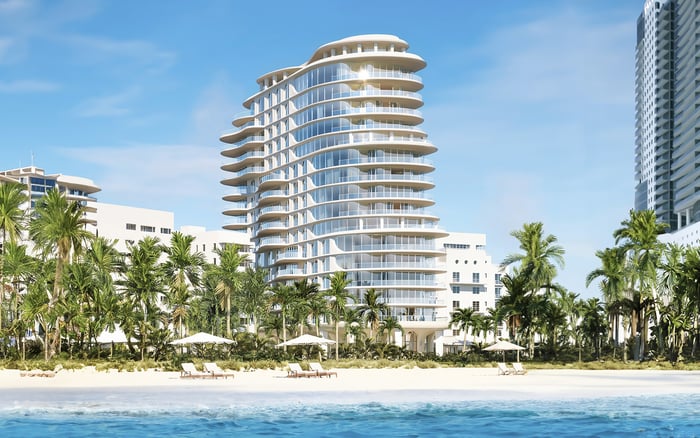
That is also why some households widen their lens to include other “lifestyle anchors” beyond the school conversation, such as waterfront living. In Miami-beach, for instance, 57 Ocean Miami Beach offers a different value system-privacy, design, and proximity to the Atlantic-but reflects the same underlying desire: a daily life that feels composed.
When school timing influences your decision window, the highest-risk mistake is choosing a home that is difficult to exit. The goal is to buy a property you would still want if your plan shifts.
Consider prioritizing:
Micro-location that is resilient regardless of school outcome. A street you would choose on its own merits.
Condition that matches your time horizon. If you cannot tolerate construction disruption, do not rationalize a renovation.
Layout flexibility. A room that can serve as a nursery, office, or guest suite is valuable optionality.
Low operational drag. In years of heavy scheduling, the best luxury is a home that behaves.
Resale clarity. Homes that are easy to understand and easy to love tend to be easier to sell.
For buyers who want the Gables ethos with a slightly different rhythm, The Village at Coral Gables can be a useful reference point for how walkability and managed living can complement a family calendar. The Village at Coral Gables offers another expression of Coral-gables living that can feel aligned with buyers who value simplicity and proximity.
In a conventional negotiation, price dominates. In a school-driven purchase, terms can matter just as much. The strongest offers often read like a plan.
Examples of terms that can reduce stress for both sides include:
A closing timeline that fits a family calendar, rather than an arbitrary date.
Proof of funds and clean contingencies that reduce the seller’s perceived risk.
Flexibility around occupancy if it creates a smoother transition.
The objective is not to be aggressive. It is to be coherent. In luxury real estate, coherence is often persuasive.
Waitlists may be the catalyst, but they are rarely the whole story. Families drawn to Coral Gables often share a preference for lasting quality: architecture with restraint, neighborhood identity, and a sense of place that does not need reinvention every season.
In that context, school-driven demand is best understood as a spotlight. It highlights what Coral Gables already is: a neighborhood where the fundamentals-beauty, privacy, access, and a livable daily rhythm-are strong enough to justify a premium.
Do private-school waitlists really influence Coral Gables home prices? They can, because they compress timelines and concentrate demand on a limited set of suitable homes.
Is it better to rent first if admissions are uncertain? Renting can preserve flexibility, but it may also delay buying in a neighborhood with finite inventory.
What types of homes benefit most from school-driven demand? Turnkey properties with functional layouts and easy daily logistics tend to attract the strongest interest.
Do buyers only focus on proximity to the school campus? Not always; they often prioritize reliable routes, commute predictability, and overall routine simplicity.
Will the premium disappear once a child is enrolled? Often it softens, but the underlying value of a great street and a livable home can remain durable.
How can a buyer protect resale value if plans change? Choose a micro-location and layout that would appeal broadly, not only to school-motivated buyers.
Are condos a practical option for school-focused families? Yes, especially for households that value lower maintenance and a lock-and-leave lifestyle.
What should buyers avoid when purchasing under time pressure? Avoid complex renovations, ambiguous layouts, or properties that require significant ongoing management.
Do terms matter as much as price in competitive situations? Yes; clean contingencies and timing flexibility can be decisive when multiple buyers are interested.
Can a school-driven purchase still be a long-term luxury play? Absolutely, if the home supports lifestyle quality beyond the school years.
For a confidential assessment and a building-by-building shortlist, connect with MILLION Luxury.
If branded residences are on your mind — as a home or as an allocation — we would be glad to share what we are seeing, privately.
Begin a quiet conversation