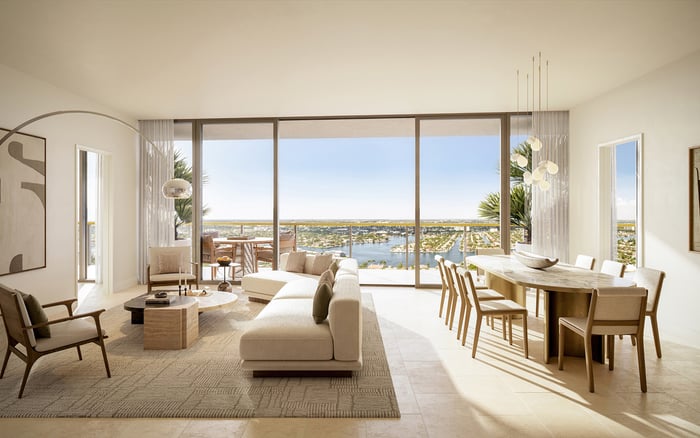
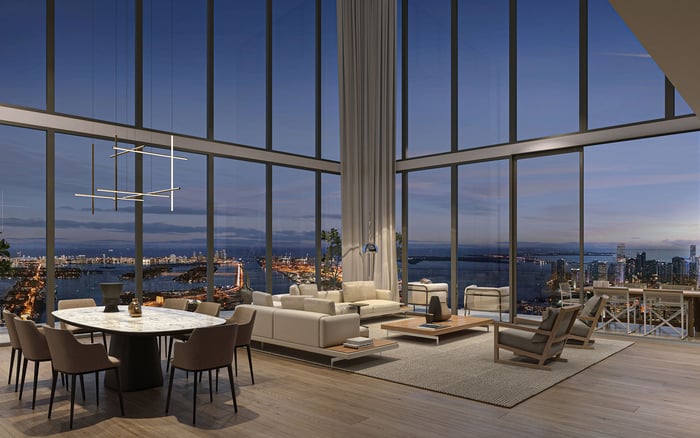
A buyer-focused guide to evaluating Miami Beach trophy penthouses through livability, privacy, building discipline, terrace design, governance, and resale strength.
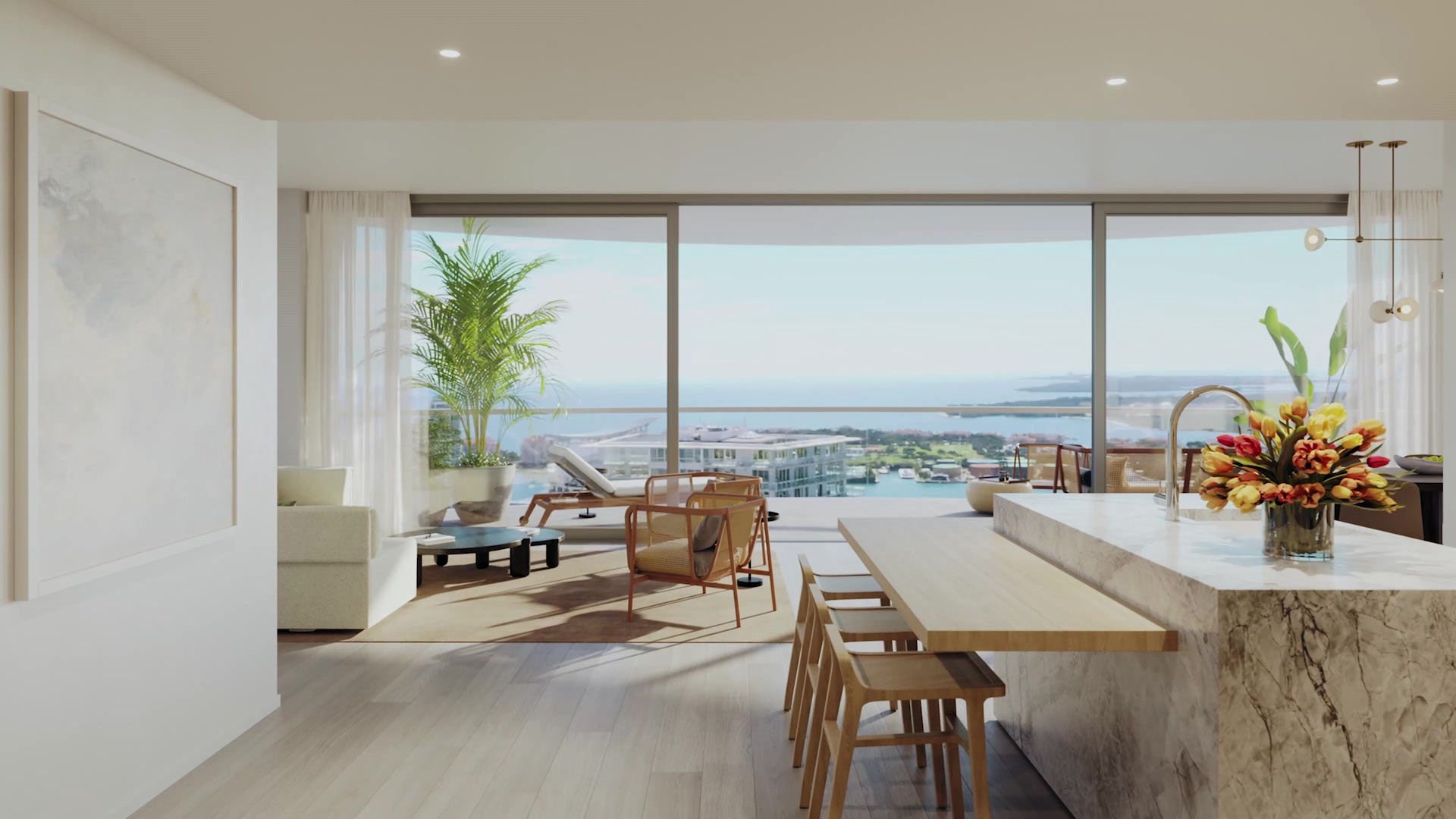
A trophy penthouse in Miami Beach may begin with spectacle, but it cannot end there. The first impression might be a private elevator opening into a grand salon, an uninterrupted view corridor, or a terrace large enough to feel like a second residence. The purchase becomes serious only when the home performs beyond the first showing.
For a long-term owner, the central question is not whether the residence is dramatic. It is whether that drama can be lived with comfortably, quietly, and repeatedly. The best penthouses balance arrival with routine. They support formal entertaining without making daily life feel theatrical. They provide privacy without isolation. They frame water and skyline views without sacrificing wall space, furniture placement, or circulation.
This is why a Miami Beach trophy purchase should be evaluated less like a collectible and more like a private estate in the sky. The buyer is acquiring air, light, access, discretion, and optionality. The right residence should feel rare on day one and rational in year ten.
A penthouse can only be as strong as the building beneath it. Long-term value depends on the discipline of the address: the quality of common areas, the clarity of resident services, the privacy of arrival, the durability of the design language, and the sense that the building will still feel relevant as tastes evolve.
In Miami Beach, buyers often look to the top floor first. A more sophisticated approach begins at the curb. How does the arrival sequence protect privacy? Is the lobby elegant without feeling overexposed? Are service areas separated from resident experiences? Does the building support a quiet daily rhythm, or does it rely on visible energy to feel impressive?
This is where established and new-generation buildings must be read carefully. A residence at The Perigon Miami Beach may appeal to a buyer seeking a highly composed beachfront environment, while Shore Club Private Collections Miami Beach places the penthouse conversation within a branded private-residential context. The point is not that one format is universally superior. It is that the building must match the buyer’s intended ownership style.
Oceanfront views are powerful, but a serious buyer should examine how those views function throughout the home. A single cinematic exposure can be seductive. A more enduring penthouse typically creates layered moments: sunrise or water from primary spaces, calmer outlooks from bedrooms, and a sense of orientation that does not depend on one room doing all the work.
High floors can deliver perspective, but height alone does not guarantee livability. The better test is how the residence handles light, glare, wind, and privacy. A beautiful panorama should not make the living room uncomfortable in the afternoon or render the outdoor areas symbolic rather than usable.
The most successful penthouses create hierarchy. There should be a great room worthy of formal arrival, along with quieter places to read, work, dine casually, and retreat. A long-term buyer should ask whether every principal room has a reason to exist. Empty grandeur can become tiring. Well-proportioned grandeur tends to age gracefully.
Terrace size is often discussed in broad terms, but the serious question is usability. A large outdoor area without shade strategy, wind awareness, logical access, or furniture zones may be less valuable than a more considered outdoor room. Trophy buyers should think in scenes: breakfast, evening drinks, seated dinners, sun lounging, and quiet private use.
The relationship between interior and exterior space is particularly important. If the terrace is accessed only through one formal area, it may be less flexible than it appears. If outdoor living connects naturally to the kitchen, primary suite, or family spaces, it becomes part of daily life rather than an occasional backdrop.
Buildings such as The Ritz-Carlton Residences® Miami Beach help frame the conversation around residential privacy and service culture, while Five Park Miami Beach shows how buyers also consider vertical living in relation to neighborhood connectivity and open-air experiences. In both cases, the penthouse question remains the same: does the outdoor space support the way the owner truly lives?
Discretion is one of the great luxuries of a trophy penthouse. It should be engineered into the residence, not merely promised. Private or semi-private elevator access, controlled sightlines, thoughtful staff circulation, guest separation, and acoustic comfort all matter.
The floor plan should support different modes of use. Owners may want a housekeeper present without compromising the primary suite. Guests may need access to powder rooms and terraces without crossing private family areas. Children or visiting relatives may need bedrooms that feel independent. A trophy home that cannot support these patterns may be visually impressive but operationally weak.
Privacy also extends to neighboring towers and surrounding sightlines. A buyer should stand in every room and ask a simple question: who can see me, and when? The answer changes across daylight, evening lighting, and seasonal use. In a market where glass is central to the architectural language, privacy must be studied carefully.
A serious investment thesis for a Miami Beach penthouse should not depend on a future buyer paying more for spectacle alone. The stronger thesis is based on durable fundamentals: scarce position, coherent architecture, excellent building management, livable proportions, protected privacy, and a floor plan that can appeal to more than one narrow lifestyle.
This does not mean buying timidly. Trophy properties are emotional by nature. The purchase should feel personal, even decisive. But the underwriting should be sober. How many future buyers would understand the floor plan quickly? Would the finishes be easy to refresh without rebuilding the entire residence? Does the building have a resident culture that supports quiet ownership? Are monthly costs aligned with the service level and physical plant?
Resale should be considered before contract, not after ownership fatigue sets in. A penthouse with eccentric improvements, overly specific rooms, or difficult circulation can become a narrower asset. A residence with volume, light, privacy, and adaptable spaces gives the owner more ways to enjoy the home and more paths to exit.
Miami Beach is not one uniform lifestyle. Some buyers want immediate access to dining, wellness, beach clubs, and cultural energy. Others want a quieter waterfront rhythm with selective access to the city. Some compare Miami Beach with Surfside, Bal Harbour, Fisher Island, Coconut Grove, or the mainland waterfront before deciding where their life will actually work.
The right penthouse is rarely just the most famous address. It is the address that reduces friction. If the owner flies in for long weekends, arrival convenience and staff readiness may matter enormously. If the penthouse is a primary residence, storage, school routines, pet logistics, guest parking, and service reliability become part of the luxury calculation.
A beautiful residence that complicates daily life is not a serious long-term purchase. The best trophy penthouse makes Miami Beach feel easier, not merely more glamorous.
What defines a trophy penthouse in Miami Beach? It is a top-tier residence with rare position, strong privacy, exceptional views, generous outdoor space, and a building environment that supports long-term ownership.
Is the best penthouse always the highest one? Not always. Height matters, but floor plan, exposure, terrace usability, privacy, and building quality can be more important over time.
How important is outdoor space? Very important, but only when it is genuinely usable. Shade, access, wind, furniture planning, and privacy determine whether a terrace becomes part of daily life.
Should buyers prioritize new construction or established buildings? Both can work. The better choice depends on design quality, governance, service culture, maintenance discipline, and how well the residence fits the owner’s lifestyle.
What makes a penthouse easier to resell? Broadly appealing proportions, adaptable interiors, strong views, privacy, and a respected building tend to make a penthouse easier for future buyers to understand.
Are branded residences automatically better long-term purchases? No. Branding can add service expectations and identity, but the underlying residence and building operations still need to be excellent.
How should a buyer judge finishes? Finishes should feel timeless, not merely expensive. A serious buyer should ask whether the materials can age well and be refreshed without major disruption.
What role does building governance play? It is central. Even a spectacular penthouse can be weakened by poor maintenance, unclear rules, or a building culture that does not protect quiet ownership.
Is a trophy penthouse a lifestyle purchase or an investment? It is both, but the lifestyle case should be supported by conservative ownership logic, including carrying costs, resale appeal, and long-term usability.
What is the simplest test before buying? Imagine living there on an ordinary weekday, not just hosting guests at sunset. If the home still feels effortless, it may be a serious candidate.
To compare the best-fit options with clarity, connect with MILLION.
If branded residences are on your mind — as a home or as an allocation — we would be glad to share what we are seeing, privately.
Begin a quiet conversation