A discreet buyer’s guide to elevator override protocols in trophy residences, covering privacy, service logistics, life-safety priorities, governance, and resale implications.
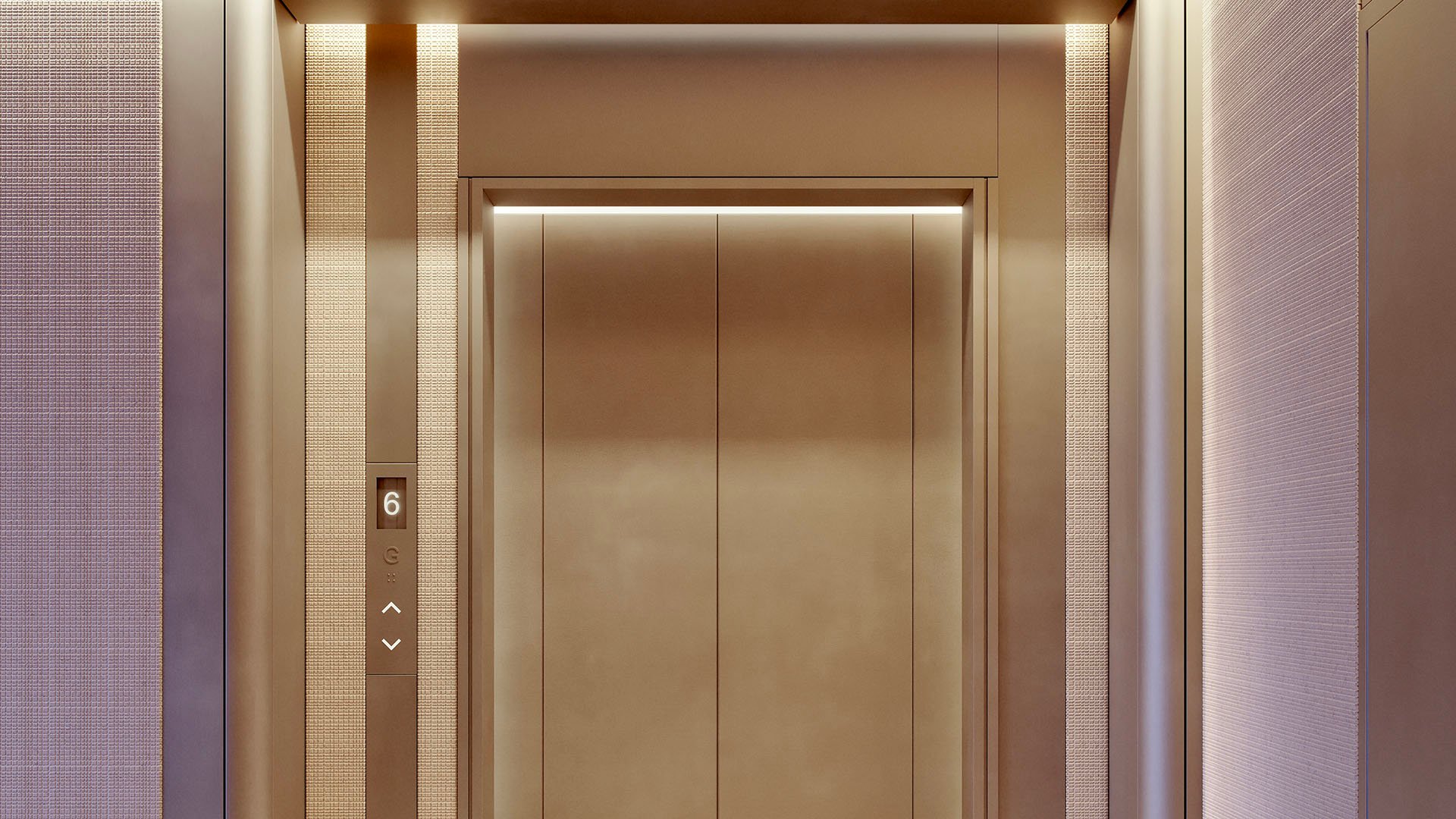
In the highest tier of South Florida real estate, privacy is not a single feature. It is an operating system. A gated approach, guarded lobby, private vestibule, and dedicated elevator may all work together, but the real test is often less visible: who can override the elevator, under what circumstances, and how that authority is documented.
Elevator override protocols determine whether a residence lives like a private home in the sky or a beautiful apartment with unresolved operational exposure. They affect owners, household staff, visiting chefs, art handlers, medical personnel, security teams, building engineers, and emergency responders. For a buyer evaluating a penthouse or full-floor residence in Brickell, Miami Beach, Fisher Island, or another ultra-prime South Florida enclave, the protocol is not a minor building detail. It is part of the asset’s long-term value proposition.
The best systems are neither theatrical nor cumbersome. They are precise. They allow the right people to reach the right destination at the right time while preventing casual access, unnecessary exposure, and improvisation by staff. In a trophy residence, the question is not simply whether the elevator is private. The question is whether privacy survives real life.
A sophisticated review begins by separating access into three worlds: owner access, service access, and emergency access. Each should be governed differently.
Owner access is the most exclusive layer. It may involve fobs, keycards, biometric credentials, concierge release, destination dispatch, or a combination of approvals. The buyer should understand whether the elevator opens directly into the residence, into a private foyer, or into a controlled vestibule. A true private arrival sequence limits visual exposure and reduces accidental contact with other residents, visitors, vendors, and staff.
Service access is more complex. A trophy residence is frequently supported by house managers, drivers, assistants, housekeepers, private chefs, florists, stylists, yacht crews, art installers, and event teams. If every service provider must be escorted manually, the owner may preserve privacy at the cost of efficiency. If access is too broad, convenience can become vulnerability. The optimal arrangement distinguishes among recurring personnel, scheduled vendors, and one-time visitors.
Emergency access sits above both. Any legitimate protocol must preserve life-safety priorities. Buyers should avoid systems that sound impressive but depend on vague exceptions or informal staff discretion. The right question is direct: when privacy and emergency response conflict, what happens, who acts, and how is the event recorded?
Before moving from admiration to commitment, a buyer should request the access-control narrative in plain language. Marketing descriptions often use broad phrases such as private elevator, controlled access, or secure arrival. Those phrases are not enough.
Ask who has master override authority. Is it the general manager, chief engineer, front desk, security director, emergency personnel, or a third-party monitoring provider? Ask whether override events are logged. Ask whether logs identify the user, time, destination, and reason. Ask whether an owner receives notice after certain categories of access. A discreet building may not broadcast every operational detail, but it should be able to explain governance without ambiguity.
Also ask how credentials are issued and revoked. A large household can change quickly. Staff turnover, seasonal guests, visiting relatives, and vendor rotations all create access risk. The protocol should allow the owner or authorized representative to add, suspend, limit, or remove credentials efficiently. If the building relies on informal memory at the desk, the residence is depending on personalities rather than policy.
For new-construction purchases, the review should happen early enough to influence customization. A buyer may want separate credentials for family, staff, house management, drivers, and vendors. In an existing building, the focus shifts to discovering what the association, management, and elevator system already permit.
The most elegant elevator protocol is only as strong as the path around it. A buyer should evaluate the entire arrival and departure sequence: porte cochere, garage, valet, lobby, security desk, elevator cab, private landing, and residence entry. If a private elevator can be reached only after passing through a public lobby with full visibility, the privacy value changes. If the service elevator shares a corridor with owner arrivals, the operational value changes.
Discretion also depends on predictability. Owners should know how guests are announced, how deliveries are held, and whether staff can send someone upward without direct approval. A residence used for intimate family life may require a different posture than one used for frequent entertaining. Neither is inherently superior. The essential point is alignment between lifestyle and protocol.
For highly visible owners, privacy should include misdirection and restraint. The building team should not casually confirm occupancy, guest names, travel patterns, delivery habits, or event schedules. Elevator access is one layer of a broader culture of confidentiality.
Some buyers view service access as a concession against privacy. In practice, a well-designed service protocol can enhance privacy by reducing ad hoc requests, hallway congestion, and repeated calls to the residence. A chef who can access a service corridor during approved hours is less intrusive than a chef who must wait in a public lobby while staff negotiates access.
Evaluate whether the building distinguishes between passenger elevators and service elevators, whether large deliveries have dedicated routes, and how move-ins, art installations, maintenance visits, and catering are handled. The more valuable the residence, the more likely it is to host complex logistics. A museum-scale artwork, couture wardrobe delivery, wine storage transfer, or catered dinner can strain a weak protocol.
The buyer should also consider household staffing. A primary residence with daily staff needs different rules than a second home used during season. An owner who travels often may want a house manager to approve access remotely. A family with children may want stricter controls around visitors, tutors, and service providers. The best protocol is not the most restrictive one. It is the one that supports the way the residence is actually lived.
Resale value in the trophy segment often turns on details that are invisible during a short showing. Elevator override governance is one of them. A future buyer may ask not only whether the residence has private elevator access, but whether that access is secure, documented, transferable, and compatible with the expectations of a high-profile household.
A vague or personality-dependent system can become a negotiation issue. If access depends on a beloved long-time manager rather than a written policy, the buyer inherits human risk. If vendor access is inconsistent, the home may feel difficult to operate. If emergency override rules are unclear, the issue can move from inconvenience to liability concern.
Strong governance, by contrast, can support confidence. A buyer can understand how the residence works, how privacy is preserved, and how household operations continue during travel, staffing changes, or ownership transfer. In the luxury market, confidence is liquidity.
A serious buyer should request the documents that shape elevator use, including building rules, security protocols where shareable, owner manuals, access-control policies, and any customization guidelines. Not every document will be fully disclosed before contract, and some security details should remain appropriately protected. Still, the building should be able to provide enough clarity for informed diligence.
Pay special attention to transferability. Are private elevator rights tied to the unit, to the owner, or to a special approval? Can a buyer inherit existing configurations? Are there limits on changing access permissions? Are additional credentials controlled by the association or by the owner? Does the building permit remote authorization, and if so, through what governance standard?
The answer matters for estate planning, trust ownership, corporate ownership, seasonal occupancy, and staffed households. Trophy residences are often held with privacy structures, family offices, or advisers involved in daily administration. The elevator protocol should recognize that ownership and occupancy are not always the same thing.
Several warning signs deserve attention. The first is verbal assurance without documentation. A phrase such as we handle that for our residents may be gracious, but it is not a protocol. The second is universal override authority. Too many people with broad access can weaken the very privacy that private elevators are meant to create.
The third red flag is an owner’s inability to revoke access quickly. A former employee, contractor, or vendor should not remain operationally connected to the residence because the system is difficult to update. The fourth is poor separation between owner and service movements. If privacy depends on everyone behaving perfectly, the architecture is doing too little work.
Finally, beware of systems that oversell technology while underexplaining governance. Biometrics, encrypted credentials, cameras, and destination controls can be useful, but hardware is not a substitute for policy. In the trophy market, technology should disappear into a calm, disciplined service culture.
The buyer’s real estate adviser, attorney, security consultant, insurance adviser, and household manager may each see a different dimension of the same issue. The adviser understands marketability. The attorney evaluates rights and obligations. The security consultant considers threat models and operational exposure. The household manager knows how people, deliveries, and service providers will actually move through the property.
A focused walk-through can be revealing. Trace an owner arrival from car to residence. Trace a guest arrival. Trace a florist, chef, nurse, art installer, and after-hours engineer. Then ask what changes if the owner is traveling, if staff changes, if a child is home, if an event is underway, or if a medical emergency occurs.
A trophy residence should not require the owner to choose between serenity and function. It should make both feel inevitable.
What is an elevator override protocol? It is the set of rules and permissions that determines who can bypass normal elevator restrictions and under what circumstances.
Why does it matter in a trophy residence? It directly affects privacy, household service, emergency response, and the confidence of future buyers.
Is a private elevator always fully private? Not necessarily. Privacy depends on credentials, landing design, staff authority, logging, and the broader arrival sequence.
Who should have override authority? Authority should be limited to clearly defined roles, with emergency needs preserved and routine access carefully controlled.
Should override activity be logged? Yes. A useful protocol should create an auditable record of access events without making daily life cumbersome.
How does this affect service staff? Clear permissions allow trusted staff and scheduled vendors to work efficiently while reducing unnecessary exposure for the owner.
What should a buyer ask before closing? Ask who controls credentials, how access is revoked, how emergencies are handled, and whether policies are documented.
Can protocols be customized? Sometimes. New developments may offer more flexibility, while established buildings often depend on existing systems and association rules.
Does elevator governance influence resale? Yes. Clear, transferable access governance can make a residence feel more secure, more functional, and easier to underwrite emotionally.
What is the ideal standard? The ideal protocol is discreet, documented, limited, adaptable, and aligned with the way the household actually lives.
When you're ready to tour or underwrite the options, connect with MILLION.
If branded residences are on your mind — as a home or as an allocation — we would be glad to share what we are seeing, privately.
Begin a quiet conversation