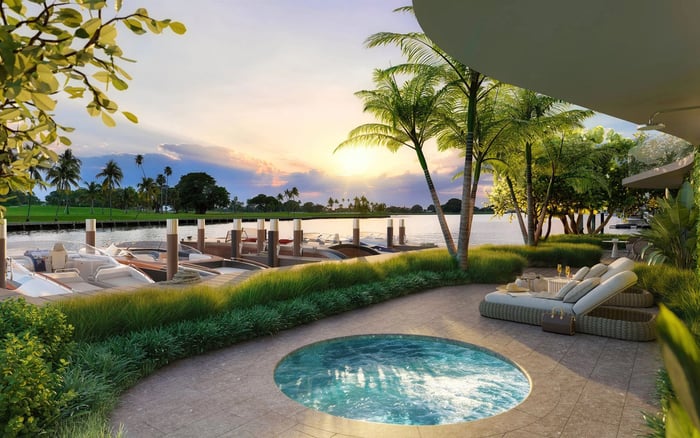
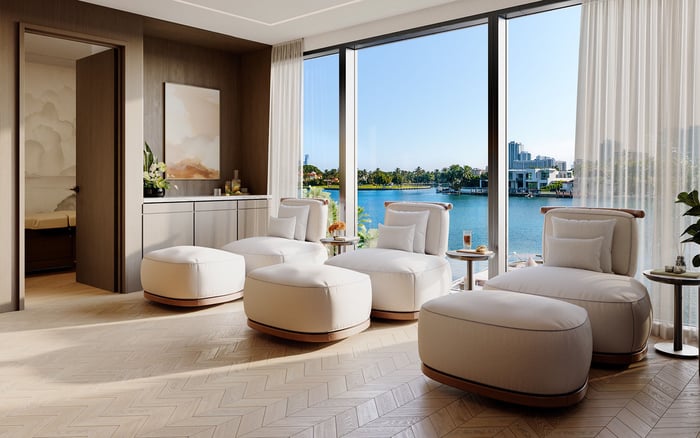
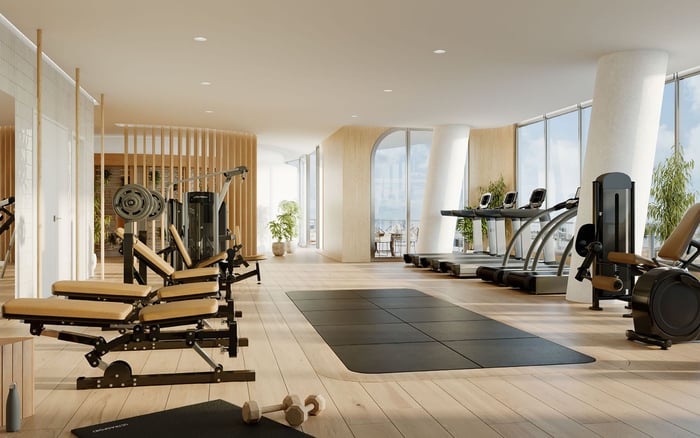
A buyer-focused guide to assessing circadian lighting claims in South Florida wellness-branded residences, from documentation and controls to bedroom performance, daylight strategy, and long-term ownership considerations.
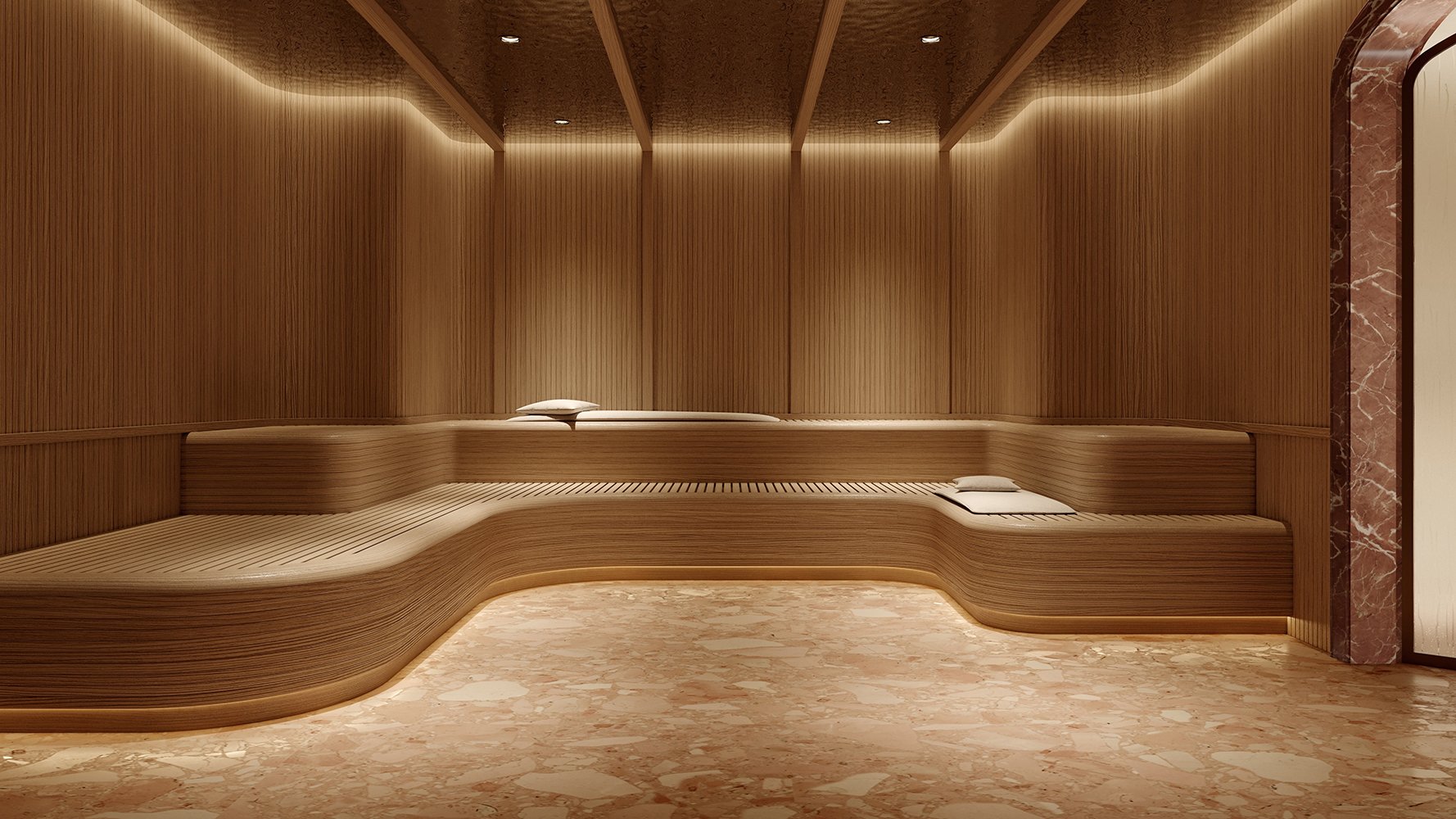
Wellness-branded residences have moved beyond the familiar language of gyms, spas, and treatment rooms. Increasingly, the more sophisticated conversation is about what happens inside the private home at 7 a.m., 4 p.m., and 11 p.m. Lighting sits at the center of that shift. It is one of the few building systems a resident experiences every waking hour, and when it is described as circadian, it warrants more than a poetic sales phrase.
For a South Florida buyer, the evaluation is especially nuanced. Residences may offer exceptional daylight, deep terraces, reflective water views, and dramatic glass lines. Those qualities can be magnificent, but they can also complicate glare, evening comfort, and the transition from bright exterior light to a calm interior. The question is not whether a residence has beautiful fixtures. The question is whether the lighting concept supports the way the home will actually be lived in.
When touring wellness-oriented properties such as The Well Bay Harbor Islands, treat lighting as a core infrastructure conversation. Ask to see how the residence behaves over time, not only how it photographs in a finished model.
A serious circadian lighting proposition should be legible before a buyer ever touches a wall control. Request the lighting narrative, fixture schedule, control intent, and any room-by-room programming description that can be shared. The goal is not to become the lighting designer. It is to understand whether the promised experience is specified, coordinated, and maintainable.
Look for a clear distinction between decorative lighting and architectural lighting. Chandeliers, pendants, and sconces create atmosphere, but they do not automatically create a circadian strategy. A strong system considers ceiling coves, recessed sources, task lighting, indirect layers, dimming behavior, and the way scenes shift from morning to evening.
Ask whether the model residence reflects the delivered specification or an upgraded package. This is particularly important in pre-construction or newly delivered luxury homes, where the visual impression can be shaped by staging, temporary lamps, and hand-tuned showroom scenes. The buyer should know what is included, what is optional, and what requires later customization.
Living rooms and kitchens often receive the most dramatic lighting treatment, but bedrooms are the most revealing test. A wellness residence should allow the primary suite to become progressively calmer in the evening without forcing the owner into darkness or inconvenience. Bedside reading, wardrobe use, bath transitions, and late-night navigation all need to be considered.
During a tour, ask for the nighttime scene to be demonstrated. Watch for overly bright downlights above pillows, harsh reflections in mirrors, or controls that require several taps to reach a comfortable level. A bedroom that depends on residents manually adjusting every source each night is not truly effortless.
In a vertical market like Brickell, where glass, views, and city illumination are part of the lifestyle, buyers comparing homes such as The Residences at 1428 Brickell should also consider exterior light after dark. Window treatments, dimming, and fixture placement must work together so the room feels restorative rather than exposed.
Circadian lighting is often discussed as an electric lighting system, but daylight is part of the experience. A residence with expansive glazing may feel energizing in the morning and visually intense in the afternoon. The answer is not simply brighter or more expensive fixtures. It is a coordinated approach to shades, glass exposure, room orientation, and evening light scenes.
Ask how automated shades, manual shades, or drapery pockets are integrated with the lighting controls. If the residence has deep terraces, review whether they soften daylight at certain times or create contrast between bright exterior zones and darker interiors. If water or skyline views are central to the home, consider reflection and glare from the seating positions you will actually use.
At 2200 Brickell and other city residences, the buyer’s due diligence should include both daytime and evening visits when possible. A home can feel entirely different once the sun drops and the interior lighting becomes the primary atmosphere.
The most elegant lighting design can fail if the controls feel complicated. In a wellness-branded residence, scenes should be intuitive: morning, entertaining, dining, reading, night, and away. The naming should make sense. The keypads should be placed where residents naturally enter, leave, and pause. The app should complement the wall controls rather than replace them.
Ask who programs the system before closing and who adjusts it after move-in. Sophisticated owners often discover their preferred scenes only after living in the home for several weeks. A thoughtful post-closing adjustment process can be more valuable than an impressive first demonstration.
Also ask what happens when a fixture, driver, keypad, or control module needs replacement. Wellness is not only about launch-day performance. It is about continuity. If a system depends on specialized components, the owner should understand the service pathway, response expectations, and whether building management, the developer team, or a third-party integrator is the appropriate contact.
A buyer who travels frequently, entertains formally, or uses the residence seasonally may need a different lighting experience than a full-time owner who works from home. The right question is not, “Is the lighting circadian?” It is, “Does this system support my schedule with minimal friction?”
In Coconut Grove and Bay Harbor settings, where buyers may prioritize quieter rhythms and indoor-outdoor living, the evening transition can matter as much as daytime brightness. Touring The Well Coconut Grove or similar wellness-minded addresses should include a conversation about how private rooms, terraces, and amenity spaces feel after sunset.
For Miami Beach buyers, the issue may be different. Coastal light, reflective interiors, and social living can create a desire for flexible scenes that move easily from relaxed mornings to evening hosting. At properties such as Shore Club Private Collections Miami Beach, the most important question is whether the lighting feels refined across multiple modes of living.
Be cautious when the explanation stays at the level of brand language. A credible system should be demonstrable. If no one can explain the difference between daytime and evening scenes, or if every room is shown in the same bright mode, the buyer should ask more questions.
Other red flags include visible glare from recessed fixtures, flicker-like discomfort on dimmed settings, controls hidden in inconvenient locations, bedrooms with only decorative lamps doing the atmospheric work, or a lack of clarity about what is standard. None of these issues automatically disqualifies a residence, but each can affect comfort and future customization cost.
The most persuasive lighting experience is quiet. It does not call attention to technology. It lets art, material, view, and architecture feel composed at every hour.
Before signing off, request a scene-by-scene demonstration in the primary suite, living area, kitchen, bath, and principal circulation spaces. Stand where you will sit, read, dine, dress, and wake up. Notice whether the light source is comfortable from those positions.
Confirm which controls are included, which are upgradeable, and whether the residence can be reprogrammed after occupancy. Ask if the lighting package coordinates with shades, audiovisual systems, security modes, and owner preferences. If the residence is being purchased furnished or staged, separate the effect of movable lamps from the built-in system.
Above all, remember that circadian lighting is not a single feature. It is an orchestration of daylight, dimming, distribution, warmth, control, and service. In the best wellness-branded residences, that orchestration disappears into daily life.
What should I ask first about circadian lighting? Ask for the lighting narrative, fixture schedule, and control plan so the claim can be evaluated beyond the sales language.
Is circadian lighting only about color temperature? No. Buyers should also consider dimming, glare, fixture placement, daylight, shades, and scene programming.
Which room matters most during evaluation? Start with the primary bedroom because evening comfort, reading light, and nighttime navigation reveal the quality of the system.
Should I tour at a specific time of day? If possible, tour once in daylight and once near evening to see how the residence transitions from natural to electric light.
Are decorative fixtures enough? Decorative fixtures can add beauty, but a wellness lighting strategy usually depends on coordinated architectural layers and controls.
What is a common buyer mistake? Many buyers focus on the model residence mood and forget to confirm which lighting elements are included in the delivered home.
How important are automated shades? They can be important when strong daylight, privacy, or glare affects how the lighting system performs during the day and evening.
Can lighting be adjusted after closing? Often it can, but the buyer should confirm who handles programming, what is included, and how future service is managed.
What makes controls feel luxurious? Clear scenes, intuitive keypad locations, reliable dimming, and simple app support make the system feel natural rather than technical.
What is the best way to shortlist comparable options for touring? Start with location fit, delivery status, and daily lifestyle priorities, then compare stacks and elevations to validate views and privacy.
If you'd like a private walkthrough and a curated shortlist, connect with MILLION.
If branded residences are on your mind — as a home or as an allocation — we would be glad to share what we are seeing, privately.
Begin a quiet conversation