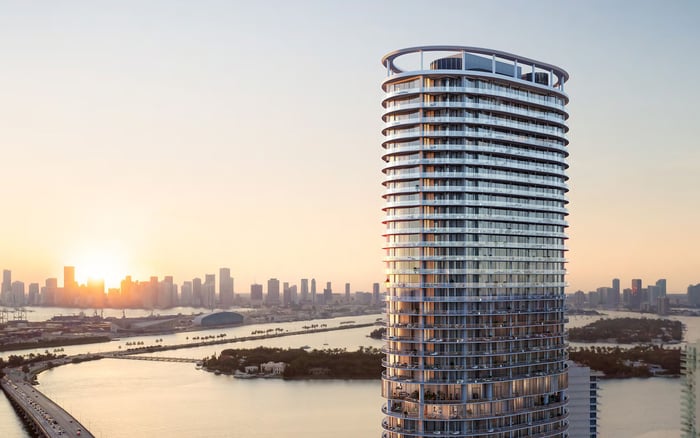
Renderings can frame a lifestyle, but they do not prove execution. South Florida luxury buyers should evaluate builders through licensing, entity history, permits, recorded documents, litigation, component approvals, flood exposure, and the performance of completed buildings after turnover.

In South Florida luxury real estate, the most seductive image is rarely the most important document. A dusk rendering can convey mood, scale, and aspiration, but it is not a legal obligation, a construction history, or proof that a building will perform through seasons of salt air, heat, rain, and wind.
For buyers considering Pre-construction or New-construction residences in Brickell, Miami Beach, Sunny Isles, Palm Beach, Fort Lauderdale, or Boca Raton, builder reputation should be evaluated with the same discipline one might apply to art, aircraft, or private banking. The question is not whether the brochure is beautiful. The question is whether the people and entities behind the project have a record of delivering what matters.
That record is not hidden. It sits in licensing files, corporate records, permit histories, recorded instruments, court dockets, association documents, product approvals, inspection obligations, and completed buildings. Renderings show what a developer wants you to imagine. Records show how that developer behaves when promises meet concrete, capital, code, weather, and time.
For a Florida condominium purchase, the enforceable materials are not the lifestyle images. Buyers and counsel should focus on the contract, declaration, prospectus or offering circular, required disclosures, floor plans, finish schedules, association budget, easements, and developer-reserved rights.
This distinction is especially important in branded and design-forward projects, where the sales environment can be exceptionally polished. A residence at 2200 Brickell may be marketed through a very different visual language than a coastal Miami Beach tower, but the buyer’s central task remains the same: measure every meaningful sales statement against the controlling documents.
Look for specificity. Are ceiling heights, appliances, flooring, glazing, parking rights, storage rights, terrace conditions, completion standards, and substitution rights described clearly? Does the developer reserve broad rights to alter amenities, views, layouts, materials, or timelines? Has your attorney reviewed rescission rights, deposit structure, material-change clauses, and default remedies? Reputation begins with what a builder is willing to put in writing.
Luxury buyers often hear a familiar development name, architect, designer, or brand. Those names matter, but they may not be the legal seller. Many projects are held by newly created single-purpose entities, which can be appropriate for financing and liability structure, but still requires careful review.
State corporate records can identify the actual developer entity, officers, managers, registered agent, annual reports, status, and formation date. If the entity is new, trace the principals through related companies and completed projects. A newly formed entity is not automatically a red flag. A newly formed entity with no visible continuity, unclear principals, or inconsistent ownership history deserves closer scrutiny.
The goal is to distinguish presentation from accountability. Who signs the contract? Who controls the land? Who is the licensed contractor? Who has delivered comparable buildings in South Florida? Who remains involved after turnover, and who disappears when the sales center closes?
Before relying on reputation claims, verify the builder’s contractor license, license status, and disciplinary history through Florida licensing records. The same review should extend to the builder, developer entity, managers, principals, and related parties where applicable.
Complaints and enforcement actions are not all equal. A single administrative matter may have a narrow explanation. A pattern involving construction defects, unlicensed activity, unresolved contract issues, or repeated consumer disputes is different. Sophisticated buyers should read for patterns rather than headlines.
Licensure is not a luxury detail. It is part of the baseline due diligence for anyone buying from, hiring, or relying on a builder.
A permit history can reveal whether a builder’s past projects moved through approvals cleanly, passed inspections, resolved violations, and received final approvals or certificates of occupancy. It can also show amendments, corrections, delays, and the practical complexity of delivery.
This is especially useful when comparing projects in similar environments. A buyer studying a waterfront residence such as The Perigon Miami Beach should not evaluate construction capability in the abstract. Coastal construction brings envelope, waterproofing, structural, wind, and corrosion considerations that are distinct from an inland low-rise or a non-coastal project.
Permit records are not a substitute for engineering advice, but they are a powerful screening tool. If a developer’s completed projects show unresolved violations, missing finals, or recurring inspection issues, the concern is not aesthetic. It is operational.
County property and official records can confirm ownership, parcel history, recorded notices of commencement, construction mortgages, releases, liens, declarations, amendments, easements, and other documents tied to the project site or developer.
Liens are particularly important. Construction liens, releases, and related disputes can help reveal how a developer pays contractors and manages capital obligations. Recorded declarations and amendments also show how a condominium is structured beyond the sales gallery, including rights reserved by the developer and obligations ultimately carried by owners.
Civil court records add another layer. Search for lawsuits involving the developer, contractor, condominium association, and related entities. Pay close attention to defect claims, lien disputes, foreclosure actions, buyer deposit disputes, and post-turnover association litigation. The existence of litigation does not automatically disqualify a builder, especially in complex construction markets. Repeated or unresolved disputes, however, warrant careful legal review.
Reputation in South Florida is not only about finishes. It is about how a building handles water, wind, heat, maintenance, and time. Major exterior components such as windows, doors, roofing, and envelope systems should be reviewed with qualified professionals, including whether applicable approvals and documentation align with the project’s location and design.
For a tower such as St. Regis® Residences Sunny Isles, the luxury conversation naturally includes views, services, arrival sequence, and amenities. Yet the deeper reputation question is technical: how are glazing, façade, waterproofing, mechanical systems, energy performance, and life-safety requirements being addressed within the governing code framework?
Flood exposure is equally material. Buyers should check official flood maps for the site and for comparable completed projects, then discuss elevation, garage design, equipment placement, drainage, insurance implications, and resilience planning with appropriate professionals.
The most persuasive reputation signal is a completed building that still feels well constructed after turnover. Walk the lobby, garage, amenity levels, corridors, elevator banks, pool deck, service areas, and exterior approaches. Listen for owner feedback, but treat online comments as leads rather than conclusions.
For existing condominiums by the same developer, review association documents, budgets, reserves, rules, litigation history, inspection history, reserve planning, and building-maintenance materials. A building that photographs beautifully at launch but struggles with maintenance, reserves, water intrusion, or association disputes tells a different story than the original rendering.
This matters across price points and geographies. The diligence for Alba West Palm Beach may differ in local context from a Sunny Isles oceanfront tower, but the same principle applies: durable performance after delivery is a stronger reputation signal than launch marketing.
Owner reviews, broker commentary, and neighborhood conversations can be valuable, but they should not become the foundation of your decision. Use them to identify questions, then verify those questions through permits, recorded documents, association materials, court records, inspections, and professional review.
If multiple owners mention elevator outages, water intrusion, acoustic issues, warranty delays, or high operating costs, ask where those concerns appear in official records or association documents. If the records are clean and issues were resolved, the story may be benign. If the same themes appear across litigation, maintenance budgets, and owner complaints, the risk profile changes.
A strong builder reputation in South Florida is supported by clean licensing, identifiable principals, stable ownership records, completed comparable projects, resolved permits, limited adverse litigation, appropriate product approvals, thoughtful flood and resilience planning, and delivered buildings that age well.
It is also supported by transparency. The best developers do not ask sophisticated buyers to rely solely on mood boards, celebrity affiliations, or sunset imagery. They can point to records, teams, consultants, prior buildings, and documents that align with the promise being sold.
The luxury buyer’s advantage is patience. Renderings reward impulse. Records reward discipline.
Are renderings legally binding in a Florida condo purchase? Renderings are generally marketing materials. Buyers should rely on the contract, declaration, prospectus or offering circular, disclosures, plans, and finish schedules.
What is the first record to check when evaluating a builder? Start with contractor licensing status and disciplinary history, then review the developer entity and principals behind the project.
Is a newly formed development LLC a warning sign? Not necessarily. It becomes a concern when the principals cannot be traced to credible completed work or stable related entities.
Why do permit records matter for luxury buyers? They show whether comparable projects obtained permits, passed inspections, resolved violations, and reached final approval.
Should I worry if a developer has been involved in litigation? Litigation is not uncommon in construction. Focus on the type of claim, repetition, severity, outcome, and whether disputes remain unresolved.
How can I evaluate coastal construction quality? Review product approvals, envelope systems, flood exposure, elevation strategy, drainage, life-safety systems, and comparable completed buildings.
Are online reviews useful when judging a builder? They are useful as leads, not proof. Verify themes through association records, permits, inspections, budgets, and legal documents.
What should my attorney review in a preconstruction contract? Key items include rescission rights, deposits, completion deadlines, material-change clauses, finish specifications, easements, and reserved developer rights.
Why are association records important after a building is delivered? They reveal operating costs, reserves, rules, amendments, disputes, and how the building functions after developer turnover.
What is the clearest sign of a reputable builder? The clearest sign is a verified pattern of completed projects, clean licensing, resolved permits, limited adverse litigation, and durable building performance.
For a tailored shortlist and next-step guidance, connect with MILLION.
If branded residences are on your mind — as a home or as an allocation — we would be glad to share what we are seeing, privately.
Begin a quiet conversation