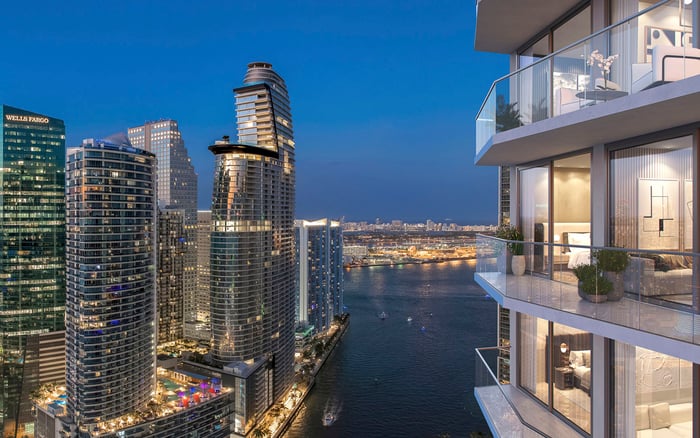
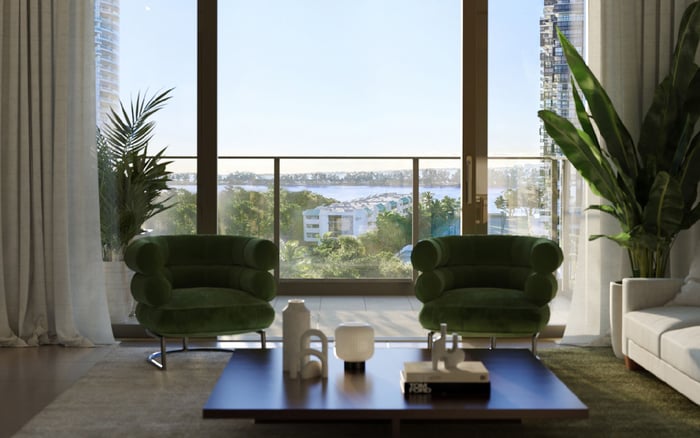
A buyer-focused guide to weighing turnkey furnished residences against customizable designer shells in South Florida’s luxury condominium market.
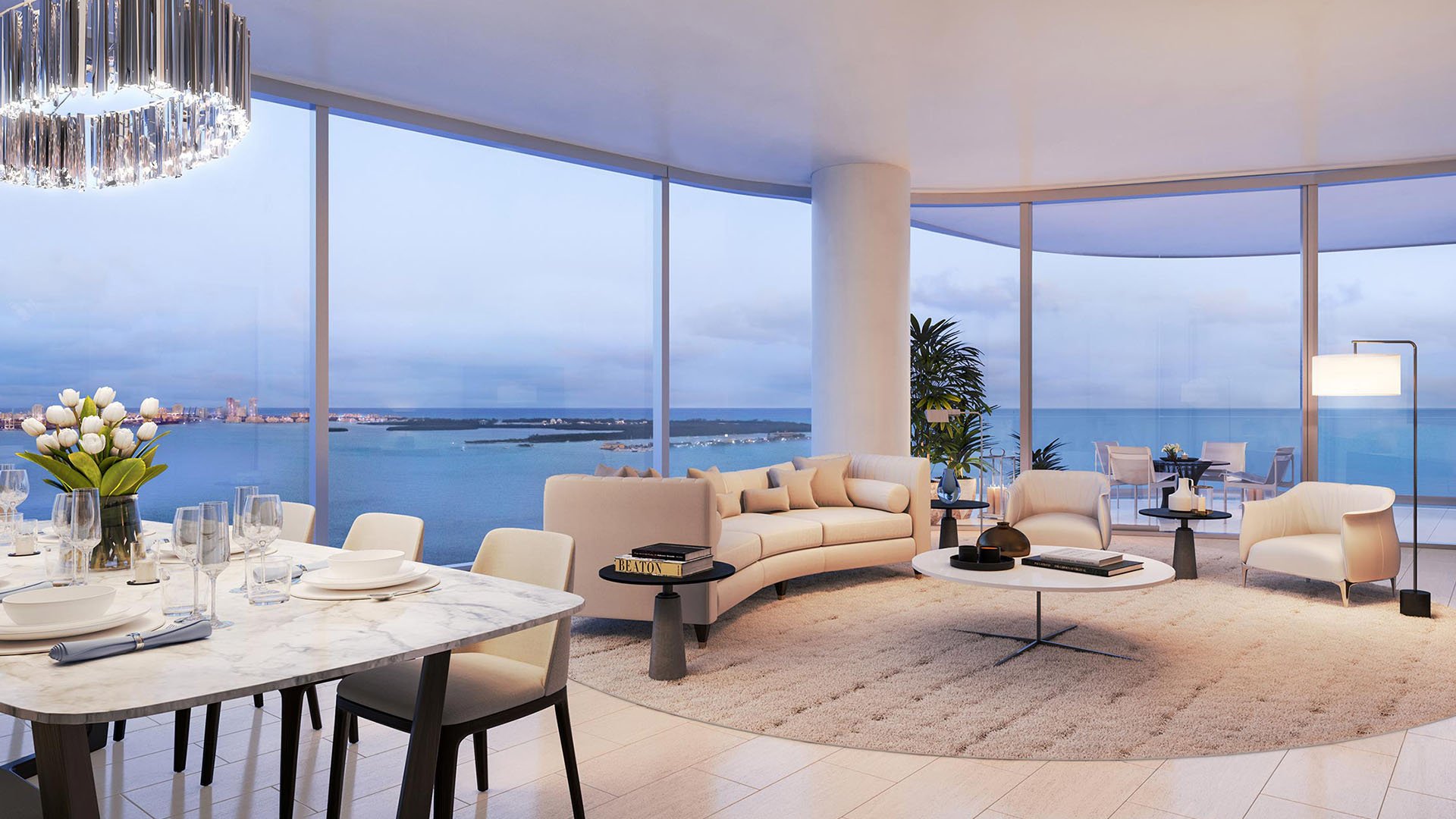
In South Florida’s luxury condominium market, the choice between a turnkey furnished residence and a customizable designer shell is rarely about taste alone. It is a decision about time, control, liquidity, family use, and how much of the owner’s identity should be embedded in the home from the first day of occupancy.
A turnkey furnished residence offers immediacy. The rooms are composed, the furniture is in place, and the owner can arrive with luggage rather than a project file. A designer shell, by contrast, preserves authorship. It asks the buyer to envision the finished residence before millwork, lighting, stone, art walls, and furniture have been resolved.
Neither path is inherently superior. The better choice depends on whether the buyer values a finished experience now or a more personal result later. In a market shaped by waterfront views, branded hospitality, private amenities, and lock-and-leave living, the distinction matters.
Turnkey is best understood as a purchase of certainty. The buyer can evaluate the residence as a complete environment rather than a set of possibilities. Sight lines, furniture scale, terrace transitions, bedroom comfort, and entertaining flow can be assessed in real time.
This is especially valuable for buyers who live elsewhere, maintain several homes, or want a seasonal residence ready for immediate use. A furnished residence can also reduce the number of decisions required after closing. Instead of coordinating architects, designers, contractors, vendors, receivers, installers, and punch-list work, the owner steps into an already curated setting.
The trade-off is that turnkey design reflects another person’s choices. Even a beautifully furnished home may not align with a buyer’s art collection, preferred color temperature, dining habits, or family rituals. For some, that is an acceptable premium for convenience. For others, it becomes the reason to start again.
A customizable designer shell protects the buyer’s right to shape the home around life, rather than adapt life to the home. It allows the owner to determine how formal or relaxed the interiors should feel, where storage should be hidden, how lighting should flatter art, and whether bedrooms, offices, staff areas, and entertaining spaces should be rebalanced.
For collectors, this can be decisive. A shell allows art walls, specialty lighting, climate considerations, and viewing distances to be planned before finishes are installed. For culinary buyers, the kitchen can be designed around performance, display, privacy, or catering. For families, acoustic separation and bedroom hierarchy can be addressed early.
The challenge is discipline. Customization can produce extraordinary results, but it can also expand in scope. Without a clear brief, a shell can become an open-ended exercise in revisions, procurement, and approvals. The most successful buyers treat the shell as a commission, not a blank check.
The financial comparison should extend beyond the purchase price. A turnkey residence may command a premium for its completed presentation, but it can also compress the time between closing and use. A shell may appear more flexible, yet the owner must account for design fees, construction, furnishings, storage, installation, insurance considerations, association procedures, and the opportunity cost of waiting.
Timing is often underestimated. Even a straightforward interior program requires sequencing. Drawings must be developed. Materials must be selected. Trades must be scheduled. Deliveries must be received. Final installation must be coordinated. If the residence is intended for a specific season, a family event, or a relocation date, the calendar becomes part of the investment thesis.
Buyers should also consider their own decision velocity. Some owners enjoy the design process and can make confident selections quickly. Others prefer to deliberate. A shell rewards clarity; turnkey rewards decisiveness at the acquisition stage.
For second-home owners, turnkey can be compelling because it simplifies the arrival ritual. Linens, seating, dining pieces, outdoor furniture, and guest rooms may already be coordinated. The residence can function as a private retreat without months of additional orchestration.
If rental flexibility is part of the plan, the analysis becomes more technical. Building rules, minimum lease terms, approval processes, furnishing durability, owner storage, insurance, and service expectations should all be reviewed before the buyer assumes any income strategy is viable. A furnished residence may be more operationally ready, but that does not automatically make it suitable for every rental program.
A shell offers the chance to design for durability from the beginning. Fabrics, flooring, wall finishes, and furniture profiles can be selected with guest use in mind. Still, the owner must decide whether the residence is primarily a personal sanctuary, an income-supporting asset, or a hybrid of both.
Resale is where restraint becomes valuable. A turnkey residence that feels broadly elegant can photograph well, show easily, and communicate lifestyle quickly. Buyers can understand the promise of the home within minutes. That clarity can matter when multiple residences compete for attention.
A highly customized shell build-out can also perform beautifully at resale if the work is timeless, well executed, and aligned with the architecture. Thoughtful millwork, balanced lighting, quiet stone selections, and flexible rooms can elevate perceived value. The risk appears when personalization becomes too specific. A dramatic media room, unusually configured bedrooms, or strong decorative signatures may delight one buyer and distract another.
The most resilient interiors usually feel personal without feeling narrow. They leave room for the next owner’s art, furniture, and rituals.
The right decision can vary by submarket. In Brickell, a buyer comparing urban convenience and service-led living may view a finished residence differently than a buyer planning a long-term custom home in a quieter coastal setting. Addresses such as 888 Brickell by Dolce & Gabbana and Cipriani Residences Brickell sit within a context where design identity, hospitality cues, and efficient use can be central to the decision.
On Miami Beach, the emotional weight of the setting often increases the importance of atmosphere. A buyer considering The Perigon Miami Beach may think carefully about how interiors frame light, water, and privacy. In Sunny Isles, vertical oceanfront living can place added emphasis on view corridors, terrace furniture, and the relationship between daytime brightness and evening intimacy, a consideration also relevant when reviewing Bentley Residences Sunny Isles.
In West Palm Beach, buyers may weigh seasonal use, cultural access, and a softer residential rhythm. A residence such as Alba West Palm Beach can be considered through that lens. This is especially true in Brickell, Miami Beach, Sunny Isles, and West Palm Beach, where new-construction and resale decisions can sit side by side in a single search.
Begin with use. Will the residence be occupied immediately, seasonally, occasionally, or full time? A buyer who wants to land, entertain, and host guests this season may assign high value to turnkey completion. A buyer planning a primary residence may prefer the patience and precision of a shell.
Next, test the furniture plan against real life. Where will luggage go? Where will children or grandchildren sleep? Can the dining table handle the way the owner actually entertains? Is there space for work calls, private reading, staff support, or wellness routines?
Then examine quality rather than decoration. In a turnkey residence, look beyond the first impression. Inspect upholstery, case goods, lighting layers, outdoor pieces, window treatments, storage, and wear points. In a shell, evaluate ceiling heights, column placement, mechanical constraints, plumbing locations, and terrace relationships.
Finally, price the invisible work. Design management, procurement, delays, association approvals, and owner attention all have value. A seemingly expensive turnkey residence may be rational if it saves a year of friction. A shell may be the wiser purchase if the buyer has a strong design team and a clear vision.
Is turnkey better for a second home? It can be, especially when the buyer values immediate use and fewer post-closing decisions.
Is a designer shell usually more personal? Yes, because the owner can shape finishes, lighting, storage, and room function around specific needs.
Which option is easier to evaluate during a showing? Turnkey is easier to read because scale, flow, and atmosphere are already visible.
Can a shell become more expensive than expected? Yes. If the scope expands or decisions are delayed, the final investment can move beyond the initial plan.
Does turnkey limit resale flexibility? Not necessarily. A restrained, high-quality turnkey interior can appeal to a broad pool of buyers.
What should art collectors prioritize? They should focus on wall dimensions, lighting, humidity awareness, viewing distance, and security planning.
Should rental plans influence the choice? Yes, but only after reviewing building rules, lease policies, durability needs, and operating expectations.
What is the biggest advantage of a shell? It gives the buyer control over the finished environment from the earliest design decisions.
What is the biggest advantage of turnkey? It reduces time, coordination, and uncertainty between purchase and enjoyment.
How should buyers make the final decision? Compare lifestyle timing, design ambition, carrying costs, and resale flexibility before choosing a path.
For a tailored shortlist and next-step guidance, connect with MILLION.
If branded residences are on your mind — as a home or as an allocation — we would be glad to share what we are seeing, privately.
Begin a quiet conversation