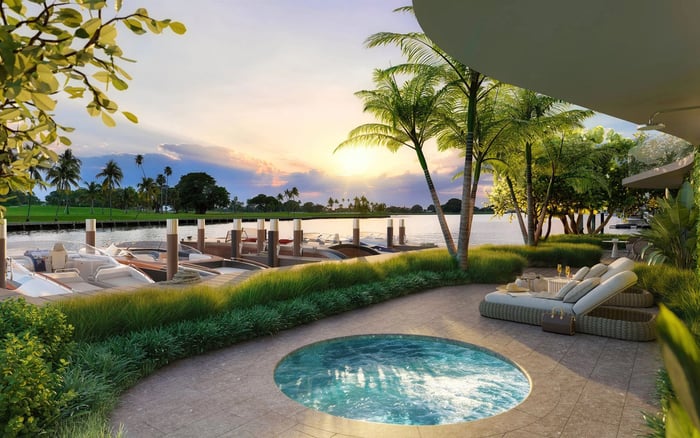
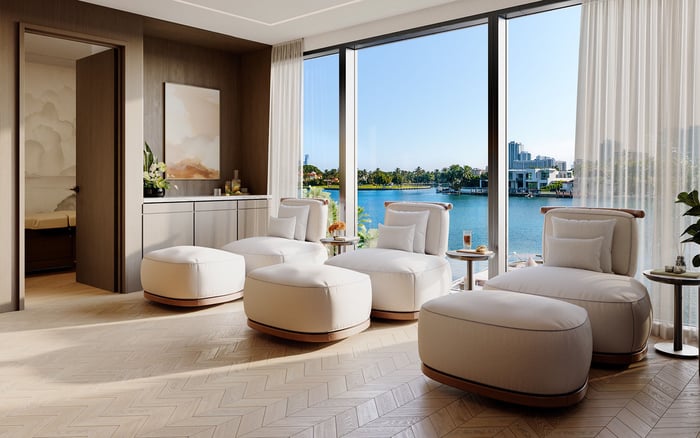
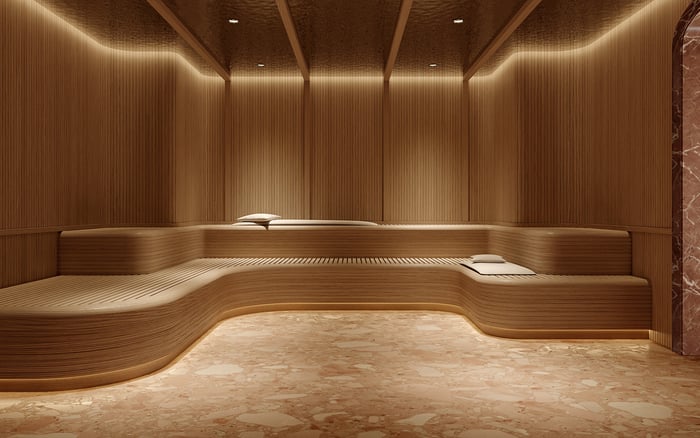
In South Florida luxury real estate, the difference between wellness theater and real recovery value is rarely the beauty of the spa. It is the depth of proof behind it. Buyers should compare certifications, building systems, operating protocols, staff oversight, and actual resident usage before assigning premium value to any wellness-forward residence.
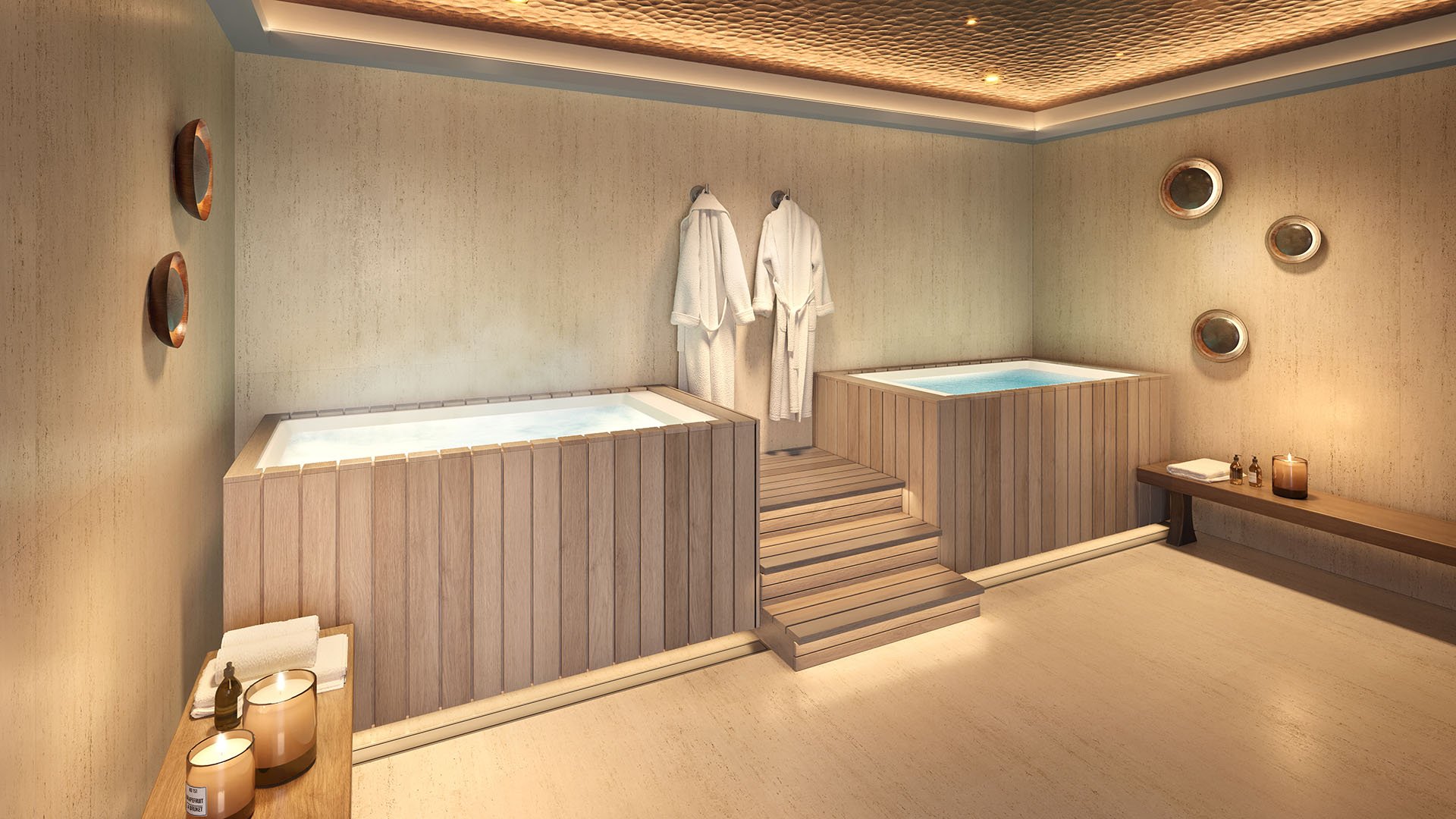
In South Florida, wellness has become one of luxury real estate’s most seductive promises. Renderings showcase thermal suites, cold plunges, infrared saunas, meditation rooms, and softly lit lounges that photograph beautifully. Yet for a discerning buyer, that aesthetic language is only the starting point. A wellness building should be judged less by spa theater and more by its ability to document genuine recovery value.
That distinction matters because a beautiful amenity can still be operationally shallow. A recovery-focused residence is more likely to demonstrate measurable standards for air quality, ventilation, lighting, humidity control, staffing, safety procedures, and actual resident use. A spa-forward building may offer all the right visual cues while revealing little beyond the amenity list.
For buyers evaluating premium residences in Brickell, Miami Beach, Coconut Grove, or Bay Harbor, the right question is not whether a project has a wellness floor. The right question is whether the building can prove that its wellness program performs beyond the brochure.
The fastest way to separate substance from styling is to ask what independent framework supports the wellness claim. WELL, Fitwel, and LEED provide a more credible reference point than amenity copy alone because they focus on measurable building features and performance standards rather than decorative indulgence.
WELL is especially useful when recovery value is part of the sales story because it emphasizes occupant health through features that can be assessed and documented. Fitwel also signals an evidence-based approach to well-being. LEED may overlap with wellness through environmental quality, lighting, and air-performance considerations, but a spa suite on its own does not amount to certified wellness.
If a building presents itself as a wellness-led address, ask to see certification status, audit documentation, or other verifiable performance material. That level of scrutiny is particularly relevant when comparing residences such as The Well Bay Harbor Islands and The Well Coconut Grove with more traditional luxury offerings that may feature sumptuous spa environments but less public evidence of health-performance systems.
Climate makes this conversation more exacting in South Florida than in many other markets. In a humid coastal environment, mold risk, ventilation quality, air exchange, filtration, and humidity control are not technical side notes. They are central to whether a building supports recovery and everyday comfort.
A buyer comparing two otherwise similar properties should ask how indoor air is managed across residences and common areas, not merely inside a treatment room. What filtration strategy is in place? How is humidity controlled? What documentation exists around ventilation performance? A glamorous sauna does little to improve wellness if the broader building system does not address pollutant control and moisture management.
That lens is useful whether considering beachfront inventory in Miami Beach or polished urban stock in Brickell. At projects such as 57 Ocean Miami Beach or The Residences at 1428 Brickell, the refined question is not simply what wellness amenities are present, but how the full building environment is engineered to support healthy occupancy over time.
True recovery amenities tend to require real operational discipline. If a residence promotes cold plunges, infrared therapy, contrast rooms, or other performance-oriented features, buyers should ask what protocols govern them. Who supervises use? Are staff trained? Is there medical-advisor involvement? Are there safety procedures, calibration schedules, sterilization routines, and maintenance records?
This is where many luxury properties begin to diverge. A hospitality-style spa can feel exquisite while functioning mostly as an atmospheric perk. A clinical-style recovery suite, by contrast, usually involves more oversight, more maintenance, and more accountability. That makes it more expensive to operate, but also more credible when a developer implies measurable benefit.
An infrared sauna is a useful example. Its presence alone says almost nothing. Buyers should ask for technical specifications because not every installation performs the same way. The same standard applies to plunge pools, compression devices, light therapy, or any branded recovery technology. If the sales narrative implies outcomes, the operating details should be equally polished.
Some of the most valuable wellness features are less photogenic than a marble hammam. Circadian lighting and overall lighting quality influence residents well beyond a single amenity zone. These systems can shape how a building feels throughout the day, and they fit naturally into a serious wellness framework because they affect routine living, not just occasional indulgence.
Membership and access rules can also be revealing. If an amenity is run as a supervised program with defined procedures, orientation, reservations, usage tracking, and staff involvement, that usually suggests more substance than a room residents can enter casually with minimal oversight. Decorative perks are easy to market. Programs with accountability are harder to stage.
This distinction becomes especially relevant in high-service projects where buyers may be tempted to equate hospitality polish with wellness rigor. At residences like St. Regis® Residences Brickell or Shell Bay by Auberge Hallandale, the premium should be judged not only by service style and finish level, but by whether wellness claims are backed by documented operating standards.
One of the least discussed measures of recovery value is whether residents actually use the amenity. A highly photographed spa can become a symbolic selling feature with surprisingly limited day-to-day participation. A simpler, better-run recovery suite may deliver more real value if residents use it consistently.
Sophisticated buyers should therefore ask what is tracked. Does management monitor participation, bookings, maintenance intervals, or performance metrics for building systems? Are there usage patterns that indicate the amenity is integrated into resident life rather than functioning as a showroom? The strongest wellness buildings pair design with evidence, audits, and operations.
That matters for valuation. Clinically operated wellness spaces generally cost more to run and maintain than standard spa lounges. If a building truly supports recovery, some of that cost should be visible in its operational model. If the amenity appears lavish but there is little documentation, little staff structure, and little sign of measurable use, the premium may be more theatrical than enduring.
When two luxury buildings appear equally wellness-forward, compare them across five layers.
First, review independent validation. Certifications and audits are far more persuasive than renderings.
Second, evaluate the building envelope and systems. In South Florida, air exchange, filtration, humidity control, and ventilation quality deserve as much attention as spa design.
Third, inspect operational seriousness. Protocols, trained staff, maintenance schedules, and equipment specifications are what turn wellness into a functioning program.
Fourth, test whether the claimed benefits extend beyond the amenity floor. Circadian lighting, environmental quality, and healthy common-area performance affect everyday living more than occasional treatments.
Fifth, ask whether residents use the offering enough to justify the premium. Recovery value should show up in engagement, not just imagery.
For MILLION Luxury readers, this is the deeper principle: the most valuable wellness residences do not merely look restorative. They are built, managed, and documented in ways that make restoration more credible.
What is spa theater in a luxury building? It is a wellness presentation built primarily around beautiful amenities and marketing imagery, without much verifiable evidence of building performance or recovery protocols.
What makes a building’s wellness offering more credible? Third-party certifications, audit documentation, operating protocols, trained staff, and measurable building systems all strengthen credibility.
Is WELL more relevant than a spa amenity list? Yes. It is more useful because it focuses on measurable features tied to occupant health rather than visual merchandising.
Does LEED automatically mean strong wellness value? No. LEED can overlap with wellness through air and environmental quality, but it is not the same as a comprehensive recovery program.
Why does humidity control matter so much in South Florida? Because moisture management, ventilation quality, and mold prevention directly affect comfort, air quality, and long-term building performance.
Should buyers ask for maintenance records on wellness equipment? Absolutely. Calibration, sterilization, and maintenance records are often stronger indicators of recovery value than the amenity itself.
Are infrared saunas all comparable? No. Their value depends on technical specifications, operational standards, and how the equipment is maintained.
Why do staffing and medical oversight matter? They suggest the amenity is being run as a serious recovery program rather than an unsupervised lifestyle perk.
Can resident usage affect value? Yes. Frequent, consistent use may indicate genuine utility, while low participation can suggest the amenity is more symbolic than functional.
How should buyers compare two wellness buildings quickly? Ask for proof in five areas: certification, building systems, protocols, staff oversight, and resident usage.
For a discreet conversation and a curated building-by-building shortlist, connect with MILLION Luxury.
If branded residences are on your mind — as a home or as an allocation — we would be glad to share what we are seeing, privately.
Begin a quiet conversation