A refined framework for South Florida buyers weighing privacy, walkability, and waterfront with equal intensity, from neighborhood form to flood exposure and carrying costs.
In South Florida, buyers who want privacy, walkability, and waterfront in equal measure are rarely choosing between better and worse. They are choosing between different expressions of luxury. One address may offer visual calm, deeper setbacks, and quieter waterfront edges, yet require a car for nearly everything beyond a morning stroll. Another may place dining, fitness, parks, and marina life within a short walk, yet rely on staffed entry, controlled access, and internal amenities to create privacy.
That distinction matters because the most consequential variable is often neighborhood type. Low-density residential enclaves tend to favor seclusion. Mixed-use waterfront districts tend to favor convenience and activity. The right fit comes from understanding which privacy mechanism you prefer: land, distance, and fewer people, or service, security, and well-managed common areas.
A disciplined comparison works best when every option is judged across five buckets: privacy controls, walkability, type of waterfront access, flood and insurance risk, and carrying costs. If two residences appear equally compelling at first showing, this framework usually reveals they are not equivalent at all.
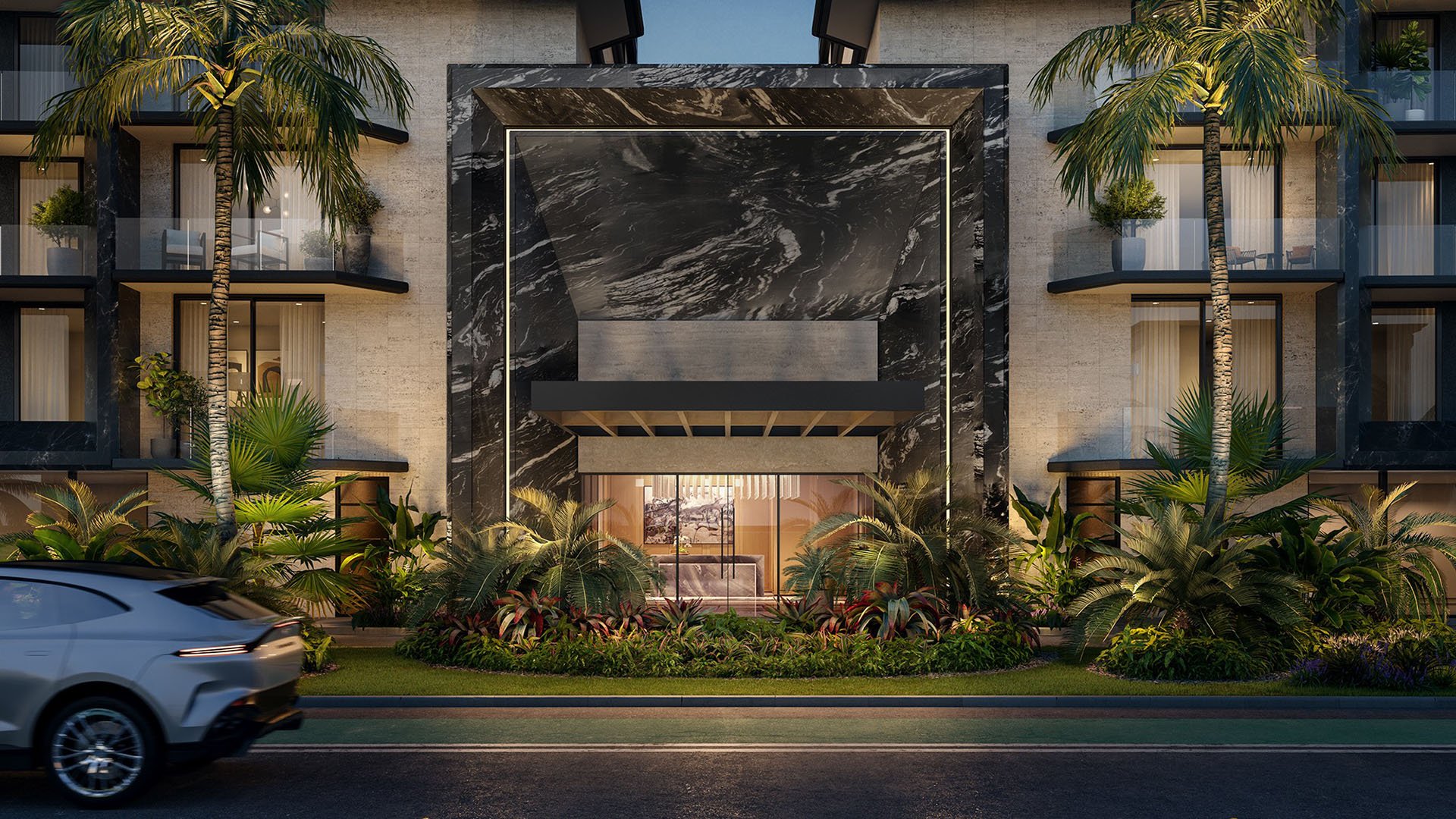
In ultra-prime property, privacy should be broken into layers. The first is neighborhood privacy: whether the surrounding streets are primarily residential, tightly regulated, or shaped by heavy commercial and visitor traffic. The second is property privacy: lot size, orientation, waterfront frontage, setbacks, and who can see or hear the outdoor living areas. The third is operational privacy: concierge oversight, elevator access, valet sequencing, resident-only amenities, and how guests move through the building.
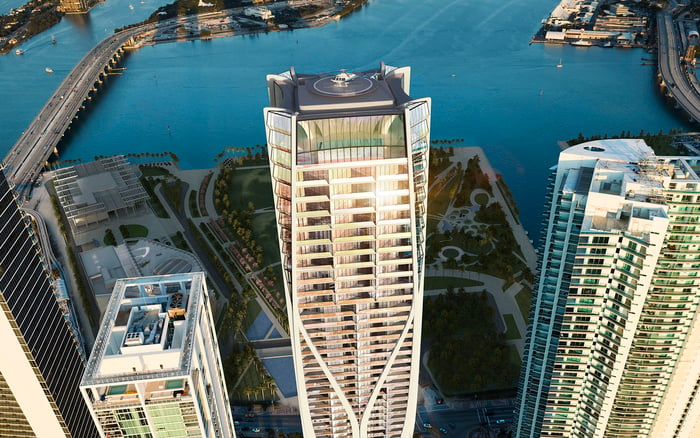
This is where building form becomes decisive. In a dense district such as Brickell, privacy is rarely created by lot size. It is created through controlled arrival, professional staffing, and private amenity design, which is why residences such as Una Residences Brickell and 2200 Brickell are best understood as urban waterfront living with curated privacy rather than absolute seclusion. That distinction is essential for anyone prioritizing Brickell in a serious search.
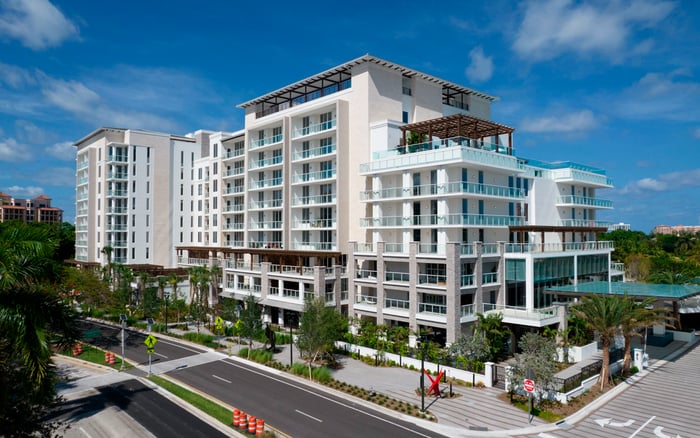
By contrast, more residential environments often provide stronger acoustic and visual separation while placing fewer daily essentials within walking distance. In Coral Gables, the appeal lies in planning discipline and neighborhood character, which can help preserve a more controlled residential atmosphere over time. Buyers comparing this style of setting should pay close attention to zoning texture, street activity, and whether commercial spillover is likely to increase in the future.
Many luxury buyers overestimate walkability because restaurants are visible from the car. Practical walkability is more demanding. The better test is whether daily life can be handled on foot: coffee, groceries, fitness, parks, waterfront promenades, and, if relevant, marina access. Nightlife alone does not make a district meaningfully walkable.
A simple scoring tool can provide a useful baseline, but it should never be the final word. Two neighborhoods with similarly strong walkable appeal can feel entirely different at street level. One may have shaded sidewalks, calmer intersections, and a coherent village rhythm. The other may offer exceptional convenience but more congestion, more visitors, and greater exposure.
Coconut Grove often enters this conversation for precisely that reason. It can offer a village-scale balance of marinas, parks, and neighborhood retail, with a more intimate streetscape than denser urban cores. Projects such as Arbor Coconut Grove and Vita at Grove Isle illustrate two different expressions of that lifestyle: one closer to neighborhood texture, the other more oriented toward a private waterfront enclave.
Fort Lauderdale deserves equal attention when buyers want urban energy without defaulting to Miami. Las Olas remains a strong benchmark because it combines galleries, restaurants, and city conveniences with proximity to the New River and Intracoastal. In that context, Andare Residences Fort Lauderdale can serve as a reference point for buyers weighing a walkable city setting against more secluded waterfront alternatives.
A waterfront address can mean very different things in practice. Some homes offer a visual relationship to the water and little else. Others provide private docks, direct mooring rights, or access patterns that materially shape boating utility and long-term value. Buyers should compare waterfront homes not only to one another, but also to strong non-waterfront options in the same neighborhood, because the premium attached to water can vary sharply depending on access type, frontage, and use.
Just as important is the character of the waterfront edge itself. Public beaches, promenades, and active marinas can create a glamorous, highly social environment that supports walkability. They can also reduce day-to-day seclusion. More private canals, bayfront streets, and residential shorelines often feel quieter and more controlled, but the tradeoff may be fewer services within walking distance.
Miami Beach makes this especially clear. Oceanfront living can be highly walkable, yet the difference between a tourism-oriented stretch and a more residential pocket is profound. For a buyer evaluating that balance, oceanfront product can be useful to consider within a broader question: do you want direct ocean presence with nearby activity, or a quieter waterfront edge with less spontaneous foot traffic?
Luxury buyers should treat listing language as a starting point, not a conclusion. Public records help confirm the details that actually shape privacy: lot dimensions, legal parcel boundaries, waterfront frontage, ownership history, and assessed value. In Miami-Dade, this verification can clarify whether a property truly has the scale and orientation implied in marketing. In Broward, the same review helps distinguish between a broad water-facing site and one with a more limited usable edge.
This step is particularly important when comparing single-family homes with condominium residences. Detached homes may promise more visual and acoustic separation, but records still matter because frontage, neighboring structures, and legal characteristics can change how private the property feels in everyday use. Condominium buyers, meanwhile, should compare not only the residence but also the HOA structure, amenity layout, and the extent to which common areas are insulated from non-resident circulation.
Waterfront beauty is only one side of the ledger. Flood zone status, elevation, and insurance exposure shape the real cost and resilience of ownership. Two residences may offer similarly compelling views and comparable walkability, yet carry very different long-term risk profiles because of site height, flood mapping, or the design of outdoor waterfront spaces.
For that reason, flood review should sit alongside aesthetic evaluation from the beginning, not near contract stage. Buyers should also compare taxes, HOA fees, and homestead treatment where relevant. Particularly for a primary residence, tax treatment can materially change carrying costs and alter the true affordability of a premium address.
This is also where condo and single-family economics diverge. A tower may deliver robust security, amenities, and managed privacy in a highly walkable district, but the HOA line item is part of the comparison. A detached waterfront home may offer greater separation and control, but potentially higher exposure to maintenance, insurance, and site-specific resilience costs.
When several excellent options remain, the clearest approach is to score each one against the same buyer-oriented questions.
First, what is creating privacy: land and distance, or staffing and controlled access?
Second, can you walk to daily needs, not just occasional entertainment?
Third, is the waterfront merely scenic, or genuinely usable for boating and outdoor living?
Fourth, how exposed is the property to flood-related cost and disruption?
Fifth, what are the real annual carrying costs once taxes, HOA fees, insurance considerations, and maintenance are accounted for?
A buyer seeking the fullest blend may ultimately gravitate toward one of three profiles. The first is the urban waterfront tower, where walkability is highest and privacy is carefully engineered. The second is the village waterfront setting, where walkability remains strong but the streetscape feels more intimate. The third is the controlled residential enclave, where privacy dominates and walkability becomes more selective. None is universally superior. The right answer depends on which kind of daily life you want the property to support.
What is the best first step when comparing privacy, walkability, and waterfront? Start by identifying neighborhood type, because it usually determines the fundamental tradeoff between seclusion and convenience.
Does a walkable waterfront address usually mean less privacy? Often yes, because more shops, promenades, and public activity typically bring more exposure and foot traffic.
Can a condo be private enough for a luxury buyer? Yes, especially when privacy is created through concierge service, controlled access, and resident-only amenities.
Why is practical walkability more important than nightlife access? Because daily convenience depends on groceries, fitness, cafes, parks, and routine errands, not only evening destinations.
What should I compare about the waterfront itself? Look at frontage, dock potential, mooring rights, and whether the edge is public-facing or more residential and secluded.
How do records help evaluate privacy? They verify lot size, parcel boundaries, frontage, and other legal details that marketing language may blur.
Is Miami Beach always less private than a residential bayfront street? Not always, but public beach activity generally creates a different level of day-to-day exposure than quieter residential waterfronts.
Why do flood maps matter if two homes look similar? Similar views can mask very different long-term cost, insurance, and resilience profiles tied to elevation and flood exposure.
Should I compare waterfront homes to non-waterfront homes nearby? Absolutely, because the premium for being on the water can vary substantially within the same neighborhood.
What often wins in the end: privacy, walkability, or waterfront? The most successful purchase is usually the one where your preferred lifestyle determines which compromise feels smallest.
If you'd like a private walkthrough and a curated shortlist, connect with MILLION.
If branded residences are on your mind — as a home or as an allocation — we would be glad to share what we are seeing, privately.
Begin a quiet conversation