A buyer-oriented look at Shoma Bay in North Bay Village and the rising importance of discreet, choreographed arrival in South Florida luxury real estate.
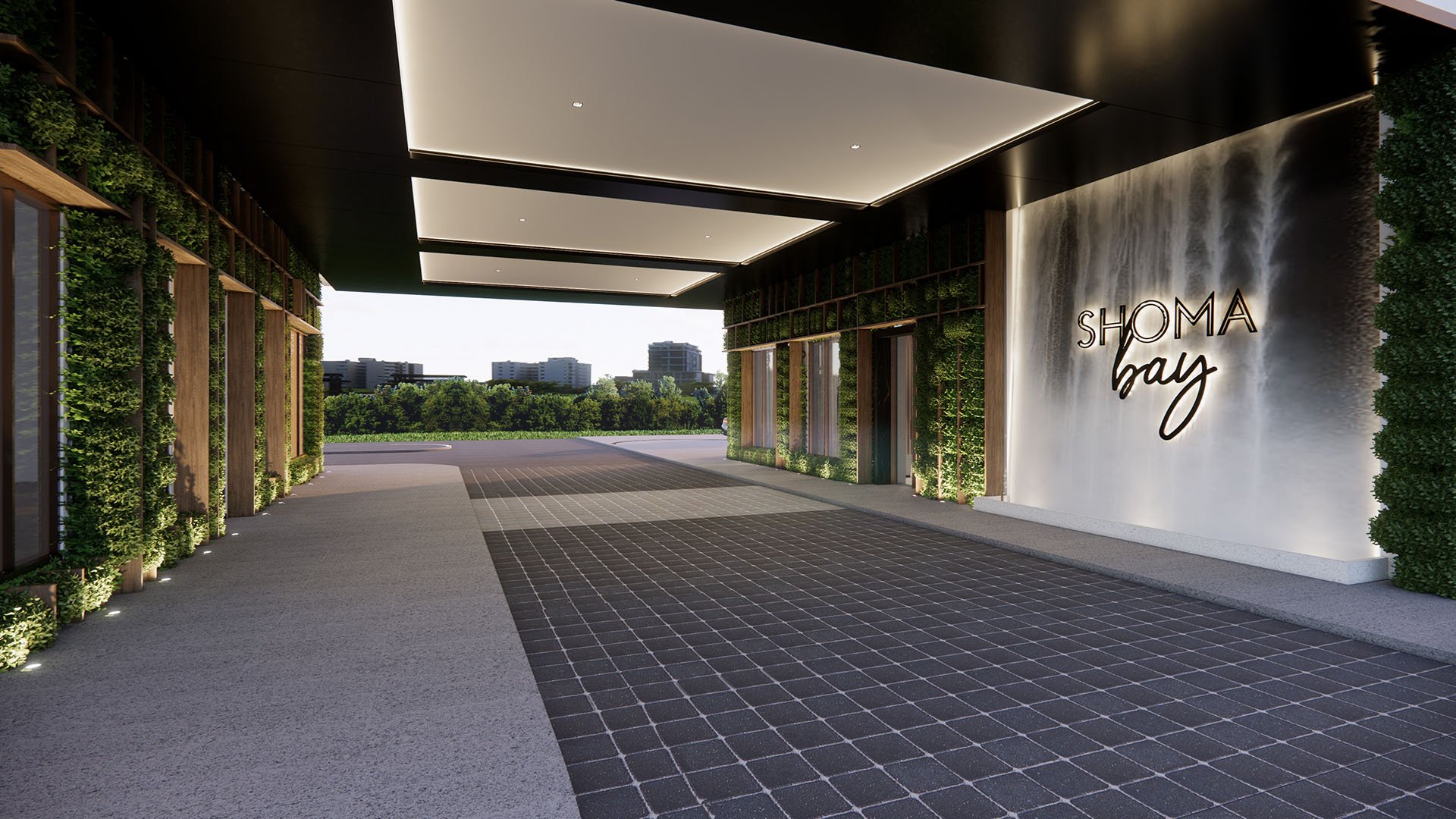
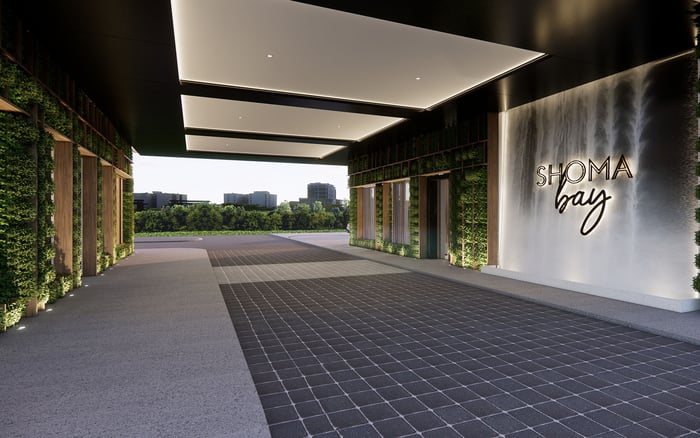
For South Florida’s most selective buyers, privacy is no longer defined only by a gated entry, a private elevator, or a residence high above the water. It begins earlier. It starts with the turn from the street, the handoff from vehicle to valet, the first sightline from a public edge, and the sequence that carries a resident from exterior exposure into a calmer private environment.
That is why Shoma Bay North Bay Village fits a larger conversation now shaping the Miami waterfront market. The project is not simply part of a location story. It is a case study in how a luxury residential address can manage the transition from public arrival to private life, especially in a setting where urban access and waterfront expectations meet.
North Bay Village occupies a distinctive position between mainland Miami and Miami Beach. That geography gives residents proximity without placing them fully inside the most heavily trafficked luxury corridors. For buyers who value access but resist constant exposure, the village offers a quieter framework for daily movement, waterfront living, and discretion.
North Bay Village has long been associated with movement across the bay, yet its next luxury chapter is more intentional. The conversation is shifting from pass-through convenience to residential identity. In that context, arrival matters because it sets the tone for whether a building feels like a destination or merely a stop along the causeway.
The privacy-first idea is especially relevant here because the village sits within the gravitational pull of Miami and Miami Beach while maintaining a more insulated character. A buyer can remain close to dining, culture, business districts, and beaches, then return to a waterfront setting that feels less publicly performative. North Bay Village increasingly describes that balance: connected, but not overexposed.
This is where Shoma Bay becomes an instructive example. The luxury narrative is not only about a desirable bayfront address or a broader amenity promise. It is about how residents can move through the project with control, comfort, and reduced visibility. For high-net-worth buyers, that choreography can be as meaningful as the view.
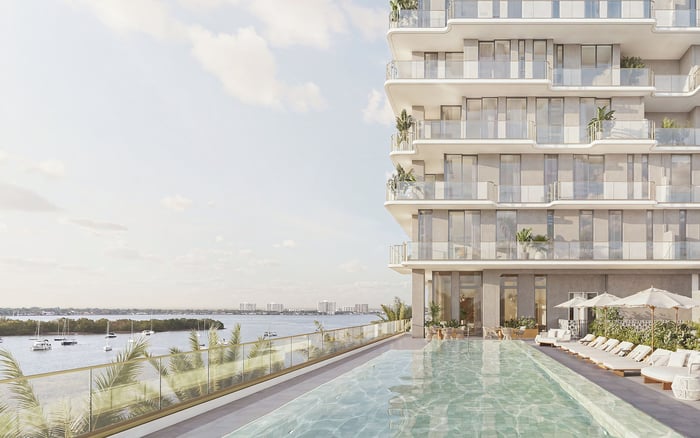
Waterfront living often sells itself through openness: light, horizon, air, and long views. Privacy-first arrival asks a more nuanced question. How can a project offer that openness while still protecting the resident’s path into the building and up to the home?
The answer is rarely one feature. It is a sequence. Vehicle entry, curb position, valet or drop-off flow, lobby placement, staff handoffs, elevator access, and the movement toward the private residence all contribute to how discreet a building feels. A beautiful lobby can still feel exposed if the approach is overly public. A refined façade can lose impact if the resident experience begins with friction.
Shoma Bay fits the theme because it allows buyers to think about arrival as more than an architectural threshold. It is a controlled progression from visibility to privacy. The most successful luxury buildings make that progression feel natural rather than theatrical. They reduce unnecessary pauses, awkward crossings, and public-facing interruptions.
In an urban waterfront project, the key challenge is not eliminating public energy. It is managing it. Luxury buyers often want proximity to restaurants, services, waterfront activity, and neighborhood vitality. They do not necessarily want that activity to merge with their residential circulation.
That distinction is central to the privacy-first conversation. A project can participate in a growing district while still giving residents a protected route home. The best arrival experiences feel composed, with clear separation between what belongs to the neighborhood and what belongs to the resident.
North Bay Village’s current development energy makes this question timely. Nearby projects such as Continuum Club & Residences North Bay Village and Tula Residences North Bay Village reinforce the area’s move toward a more deliberate residential future. In that setting, Shoma Bay’s relevance is not isolated. It belongs to a broader discussion about how the village should welcome residents who expect discretion as part of the daily experience.
A privacy-first buyer is not only asking whether a building is secure. Security is expected. The more refined question is whether the property understands the resident’s desire to move without unnecessary attention.
That includes controlled visibility at arrival, intuitive handoffs between staff and resident, smooth transitions from car to interior, and minimal friction between public-facing areas and private elevator or residential zones. It also includes emotional privacy: the feeling that one can return home without being on display.
This is why arrival has become part of the design and sales language of new-construction luxury. Buyers compare not just floor plans and views, but the lived rhythm of a building. The strongest residences offer a sense that the day becomes quieter as one approaches home.
Miami’s denser luxury districts have undeniable appeal, but they also bring a higher degree of visibility. For some buyers, that exposure is part of the energy. For others, it is precisely what they want to leave behind at the end of the day.
North Bay Village offers a different proposition. It remains close to major destinations, yet its waterfront character can feel more contained. That does not mean remote. It means buffered. In a market where discretion is increasingly prized, that distinction matters.
Comparable buyer psychology can be seen across other waterfront pockets where privacy and access are both part of the appeal. Onda Bay Harbor speaks to a similar appetite for bay-oriented living outside the most exposed urban corridors, while The Well Bay Harbor Islands reflects the growing importance of resident-centered lifestyle as part of the luxury decision. Shoma Bay belongs in that conversation because it highlights how a building’s first impression can be as practical as it is aesthetic.
The most persuasive way to understand Shoma Bay is not as a single amenity story. It is as a lens on how North Bay Village luxury is maturing. The area’s promise is not only waterfront proximity between Miami and Miami Beach. It is the possibility of a more private daily rhythm within reach of both.
For the right buyer, privacy-first arrival is a form of quiet intelligence. It reduces exposure, organizes movement, and turns the return home into a controlled experience. In South Florida’s ultra-premium market, that kind of choreography is becoming less like a bonus and more like a baseline expectation.
What does privacy-first arrival mean in luxury real estate? It refers to the way a building manages movement from the street, car, curb, lobby, elevator, and residence with discretion and minimal exposure.
Why is Shoma Bay relevant to this conversation? Shoma Bay can be viewed as a North Bay Village case study for how a waterfront residential project handles the transition from public-facing arrival to private living.
Why does North Bay Village appeal to privacy-minded buyers? It sits between mainland Miami and Miami Beach, offering proximity to both while maintaining a quieter waterfront character than denser corridors.
Is privacy-first arrival only about security? No. Security is part of it, but the larger idea includes visibility, circulation, staff handoffs, and how calmly a resident moves through the property.
Does waterfront living conflict with privacy? Not necessarily. The strongest waterfront projects balance openness to views with controlled access and discreet resident circulation.
How should buyers evaluate arrival during a project review? They should study the path from vehicle arrival to residence, including where public areas end and private residential movement begins.
Why is North Bay Village changing in perception? The area is increasingly discussed as an intentional luxury residential destination rather than only a pass-through causeway environment.
What makes arrival choreography important for high-net-worth buyers? It protects time, reduces unnecessary visibility, and creates a more composed return-home experience.
Can mixed-use energy coexist with residential discretion? Yes, when public-facing activity is clearly separated from private residential circulation and access points.
What is the main buyer takeaway on Shoma Bay? Its luxury value can be understood not only through location, but through the promise of a controlled, discreet, resident-centered arrival sequence.
For a confidential assessment and a building-by-building shortlist, connect with MILLION.
If branded residences are on your mind — as a home or as an allocation — we would be glad to share what we are seeing, privately.
Begin a quiet conversation