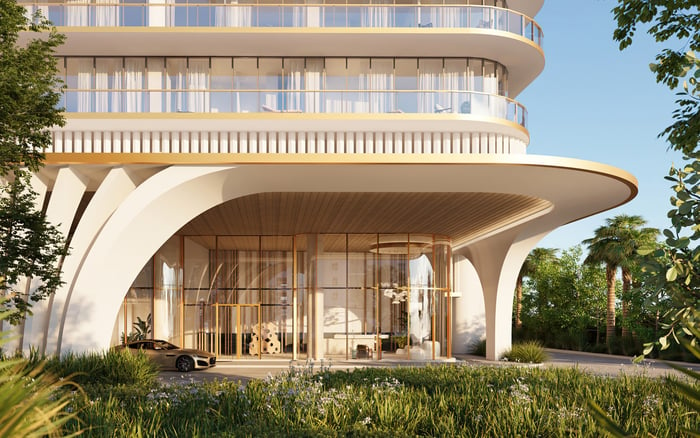
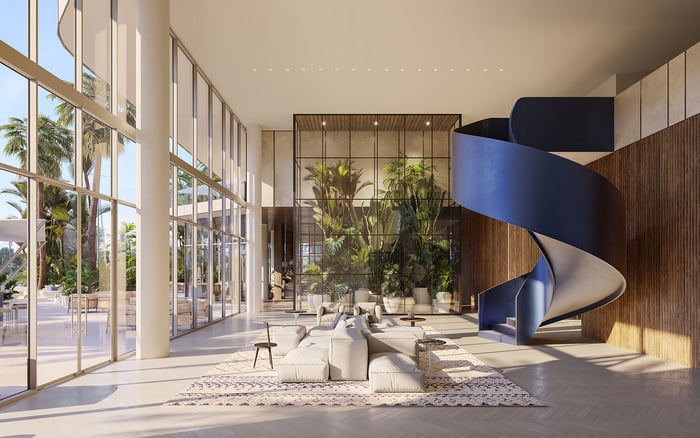
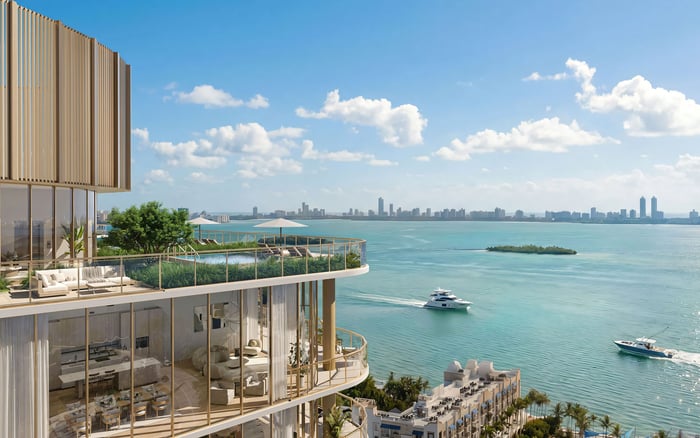
South Florida’s luxury buyer is increasingly prioritizing ease, privacy and operational calm. Riva Residenze Fort Lauderdale, The Ritz-Carlton Residences® Fort Lauderdale and Alma Bay Harbor Islands illustrate how low-friction luxury is reshaping expectations across waterfront, branded and boutique residential settings.
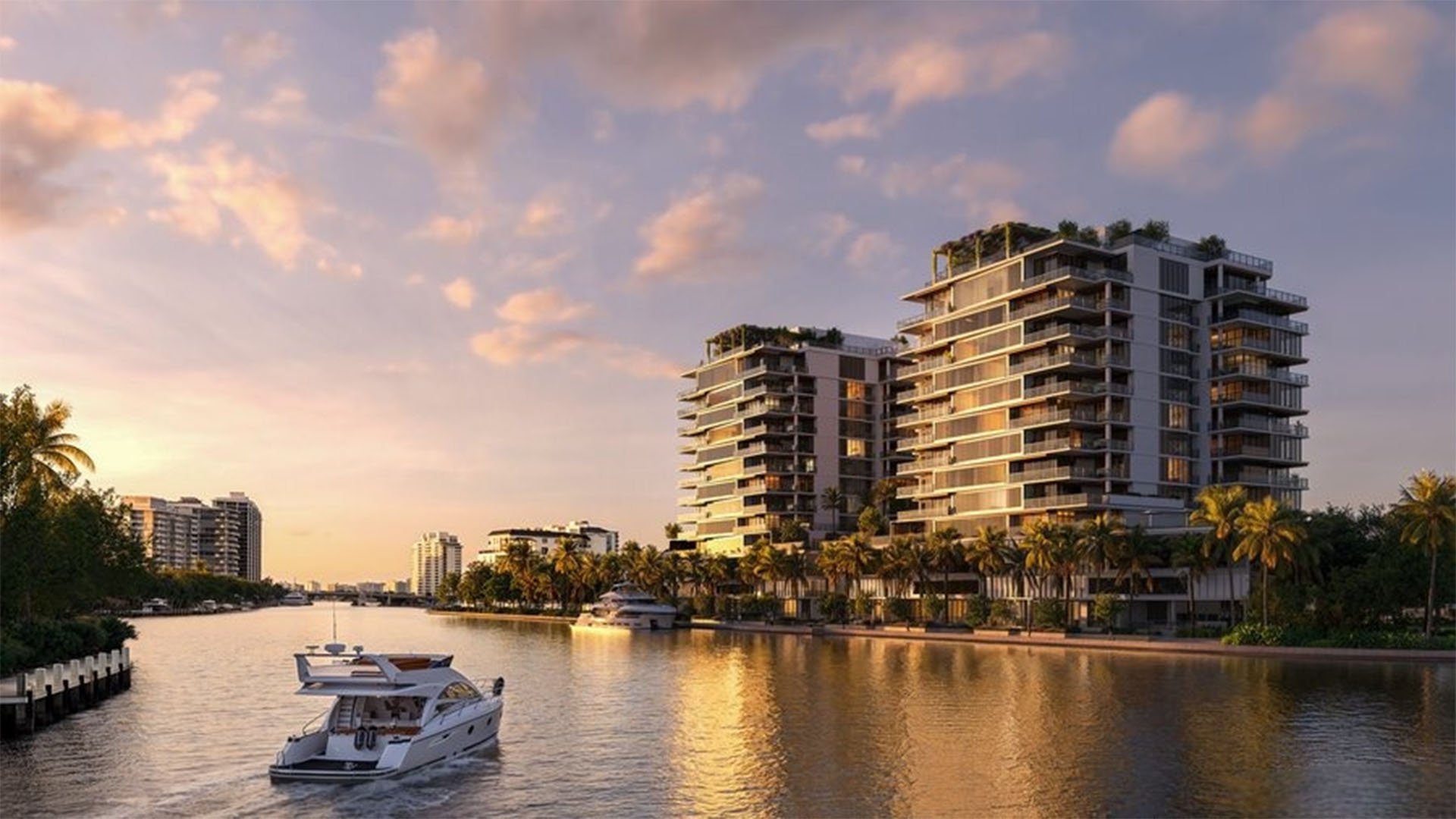
South Florida luxury has always understood spectacle. The region knows how to deliver the dramatic arrival, the cinematic view, the resort-level pool deck and the residence composed for a life lived partly indoors, partly in the open air. Yet the most sophisticated buyers are asking a quieter, more exacting question: how much effort does this home remove from daily life?
That is the essence of low-friction luxury. It is not anti-design, anti-service or anti-amenity. It is the opposite: the disciplined editing of every residential touchpoint so ownership feels lighter, calmer and more intuitive. In this context, Riva Residenze Fort Lauderdale, The Ritz-Carlton Residences® Fort Lauderdale and Alma Bay Harbor Islands become useful signals. Each speaks to a different version of the same buyer desire: a residence that makes high-end living feel less managed, less performative and more natural.
For a certain owner, the next threshold of status is not simply more space or more amenities. It is fewer compromises. It is the ability to move between privacy, service, arrival, wellness, entertaining and retreat without a constant sense of coordination. In a market where premium buyers often divide time between homes, cities and obligations, ease has become a form of value.
Fort Lauderdale has matured into a luxury market with its own residential identity, distinct from Miami’s energy and Palm Beach’s formality. Its appeal lies in a blend of waterfront sensibility, urban access and a more discreet cadence. For buyers evaluating Fort Lauderdale today, the question is rarely whether the city can support luxury. The sharper question is which version of luxury best suits a life that needs both refinement and breathing room.
Riva Residenze Fort Lauderdale fits naturally into that conversation because it suggests a residential experience shaped around composure rather than noise. The value proposition is not merely a building name. It is whether the home feels easy to enter, easy to use, easy to enjoy and easy to leave when travel calls. Low-friction luxury rewards residences that make daily routines feel well edited, from the transition between private and shared spaces to the intuitive separation of public-facing entertaining and personal retreat.
The presence of The Ritz-Carlton Residences® Fort Lauderdale adds another layer to the city’s evolution. Branded residences matter most when the brand promise reduces uncertainty. Buyers are not only purchasing finishes or addresses. They are buying an expectation of hospitality logic, operational consistency and a familiar service language. In a second-home or primary luxury context, that familiarity can be as valuable as the view.
What is notable is that these Fort Lauderdale offerings do not need to mimic Miami to feel important. Their strength is in a different rhythm: polished, coastal, residential and somewhat less congested in spirit. For the buyer who wants access without overexposure, that rhythm is precisely the point.
If Fort Lauderdale expresses low-friction luxury through a broader coastal city lens, Bay Harbor Islands brings the concept into sharper boutique focus. The buyer drawn to Alma Bay Harbor Islands is likely not seeking the loudest address in South Florida. The more compelling attraction is scale, privacy and the possibility of living well without the daily intensity of a larger tower environment.
In a Bay Harbor setting, low-friction living often means shorter mental distances. The home should feel connected but not exposed, refined but not theatrical, calm but not isolated. That balance is increasingly important for buyers who want proximity to Miami Beach and the broader Miami luxury corridor while preserving a sense of residential quiet.
Alma Bay Harbor Islands reflects the growing appeal of smaller-feeling luxury environments, especially for owners who value discretion. Boutique does not mean lesser. In many cases, boutique living is the more demanding product type because there is less room to hide behind scale. The architecture, circulation, arrival experience and atmosphere must work with particular clarity. When they do, the result can feel deeply personal.
This is where Alma becomes part of a larger South Florida shift. The region is not only producing trophy towers. It is producing a more nuanced luxury map, where the best residence for a buyer may be the one that removes the most friction from their actual life, not the one that shouts most loudly from the skyline.
Waterfront has long been one of South Florida’s defining luxury signals, but the way buyers interpret it is changing. The view still matters. The sense of openness still matters. The emotional release of water, sky and light still matters. What has changed is that buyers increasingly connect these qualities to livability rather than display.
A waterfront residence that is difficult to use, overcomplicated to maintain or too public in its daily experience may not satisfy the new premium buyer. The strongest residences are those that turn location into ease. They reduce the sense of effort around entertaining, decompressing, hosting family or moving between indoor and outdoor routines.
Lifestyle, in this context, is not a marketing layer placed on top of the building. It is the functional reality of how the residence supports the owner’s schedule, privacy and preferences. Does the home accommodate a quiet morning as well as an evening with guests? Does the building feel intuitive when the owner arrives after travel? Does the address create access without forcing constant exposure?
These questions are becoming more important because luxury buyers are more fluent than ever. They have seen enough marble, glass and water features to distinguish between surface polish and genuine ease. Low-friction luxury wins when the residence feels self-explanatory: elegant without requiring explanation, serviced without feeling intrusive, private without feeling remote.
The best way to assess this category is to look beyond the brochure language and imagine an ordinary week. Not the first tour. Not the cocktail reception. An ordinary week. How does the arrival sequence feel? Where do deliveries, guests and service functions go? How naturally does the plan support privacy? Are shared spaces useful or simply photogenic? Does the building’s identity support the owner’s life, or does it ask the owner to adapt?
This lens is especially useful when comparing Riva Residenze Fort Lauderdale, The Ritz-Carlton Residences® Fort Lauderdale and Alma Bay Harbor Islands. The three are not interchangeable, and they should not be evaluated as if they are. One buyer may prioritize the residential calm and waterfront sensibility associated with Fort Lauderdale. Another may prefer the recognizable service expectations of a branded environment. A third may respond to the quieter, more intimate language of Bay Harbor Islands.
The common thread is not sameness. It is reduced resistance. A low-friction residence makes ownership feel less like an operation and more like an extension of how the buyer already wants to live. That may be the most relevant luxury metric in South Florida now.
The rise of low-friction luxury suggests a more mature market. Buyers are not abandoning grandeur, design or amenities. They are becoming more selective about which forms of luxury actually improve life. The future premium may belong to residences that feel calm before they feel impressive, and highly resolved before they feel lavish.
That is why projects such as Riva Residenze Fort Lauderdale, The Ritz-Carlton Residences® Fort Lauderdale and Alma Bay Harbor Islands are worth watching as part of a larger pattern. They represent different answers to the same buyer question: can this home make life more beautiful while asking less from me?
In South Florida, that may be the defining luxury of the decade.
What does low-friction luxury mean in South Florida real estate? It means a residence that reduces daily complexity through privacy, intuitive design, service and ease of ownership.
Why is Fort Lauderdale relevant to this trend? Fort Lauderdale offers a more composed luxury rhythm for buyers who want refinement, water-oriented living and residential calm.
How does Riva Residenze Fort Lauderdale fit the low-friction idea? It represents the appeal of a polished residential environment where ease, privacy and lifestyle flow matter as much as presentation.
What role do branded residences play in low-friction luxury? Branded residences can reduce uncertainty by offering buyers a familiar service language and a more predictable ownership experience.
Why mention The Ritz-Carlton Residences® Fort Lauderdale in this context? The name signals a hospitality-driven residential expectation, which can be valuable for buyers seeking consistency and discretion.
How does Alma Bay Harbor Islands differ from larger luxury towers? Alma Bay Harbor Islands speaks to buyers who may prefer boutique scale, privacy and a quieter residential atmosphere.
Is boutique living considered true luxury? Yes. Boutique luxury can be especially compelling when intimacy, design clarity and privacy are more important than scale.
Why is waterfront living still important? Waterfront living remains central because it supports light, openness and emotional calm, especially when paired with practical ease.
What should buyers compare beyond finishes? Buyers should compare arrival, privacy, service flow, shared spaces and how naturally the residence supports an ordinary week.
Is low-friction luxury only for second-home buyers? No. It appeals to primary residents and seasonal owners alike because both value homes that simplify rather than complicate life.
If you'd like a private walkthrough and a curated shortlist, connect with MILLION.
If branded residences are on your mind — as a home or as an allocation — we would be glad to share what we are seeing, privately.
Begin a quiet conversation