A discreet buyer’s guide to how portfolio leverage, liquidity, opportunity cost, and ownership horizon shape the decision to acquire luxury real estate on Fisher Island.

For a certain kind of buyer, Fisher Island is not simply a place to acquire a residence. It is a capital-allocation decision shaped by liquidity, privacy, family use, and control. The question is rarely whether the buyer can afford the property. The more refined question is whether the acquisition should be made with cash, strategic debt, asset-backed liquidity, or a blended structure that preserves optionality elsewhere in the portfolio.
That distinction matters. Luxury real estate at this level often competes with private business interests, market investments, art, aircraft, philanthropy, and generational planning. A residence may be emotionally compelling, but it still belongs inside a broader balance sheet. Portfolio leverage therefore becomes less about borrowing capacity and more about discipline: how much capital should be fixed in one highly personal asset, and how much should remain liquid for opportunity, defense, or succession.
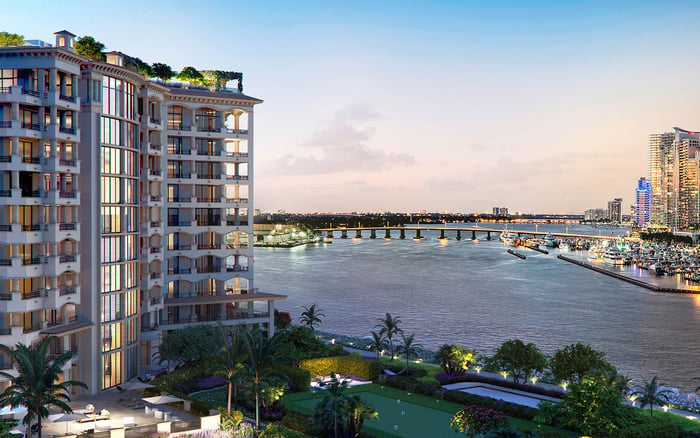
On Fisher Island, where privacy and scarcity are central to the appeal, leverage questions can influence timing as much as price. A buyer considering The Residences at Six Fisher Island may evaluate not only the residence itself, but also how the acquisition interacts with liquidity targets, investment mandates, and family office governance.
Portfolio leverage is often misunderstood as a simple yes-or-no financing decision. In practice, sophisticated buyers treat it as a flexibility tool. Paying all cash can deliver speed, certainty, and psychological simplicity. Using leverage can preserve capital for other investments, business needs, or reserves. Neither approach is automatically superior.
The decision becomes sharper when a buyer is already exposed to real estate through primary homes, income assets, development interests, or commercial holdings. Another luxury purchase may increase concentration even if the household remains comfortably capitalized. That is why the conversation should begin with exposure, not loan terms.
A clear framework asks four questions. What percentage of net worth will be held in personal-use real estate after the acquisition? How much liquidity should remain available after closing and furnishing? What is the likely hold period? How would the family feel if markets, business income, or borrowing conditions changed shortly after purchase?
Those answers often determine whether cash feels elegant or inefficient, and whether leverage feels prudent or unnecessary.
Fisher Island buyers tend to evaluate more than interior finish or view orientation. The decision often sits at the intersection of Investment discipline, Waterfront lifestyle, and Gated-community expectations. These are not slogans. They are the practical filters through which a major purchase is assessed.
A Waterfront residence can feel like a lifestyle asset first, yet it still absorbs capital. A Gated-community setting can support privacy and predictability, yet ownership also carries the responsibilities that come with any rare address. Investment thinking does not remove emotion from the decision. It gives emotion a more stable structure.
For instance, a buyer considering The Links Estates at Fisher Island may value privacy, scale, and a more residential feel. The leverage question then becomes highly personal: should the acquisition be treated as a long-term family compound decision, or as one part of a diversified residential portfolio?
Cash remains powerful in ultra-luxury real estate because it can simplify negotiation and reduce execution risk. It may also appeal to buyers who dislike administrative complexity or prefer to keep personal residences free of encumbrance. For some families, the emotional value of clean ownership outweighs the theoretical benefit of retained liquidity.
Cash can also be sensible when the buyer has ample liquidity beyond the purchase, a long ownership horizon, and limited need for redeployable capital. In that case, the residence is less a trade and more a lifestyle anchor. The buyer is not trying to optimize every basis point. The goal is certainty, discretion, and use.
Still, even cash buyers should consider opportunity cost. Capital committed to a residence is capital no longer available for other purposes. The question is not whether the buyer has enough. The question is whether the chosen structure respects the buyer’s larger financial architecture.
Strategic leverage can make sense when a buyer wants the residence but prefers to keep capital productive elsewhere. This may be relevant for entrepreneurs, investors, or families with significant private-market commitments. Debt, when used carefully, can allow the buyer to acquire the desired property without overconcentrating liquid capital in a personal asset.
The appeal is not simply financial. Leverage can preserve agility. It can keep reserves available for business expansion, market dislocation, family planning, or additional real estate opportunities. In a market where the best residences may require decisive action, liquidity can be an advantage.
That said, leverage should be matched to temperament. A buyer who will be distracted by debt on a personal residence may not enjoy the theoretical efficiency. The finest structure is the one the owner can live with comfortably through changing conditions.
Different property types can prompt different leverage conclusions. A condominium residence may be evaluated through ease of ownership, service, privacy, and lock-and-leave convenience. An estate-style purchase may require a wider review of maintenance, family use, staffing, and long-term planning.
A buyer looking at Palazzo del Sol may frame the acquisition around refined condominium living and capital preservation. A buyer comparing Palazzo della Luna may ask similar questions, but the answer may differ depending on intended use, current portfolio exposure, and the role the residence will play in the family’s Miami life.
The point is not to force a financing answer onto every property. It is to understand how the residence behaves inside the portfolio. Does it replace another home, add a new layer of exposure, or become the primary South Florida base? Is it intended for seasonal use, multigenerational enjoyment, or eventual resale flexibility? These questions shape the capital strategy as much as the property tour does.
Before signing, the most disciplined buyers pressure-test the acquisition in plain language. If no debt is used, what opportunities are being deferred? If debt is used, what happens if refinancing is unattractive later? If the property is held for many years, does the structure remain comfortable? If the family’s needs change, can the asset be carried without stress?
The best advisors also separate purchase excitement from post-closing reality. Furnishings, operating costs, reserves, and lifestyle spending should be considered before deciding how much capital to commit at closing. In the Fisher Island context, the goal is not maximal leverage. It is elegant liquidity.
A well-structured purchase should feel calm after the closing dinner. It should leave the buyer with privacy, pride of ownership, and enough financial room to remain opportunistic.
Portfolio leverage influences the Fisher Island decision because it turns desire into structure. The residence may be beautiful, rare, and emotionally right. But the acquisition becomes truly intelligent only when it also fits the family’s liquidity, risk tolerance, and long-term plans.
For the ultra-premium buyer, the right question is not, “Can I buy it?” It is, “What is the cleanest way to own it without compromising the rest of the portfolio?” On Fisher Island, that question is often the difference between a purchase that feels impressive and one that feels inevitable.
Should every Fisher Island buyer consider leverage? Every buyer should consider the question, even if the final decision is to pay cash. The exercise clarifies liquidity, concentration, and opportunity cost.
Is cash always stronger in a luxury purchase? Cash can be stronger for certainty and simplicity, but it is not always the most efficient structure. The best answer depends on the buyer’s broader balance sheet.
Can leverage make sense for a personal-use residence? Yes, if it preserves liquidity and fits comfortably within the buyer’s risk tolerance. It should not create stress or depend on optimistic assumptions.
How does ownership horizon affect the decision? A longer hold period may support a simpler, more permanent capital structure. A shorter or uncertain horizon may reward flexibility.
Why does portfolio concentration matter? A buyer may already hold significant real estate exposure. Adding another major residence can change the balance of liquid and illiquid assets.
Should a buyer decide financing before touring properties? It is wise to define a preliminary structure early. That allows the buyer to act decisively when the right Fisher Island opportunity appears.
Does leverage reduce privacy? It can add administrative steps, but privacy concerns are usually managed through careful structuring and professional execution. The buyer should discuss this before committing.
What role does family office governance play? Governance can help separate lifestyle preference from portfolio discipline. It also keeps the decision aligned with liquidity and succession planning.
Can the same buyer use different strategies for different residences? Yes. A primary lifestyle anchor, a seasonal residence, and an investment-oriented property may each justify a different capital approach.
What is the most important question before buying? Ask whether the acquisition remains comfortable under changing market, business, and family conditions. If it does, the structure is likely more resilient.
For a confidential assessment and a building-by-building shortlist, connect with MILLION.
If branded residences are on your mind — as a home or as an allocation — we would be glad to share what we are seeing, privately.
Begin a quiet conversation