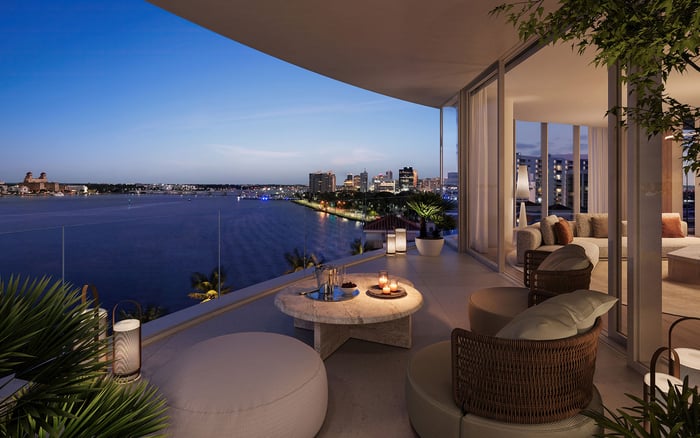
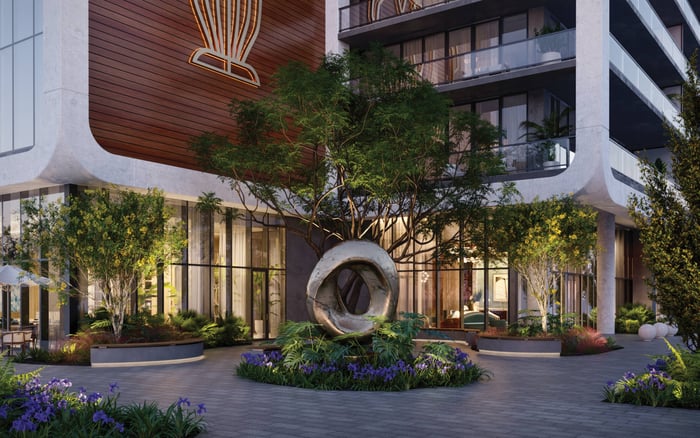
A discreet owner’s guide to shaping pet-friendly routines at Edgeworth West Palm Beach, with practical planning for travel days, care handoffs, building etiquette, and second-home ownership.
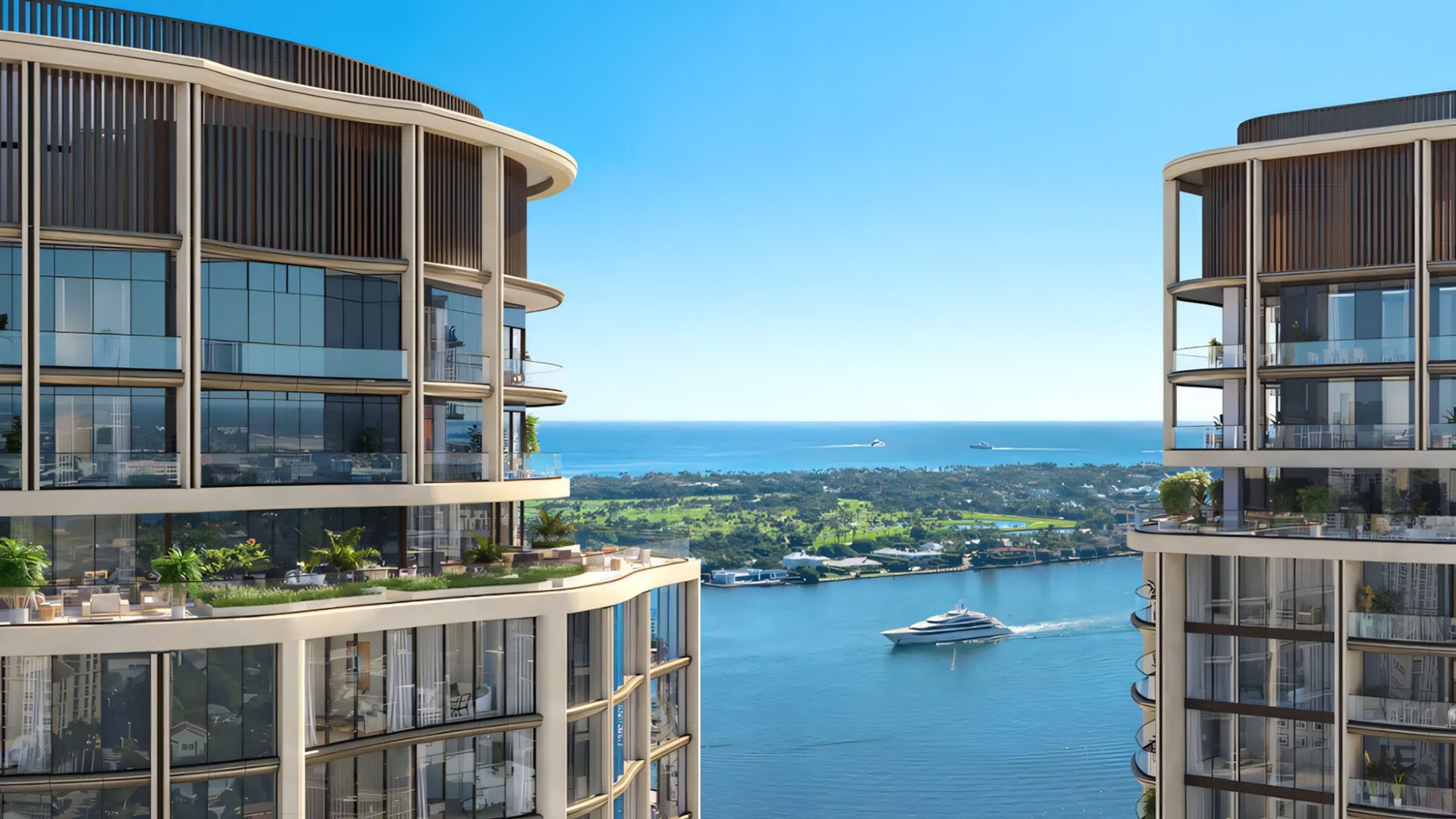
At the top end of West Palm Beach ownership, pet-friendly living is no longer a soft amenity. It is an operating system. The most sophisticated buyers are not simply asking whether a residence accepts dogs or cats. They are asking how a home performs when its owner is in New York for three days, in Europe for two weeks, or moving between a Palm Beach season and a summer elsewhere.
That is the useful lens for considering Edgeworth West Palm Beach. For owners who travel frequently, the question is not only what the building may allow, but how daily life can be structured with minimal friction. A pet routine must work for the resident, the animal, household staff, the building team, and any visiting caregiver. At its best, it feels invisible.
In this segment, discretion matters as much as convenience. A dog walker should know where to enter. A pet sitter should understand elevator etiquette. A house manager should have written preferences for feeding, medication, grooming, emergency contacts, and access. The residence should remain serene, secure, and composed even when the owner is away.
West Palm Beach has become a natural fit for owners who want a more measured cadence than Miami, while staying close to private aviation, Palm Beach social life, dining, culture, and waterfront routines. For pet owners, that calmer rhythm can be especially valuable. The city’s appeal is not only sunshine and walkability in select districts. It is the ability to design a repeatable day.
Second-home ownership changes the pet conversation. A primary home may rely on instinct and habit, but a secondary residence requires documentation. The leash location, preferred route, feeding schedule, veterinarian contact, approved treats, and household boundaries should all be clear enough for someone else to execute without a call to the owner.
This is where West Palm Beach residences compete on lifestyle intelligence. Buyers may compare Edgeworth with nearby offerings such as Alba West Palm Beach, Forté on Flagler West Palm Beach, or Mr. C Residences West Palm Beach, but the refined question remains consistent: which residence best supports the way the household actually lives when the owner is present, absent, and in transition?
A polished pet routine begins before departure. The evening before a flight, owners should prepare a compact station with food portions, medications if applicable, grooming tools, waste bags, harnesses, vaccination records, and written instructions. The goal is not abundance. It is clarity.
For a traveling owner at Edgeworth West Palm Beach, the strongest routine is usually built around three handoffs. First is the home handoff, where the caregiver understands the residence, the pet’s temperament, and any rooms that should remain private. Second is the building handoff, where access permissions, arrival times, and contact procedures are aligned in advance. Third is the neighborhood handoff, where routes, shaded pauses, and preferred timing are explained.
Owners should also think about emotional continuity. Pets respond to familiar smells, sounds, and sequences. A consistent morning walk, a particular mat near the door, or a set feeding place can reduce stress when the household principal is away. Luxury, in this context, is not spectacle. It is stability.
The most common failure in traveling pet ownership is not the care itself. It is access. A caregiver arrives without the right clearance, a temporary key is misplaced, an elevator protocol is misunderstood, or the front desk receives instructions too late. These are small disruptions, but in a premier building they are avoidable.
Owners should create a written access plan that addresses names, dates, arrival windows, permitted areas, emergency contacts, and whether a caregiver may enter when the owner is not present. The document should be updated each time travel plans change. If household staff, a pet sitter, and a dog walker all have different responsibilities, those roles should not overlap casually.
This same standard applies across new-construction and established luxury residences. Buyers considering The Ritz-Carlton Residences® West Palm Beach, for example, may be drawn to a service-forward environment, while Edgeworth prospects may be focused on a more specific lifestyle fit. In either case, the owner’s obligation is to convert preference into procedure.
In a luxury condominium, pet etiquette is part of residential etiquette. That means leashes in shared spaces, quiet transitions through lobbies and elevators, prompt cleanup, and a clear understanding of where pets are and are not appropriate. These points may sound basic, but they carry outsized importance in buildings where privacy and calm are central to the value proposition.
For traveling owners, etiquette must be teachable. A caregiver should know whether the pet is comfortable around other animals, whether it should wait for a less crowded elevator, and how to handle a lobby encounter with neighbors. A well-written note can prevent awkward moments and preserve the owner’s reputation while away.
The best routines also anticipate weather. South Florida heat, rain, and pavement temperature can alter the timing and length of walks. A high-end pet routine should include preferred indoor settling rituals for stormy afternoons and shorter relief walks when conditions are uncomfortable.
Pet-friendly living is most successful when the home itself quietly supports it. That does not require turning a refined residence into a kennel. It means selecting durable textiles where appropriate, placing washable mats near entry points, protecting delicate rugs during travel periods, and assigning one calm area where the animal can rest without interruption.
Owners who travel should consider a dedicated pet drawer or cabinet stocked with duplicate essentials. This prevents the familiar last-minute search for a leash, medication, or travel carrier. It also allows a caregiver to function confidently without opening private storage.
Technology can help, but it should not replace human judgment. Cameras, smart locks, and temperature controls may add reassurance, yet they are most effective when paired with a trusted person who knows the pet. The objective is not surveillance. It is continuity.
Before committing to any residence, pet owners should ask practical questions early. What are the pet policies? Are there size, breed, number, or registration requirements? What documentation is needed? How are visiting caregivers handled? Are there rules for service elevators, lobby circulation, or designated relief areas? What happens if the owner is abroad and an urgent pet issue arises?
The answers may vary by building, and they should be reviewed directly as part of due diligence. For Edgeworth West Palm Beach, the important point is to evaluate the residence not only as architecture or location, but as a living framework for a mobile owner with a cherished animal.
Pets are personal. Travel is fluid. Luxury real estate must bridge both.
Is Edgeworth West Palm Beach appropriate for owners who travel with pets? It can be considered through the lens of pet policy, access planning, and caregiver coordination. Buyers should confirm all building-specific rules before purchase.
What should traveling owners prepare before leaving a pet at home? Prepare written care instructions, access permissions, feeding details, emergency contacts, and preferred walk routines. Keep essentials in one easy-to-find location.
Should I use a pet sitter or a dog walker in a luxury building? Either can work if the role is clearly defined and approved for access. The building team should know who is coming, when, and for what purpose.
How do pets affect condominium due diligence? Pets add questions about rules, registration, shared-space etiquette, and emergency procedures. These should be reviewed before contract decisions are finalized.
Why is West Palm Beach attractive for pet-owning second-home buyers? West Palm Beach offers a polished seasonal rhythm that can suit owners seeking calm, service, and proximity to Palm Beach life. Pet routines still depend on the specific residence.
What is the most overlooked part of a pet-care routine? Access is often overlooked. A caregiver without proper instructions can create unnecessary stress for the pet, the owner, and the building staff.
Can a luxury residence remain design-forward with animals? Yes, if materials, storage, and resting areas are planned carefully. The aim is to integrate the pet’s routine without compromising the home’s atmosphere.
Should new-construction buyers ask different pet questions? New-construction buyers should ask how policies, staffing, and access procedures will operate once the building is active. Early clarity helps avoid assumptions.
Is second-home pet ownership more complicated than primary-home ownership? It can be, because care is often delegated while the owner travels. Written procedures and trusted local support make the difference.
What is the best first step for a pet owner considering Edgeworth? Begin by confirming current pet policies and mapping your actual travel routine. Then evaluate whether the building can support that routine with discretion.
For a discreet conversation and a curated building-by-building shortlist, connect with MILLION.
If branded residences are on your mind — as a home or as an allocation — we would be glad to share what we are seeing, privately.
Begin a quiet conversation