Private elevator access control is more than a prestige detail. For South Florida bayfront buyers, it can influence privacy, building operations, association economics, insurance conversations, and the long-term resale narrative around a residence.
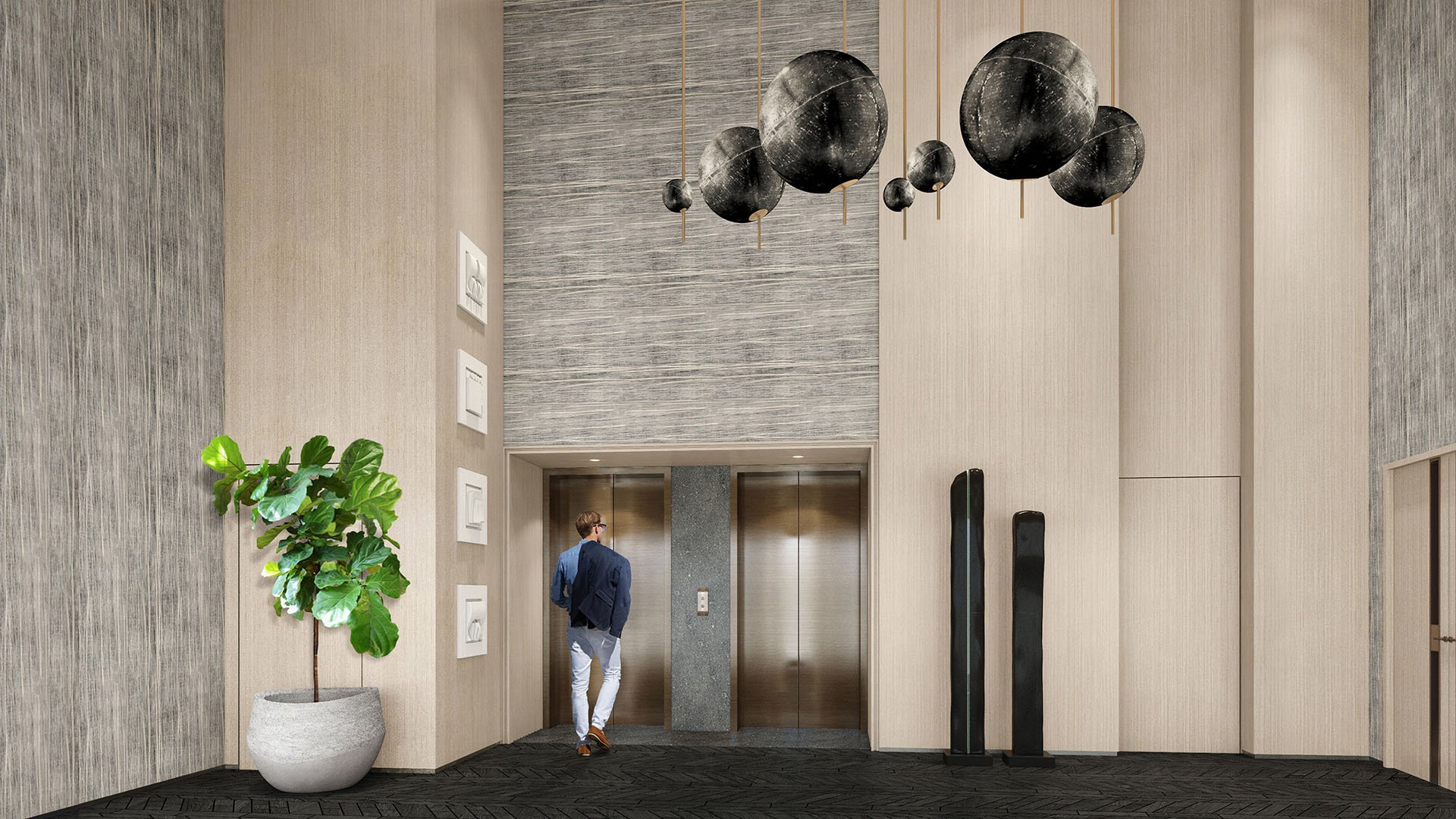
Private elevator access control is often presented as a lifestyle amenity. In a South Florida bayfront residence, it is better understood as an operating philosophy. The promise is simple: fewer thresholds, fewer shared moments, and a more composed arrival from the garage, lobby, or amenity level to the residence itself. The cost story is more layered.
For a buyer comparing a high-floor bayfront home with direct elevator entry against another residence with a traditional corridor, the difference is not merely architectural. It can affect service expectations, association budgets, security procedures, insurance conversations, maintenance planning, and eventual resale. The more private the vertical journey becomes, the more precisely the building must manage that privacy.
That is why sophisticated buyers now study elevator access with the same seriousness they bring to views, floor plate, parking, and terrace depth. A direct elevator can feel effortless on a calm afternoon. The question is whether it remains effortless after years of salt-air exposure, guest arrivals, contractor visits, storm preparation, and peak-season use.
Waterfront buyers often prize discretion. On Biscayne Bay, the Intracoastal, and ocean-adjacent islands, the experience of coming home can be as important as the view. A private elevator vestibule can create a residential sequence closer to a single-family estate: secure arrival, controlled entry, and a clearer boundary between public building space and private home.
Yet privacy is not created by doors alone. It depends on access credentials, elevator programming, staff protocols, visitor management, fire and life-safety coordination, package handling, and service routing. If any of those systems are improvised, the feature can become a frustration rather than a luxury.
In dense vertical markets such as Brickell, buyers considering residences like Una Residences Brickell should ask how elevator access integrates with valet, security desk procedures, amenity reservations, and service entries. The ideal experience is invisible: guests are routed cleanly, staff understand permissions, and residents do not have to explain the building every time someone arrives.
The visible elevator cab is only the polished surface. Behind it are control systems, destination dispatch logic, key fobs or biometric layers, cameras, door hardware, communications equipment, emergency override procedures, and ongoing maintenance contracts. In a bayfront environment, mechanical dependability matters because humidity, salt air, storms, and heavy seasonal use can all place pressure on building systems.
A residence with private elevator access may also require more detailed service coordination. Movers, designers, housekeepers, private chefs, medical providers, family offices, and yacht crews may all need temporary or recurring access. The building must decide who grants permission, how long it lasts, how it is logged, and how it is revoked. That labor is part of the cost, even when it is folded into general staffing.
For an owner, the practical questions are direct. How many elevators serve the stack? Is there a service elevator with a logical path to the residence? What happens when one elevator is offline? Are private elevator lobbies maintained as limited common elements, unit interiors, or association areas? The answers influence both convenience and future expense.
Pricing & Trends conversations around private elevator residences often focus on the immediate premium. The better analysis asks whether the feature strengthens the full ownership proposition. A private elevator can enhance perceived value when it supports a rare floor plan, generous scale, water views, and a highly controlled building environment. On its own, it is not enough.
The premium should be tested against ongoing obligations. Monthly dues may need to support higher staffing standards, more complex security infrastructure, reserve planning for elevator components, and specialized vendor relationships. If a building underfunds those systems, an owner may enjoy privacy in year one and face special-assessment risk later.
In Miami Beach, where buyers often weigh architecture, hospitality, beach proximity, and access control together, a residence such as The Perigon Miami Beach belongs in a broader comparison of how the arrival sequence is managed. The elevator is not the entire story. The lobby, porte cochere, garage, service corridor, and staff culture all determine whether the private arrival feels truly private.
Private elevator access puts unusual pressure on condominium governance. Rules must be clear without feeling punitive. Residents need confidence that their home is protected, while guests and service providers need a process that does not feel theatrical or slow.
Buyers should review association documents, proposed budgets, reserve philosophy, and rules for access credentials before treating direct elevator entry as a simple luxury upgrade. The most elegant buildings tend to make governance feel calm. They anticipate the everyday realities of high-value ownership: visiting family, rotating staff, art deliveries, renovation teams, and seasonal absences.
Friction is greatest when privacy has been marketed but not operationalized. A buyer may discover that contractors cannot access a residence efficiently, that guest permissions require repeated manual intervention, or that service elevators are overburdened. None of these issues erase the appeal of private access, but they change the real cost of living with it.
Private elevator systems can become part of a wider insurance and risk conversation. The issue is not only the elevator itself, but the building’s ability to document maintenance, manage access, respond to emergencies, and maintain secure common areas. A disciplined association should be able to explain how elevator vendors are selected, how inspections are coordinated, and how outages are communicated.
Reserve planning is equally important. Elevators are long-lived building systems, but they require periodic modernization, software updates, mechanical work, and component replacement. When access control is layered onto elevator operations, future upgrades may involve both mechanical and digital infrastructure.
In Sunny Isles Beach, where vertical luxury often centers on expansive views and private arrival, buyers looking at options such as Bentley Residences Sunny Isles should place building systems alongside finishes. The most impressive residence can lose its composure if the vertical circulation plan is fragile.
Resale value depends on whether future buyers see private elevator access as a genuine advantage or as a cost they must inherit. In the strongest cases, the feature supports a broader identity: low-friction privacy, gracious entertaining, clean separation between owner and service movement, and confidence in building management.
In weaker cases, the feature may be treated as decorative. If access is slow, confusing, or expensive to maintain, buyers may discount it. The market tends to reward privacy that feels natural, not privacy that requires explanation.
For bayfront buyers in quieter enclaves, projects such as La Baia North Bay Harbor Islands offer a useful reminder that scale and setting matter. A boutique environment may deliver a different privacy equation than a larger tower. Neither is automatically superior. The right choice depends on how the building balances exclusivity, service, and operating discipline.
Before committing to a bayfront residence with private elevator access, buyers should move beyond the sales-language version of privacy. Ask for the full arrival sequence. Enter as an owner, a guest, a vendor, and a delivery. Study what happens when staff are busy. Ask about backup procedures. Understand whether elevator lobbies are decorated, insured, cleaned, and maintained by the unit owner or the association.
Also compare the feature against alternatives. A semi-private elevator bank with excellent staffing may outperform a direct-entry system that is poorly managed. A traditional corridor in a superbly run building may feel calmer than a private elevator in a building with thin staffing.
The best South Florida bayfront residences do not ask buyers to choose between glamour and operations. They make privacy durable. That durability is what changes the real cost, and potentially the real value, of the home.
Does private elevator access always increase a residence’s value? Not always. It can support value when paired with strong design, governance, staffing, and dependable building systems.
What is the most important question to ask about a private elevator? Ask what happens when the primary elevator is offline. Backup routing reveals how practical the system really is.
Can private elevator access increase monthly ownership costs? It can, especially if the building requires more staffing, security technology, specialized maintenance, or stronger reserves.
Is a direct-entry elevator better than a semi-private elevator? It depends on execution. A well-managed semi-private system can feel more refined than a poorly operated direct-entry plan.
Should buyers review association documents for elevator rules? Yes. Access permissions, maintenance duties, guest procedures, and limited common element language can all affect ownership.
Does bayfront exposure matter for elevator maintenance? Bayfront environments can make maintenance discipline especially important. Buyers should ask how systems are protected and serviced.
How does private access affect guests and vendors? It can make arrivals more discreet, but only if the building has clear processes for temporary permissions and service routing.
Can private elevator access complicate renovations? It may. Renovation teams need freight routes, insurance approvals, time windows, and elevator protection procedures.
What should second-home buyers focus on? They should focus on remote access management, staff coordination, storm procedures, and how permissions are revoked when vendors change.
Is private elevator access worth paying more for? It is worth a premium when it improves daily living and is supported by long-term operational discipline.
For a discreet conversation and a curated building-by-building shortlist, connect with MILLION.
If branded residences are on your mind — as a home or as an allocation — we would be glad to share what we are seeing, privately.
Begin a quiet conversation