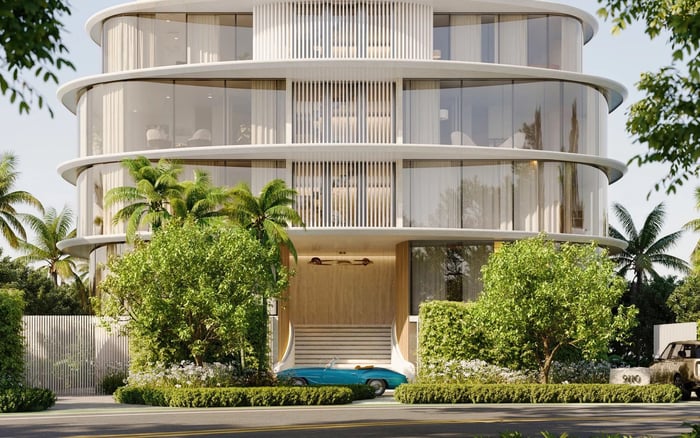
For ultra-high-net-worth buyers in South Florida, private aviation is not a lifestyle accessory so much as a residential filter. Access to executive airports in Miami-Dade, Broward, and Palm Beach often influences where globally mobile households choose to live, tilting demand toward enclaves that minimize transfer friction while preserving privacy, security, and waterfront prestige.
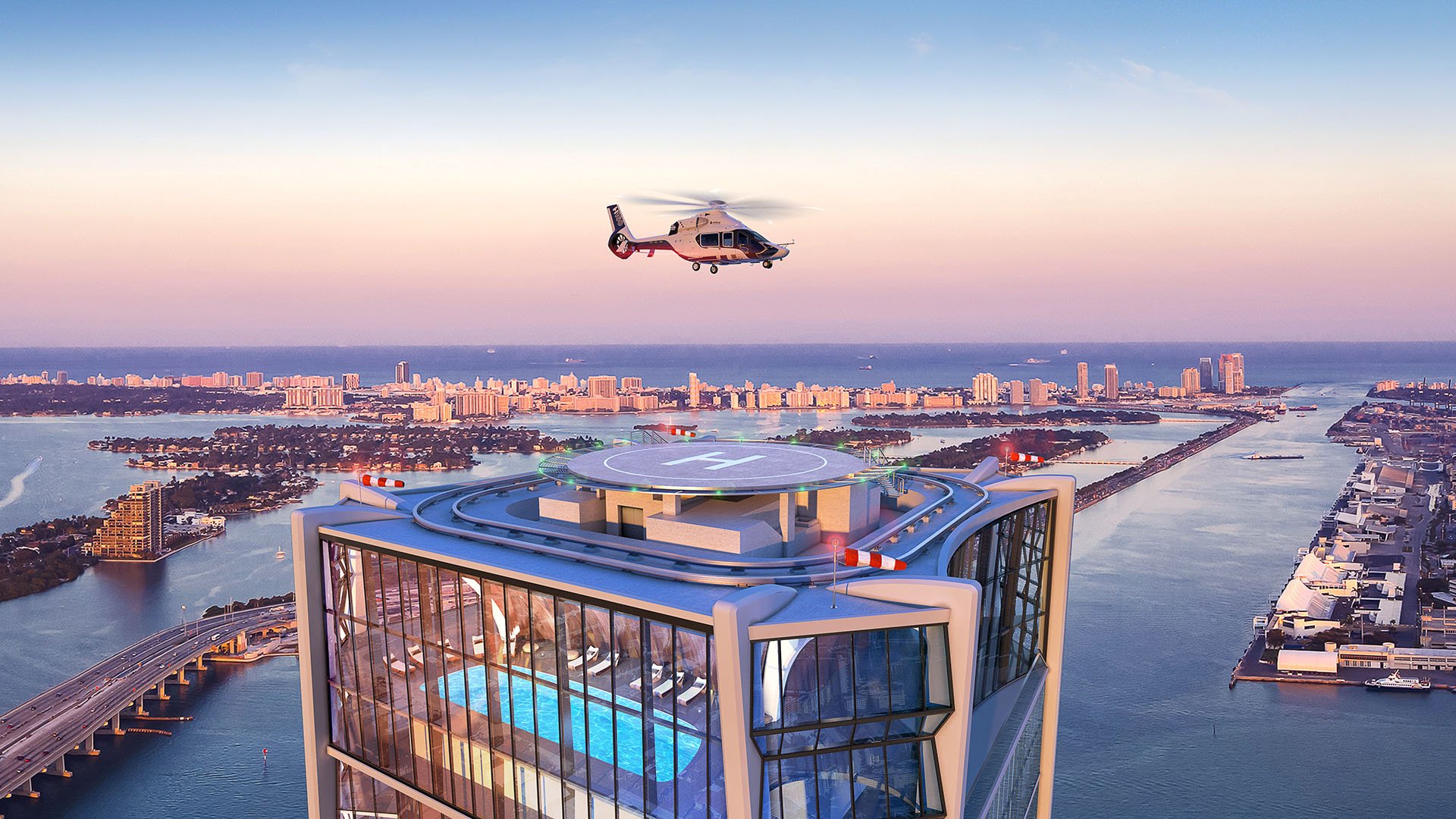
In South Florida, the luxury conversation is often framed around waterfront exposure, branded residences, marina access, or proximity to cultural districts. For ultra-high-net-worth households, however, another layer quietly reshapes the map: private aviation. The question is not simply whether a residence is beautiful or prestigious. It is whether the journey from front door to aircraft feels efficient, protected, and repeatable.
That shift matters because executive airports serve a different role than major commercial terminals. Buyers who fly privately often prioritize reduced terminal friction, smoother vehicle-to-aircraft transitions, and practical access to private-flight facilities and runways. In that framework, a home's position within an executive-airport network can matter more than its straight-line distance to a downtown office tower.
This is one reason South Florida remains so compelling. Rather than relying on a single node, the region offers multiple private-flight gateways across Miami-Dade, Broward, and Palm Beach counties. For global families balancing business, leisure, and frequent regional travel, that network makes residential choice more nuanced and more strategic.
Within Miami-Dade, Opa-locka Executive Airport plays an outsized role in shaping northern demand. Positioned north of central Miami and operating as a major business-aviation hub, it gives households in the north Miami corridor a meaningful logistical advantage over buyers who live farther south.
That is part of the appeal behind communities such as Aventura, Bal-harbour, Sunny Isles, Golden Beach, and Bay Harbor Islands. For households that fly often, these enclaves can align more naturally with departure patterns centered on Opa-locka. The residential equation becomes less about proximity to the urban core and more about preserving time, privacy, and ease.
In Aventura, that logic complements the appeal of refined new inventory such as Avenia Aventura. In Bal-harbour, the conversation aligns with the ultra-discreet shoreline positioning of Rivage Bal Harbour. And in Sunny Isles, projects such as St. Regis® Residences Sunny Isles resonate with buyers who want oceanfront stature without sacrificing practical airport access to the north.
For affluent buyers, the aviation question has broadened beyond aircraft ownership. Charter usage and membership-based flying have expanded the number of households that care deeply about airport proximity, even if they do not maintain a jet themselves. Quick departure capability has become a more central part of lifestyle planning for buyers who move fluidly among multiple residences and business commitments.
This has introduced a more exacting form of neighborhood selection. A buyer may admire Miami Beach, for instance, but still compare it with Bay Harbor Islands, Surfside, or Aventura through the lens of transfer simplicity. Another may be drawn to southern Miami-Dade, but weigh whether Miami Executive Airport better suits typical routes than Opa-locka would. In other words, South Florida demand is not just waterfront versus inland. It is also about which executive field most naturally fits a household's actual travel patterns.
That is why privacy, security, and seamless logistics now appear so often in elite residential marketing. They are not abstract luxuries. They are part of a mobility system that starts at home and ends at the aircraft door.
Miami-Dade's airport system includes multiple access points, among them Miami International, Opa-locka Executive, Miami Executive, Miami Homestead General Aviation, and Dade-Collier. For buyers, that creates optionality. Northern neighborhoods tend to benefit from Opa-locka's position, while southern luxury areas may be better aligned with Miami Executive.
This helps explain why the county cannot be read as one uniform luxury geography. Coconut-grove, Coral-gables, and southern enclaves still appeal to many globally mobile buyers, particularly when flight patterns point south. Yet for households whose routines depend on northern executive access, the convenience profile shifts materially.
Even in areas more associated with a city-centric lifestyle, aviation remains part of the conversation. A Brickell buyer considering The Residences at 1428 Brickell may accept a more urban setting because the address solves other priorities, but the trade-off is still measured against airport logistics. In quieter waterfront settings, buyers often prefer the more controlled rhythm of neighborhoods where the drive to a private-flight departure feels simpler and more discreet.
Broward adds another important dimension to the region's appeal. Its airport network allows buyers to calibrate where they live based on the executive field that best matches their movements. North Perry Airport reinforces the attractiveness of nearby Broward submarkets for households that rely on private aircraft or frequent charter use.
That helps support the relevance of coastal and near-coastal addresses in Fort-lauderdale and Hallandale, where lifestyle quality can be paired with practical access to executive aviation. For some buyers, this makes Broward feel less like a midpoint between Miami and Palm Beach and more like a self-contained luxury market with its own mobility advantages.
Projects such as Andare Residences Fort Lauderdale and Shell Bay by Auberge Hallandale fit neatly into this mindset. The value is not only architectural or amenity-driven. It is also about how efficiently a residence supports departures, returns, and the cadence of high-frequency travel.
Farther north, Boca Raton Airport is dedicated to corporate and private aircraft, which helps explain why Boca-ratón and adjacent coastal communities remain so attractive to aviation-oriented wealth. For buyers who want private-flight convenience without relying on major commercial terminals, proximity to Boca Raton Airport can be a decisive part of the residential brief.
This logic extends beyond Boca Raton itself into Highland Beach and Delray Beach. The result is a cluster of communities where luxury living, coastal prestige, and executive-airport access intersect in a highly practical way. In this context, properties such as Alina Residences Boca Raton feel aligned with the expectations of buyers who see mobility as an everyday requirement rather than an occasional indulgence.
Palm-beach and West-palm-beach, meanwhile, remain part of the broader conversation because South Florida's airport network allows buyers to match residence and runway with unusual precision across counties.
Private aviation also deepens the meaning of privacy. In ultra-prime South Florida, discretion is no longer measured only by a gated entrance, a private elevator, or a secluded beachfront parcel. It includes how exposed a household feels while moving through the region.
Fisher-island is the clearest expression of that mindset. The island has long been defined by seclusion and controlled access, and its own helipad reinforces the premium residents place on direct, tightly managed mobility. That sensibility carries into residential choices such as The Residences at Six Fisher Island, where privacy is understood as both architectural and operational.
For many ultra-high-net-worth buyers, this is the real hierarchy of value: a home should offer beauty, certainly, but it should also simplify movement, reduce unnecessary exposure, and preserve optionality. In South Florida, the neighborhoods that satisfy those demands most elegantly are often the ones within a practical drive of the right executive airport.
Why does private aviation affect where luxury buyers live in South Florida? It changes the definition of convenience. Many buyers prioritize smooth access to executive airports over simple proximity to downtown districts.
Which airport most benefits northern Miami-Dade luxury areas? Opa-locka Executive often supports the north Miami corridor, including Aventura, Bal-harbour, Sunny Isles, and nearby enclaves.
Do buyers need to own a jet for airport proximity to matter? No. Charter and membership-based flying have made executive-airport access relevant to a wider affluent audience.
Why are executive airports preferred over major commercial hubs? They typically reduce terminal friction and shorten the transfer from car to aircraft, which matters to frequent flyers.
Does Miami-Dade offer more than one aviation option for luxury residents? Yes. The county's airport system includes several access points, allowing buyers to choose neighborhoods based on travel patterns.
How does Broward fit into this picture? Broward's airport network gives buyers another layer of executive-airport access and location flexibility.
Why is Boca-ratón especially relevant to aviation-oriented buyers? Boca Raton Airport's private-aircraft focus makes nearby coastal communities especially practical for frequent flyers.
Is Fisher-island unique in the regional luxury market? It stands apart for its extreme privacy profile and its helipad, which underscores the value of controlled mobility.
How does airport access influence micro-location decisions? Buyers often compare nearby luxury enclaves based on transfer simplicity, discretion, and how naturally each area fits their travel routines.
What is the best way to shortlist comparable options for touring? Start with location fit, delivery status, and daily lifestyle priorities, then compare stacks and elevations to validate views and privacy.
For a discreet conversation and a curated building-by-building shortlist, connect with MILLION.
If branded residences are on your mind — as a home or as an allocation — we would be glad to share what we are seeing, privately.
Begin a quiet conversation