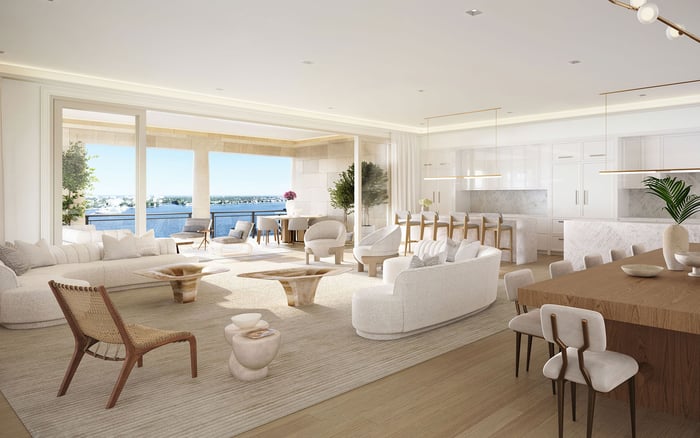
Palm Beach luxury living is increasingly defined by a quiet equilibrium: generous amenities, private circulation, discreet staffing, and security that protects residents without making daily life feel controlled.
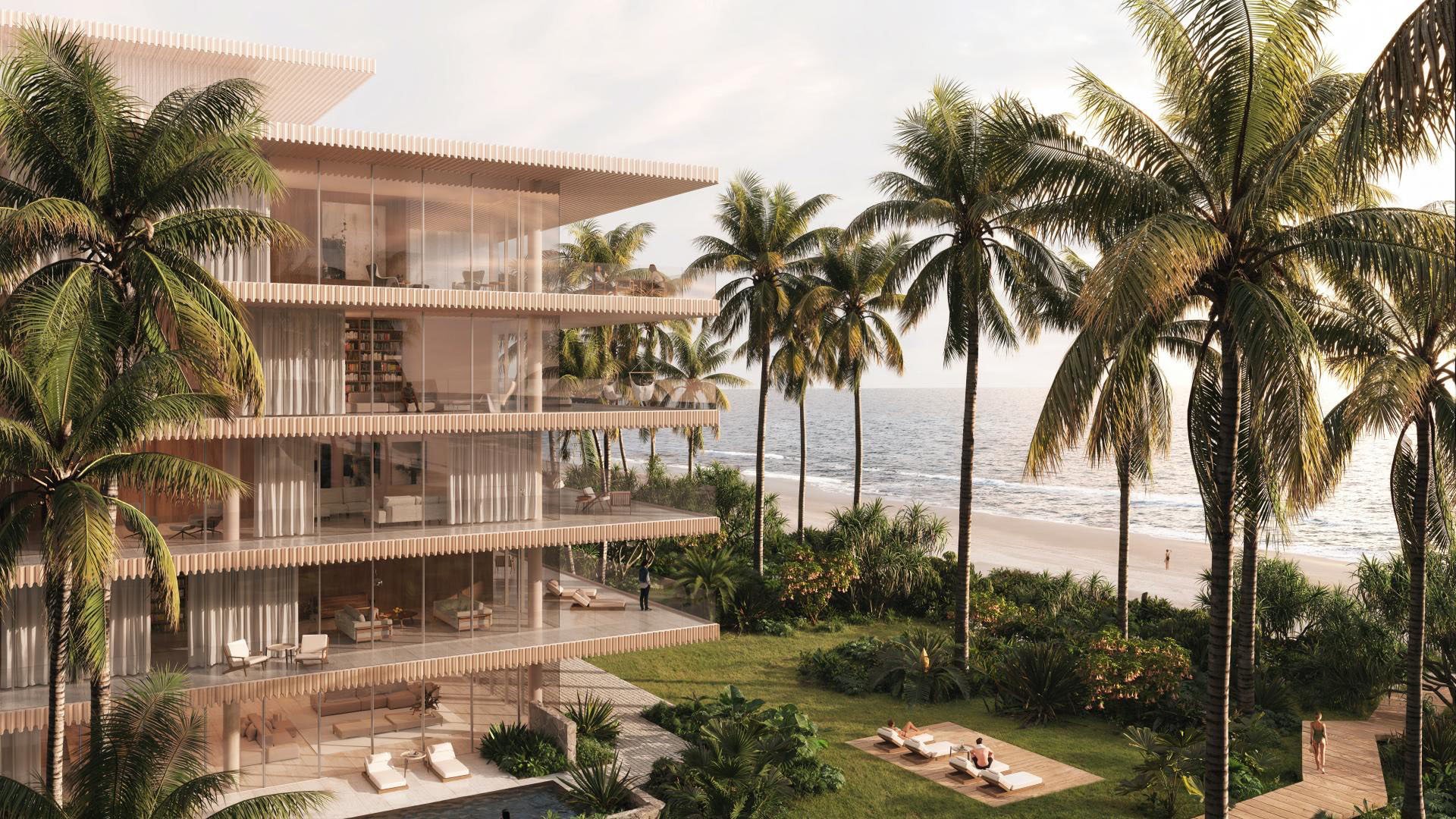
Palm Beach luxury has always carried a particular social code. The best residences do more than provide comfort; they protect the rhythm of private life. For today’s high-net-worth buyer, the question is no longer whether a building offers a fitness center, pool, lounge, spa, or dining room. The sharper question is whether those amenities can be enjoyed without unwanted exposure, casual traffic, or operational friction.
That is the central balancing act behind Palm Beach Residences and the broader conversation around ultra-premium living across the Palm Beach and West Palm Beach corridor. Resort-style amenities create value, but only when paired with discretion. A beautiful amenity that feels crowded, visible, or loosely managed can diminish the very exclusivity it is meant to deliver.
In this segment of the market, privacy is not a single feature. It is a layered system of architecture, staffing, technology, and operating rules. At its most refined, it is nearly invisible: residents sense ease, not surveillance; service, not control.
The first layer is spatial planning. A privacy-first residence typically separates the paths of residents, guests, staff, deliveries, and maintenance so daily life feels calm rather than overexposed. This does not require a fortress-like atmosphere. In the best examples, separation is achieved through elegant sequencing: a composed arrival, a discreet lobby, controlled access points, and circulation that avoids unnecessary encounters.
Compartmentalized layouts are especially important in buildings with meaningful amenity programs. If a resident is moving from a private elevator corridor to a spa suite, or from parking to a residence, that path should not overlap unnecessarily with delivery routes or service movement. The same principle applies to guests. A visitor can be welcomed warmly while still being guided through a managed sequence that protects the privacy of residential floors.
Controlled elevator access is one of the most common tools because it limits movement to authorized floors or designated amenity zones. Yet the key is restraint. Security should remain in the background, integrated into the daily choreography rather than announced at every turn.
This is why buyers comparing Palm Beach with nearby offerings such as The Ritz-Carlton Residences® West Palm Beach often look beyond amenity names and study how the building actually moves. The plan matters as much as the program.
An amenity is only as luxurious as the experience of using it. A private dining room loses its appeal if access feels unpredictable. A wellness suite becomes less compelling if residents cannot count on calm. A lounge, screening room, or entertainment space should feel like an extension of the home, not a semi-public club.
For this reason, access management is central. Shared spaces can feel more private through reservations, limited-capacity policies, and semi-exclusive time windows. These systems are not about restriction for its own sake. They are about preserving the quality of the experience so amenities feel curated rather than consumed.
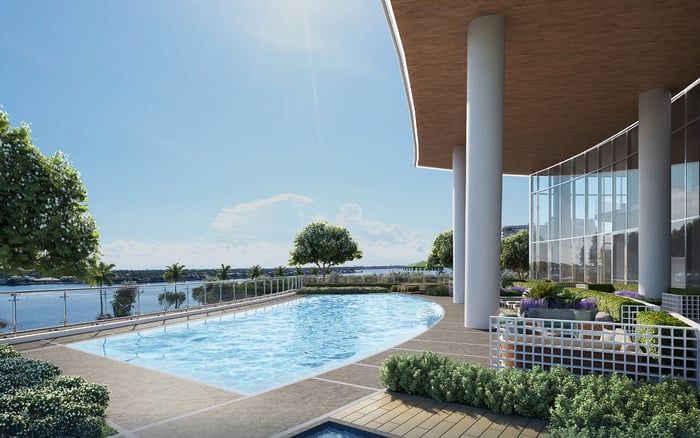
The pool is a particularly sensitive example. In South Florida, pool decks are among the most visible and emotionally important amenity areas. Privacy depends on spacing, sightlines, landscaping, screens, and the careful placement of seating. A pool environment should allow residents to relax without feeling observed from every angle or compressed into a resort crowd.
Wellness amenities require similar discipline. Fitness centers, spa areas, treatment rooms, and recovery spaces create daily value, but they also bring residents into close proximity. Thoughtful scheduling, staff protocols, and clear rules can make those spaces feel personal even when they are shared.
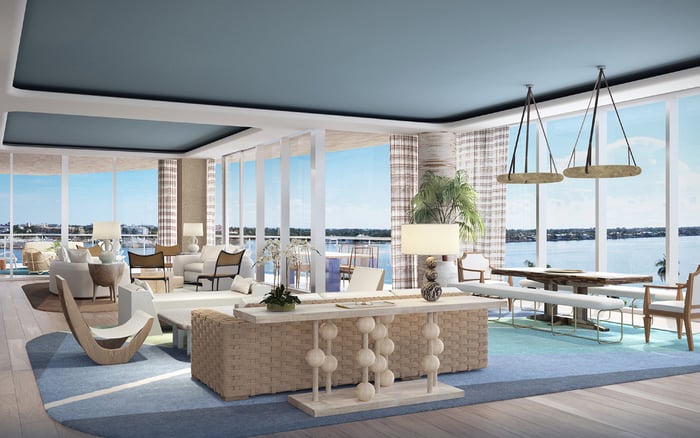
The most successful Palm Beach residences create a sense of seclusion inside the home itself. Private terraces, expansive views, sound insulation, and thoughtful layouts all help residents feel removed from the common life of the building. A terrace is not just outdoor space; in this market, it becomes a private room in the sky or at the garden edge, shaped by orientation, screening, and distance from neighboring sightlines.
That interior privacy matters because buyers in this category often want the services of a staffed residence without sacrificing the feeling of a private estate. The goal is to enjoy concierge attention, fitness access, maintenance support, and hospitality without inviting the ambient visibility of a hotel.
This is where many new-construction conversations become more nuanced. Buyers may admire a long amenity menu, but they increasingly ask whether the building can absorb that activity discreetly. Does the delivery path avoid the residential lobby? Can housekeeping or maintenance enter without disrupting personal routines? Are guest movements managed without becoming theatrical? These questions shape the lived experience.
Nearby projects such as Alba West Palm Beach and The Berkeley Palm Beach are part of a wider buyer focus on boutique-scaled comfort, access, and day-to-day discretion across the Palm Beach area.
Service is both the great luxury and the great vulnerability of a high-end residence. Concierge, spa, fitness, maintenance, housekeeping, and security teams can elevate daily life, but weak protocols can compromise privacy. The difference lies in training, vetting, and access discipline.
In a privacy-focused residence, staff should understand discretion as a standard, not a courtesy. Background checks, confidentiality agreements, role-based access, and ongoing training are all part of a more serious operational culture. Residents should not need to wonder who can access which areas, when, or why.
Guest management is equally important. A building can be welcoming without being porous. The best systems allow invited visitors to move smoothly through arrival while preserving control over residential floors and amenity zones. A dinner guest should feel expected, not interrogated; an unverified visitor should not be able to wander.
Delivery and maintenance protocols are another pressure point. These are among the most common moments when convenience and security collide. A well-run residence creates clear service routes, scheduled access, and accountability without making residents manage the process themselves.
This is the essence of invisible security. The resident experiences seamless hospitality while access control, monitoring, and operating discipline work quietly behind the scenes.
For buyers, the smartest review goes beyond finishes and view lines. Ask how the building separates public, private, amenity, and service zones. Study whether the elevator strategy is intuitive. Consider whether the pool, lounge, spa, and dining areas have enough breathing room to avoid perceived density.
Also look at the culture implied by the operation. A residence can be beautiful and still feel exposed if staffing protocols are weak or amenity policies are too loose. Conversely, a well-composed building can make shared amenities feel almost private through careful scheduling, generous spacing, and a disciplined service model.
The gated-community idea is useful as a metaphor, even when the setting is a vertical residence rather than an estate enclave. Buyers are seeking a perimeter of trust: controlled arrivals, known staff, managed guests, discreet service, and private retreat. That perimeter supports value because it makes amenities feel exclusive rather than overused.
In Palm Beach, true luxury is not simply having more. It is having access to more without giving up control of one’s personal world.
Why is privacy so important in Palm Beach residences? Palm Beach buyers often value discretion as highly as design, service, and location. Privacy protects the feeling of home, even within an amenity-rich shared environment.
How do luxury buildings separate residents from service activity? They often use compartmentalized layouts, separate circulation paths, controlled access points, and managed service routes. The goal is to reduce unnecessary encounters without making operations feel rigid.
Are amenities less valuable if they are shared? Not necessarily. Shared amenities can feel highly private when capacity, reservations, sightlines, and staffing are handled with discipline.
What is invisible security? Invisible security means access control and monitoring operate quietly in the background. Residents experience hospitality first, while protection remains integrated and unobtrusive.
Why does elevator control matter? Controlled elevators can limit movement to authorized floors and amenity areas. This helps preserve privacy on residential levels and reduces casual circulation.
How can a pool area feel more private? Spacing, landscaping, screens, and strategic sightlines can make pool areas feel calmer and less exposed. Capacity management also helps preserve exclusivity.
What should buyers ask about staff protocols? Buyers should ask about vetting, confidentiality expectations, role-based access, and staff training. Service quality depends on both hospitality and discretion.
Do guest policies make a building feel less welcoming? They should not. Strong guest management allows invited visitors to arrive smoothly while maintaining control over private residential areas.
Why do deliveries create privacy concerns? Deliveries and maintenance require outside or staff access, which can conflict with convenience if poorly managed. Clear routes and protocols reduce that risk.
What is the best way to shortlist comparable options for touring? Start with location fit, delivery status, and daily lifestyle priorities, then compare stacks and elevations to validate views and privacy.
To compare the best-fit options with clarity, connect with MILLION.
If branded residences are on your mind — as a home or as an allocation — we would be glad to share what we are seeing, privately.
Begin a quiet conversation