A buyer-focused guide to the reserve study questions that matter before purchasing at Turnberry Ocean Club Sunny Isles, from amenity inventories to oceanfront useful-life assumptions and funding philosophy.
For a buyer considering Turnberry Ocean Club Sunny Isles, the reserve study is not a back-office document. It is the capital plan for preserving a highly serviced, amenity-rich, oceanfront condominium environment in Sunny Isles Beach. The question is not simply whether reserves exist. The sharper question is whether the assumptions behind those reserves reflect the real cost of maintaining the building, its finishes, its technology, its vertical systems, and its resort-caliber common areas over time.
In ordinary condominium due diligence, buyers often focus on monthly assessments and recent sales. At the ultra-premium end of the market, the inquiry should be more precise. A lower monthly number can be less meaningful than a well-documented reserve strategy, while a higher number may be entirely rational when tied to thoughtful capital planning. For Turnberry Ocean Club Sunny Isles, the correct posture is neither alarm nor assumption. It is disciplined questioning.
This is especially important for buyers comparing Sunny Isles Beach with other high-service coastal addresses such as Bentley Residences Sunny Isles or St. Regis® Residences Sunny Isles, where amenity expectations and replacement standards are part of the ownership proposition. In that context, reserve adequacy is not only an accounting issue. It is a lifestyle-protection issue.
Many buyers begin by asking how much money is in reserves. That is useful, but incomplete. The first question should be what the reserve study actually includes. Does the inventory capture only core building systems, or does it also include the high-cost common amenities that define the property experience?
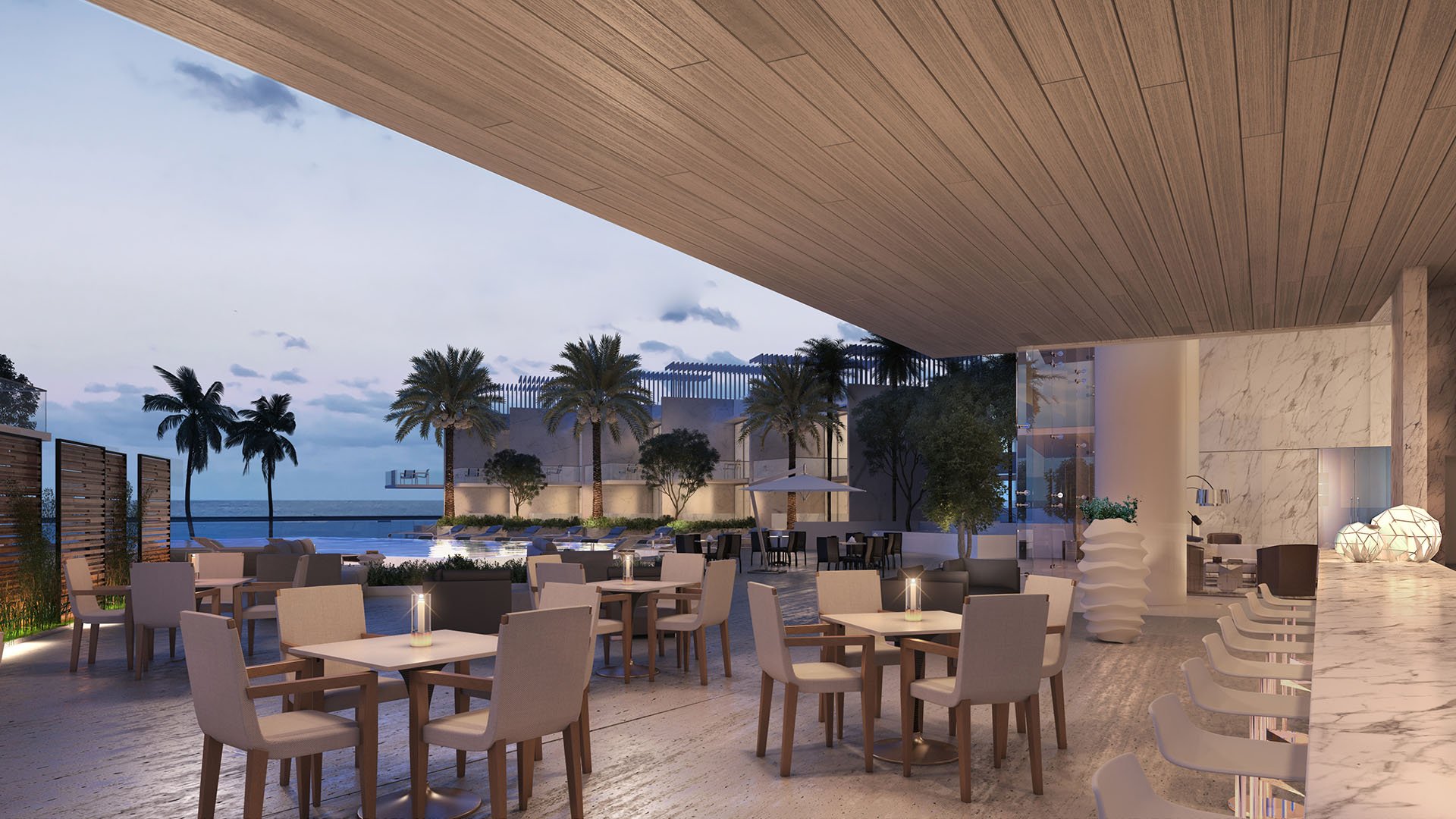
At Turnberry Ocean Club Sunny Isles, buyers should ask whether sky-club-level amenities are treated as reserve-funded common elements or as operating and discretionary expenses. That distinction matters because a capital component excluded from the reserve schedule may still need replacement, refurbishment, or modernization later. If it is not reserved, it may appear through operating increases, special assessments, or future board decisions.
Ask specifically about pools, pool decks, spa areas, wellness spaces, fitness equipment, resort-style amenity equipment, premium common-area finishes, and building-service technology. A sophisticated reserve study should not treat all amenities as if they age at the same pace or cost the same to replace. Fitness equipment, spa components, pool systems, and decorative finishes can have different useful lives and different replacement standards.
The most elegant question a buyer can ask is also one of the simplest: are replacement costs modeled for like-kind luxury quality?
A reserve assumption based on generic replacement can look orderly on paper while failing to capture the cost of maintaining a premium environment. At a luxury tower, replacing common-area finishes at a merely functional standard is not the same as preserving the design language buyers paid for. The same logic applies to pool decks, wellness amenities, spa areas, lobby finishes, corridors, and owner-facing service spaces.
Buyers should ask whether premium finishes are reserved for replacement at comparable luxury quality. This does not require a prediction of future design taste. It requires a disciplined assumption that the building will be maintained to the standard implied by its positioning. The comparison is instructive across the broader Sunny Isles Beach market, where buyers may also evaluate The Ritz-Carlton Residences® Sunny Isles and expect the common environment to remain commensurate with the private residences.
Oceanfront ownership carries obvious beauty and less visible maintenance complexity. Salt air, wind-driven rain, humidity, and sun exposure can affect corrosion, waterproofing, façade elements, balcony areas, glazing, exterior sealants, and mechanical systems. A reserve study that does not adjust useful-life assumptions for coastal exposure may be too generic for the asset it is meant to protect.
Buyers should ask whether oceanfront exposure is reflected in the useful-life assumptions for façade, balcony, glazing, waterproofing, mechanical systems, and related building-envelope components. They should also ask whether elevator and vertical-transportation systems are included as major reserve components, given the tower format. Elevators are not aesthetic conveniences in a high-rise. They are operational infrastructure.
Access-control, security, and building-service technology also deserve attention. These systems can become obsolete before they physically fail. The buyer’s question should be whether they are included in reserves, expected to be covered by operating budgets, or handled through future discretionary spending.
A useful reserve study distinguishes between structural and safety-related components and discretionary aesthetic upgrades. This distinction helps buyers understand which future costs are essential and which are matters of preference, timing, or competitive repositioning.
Ask whether the study separates mandatory structural, life-safety, waterproofing, façade, mechanical, elevator, and code-sensitive items from optional upgrades to finishes and amenity presentation. Both categories matter, but they carry different urgency. A future redesign of a lounge is not the same as a necessary waterproofing or façade project.
This is where buyer guides can become too shallow if they stop at monthly fees. The better guide is the one that reveals the governance philosophy behind those fees. Does the association tend to anticipate capital needs, or does it tolerate periodic special assessments as part of its funding culture? Neither answer should be assumed. It should be asked directly.
Once the component inventory is clear, turn to the financial assumptions. Ask whether replacement-cost estimates reflect South Florida luxury-construction pricing rather than generic national tables. Labor availability, specialized materials, coastal logistics, high-rise access, and luxury finish standards can all affect project costs.
The inflation or construction-cost escalation rate is equally important. A reserve plan may appear sufficient under a mild escalation assumption and less robust under a higher one. Buyers should ask whether the escalation rate has been stress-tested and how future capital projects would be affected if costs rise faster than expected.
Reserve funds also involve investment assumptions. Ask what interest-rate or investment-return assumption is used and whether the association prioritizes liquidity and principal protection. For an association, a reserve fund is not a speculative portfolio. It is capital set aside for future obligations. Liquidity can matter as much as yield when a major project approaches.
Finally, ask whether the association targets a specific reserve-funding level or accepts periodic special assessments as part of its funding philosophy. A buyer does not need to prefer one structure universally. What matters is knowing the approach before closing, not discovering it after ownership begins.
Before closing, ask the seller, association, or property manager for the full reserve study, current reserve balances, recent budgets, board minutes, and any engineering materials that may be available. Also ask whether the most recent reserve study has been updated to reflect current building age, observed conditions, and the heightened expectations surrounding high-rise condominium maintenance in South Florida.
The buyer should also inquire whether pending or anticipated capital projects are already included in the reserve study, annual budget, or disclosed assessments. Past special assessments, reserve transfers, or deferred projects can be useful context if they suggest earlier assumptions were too optimistic. The point is not to accuse the association of poor planning. The point is to understand whether the financial model has learned from actual building experience.
A well-run luxury condominium should be able to discuss reserve assumptions with clarity. If documents are incomplete, the buyer’s advisory team should slow the process, clarify the open questions, and evaluate the risk before becoming emotionally committed to the residence.
What is the first reserve question to ask before buying at Turnberry Ocean Club Sunny Isles? Ask what components are actually included in the reserve inventory, especially amenities and high-cost common elements.
Should buyers focus first on the reserve balance? The balance matters, but it is only meaningful when measured against the study’s component list, useful lives, and cost assumptions.
Why do luxury amenity assumptions matter? Pools, spas, wellness areas, and premium finishes can require replacement standards that differ from basic functional construction.
Should oceanfront exposure affect the reserve study? Yes. Buyers should ask how corrosion, waterproofing, façade, glazing, balcony, and mechanical-system assumptions reflect coastal exposure.
Are elevators part of a proper reserve discussion? They should be. In a high-rise tower, vertical transportation is a major operational system, not a minor convenience.
What financial assumptions should buyers review? Ask about replacement-cost pricing, construction escalation, investment-return assumptions, liquidity priorities, and reserve-funding targets.
How should technology be treated in reserves? Access-control, security, and building-service technology should be discussed because obsolescence can arrive before physical failure.
What documents should be requested before closing? Request the full reserve study, current balances, recent budgets, board minutes, disclosed assessments, and available engineering materials.
Do reserve questions imply the building has a problem? No. They are standard due diligence for a sophisticated buyer evaluating a complex luxury condominium asset.
Why is this especially relevant in Sunny Isles Beach? Sunny Isles Beach includes high-rise coastal properties where amenity quality, ocean exposure, and long-term maintenance planning intersect.
When you're ready to tour or underwrite the options, connect with MILLION.
If branded residences are on your mind — as a home or as an allocation — we would be glad to share what we are seeing, privately.
Begin a quiet conversation