A buyer-focused look at why Miami Beach remains a compelling laboratory for outdoor living, where terrace usability, view quality, and maintenance exposure determine the true value of luxury residential space.

In South Florida luxury real estate, few questions are more revealing than this one: will the outdoor space actually be used? A large terrace can photograph beautifully yet fall short in daily life if it is too exposed, too windy, too hot, too public, or too difficult to maintain. Miami Beach sharpens that question because the market is intensely visual, highly coastal, and deeply lifestyle-driven. Buyers are not simply purchasing interior square footage. They are buying the choreography between rooms, air, light, water, privacy, and upkeep.
That is why Miami Beach remains one of the region’s most instructive markets for evaluating terrace usability, view quality, and maintenance exposure. The best residences do not treat the balcony as leftover exterior area. They make it part of the plan, part of the view strategy, and part of the ownership experience.
For MILLION readers, the distinction is not academic. It affects how a residence lives in the morning, how it entertains at sunset, how it ages through seasonal weather, and how it presents itself in a future resale conversation.
Outdoor space is often described by area, but serious buyers should begin with geometry. A deep, well-proportioned terrace can support dining, lounging, planting, and circulation without feeling staged. A long, narrow balcony may offer dramatic frontage but limited flexibility. Corners, columns, railing placement, door swings, and overhangs all determine whether furniture can be arranged with elegance or merely squeezed into position.
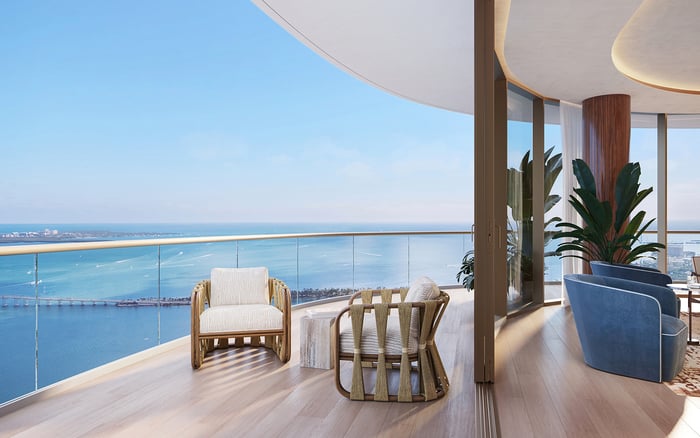
Miami Beach rewards terraces that feel like outdoor rooms. The ideal layout allows a resident to move from the living room to the exterior without interruption, then remain outside comfortably. That requires more than glass doors and a view. It requires shade, human scale, privacy from neighboring lines of sight, and enough depth to let people sit without feeling pressed against the railing.
A buyer should stand outside and ask practical questions. Where would breakfast happen? Where would guests gather without blocking the doors? Can two people pass behind a dining chair? Does the terrace feel gracious when empty and still functional when furnished? These answers often reveal more than the floor plan.
In Miami Beach, a view is not only water. It is foreground, middle distance, horizon, sky, and the angle from which each is experienced. Oceanfront exposure may be the clearest luxury shorthand, but not every ocean view lives the same way. Some views are cinematic from the living room yet less comfortable from the terrace. Others build their power through layered scenery: palms, low-rise streets, Biscayne Bay, city lights, or the open Atlantic.
Waterview quality improves when the eye has breathing room. A strong view should not require leaning over a railing or standing in one precise corner. It should unfold from primary rooms and remain legible while seated outdoors. Privacy matters as well. A technically impressive outlook can lose emotional value if the terrace feels observed from nearby buildings.
Light is part of the composition. Morning brightness, afternoon glare, sunset drama, and nighttime reflection each create a different living experience. The most successful residences manage those shifts through orientation, overhangs, glass performance, terrace depth, and interior planning. View quality is therefore not a single photograph. It is a full day of visual comfort.
The more coastal the setting, the more ownership quality depends on maintenance exposure. Outdoor space in Miami Beach encounters sun, salt air, humidity, wind, and rain. Materials, drainage, railing systems, exterior finishes, door hardware, and furniture choices all become part of the long-term equation.
This does not diminish the appeal of outdoor living. It refines it. The best luxury terraces are designed with stewardship in mind. They anticipate cleaning, drying, storage, plant care, fabric durability, and the realities of seasonal absence. For a second-home owner, these details matter profoundly. A terrace that is beautiful only when freshly prepared may become less compelling than one that remains composed with reasonable care.
Maintenance exposure should be read at multiple scales. At the residence level, look at the condition of railings, thresholds, pavers, drains, exterior lighting, and ceiling surfaces. At the building level, consider how access, staff protocols, facade care, and rules for outdoor furnishings support a polished environment. Discretion in ownership often begins with not having to solve the same exterior problem repeatedly.
Miami Beach compresses many South Florida priorities into one market. It offers water, architecture, walkability in select enclaves, resort sensibility, and a mature luxury audience that understands nuance. In this context, a terrace is not merely an amenity. It is a test of design intelligence.
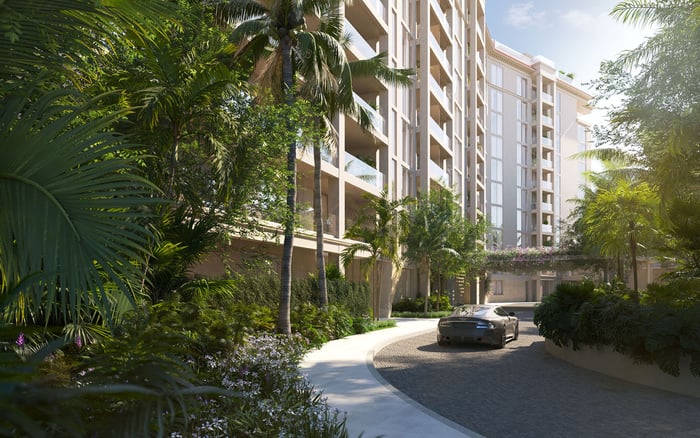
South of Fifth illustrates the point as a phrase and as a buyer mindset: outdoor space must balance openness with privacy, glamour with restraint, and proximity with calm. Across Miami Beach, the same logic applies in different forms. Some buyers prize direct coastal drama. Others prefer bay light, garden edges, or skyline evenings. The common denominator is the desire for outdoor space that performs every day, not only during a showing.
This is where the conversation becomes more precise than conventional amenity language. Terrace, Balcony, Oceanfront, Waterview, and South of Fifth are not just tags. They are cues for how a residence should be evaluated in person.
A sophisticated walk-through should treat the terrace as seriously as the primary suite or kitchen. Arrive at a time that reveals the exposure. Step outside and remain there. Notice the sound level, wind movement, glare, shade, and temperature. Sit if possible. A terrace that feels generous while standing may feel less persuasive once occupied.
Then study the transitions. Are the interior and exterior floors visually aligned? Do the doors open easily? Is there enough protected area for furniture? Are there natural zones for dining and lounging? Does the terrace connect to the main living space, or does it feel appended?
Finally, read the edges. Railings should preserve the view without making the resident feel overexposed. Neighboring terraces should feel comfortably distant or intelligently screened. Mechanical elements, rooflines, and service areas should not dominate the composition. Luxury is often decided at the periphery.
The strongest outdoor spaces tend to explain themselves quickly. They do not require an elaborate sales narrative because their usefulness is visible. A buyer can imagine coffee, reading, entertaining, quiet evenings, and seasonal guests within minutes. That intuitive recognition can support desirability over time.
In Miami Beach, where taste and expectations are elevated, outdoor space must justify itself beyond novelty. Oversized but awkward terraces can disappoint. Smaller but better-proportioned terraces can feel more valuable if they are private, shaded, connected, and easy to maintain. The premium lies in utility joined to beauty.
For owners, this means the right terrace is both a lifestyle asset and a stewardship decision. It should enhance the residence while remaining manageable. It should intensify the view without turning exposure into a burden. It should make South Florida’s climate feel like an advantage rather than a responsibility.
Before pursuing a Miami Beach residence, buyers should define how they will actually live outdoors. Entertaining buyers may prioritize depth, dining capacity, and indoor-outdoor flow. Privacy-driven buyers may prioritize screening, setback, and quieter exposures. Design-focused buyers may care most about sightlines, proportions, and material continuity. Seasonal owners may place greater weight on durability and building management.
The most successful purchase strategy ranks these needs before falling in love with a view. A spectacular outlook is powerful, but it should not obscure an uncomfortable terrace, difficult maintenance profile, or compromised privacy condition. Conversely, a quieter view with superior usability may become the more satisfying long-term home.
Miami Beach solves the South Florida question by forcing clarity. It asks whether outdoor space is truly livable, whether the view is enjoyable throughout the day, and whether the exposure can be maintained with elegance. When all three align, the residence feels complete.
Why is terrace usability so important in Miami Beach? Because outdoor space is central to the lifestyle, but it only adds value when it works comfortably for real daily use.
Is a larger terrace always better? No. Proportion, depth, shade, privacy, and furniture flexibility can matter more than raw size.
What makes a view high quality? A strong view is comfortable from seated positions, layered in composition, and not dependent on one narrow angle.
How should buyers think about Oceanfront exposure? Oceanfront exposure can be highly desirable, but buyers should also evaluate wind, glare, privacy, and maintenance needs.
What is maintenance exposure? It is the degree to which sun, salt air, humidity, rain, and wind affect exterior surfaces and day-to-day care.
Does a Balcony add resale value? It can, especially when it is usable, private, well connected to the interior, and easy to maintain.
Should second-home buyers evaluate terraces differently? Yes. Seasonal owners should pay close attention to durability, drainage, furnishing rules, and building support.
Why does South of Fifth remain a useful buyer reference? It signals a preference for refined outdoor living, privacy, walkability, and carefully composed residential settings.
Can a quieter Waterview outperform a dramatic view? Yes. If it offers better privacy, comfort, and daily usability, it may feel more livable over time.
What should buyers do during a terrace walk-through? They should sit outside, study light and wind, test circulation, and examine how the terrace connects to the interior.
When you're ready to tour or underwrite the options, connect with MILLION.
If branded residences are on your mind — as a home or as an allocation — we would be glad to share what we are seeing, privately.
Begin a quiet conversation