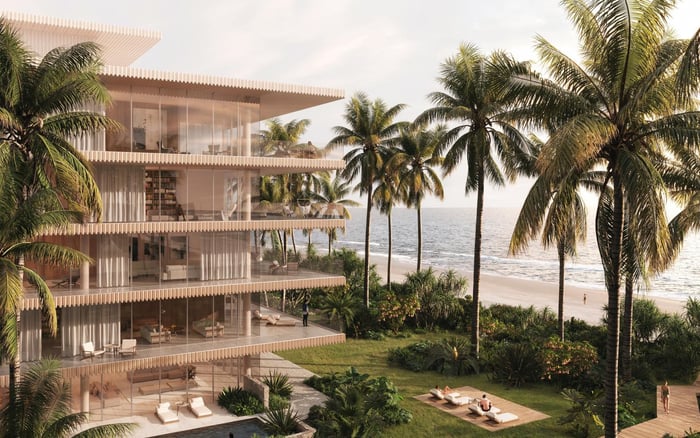
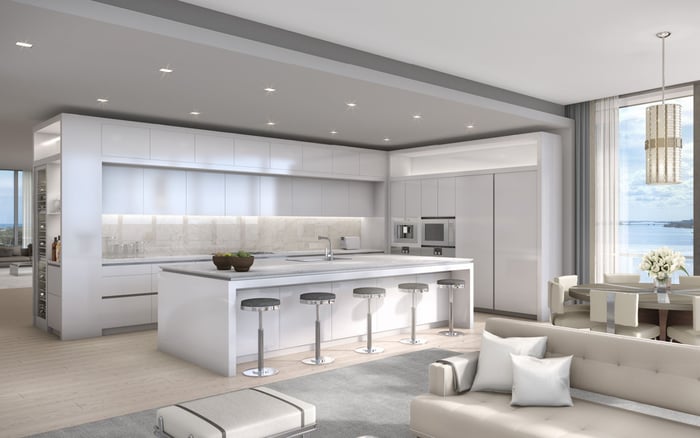
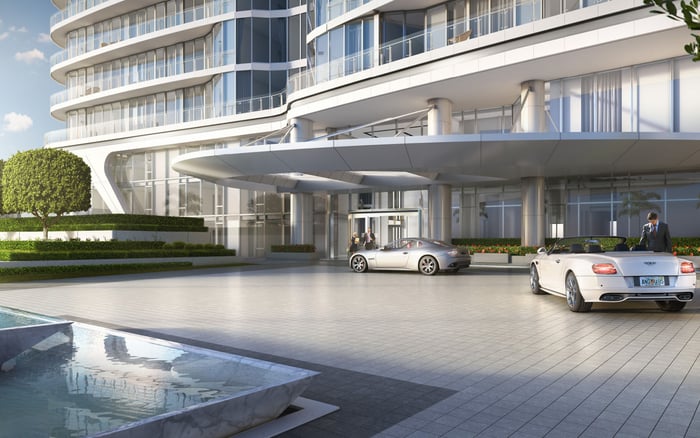
A discreet buyer’s guide to evaluating family-zone planning at The Bristol Palm Beach, from layout separation and terrace safety to amenities, staff flow, storm resilience, and long-term flexibility.
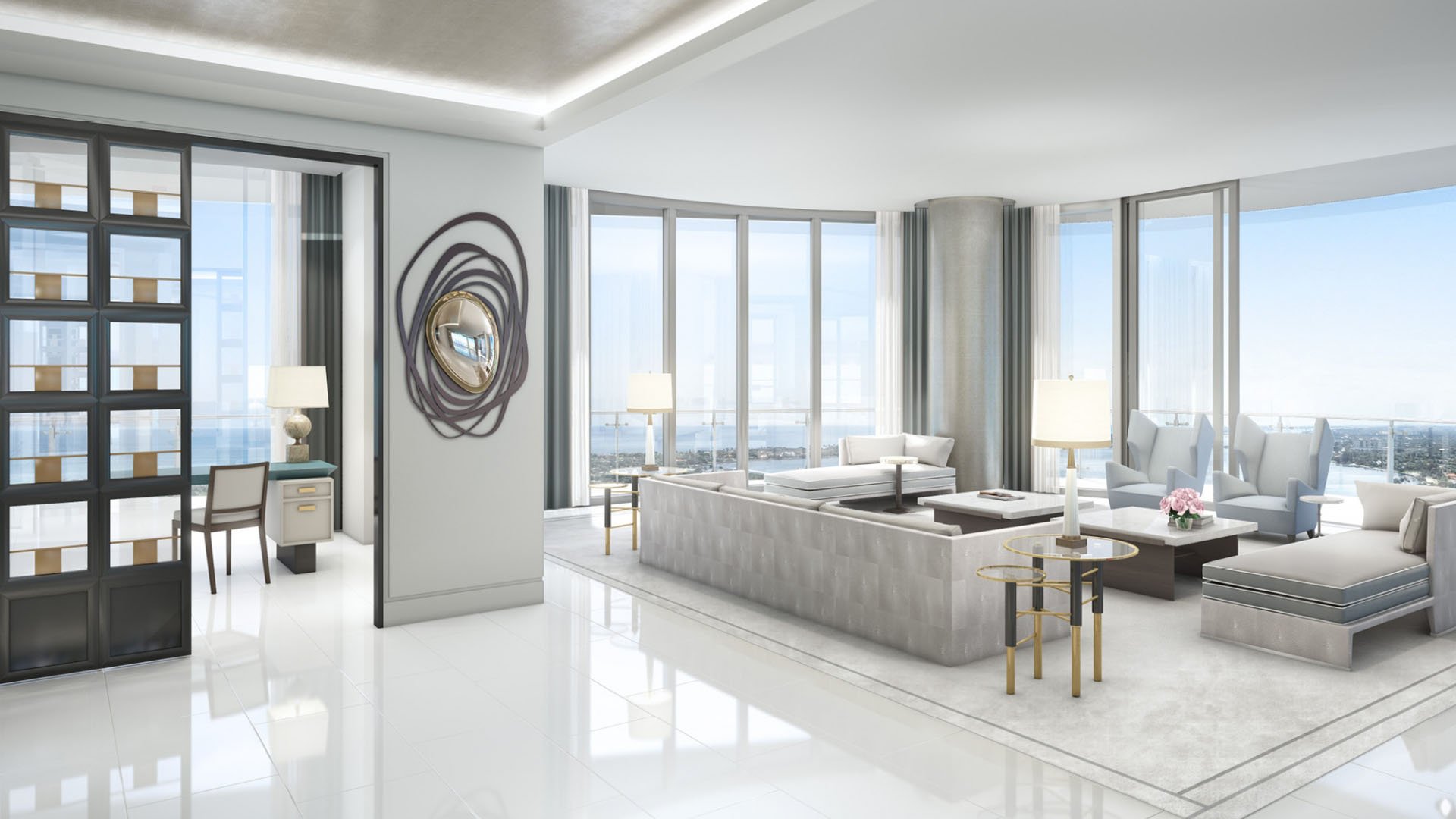
At the top of the Palm Beach and West Palm Beach luxury market, the purchase is rarely about square footage alone. A residence must perform beautifully at breakfast, during homework, when grandparents arrive, when staff are circulating, when guests stay for the weekend, and when a formal dinner overlaps with a teenager’s movie night. That is the essence of family-zone planning.
For buyers considering The Bristol Palm Beach, the conversation should begin with how the residence supports daily life, privacy, supervision, and future change. Views, terraces, shared spaces, and building services can shape family routines in memorable ways, but they also change how buyers should think about outdoor use, guest flow, evening entertaining, and the practical rhythm between private life and shared circulation.
This is a buyer’s guide topic because the best answers are not abstract. They come from walking the floor plan with your architect, designer, family office, property manager, and, when appropriate, household staff. The goal is to determine whether the residence can be organized into calm, legible zones without losing the elegance that made the address compelling in the first place.
Before admiring finishes, ask a more operational question: can the plan be divided into distinct family zones? In a true primary or extended-season residence, adults, children, guests, staff, work, and quiet time each need their own territory.
Start with bedrooms. Are children’s rooms close enough for supervision but separated enough for privacy as they age? Can a grandparent or adult child occupy a suite without feeling absorbed into the children’s wing? Is there a natural place for a nanny, visiting caregiver, or household staff member to arrive, store belongings, and move discreetly?
Then test the entertaining sequence. Bedrooms, service areas, family rooms, and formal spaces should not compete with one another. If a family hosts often, the plan should allow catering, deliveries, guest arrivals, and cleanup without pulling daily life into public view. Buyers comparing West Palm Beach options such as Alba West Palm Beach often benefit from applying the same exercise across multiple floor plans, not to rank beauty, but to compare how each residence manages real household choreography.
In a luxury condominium, the family zone does not stop at the front door. Elevator access, controlled entry, valet areas, corridors, pools, lounges, and other amenities all shape how independent a child or teenager can safely become.
Ask how residents move from the home to shared amenities. Would a child need to cross adult-oriented areas? Are there points where supervision is expected or practically unavoidable? How do guests, staff, deliveries, and service providers circulate relative to family spaces? These questions are especially important in a serviced luxury environment, where convenience can sometimes blur the boundary between private home and shared operations.
The same scrutiny applies to hotel-style services if they are part of the ownership experience. They may improve daily convenience, particularly for families managing school mornings, dinner reservations, packages, and visitors. Yet services can also raise questions around privacy, staff interaction, scheduling, access permissions, and who can authorize what on behalf of the household.
A terrace or balcony can be one of the emotional reasons to buy a South Florida condominium. For family planning, however, it must be evaluated like a room with its own safety protocol.
Before assuming an outdoor area is suitable for children, ask about railings, furniture placement, access controls, door hardware, sightlines from interior rooms, and rules governing terrace use. Consider how a toddler, an active child, a visiting cousin, or a group of teenagers might behave there without the discipline of adult eyes constantly present. The question is not whether the terrace is beautiful. It is whether that beauty can coexist with the family’s standard for supervision.
Noise also belongs in this conversation. Ask about sound transmission between terraces, neighboring residences, bedrooms, media rooms, family areas, building corridors, and outdoor entertaining spaces. In a Palm Beach lifestyle residence, quiet is not merely a luxury. It is part of the home’s daily performance.
A residence that works for a family today may need to work differently in five years. Children become teenagers. Grandparents may stay longer. Staff needs may change. A seasonal home may become a primary base. A room used for play may need to become study space, wellness space, or an additional guest suite.
Ask what floor-plan flexibility exists for future reconfiguration. Review whether condominium documents restrict renovations, combining rooms, service access, pets, noise, deliveries, guests, and amenity use. The most elegant renovation concept means little if the governing documents, building systems, or approval process make it impractical.
For buyers also studying newer West Palm Beach offerings such as Forté on Flagler West Palm Beach and Shorecrest Flagler Drive West Palm Beach, a consistent due-diligence matrix is useful: Which plan separates generations best? Which accommodates staff most discreetly? Which can adapt if the home becomes less seasonal and more year-round?
The most revealing exercise is to act out a day. Begin with a school morning. Where does a child eat, store a backpack, meet a driver, or wait for a caregiver? Where does a parent take a work call while another family member watches television? Where do deliveries go? Where does a guest sleep after a late dinner? Where does homework happen without being visually or acoustically absorbed into entertaining space?
Then test a weekend evening. If adults are hosting in the formal living area, can children occupy a media or family room without noise conflict? Can staff prepare, serve, and clean up without moving through private bedrooms? Can an overnight guest return from dinner without disturbing a sleeping child?
Design professionals should be asked to pressure-test these scenarios before contract, not after closing. The family-zone question is less about whether a home is large. It is about whether its circulation supports calm.
Ask which amenities are child-friendly, teen-friendly, adult-only, or subject to time, guest, or supervision restrictions. Property management should be able to explain how rules address children in pools, fitness areas, lounges, elevators, valet areas, and other shared spaces. Just as important, ask about the building’s resident culture. Does it include families with children, or does it skew toward adult-only, seasonal, or pied-à-terre ownership?
Resilience is equally central in South Florida. Ask how the building handles storm resilience, generator capacity, mechanical-system protection, and habitability during weather events. Confirm where critical infrastructure is located and whether outages could affect elevators, air conditioning, water, communications, or security. In a vertical luxury residence, family comfort depends on systems as much as finishes.
Buyers considering broader Palm Beach possibilities, including Palm Beach Residences, should treat resilience, circulation, and amenity governance as core lifestyle questions, not technical afterthoughts.
Family-zone planning is ultimately a privacy exercise. It protects children’s routines, adult entertaining, staff efficiency, guest comfort, quiet time, and future flexibility. At The Bristol Palm Beach, the strongest buyer questions are precise: Where does each person go? Who sees whom? What can be heard? What happens in a storm? What changes when the family grows up?
The right residence will not simply accommodate family life. It will allow it to unfold with grace.
What is family-zone planning in a luxury condominium? It is the process of dividing a residence into functional areas for adults, children, guests, staff, work, entertaining, and quiet time.
Why does family-zone planning matter at The Bristol Palm Beach? Shared circulation, terraces, services, amenities, and private rooms should be tested against the family’s daily routines and supervision standards.
Should buyers review condominium documents before making layout assumptions? Yes. Documents may affect renovations, room changes, guest use, staff access, pets, noise, deliveries, and amenity use.
How should families evaluate terrace use? Review railings, access controls, furniture placement, supervision sightlines, and whether the terrace truly functions as a safe family zone.
What should parents ask about elevators and controlled entry? Ask how children, guests, staff, and deliveries move through the building, and where supervision is expected in shared circulation areas.
Are amenities always suitable for children or teenagers? Not necessarily. Ask which spaces are child-friendly, teen-friendly, adult-only, or subject to time, guest, or supervision restrictions.
How can a residence support multi-generational living? Look for bedroom separation, privacy for grandparents or adult children, flexible guest areas, and circulation that avoids conflicts with daily family life.
Why is noise transmission part of family-zone due diligence? Sound between bedrooms, media rooms, terraces, corridors, and neighboring residences can affect sleep, study, entertaining, and quiet hours.
What storm-resilience questions should families ask? Ask about generator capacity, protected mechanical systems, critical infrastructure locations, and whether outages could affect elevators, air conditioning, water, communications, or security.
When should a designer become involved? Before contract if possible, so daily scenarios such as school mornings, nanny arrivals, homework, entertaining, guests, and quiet time can be tested.
When you're ready to tour or underwrite the options, connect with MILLION.
If branded residences are on your mind — as a home or as an allocation — we would be glad to share what we are seeing, privately.
Begin a quiet conversation