A buyer-focused guide to reading lobby volume before touring luxury residences, from privacy and service rhythm to daily comfort, architectural intent, and long-term ownership fit.
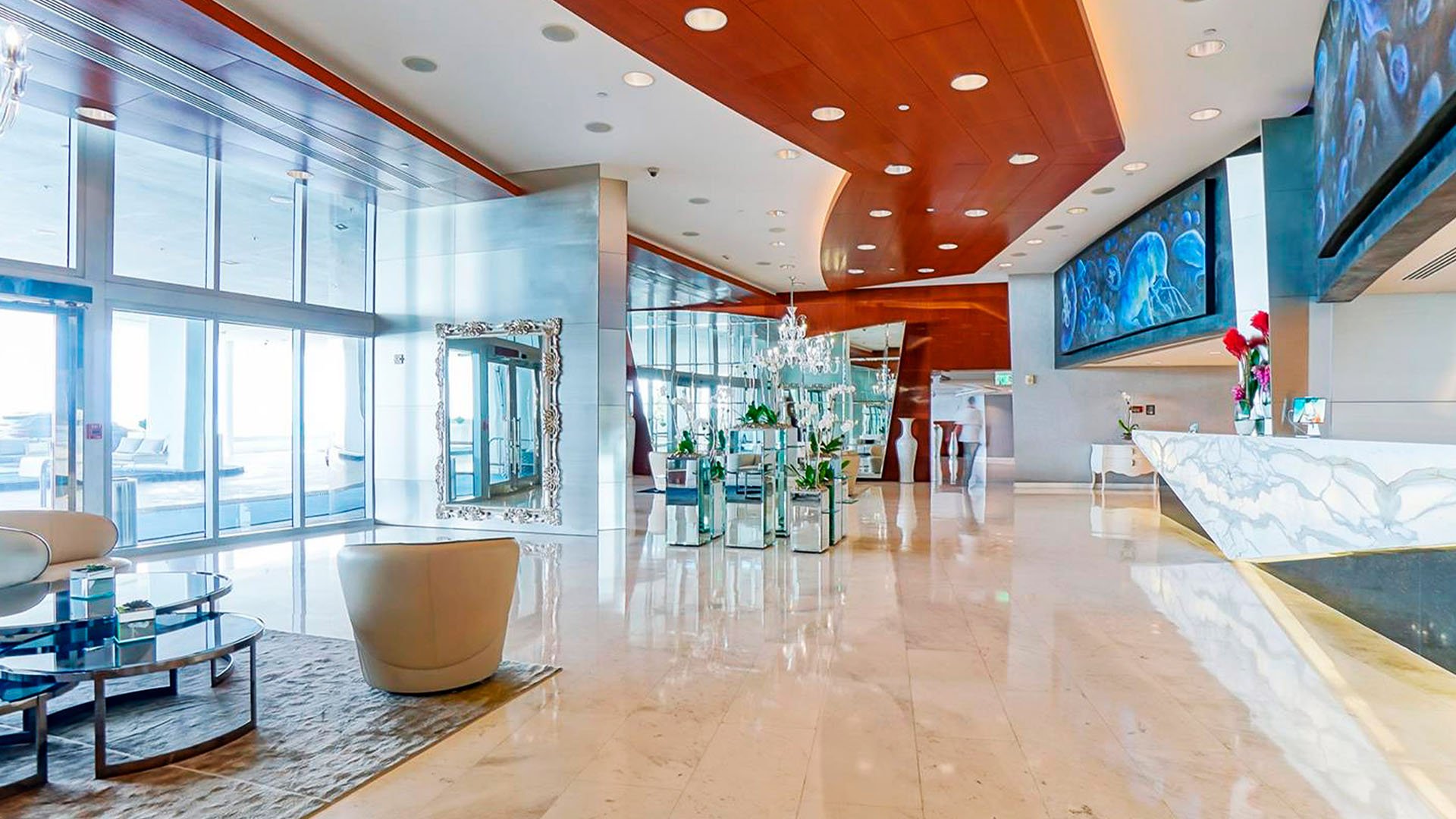
Before a first tour, most buyers study views, floor plans, terraces, and neighborhood maps. The lobby is often treated as a pleasant prelude, something to experience only after the appointment is confirmed. That is a missed opportunity. In South Florida luxury real estate, lobby volume can sharpen a shortlist before anyone steps into an elevator.
Volume is not simply height. It is the relationship between ceiling plane, width, depth, light, seating, desk placement, art, arrival sequence, and the way people move through the room. A tall lobby can feel theatrical or exposed. A compact lobby can feel intimate or congested. The difference is not size alone, but choreography.
For buyers comparing Brickell, Miami Beach, Sunny Isles, Coconut Grove, Bay Harbor, Fort Lauderdale, or Palm Beach, lobby volume offers a fast and revealing first read. It suggests whether the building is designed for discretion, social energy, hotel-style service, or a quieter residential cadence. That early signal can save time, especially when the shortlist includes several otherwise compelling residences.
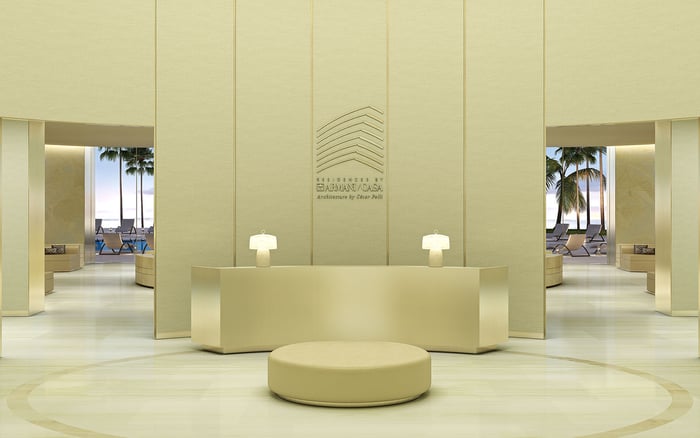
A lobby with generous height and a long axial view often announces ceremony. It may suit buyers who want a strong sense of arrival, a formal guest experience, and the psychological lift of entering a building that feels larger than the residence itself. This can appeal to owners who entertain, host visiting family, or value an address that feels significant from the curb.
A lower, more layered lobby creates a different luxury language. It may feel calmer, more private, and more residential. Instead of spectacle, the emphasis is on compression, materiality, and control. For some buyers, that is the more sophisticated experience: fewer visual interruptions, less public theater, and a cleaner transition from city to home.
The key is to ask what the lobby is designed to accomplish. Is it guiding residents quickly and quietly to private elevators? Is it encouraging conversation? Is it operating like a hotel lounge? Is the front desk a ceremonial centerpiece or a discreet service point? These answers matter because they preview daily life, not just design taste.
A dramatic lobby can be seductive during a first visit, particularly in a city shaped by light, water, and hospitality. But the right lobby is the one that works on an ordinary Tuesday, after a long flight, with guests arriving, packages being handled, and valet movement at the porte cochere.
If you value anonymity, study sightlines. From the entrance, can arriving guests see directly into seating areas, elevator banks, or concierge interactions? If the room is open and theatrical, privacy depends on planning. If the room is segmented, privacy may be built into the architecture.
If you entertain often, study pause points. A lobby with comfortable seating, clear circulation, and a graceful waiting area can make hosting feel effortless. In a branded or design-forward building, the lobby may also become part of the social experience. A buyer considering Baccarat Residences Brickell, for example, may read the arrival environment as part of a broader expectation for polish, service, and atmosphere.
If your household includes children, frequent visitors, pets, drivers, or staff, look beyond beauty. Ask whether the volume supports circulation without friction. A visually striking lobby that narrows at the wrong point can feel less luxurious over time than a quieter room with better flow.
Brickell buyers often accept density in exchange for connectivity, skyline energy, dining, and proximity to business districts. In that context, lobby volume has a practical role. It must absorb movement without making home feel like a continuation of the street.
The most successful urban lobbies create a moment of decompression. They separate arrival from waiting, service from socializing, and residents from transient activity. A buyer evaluating The Residences at 1428 Brickell should consider not only the residence, but also how the building’s arrival sequence supports privacy in a high-energy neighborhood.
In urban towers, bigger is not always better. The question is whether the volume has discipline. Does the room have clear edges? Is the reception point visible without dominating? Are seating areas placed for comfort rather than display? A well-scaled lobby can make a busy location feel controlled, which is often the real luxury in Brickell.
On the beach, the lobby carries a different responsibility. It must mediate between sunlight, salt air, resort expectations, and residential privacy. Excessive drama can feel redundant when the ocean is already the main event. Understatement, proportion, and material restraint can be more powerful.
For a Miami Beach buyer, the best lobby volume often functions like a lens. It should prepare the eye for water, sky, and landscape without becoming a stage set. At The Perigon Miami Beach, a prospective buyer may naturally consider how arrival, architecture, and the coastal setting speak to one another before comparing individual floor plans.
Sunny Isles creates another version of the question. Height, ocean orientation, and a resort-residential sensibility can make the lobby experience especially important. When reviewing Bentley Residences Sunny Isles, buyers may want to consider whether the entry volume reinforces a sense of privacy after a highly visible coastal arrival.
Not every buyer wants grand procession. Boutique properties and wellness-oriented residences often use lobby volume to create calm rather than ceremony. The ceiling may be lower, the lighting softer, and the seating more residential. For buyers seeking a quieter daily rhythm, that can be an advantage.
In Coconut Grove, for instance, the appeal is often tied to landscape, shade, neighborhood texture, and a less hurried atmosphere. A property such as The Well Coconut Grove invites buyers to think about arrival as a transition into restoration rather than display. In that context, lobby volume should feel composed, not merely impressive.
Boutique does not mean small in ambition. It means the experience is edited. A compact lobby can be luxurious when every sightline is intentional, every material earns its place, and circulation is intuitive. For buyers who spend most of the year in residence, this quieter intelligence may matter more than a soaring first impression.
Before scheduling tours, review each building through four questions. First, does the lobby volume match the pace of the neighborhood? A calm lobby in a dense area can be valuable. A lively lobby in a resort setting may be desirable if the owner wants social energy.
Second, does the arrival sequence protect privacy? Volume without control can expose too much. Third, does the lobby support the way you actually use the building? Think about drivers, guests, deliveries, pets, luggage, and seasonal occupancy. Fourth, does the lobby feel consistent with the residence you intend to buy? A serene half-floor home above a chaotic entry can create a mismatch.
This is not about eliminating buildings because a room feels too large or too small. It is about recognizing lobby volume as a proxy for priorities. It reveals how the building balances architecture, service, privacy, and daily movement. In the luxury market, those qualities shape ownership long after the first view photo has been admired.
Why should lobby volume matter before I tour a residence? It helps you understand the building’s privacy, service rhythm, and daily experience before focusing on individual finishes or views.
Is a larger lobby always more luxurious? No. A large lobby can feel impressive, but luxury depends on proportion, acoustics, circulation, privacy, and material restraint.
What should I notice first when entering a lobby? Notice whether the space makes you feel guided, exposed, delayed, or relaxed. That instinct often reflects the quality of the arrival sequence.
How does lobby volume affect privacy? Volume affects sightlines, waiting areas, reception placement, and the transition between public arrival and private residence.
Does lobby design influence resale perception? It can influence first impressions, especially for buyers who value architecture, service, and a coherent sense of arrival.
Should investors care about lobby volume? Yes. Even when the purchase is investment-driven, a compelling and functional arrival experience can strengthen buyer and tenant appeal.
What is better for a second home, grand or intimate? It depends on use. Frequent hosts may prefer ceremony, while owners seeking retreat may prefer a quieter, more residential arrival.
How should I compare lobbies across neighborhoods? Judge each lobby against its context. Brickell, Miami Beach, Sunny Isles, and Coconut Grove each call for a different arrival language.
Can a beautiful lobby hide functional issues? Yes. Poor circulation, awkward seating, exposed service zones, or confusing access can reduce the pleasure of daily ownership.
When should I make lobby volume part of my decision? Use it early to refine your shortlist, then confirm the impression during a private tour with floor plan, elevator, and amenity access in mind.
If you'd like a private walkthrough and a curated shortlist, connect with MILLION.
If branded residences are on your mind — as a home or as an allocation — we would be glad to share what we are seeing, privately.
Begin a quiet conversation