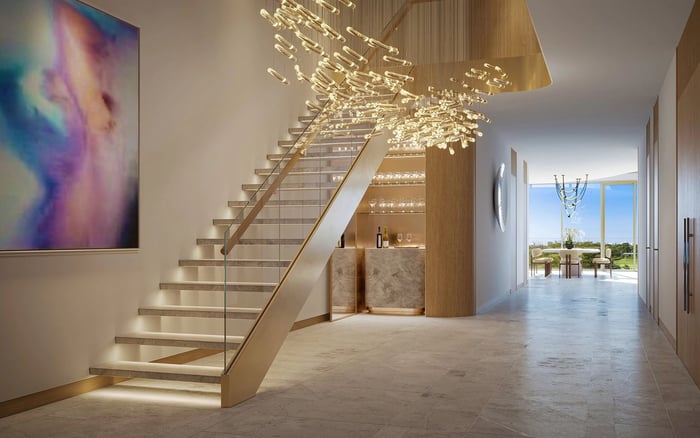
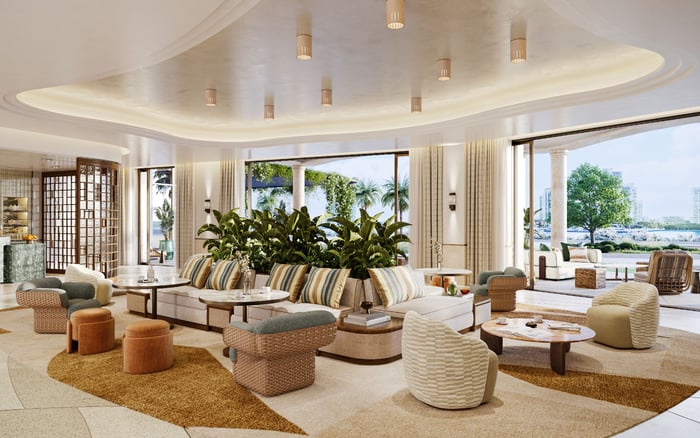
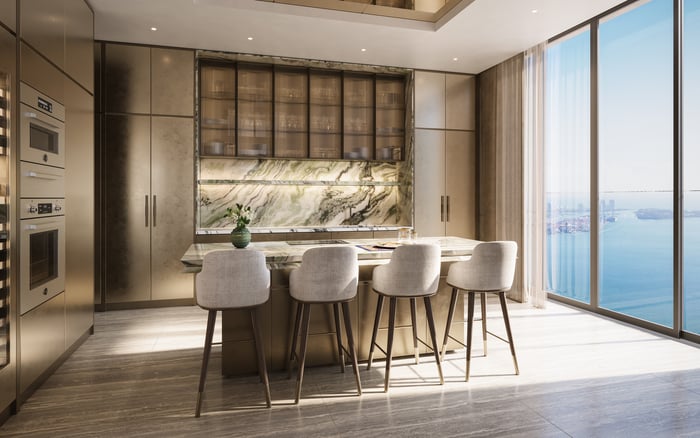
Miami luxury buyers are increasingly treating lighting scenes as part of the residence search, especially when art display, entertaining, privacy, and evening atmosphere matter as much as views or finishes.
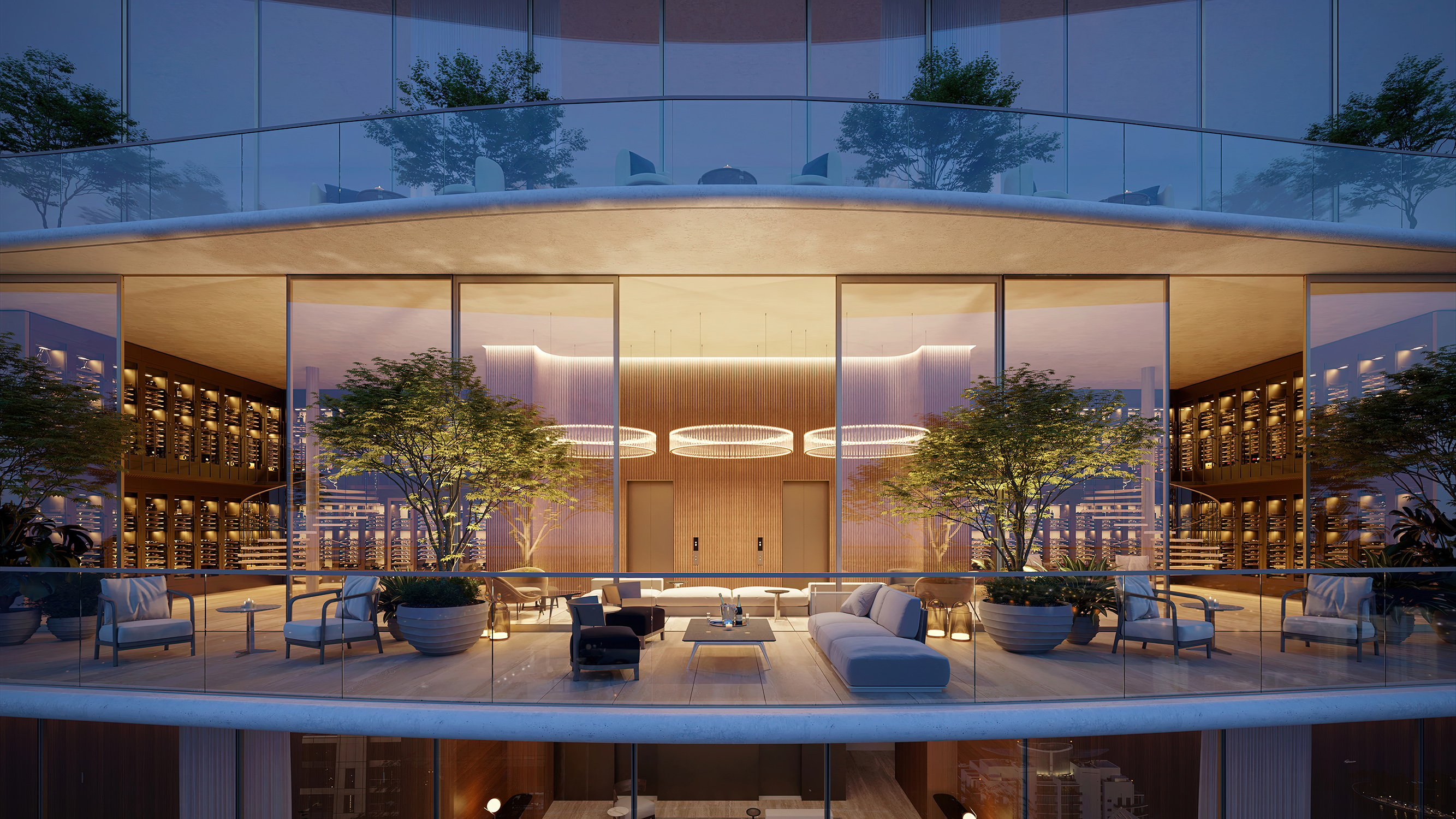
In Miami’s luxury market, the residence search is no longer defined only by square footage, water views, service, and finish packages. For a growing class of collectors and design-driven buyers, the more decisive question is intimate: can the home hold art beautifully at every hour?
That question changes the entire showing. A buyer who owns paintings, sculpture, photography, or mixed-media work is not simply walking through rooms. They are reading walls, ceiling planes, natural light exposure, window glare, nighttime reflection, and the rhythm of entertaining. The conversation moves from “Where does the sofa go?” to “What happens to this canvas at sunset?” and “Can a dinner scene protect the art while still flattering the room?”
Lighting scenes give that conversation structure. A scene is not just a dimmer setting. It is a coordinated environment: ambient light, accent light, shade position, color temperature, reflection control, and, in some cases, the transition from daylight to evening. In a city where architecture often celebrates glass, water, and open-plan living, the ability to create a quieter gallery moment inside the residence is becoming a luxury in its own right.
The most sophisticated art-focused buyers now tour with a different eye. They look for uninterrupted walls, enough depth for proper viewing distance, ceiling conditions that can accept refined fixtures, and circulation that allows a piece to breathe. A spectacular view can be a gift, but too much uncontrolled brightness can compete with delicate work.
This is why buyers ask to see residences at more than one time of day. Morning light may reveal glare. Afternoon light may expose heat and reflection. Evening light may show whether the home can become more atmospheric, with art reading clearly rather than disappearing into shadow. In search shorthand, the relevant filters may read Art-basel, Miami Beach, Brickell, Coconut-grove, New-construction, and Ultra-modern, but the real test is how those environments perform after the door closes.
At The Perigon Miami Beach, for example, a Miami Beach buyer thinking about art should study how ocean brightness, interior wall placement, and evening ambience work together. The point is not to reduce a residence to technical specifications. It is to understand whether its beauty can be tuned.
The old luxury vocabulary celebrated imported stone, custom millwork, and grand terraces. Those still matter. But for collectors, lighting language has become equally important. They want to know whether the living room can move from gallery mode to cocktail mode without visual chaos. They want a dining scene that is warm, flattering, and controlled. They want corridors that feel intentional, not like leftover space.
A well-planned art scene typically depends on layered illumination rather than one dominant source. General ambient light should feel soft and architectural. Accent lighting should be precise enough to support artwork without creating harsh hotspots. Decorative fixtures should contribute mood without stealing attention. Shades should be considered part of the composition, not a separate convenience.
This also changes how buyers value pre-construction and newly completed residences. In New-construction searches, the ability to influence ceiling infrastructure, controls, and shade pockets before completion may be more valuable than a later cosmetic upgrade. Once ceilings are closed and millwork is installed, changes can become more invasive.
Brickell presents a distinctive challenge for collectors: vertical glamour, dramatic outlooks, and glass-rich rooms. These qualities are central to the appeal, but they require discipline when art is part of the brief. Buyers should evaluate where the art wall lives in relation to glass corners, balcony doors, and evening city reflection.
At The Residences at 1428 Brickell, a Brickell search can be framed around the balance between skyline energy and private interior control. The right residence should allow both: a cinematic urban setting and a calm, legible interior for art.
The same principle applies downtown. A buyer considering One Thousand Museum Downtown Miami should think beyond the first impression of architecture and view. The deeper question is whether furniture placement, circulation, and light control can create a residence that feels collected rather than merely impressive.
Not every collector wants a high-gloss gallery in the sky. Some prefer softness: tree canopy, filtered daylight, tactile materials, and rooms that feel residential before they feel ceremonial. Coconut Grove can speak to that instinct, especially for buyers who want art to coexist with books, family dinners, and a less formal daily rhythm.
At Four Seasons Residences Coconut Grove, the art-lighting conversation may be less about spectacle and more about restraint. How does daylight enter? Where can a major work sit without being overpowered? Can the evening scene feel intimate without becoming dim? These questions are subtle, but they often determine whether a residence feels livable for a serious collector.
The Grove buyer may also be more sensitive to transitions. Entry to living room, living room to terrace, dining to lounge: each passage can become an opportunity for a controlled lighting moment. A strong residence does not need to mimic a gallery. It needs to let art participate in the life of the home.
Before committing, buyers should ask practical questions. Can the ceiling accept the lighting strategy the collection requires? Are there enough solid walls for current and future acquisitions? Do window treatments integrate cleanly? Can scenes be adjusted for entertaining, quiet evenings, and art viewing? Is there a plan for works that are sensitive to direct sun or excessive brightness?
The best answers usually come before closing, not after. A lighting designer, architect, art advisor, or interior designer can identify whether a residence has strong bones for display. They can also help a buyer distinguish between problems that are easy to solve and conditions that are fundamental to the plan.
This is where the Miami search becomes more precise. A residence may be magnificent, yet wrong for a particular collection. Another may appear quieter at first, then reveal superior walls, better proportions, and more controllable light. For art-centered buyers, the second home can be the rarer find.
Lighting scenes are changing the Miami residence search because they translate lifestyle into atmosphere. They recognize that a luxury home is not static. It hosts breakfast light, afternoon brightness, dinner parties, private viewings, and late-night calm. For collectors, each of those moments asks something different of the architecture.
The most successful search begins with the collection in mind. Not as an afterthought, and not as decoration to be placed once the residence is chosen. Art should be part of the brief from the first tour: wall by wall, scene by scene, room by room. In Miami, where residences are often designed around views, the next level of discretion is designing the interior experience with equal confidence.
Why are lighting scenes important for art collectors in Miami? They help control glare, mood, and visibility, especially in residences with abundant glass, water views, and strong daylight.
Should buyers tour a residence at different times of day? Yes. Morning, afternoon, and evening conditions can reveal very different qualities in the same room.
What is the difference between art lighting and decorative lighting? Art lighting is planned to support specific works, while decorative lighting is often used for atmosphere, scale, or design expression.
Can lighting be improved after purchase? Often, but the ease depends on ceiling conditions, wiring, shade integration, and the overall interior plan.
Are glass walls bad for art? Not necessarily. They simply require more careful planning around shades, wall placement, reflections, and brightness.
What should a collector bring to a residence search? A sense of collection scale, preferred display style, and any known sensitivity around light or placement can make each tour more useful.
Do lighting scenes matter in pre-construction purchases? Yes. Earlier planning can make it easier to coordinate ceilings, controls, shades, and future interior design.
Is a gallery-like home always the goal? No. Many buyers want art integrated into daily life, with scenes that feel residential, warm, and flexible.
Which Miami areas suit art-focused buyers? It depends on lifestyle, but buyers often compare beach, urban, and garden-oriented settings for light control and mood.
Who should advise on art-sensitive lighting? A coordinated team may include a lighting designer, architect, interior designer, and art advisor.
For a discreet conversation and a curated building-by-building shortlist, connect with MILLION.
If branded residences are on your mind — as a home or as an allocation — we would be glad to share what we are seeing, privately.
Begin a quiet conversation