A discreet guide for Los Angeles buyers evaluating Miami and South Florida, focused on neighborhood fit, ownership discipline, privacy, liquidity, and long-term lifestyle alignment.

For Los Angeles buyers considering South Florida, the essential adjustment is psychological. Miami is not a substitute for Los Angeles, and it should not be evaluated as a warmer replica for the Westside, Malibu, or the Hollywood Hills. It is a distinct ownership culture, with its own rhythms, building types, waterfront logic, and expectations around service.
The phrase wealth migration can sound broad, but for an individual buyer the question is precise: where will capital feel both protected and personally useful? A family relocating full-time will read the market differently from an executive seeking a seasonal base, a founder designing a bi-coastal lifestyle, or a collector seeking a secure residence with hospitality-level ease.
The strongest approach begins with use case, not property tours. Frequency of stay, desired privacy, travel patterns, school or club priorities, entertaining style, and tolerance for building density all shape the right answer. A beautiful residence can still be the wrong acquisition if it does not match how the buyer actually lives.
Los Angeles buyers often arrive with a refined sensitivity to light, scale, arrival sequence, outdoor living, and architectural identity. Those instincts translate well, but not always directly. In South Florida, the relationship between residence and water is central, yet it varies meaningfully by neighborhood and building type.
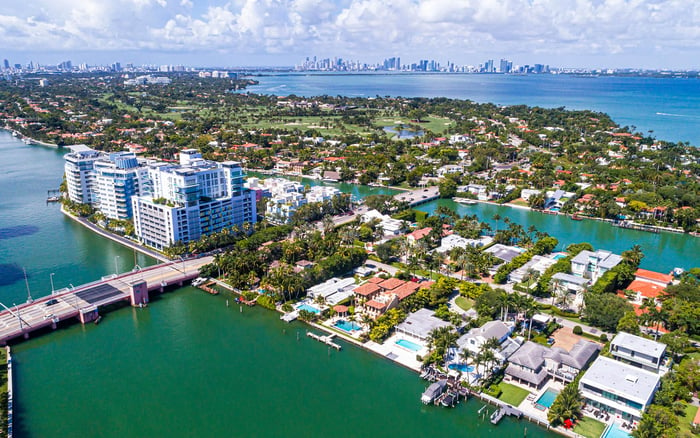
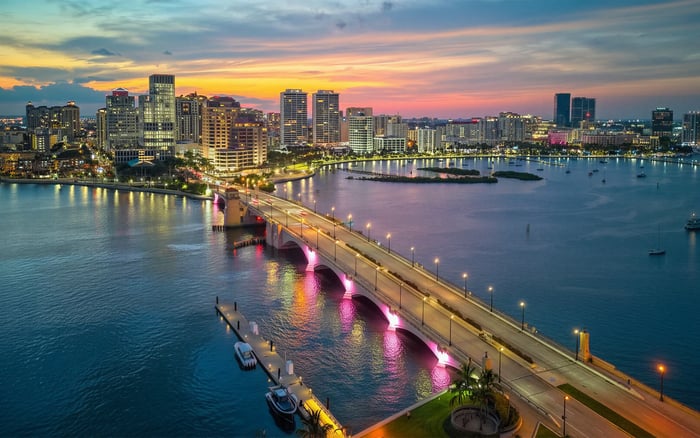
A high-floor condominium in Brickell may deliver skyline energy, concierge structure, and an urban lock-and-leave lifestyle. A residence in Miami Beach may feel more resort-oriented, with proximity to sand, dining, and cultural movement. Coconut Grove may appeal to buyers seeking a quieter canopy, village atmosphere, and a softer residential pace. West Palm Beach introduces a different balance, often attractive to buyers who want a polished urban setting with a more measured tempo.
The point is not to rank these choices abstractly. The right geography depends on whether the buyer wants visibility or retreat, walkability or enclosure, vertical living or a more residential cadence. In this sense, Miami rewards clarity.
For buyers moving capital from Los Angeles to Miami, neighborhood selection should come before finishes. A residence can be renovated, furnished, and styled. A location cannot be made more aligned with a buyer’s daily rhythm.
In Brickell, properties such as The Residences at 1428 Brickell sit within a district often considered by buyers seeking a polished urban base. For those drawn to beach proximity and a more coastal pattern, The Perigon Miami Beach may enter the conversation as part of a Miami Beach search. The comparison is not only about views or amenities. It is about how each setting performs on an ordinary Tuesday morning and across a full winter weekend.
Coconut Grove can speak to those who want a more settled residential feeling, and Four Seasons Residences Coconut Grove offers an example of the kind of address that may appeal to buyers who value service within a calmer neighborhood context. Farther north, West Palm Beach can become relevant for households seeking another version of South Florida sophistication, with The Ritz-Carlton Residences® West Palm Beach representing the branded-residence category in that market.
Los Angeles owners accustomed to estates or gated compounds should pay close attention to condominium governance. In Miami, the building is not merely a container for the residence. It is part of the asset. Rules, reserves, staff culture, insurance posture, rental policy, pet policy, service standards, and approval processes all influence the ownership experience.
Privacy should also be studied carefully. Some buyers want a social building with visible energy. Others want a residence where arrival, elevator access, service corridors, and guest management feel discreet. Neither preference is inherently superior, but a mismatch can become expensive and frustrating.
For a buyer who will travel frequently, lock-and-leave performance is critical. That means more than a staffed lobby. It includes maintenance coordination, package handling, hurricane preparation protocols, vendor access, and the quality of communication when the owner is away. A property can be beautiful in person yet operationally inconvenient from another coast.
The most refined buyers slow the process down before they speed it up. They create a short list by lifestyle, then pressure-test it through documents, building history, ownership rules, and resale logic. This is the discipline behind the best Buyer's Guides: reduce emotion without removing taste.
First, define the primary purpose. Is the residence a full-time relocation, a winter address, an investment-adjacent hold, or a legacy purchase? Second, define the acceptable friction. Some buyers will tolerate valet queues for a superior view; others will not. Some want dining and retail downstairs; others prefer separation. Third, understand exit quality. Even buyers planning to hold long term should ask who the next buyer might be.
Sunny Isles Beach may enter the conversation for buyers prioritizing a particular vertical oceanfront lifestyle, and Bentley Residences Sunny Isles is one example of a project name that can appear in that search universe. Again, the inquiry should remain practical: does the building, neighborhood, and ownership structure match the buyer’s life, not simply the buyer’s imagination of Miami?
Before an offer, a Los Angeles buyer should be able to answer five questions with confidence. What role will this residence play in the household portfolio? Which neighborhood best supports daily life? What level of service is expected? What privacy standard is non-negotiable? How would the property be viewed by a future buyer with similar means?
The most elegant purchase is rarely the loudest one. It is the one in which location, building, floor plan, management culture, and personal rhythm align. In South Florida, that alignment can be found across several distinct markets, but it should never be assumed from price alone.
Miami rewards buyers who arrive with curiosity and discipline. For those coming from Los Angeles, the opportunity is not simply to change coasts. It is to recalibrate how wealth, lifestyle, and residence can work together in a place defined by water, service, and a more fluid sense of time.
Should Los Angeles buyers treat Miami as a direct replacement for Los Angeles? No. Miami should be evaluated on its own terms, with attention to lifestyle, building culture, neighborhood rhythm, and ownership structure.
What should come first, neighborhood or building? Neighborhood should usually come first. A residence can be redesigned, but the surrounding daily pattern is fixed.
Is Brickell best for every relocating buyer? No. Brickell may suit buyers who want an urban base, but others may prefer Miami Beach, Coconut Grove, West Palm Beach, or another setting.
Why is condominium governance so important? Governance affects rules, privacy, maintenance, rental flexibility, service standards, and the day-to-day ownership experience.
How should a buyer think about privacy? Privacy is not just square footage. It includes arrival, elevator access, guest flow, staff discretion, and building culture.
Is a branded residence always the safer choice? Not automatically. Brand can support service expectations, but buyers still need to review governance, location, floor plan, and long-term fit.
What does lock-and-leave really mean? It means the residence can be managed smoothly when the owner is away, including maintenance, access, communication, and storm readiness.
Should resale matter if the buyer plans to hold long term? Yes. A disciplined buyer still considers future demand, because liquidity is part of intelligent ownership.
How many properties should a serious buyer tour? Enough to compare neighborhoods and ownership styles, but not so many that the search loses focus. A curated shortlist is usually more productive.
What is the most common mistake in a Los Angeles to Miami search? The common mistake is buying the fantasy before understanding the building, neighborhood, and practical rhythm of daily life.
When you're ready to tour or underwrite the options, connect with MILLION.
If branded residences are on your mind — as a home or as an allocation — we would be glad to share what we are seeing, privately.
Begin a quiet conversation