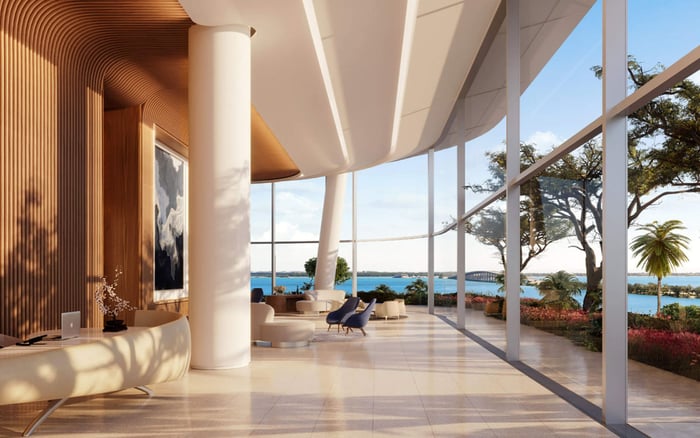
Generator coverage is no longer a back-end inspection detail in South Florida luxury real estate. It is a pre-tour filter that clarifies which homes and residences can remain livable, secure, and convenient when the grid is interrupted.

In South Florida luxury real estate, generator coverage belongs before the first tour, not after a favorite residence has already captured attention. The reason is straightforward: backup power is not merely a mechanical detail. It shapes how a property performs when weather, grid strain, or a building-wide disruption interrupts ordinary life.
For affluent buyers, the question is rarely whether a property has a generator. The sharper question is what that generator actually supports. One residence may offer code-minimum life-safety systems while leaving daily comfort exposed. Another may preserve elevator access, select cooling, security, communications, garage entry, lighting, and essential appliances in a way that feels much closer to uninterrupted living.
That distinction matters across Brickell, Miami Beach, Sunny Isles, oceanfront enclaves, new-construction towers, and single-family homes. Each setting carries its own exposure, vertical movement, privacy expectations, and service dependencies. Before a buyer steps into a lobby, penthouse, or gated drive, generator coverage can already reveal meaningful information about resilience and ownership quality.
Many buyers hear “backup generator” and assume the core question has been answered. In practice, generator coverage exists on a spectrum. At one end are systems focused on life safety and emergency operation. At the other are more comprehensive arrangements that preserve the rhythms of a refined home.
The gap between those two points can be substantial. Life-safety coverage may prioritize emergency lighting, fire systems, limited elevator operation, and other essential building functions. Livability coverage asks a more personal set of questions: Can owners reach their residence without waiting for a single shared elevator? Will the home remain cool enough for comfort? Will refrigeration, Wi-Fi infrastructure, security, gate access, or water pressure continue functioning as expected?
This is why generator coverage belongs in the earliest phase of the search. A buyer who values storm-season confidence, remote ownership, staff coordination, or aging-in-place comfort should not wait until contract review to discover that backup power is narrower than anticipated.
In a high-rise, generator coverage should be evaluated at both the building-wide and residence-specific levels. The first issue is vertical access. Ask how many elevators are connected to backup power, whether service elevators are included, and how priority is managed during an outage. In an ultra-luxury tower, a single working elevator may be technically adequate yet practically frustrating if dozens of residences depend on it.
Next, examine cooling and ventilation. Full-unit air conditioning on backup power is not the same as limited common-area support. Some buildings may maintain corridors, emergency systems, or select mechanical functions without preserving private residence comfort. Buyers should ask whether any in-unit systems are supported and whether the answer differs by line, floor, or build-out.
Security deserves equal attention. A luxury condominium relies on controlled access, cameras, garage gates, elevators, concierge desks, and, in some cases, package, valet, or service infrastructure. If those systems are compromised, a building can feel operationally diminished even when the structure itself remains secure.
Finally, clarify communications. Internet equipment, cellular boosters, entry systems, and remote monitoring can be just as important as lighting. For owners who travel frequently, the ability to verify access, alarms, climate, and staff coordination during a disruption is part of the value proposition.
Single-family estates require a different lens. Instead of asking what the association covers, the buyer is evaluating a private utility strategy. The most important questions involve capacity, fuel, transfer switches, maintenance, and what the system is designed to support.
A whole-home generator is different from a generator that powers selected circuits. One property may support refrigerators, security, basic lighting, garage doors, and a limited cooling zone, while another may handle the entire residence, guest house, pool equipment, gates, landscape lighting, and smart-home systems. The distinction should be clear before the tour because it affects how the buyer interprets mechanical rooms, service areas, and future improvement costs.
Fuel planning is also essential. A system is only as reassuring as the fuel source and maintenance routine behind it. Buyers should ask how the generator is tested, who services it, whether records exist, and how easily vendors can access the equipment after severe weather. A beautiful estate with a neglected generator is not truly prepared.
For waterfront and low-lying locations, placement matters as well. Buyers should ask where the equipment sits, how it is protected, and whether the installation appears consistent with the property’s risk profile. The goal is not to become an engineer before touring. The goal is to avoid spending emotional energy on homes whose resilience profile is incompatible with the buyer’s expectations.
A disciplined shortlist should include a simple generator column beside price, location, view, floor height, privacy, and amenities. That column should not contain a vague yes or no. It should summarize coverage in practical language: elevators, cooling, security, internet, garage, gates, water systems, appliances, and owner comfort.
This approach helps buyers compare properties that otherwise appear similar. Two residences may share a water view and an elegant amenity program, yet differ dramatically in outage performance. A tower with stronger elevator redundancy may be more attractive to a buyer who travels with family, staff, or older relatives. An estate with clearly documented full-home support may justify greater confidence than one with an impressive but undefined mechanical setup.
Generator coverage also influences negotiation posture. If the system is narrow, undocumented, aging, or difficult to expand, that may become part of the buyer’s valuation conversation. If the system is comprehensive and well maintained, it can reinforce the home’s premium positioning, particularly for buyers who understand South Florida ownership beyond the fair-weather season.
The most concerning answer is not always “no generator.” Sometimes the greater risk is ambiguity. If a representative cannot explain what the generator supports, whether testing is routine, or how long critical functions can continue, the buyer should slow down and request written clarification.
Another red flag is overbroad language. Phrases such as “the building has backup power” or “the home is generator-ready” can mean very different things. Generator-ready may indicate infrastructure potential rather than a functioning system. Backup power may refer to emergency areas rather than private comfort. These distinctions should be settled before a tour becomes emotionally persuasive.
Buyers should also be careful with assumptions about new construction. Newer does not automatically mean comprehensive coverage. It may mean newer systems, cleaner documentation, and better integration, but the actual scope still needs to be reviewed. In the luxury tier, the standard is not whether backup power exists. The standard is whether it aligns with how the owner intends to live.
Once the generator questions are answered, the first tour becomes more intelligent. The buyer is no longer walking through rooms in isolation. They are evaluating the residence as a complete operating environment.
In a tower, the buyer can look at elevator banks, garage circulation, lobby staffing, service routes, and mechanical access with a clearer eye. In an estate, the buyer can observe equipment placement, driveway access, service gates, landscape dependencies, and smart-home integration. The tour becomes less about being impressed and more about confirming whether the property’s resilience matches its aesthetic promise.
For South Florida’s ultra-premium audience, this is the right sequence. Beauty may open the conversation, but continuity often sustains ownership satisfaction. Generator coverage is one of the quiet details that separates a property that photographs beautifully from one that lives beautifully under pressure.
Should generator coverage affect my shortlist before touring? Yes. It helps separate properties that merely meet basic expectations from those that support comfort, access, and security during an outage.
Is having a generator enough? No. The important question is what the generator powers, including elevators, cooling, security, communications, gates, garages, and essential appliances.
Are high-rise condos and estates evaluated the same way? No. Towers require building-wide questions about elevators and common systems, while estates require private questions about capacity, fuel, and maintenance.
Should I ask about air conditioning on backup power? Yes. Cooling is often central to livability in South Florida, and buyers should clarify whether any private residence cooling is supported.
What is a good first question for a condo building? Ask which elevators and security systems remain operational on backup power, and whether private residence systems receive any support.
What is a good first question for an estate? Ask whether the generator is whole-home or limited-circuit, and request a clear explanation of the systems it supports.
Can generator coverage influence value? It can. Strong, documented coverage may reinforce confidence, while vague or limited coverage can become part of the buyer’s negotiation analysis.
Should new construction be assumed to have better backup power? No. Newer systems may be advantageous, but the exact scope of backup coverage still needs to be confirmed in writing.
What is the biggest red flag? Ambiguity. If no one can clearly explain what remains operational during an outage, the buyer should pause and request specifics.
When should generator details be reviewed with professionals? Before serious negotiation. Mechanical, legal, and insurance advisors can help interpret whether the stated coverage matches the buyer’s needs.
For a discreet conversation and a curated building-by-building shortlist, connect with MILLION.
If branded residences are on your mind — as a home or as an allocation — we would be glad to share what we are seeing, privately.
Begin a quiet conversation