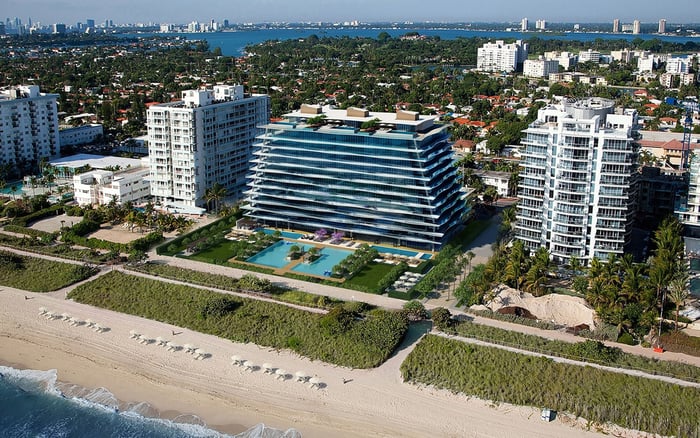
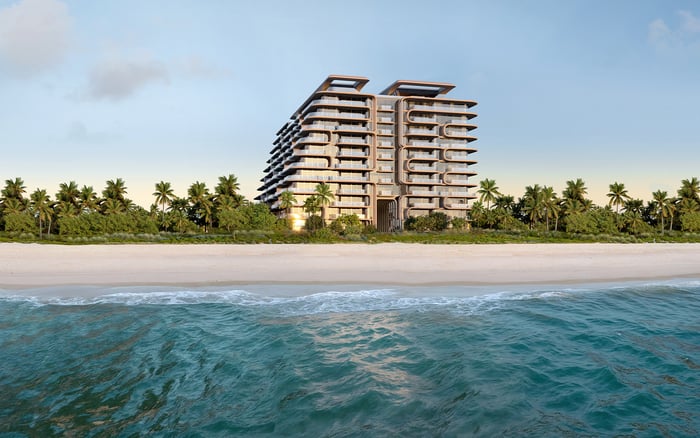
A buyer-focused look at how an established branded Surfside condominium and a newer Surfside offering frame diligence around oversight, transparency, and long-term risk.

For South Florida’s most sophisticated condominium buyers, the conversation is no longer limited to views, finishes, service, and privacy. Strong building governance has become a defining luxury amenity because it influences how a property protects capital, manages shared responsibilities, communicates with owners, and responds to long-term risk.
That shift is especially relevant in Surfside, where the buyer profile often includes families, international principals, second-home owners, and investors who expect discretion while demanding clarity. In this environment, Fendi Château Residences Surfside and The Delmore Surfside frame two distinct but complementary due-diligence conversations. One reflects the established, branded ultra-luxury condominium lens. The other reflects the newer-project lens, where buyers evaluate governance expectations before or during purchase.
Neither property should be reduced to assumptions about reserves, board practices, litigation, inspections, or finances without direct documents. The stronger approach is to examine what each market position allows a buyer to ask, verify, and negotiate before committing.
Fendi Château Residences Surfside is best understood as the mature side of this governance comparison. Its value for a governance-minded buyer is not that specific internal practices can be inferred from the brand alone. Rather, an established condominium may provide a longer observable record for review.
In a completed, lived-in building, buyers and their advisers may be able to evaluate association operations with greater practical context. That can include recent meeting minutes, budget history, maintenance priorities, rules and regulations, insurance discussions, capital planning materials, owner communications, and the general cadence of decision-making. The point is not to assume perfection. The point is to determine whether the building’s operating culture aligns with the buyer’s tolerance for risk and preference for transparency.
The Fendi name adds another layer to the analysis. A branded ultra-luxury condominium carries an identity that buyers expect to be protected through service standards, design continuity, and a controlled residential experience. Yet brand identity should be treated as a starting point, not a substitute for review. A buyer seeking strong governance should still ask how association decisions are made, how communication is handled, how common elements are maintained, and how future obligations are planned.
For ultra-premium buyers, this is where the conversation becomes more refined. The best diligence is not adversarial. It is precise, document-led, and discreet. A buyer does not need speculative questions. The better path is to request the materials that show how the building actually functions.
The Delmore Surfside represents a different governance moment. As a newer Surfside offering, it asks buyers to consider governance before the full pattern of association life has matured. That makes the diligence more forward-looking.
In this setting, buyers are typically focused on the documents and commitments that will shape the building’s first years of ownership. They should study the declaration, bylaws, rules, budget framework, turnover provisions, management structure, service philosophy, use restrictions, and any disclosed obligations that may affect future owners. The objective is to understand how governance is designed, not to assume how it will perform.
This distinction matters. A newer project may appeal because it offers a fresh residential concept and contemporary expectations. But governance-minded buyers should pair that appeal with questions about transition from developer control, owner representation, communication protocols, operational budgeting, and responsibility for shared amenities. Each item can be evaluated without making unsupported claims about the building’s future.
The Delmore Surfside is therefore useful for buyers who want to shape their decision before governance patterns become fully seasoned. The focus is less on reviewing years of association history and more on understanding the architecture of oversight that will affect ownership once the residence is delivered, occupied, and operated.
The most important comparison between Fendi Château Residences Surfside and The Delmore Surfside is not which building is “better governed.” That conclusion requires documents and property-specific review. The more useful comparison is the type of evidence each property can offer at the moment of purchase.
At an established building, the buyer can often evaluate performance through history. Are owner communications clear? Are meeting records organized? Are maintenance priorities visible? Do budgets appear coherent? Are rules consistently articulated? Has the association demonstrated a culture of orderly decision-making? These questions help a buyer interpret the lived reality of ownership.
At a newer offering, the buyer evaluates the design of governance. Are the governing documents clear? Is there a credible path to owner participation? Are responsibilities between developer, association, and management plainly described? Are service standards and amenity obligations defined in a way that can be sustained? These questions help the buyer understand the future operating environment.
Across both categories, the same rule applies: governance claims should be verified, not absorbed. Buyers should request documents through appropriate channels, review them with experienced counsel, and avoid relying on informal assurances. Luxury is not only what a building offers on arrival. It is how the building behaves after closing.
Surfside occupies a rare position in Miami’s luxury geography. It is quieter than South Beach, more residential than many urban waterfront corridors, and close to Bal Harbour while retaining a distinct village scale. That intimacy makes governance feel more personal. In a boutique or limited-inventory environment, the character of shared decision-making can shape the ownership experience as much as architecture.
The broader Surfside market also gives buyers useful context. A client comparing Fendi Château Residences Surfside and The Delmore Surfside may also look at Arte Surfside, Ocean House Surfside, or The Surf Club Four Seasons Surfside to understand how different luxury formats approach privacy, service, and residential identity. Those comparisons should remain disciplined. Each building has its own documents, ownership culture, and operating realities.
For buyers focused on strong building governance, Surfside’s appeal lies in pairing oceanfront luxury with a more exacting ownership lens. The right residence should satisfy the emotional brief, but it should also withstand scrutiny from counsel, financial advisers, family offices, and long-term asset managers.
A serious buyer should begin with the governing documents. Declarations, bylaws, rules, budgets, insurance materials, meeting minutes, disclosures, and management agreements can reveal more than presentation language ever will. The aim is to understand authority, responsibility, cost allocation, restrictions, and decision-making rhythm.
Next, buyers should study communication. Strong governance tends to appear in clear notices, organized records, consistent owner messaging, and transparent processes for major decisions. Weak communication does not always signal poor governance, but it does invite deeper questioning.
Third, buyers should consider fit. Some owners prefer highly structured environments with formal rules and tight operational control. Others prefer more flexibility. In ultra-luxury condominiums, governance is not only about risk reduction. It is also about preserving a shared standard of living among owners whose expectations may differ.
Finally, the buyer should separate brand, architecture, and governance. A beautiful residence can still require disciplined document review. A newer project can be compelling while still requiring careful attention to future operating structure. An established branded condominium can offer history while still demanding current verification.
Why does governance matter in a Surfside condo purchase? Governance affects transparency, maintenance decisions, owner communication, and long-term risk management. For luxury buyers, it is part of protecting both lifestyle and capital.
Is Fendi Château Residences Surfside automatically stronger because it is established? Not automatically. Its maturity may allow buyers to review actual association history and operations, but conclusions should be based on documents.
How should buyers evaluate The Delmore Surfside as a newer project? Buyers should focus on governing documents, budget framework, management structure, turnover provisions, and the planned approach to owner oversight.
Can buyers rely on a luxury brand as proof of governance quality? No. Brand identity can support expectations, but governance quality should be verified through legal and association materials.
What documents should a buyer request before closing? Key materials may include bylaws, declarations, budgets, rules, meeting minutes, insurance information, disclosures, and management agreements.
Should family offices approach governance differently? Family offices often benefit from a document-led review that considers operational risk, liquidity, ownership restrictions, and long-term asset stewardship.
Does Surfside require more governance diligence than other markets? Surfside attracts discerning buyers, and its luxury inventory makes governance an especially important part of condominium selection.
Are reserves, inspections, or board practices discussed here as facts? No. Those items should be reviewed only through current documents, professional advice, and property-specific materials.
Can a newer building offer governance advantages? A newer building can offer a clearly designed governance framework, but buyers should study how that framework will operate after ownership matures.
What is the main takeaway for buyers comparing these two properties? Fendi Château Residences Surfside offers an established-building diligence lens, while The Delmore Surfside offers a forward-looking governance review.
When you're ready to tour or underwrite the options, connect with MILLION.
If branded residences are on your mind — as a home or as an allocation — we would be glad to share what we are seeing, privately.
Begin a quiet conversation