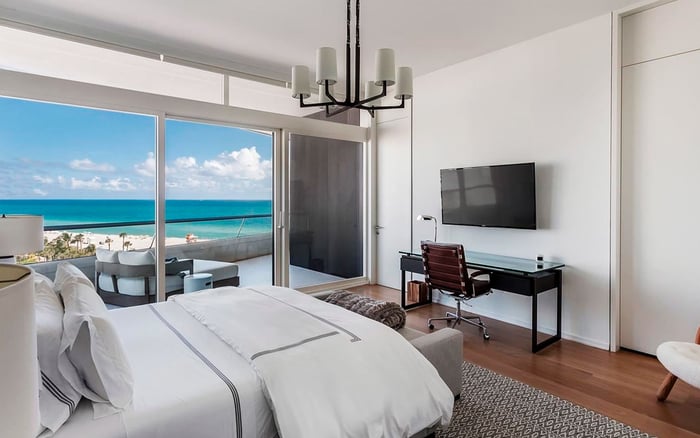
A document-led framework for evaluating walkability, club privileges, private dining, governance, and ownership obligations before buying in Miami Beach.

In Miami Beach, a beautiful residence may be only one layer of the purchase. The broader proposition can encompass a walkable routine, access to social spaces, private dining, hospitality services, beach proximity, and a particular standard of privacy. Each element warrants its own review.
The careful buyer distinguishes what is physically present from what is contractually available. A restaurant next door is not the same as resident dining. A club associated with a property is not necessarily an ownership right. A pleasant route viewed on a quiet morning may feel markedly different after dark, during heavy rain, or amid nearby construction.
This installment in MILLION's Buyer's Guides is therefore less about checking amenity boxes than defining enforceable value. The objective is simple: understand what transfers with the residence, what depends on a separate agreement, and what can change after closing.
Walkability should be measured against the buyer's actual calendar. Map the routes that matter: the beach, fitness, dining, daily provisions, cultural appointments, a preferred hotel, and the place where a car or driver will meet you. Then walk them at the times you expect to use them.
Observe shade, crossings, sidewalk continuity, lighting, traffic exposure, service access, and the ease of arriving elegantly. If possible, repeat the exercise in heat and rain. For a second-home owner, also consider whether the route remains intuitive for family, guests, and staff who may not know the neighborhood.
When comparing 57 Ocean Miami Beach with The Perigon Miami Beach, use the project presentations as an introduction, not a substitute for an on-foot inspection. The relevant question is not whether an address is described as walkable. It is whether your preferred lifestyle can unfold comfortably from its doors.
A luxury purchase can involve several overlapping relationships: condominium ownership, association membership, club participation, and operator-managed services. Ask counsel to identify the document governing each relationship and the party responsible for delivering each benefit.
For any club connection, request written answers to practical questions. Is membership automatic, optional, or separately purchased? Does it transfer on resale? Can dues, categories, guest privileges, hours, or reciprocal access change? Are reservations guaranteed, prioritized, or merely available subject to capacity? Does access extend to family, tenants, household staff, and unaccompanied guests?
The distinction matters when considering a hospitality-oriented setting such as Shore Club Private Collections Miami Beach. Buyers should reconcile every material representation with the condominium declaration, purchase agreement, club documents, operator agreements, current fee schedules, and written rules applicable to the residence under consideration.
Private dining can describe distinctly different experiences. It may mean a residents-only room, in-residence service, preferred booking at a public restaurant, event catering, or access conditioned on club status. Do not allow those concepts to blur together.
Ask what can actually be ordered, where it can be served, during which hours, and by whom. Clarify reservation windows, minimum spending, service charges, delivery fees, cancellation rules, guest limits, dress expectations, and whether menus or service periods may change. If entertaining is central to the purchase, test a realistic scenario in writing: a quiet family dinner, a larger hosted evening, or a late arrival requiring service.
At Five Park Miami Beach or any other residence under consideration, the prudent approach is property-specific. Confirm whether the desired experience belongs to the unit, the building, a club, or an outside operator. These are not interchangeable forms of access.
Amenities are experienced socially but funded and governed collectively. With qualified advisers, review the declaration, bylaws, rules, budget, reserves, insurance materials, pending assessments, meeting records, and material contracts. The aim is to understand both present obligations and the mechanisms through which future decisions may be made.
Pay close attention to who may revise operating hours, access standards, staffing, food and beverage policies, guest rules, and service levels. Determine whether a branded or managed experience depends on an agreement with a defined term, renewal process, or termination right. Ask what happens to names, privileges, and service commitments if an operator changes.
Cost review should extend beyond headline common charges. Build a personal ownership model that accounts for club dues, food and beverage commitments, parking, storage, valet, service charges, gratuities, and the expense of maintaining the residence while absent. The elegant decision is one whose recurring structure remains comfortable, not merely affordable at acquisition.
Waterfront appeal should be paired with a close review of access and continuity. Ask how the property and your usual routes function during heavy rain, unusually high water, extreme heat, and service interruptions. Examine arrival points, garage access, backup arrangements, package handling, and procedures for an unoccupied home.
Nearby construction also warrants direct observation. Identify active sites and parcels that could affect noise, views, pedestrian routes, loading patterns, or privacy. Avoid predictions that cannot be documented. Instead, review available zoning and approval materials with the appropriate professionals, visit at different hours, and decide how much uncertainty your ownership plan can absorb.
Create a concise written schedule of the promises that materially influence value. Beside each, record the controlling document, cost, duration, transferability, decision-maker, and remedy if access changes. Anything important that remains verbal should be treated as unresolved.
The final decision file should also distinguish legal review from personal judgment. Counsel can interpret rights and obligations. Financial and insurance advisers can evaluate exposure. Only the buyer can decide whether the walk, atmosphere, privacy, and dining rhythm feel worthy of the address.
Careful ownership is not an exercise in skepticism. It is a way to preserve the pleasure of the purchase by ensuring that the residence and its surrounding privileges align with the life envisioned for them.
Is walkability the same for every Miami Beach buyer? No. Evaluate the routes, hours, weather conditions, mobility needs, and privacy preferences specific to your household.
Does condominium ownership automatically include club membership? Not necessarily. Confirm the relationship in the governing documents and any separate membership agreement.
Should verbal amenity promises influence an offer? Material promises should be identified in writing and reconciled with binding documents before signing.
What should private dining access include? Confirm the venue, eligibility, hours, menus, reservation priority, guest rules, charges, and party delivering the service.
Can club privileges change after closing? The governing documents should explain who controls privileges and how rules, dues, categories, or access may change.
How should a buyer test a neighborhood route? Walk it at relevant times and assess shade, crossings, lighting, traffic, weather exposure, and construction activity.
Why review operator agreements? They may clarify the term, scope, renewal, and termination framework behind a managed or branded experience.
Which recurring costs deserve attention? Consider association charges, club dues, service fees, parking, storage, gratuities, insurance, and absence management.
How should nearby construction be considered? Observe current conditions, review available approvals with professionals, and assess your tolerance for noise and change.
Who should review the fine print? Engage qualified legal, financial, insurance, and technical advisers whose expertise fits the property and your ownership plan.
To compare the best-fit options with clarity, connect with MILLION.
If branded residences are on your mind — as a home or as an allocation — we would be glad to share what we are seeing, privately.
Begin a quiet conversation