A discreet look at how Design Miami’s influence can reshape what ultra-prime Key Biscayne buyers value, from collectible interiors to wellness, terraces and enduring restraint.
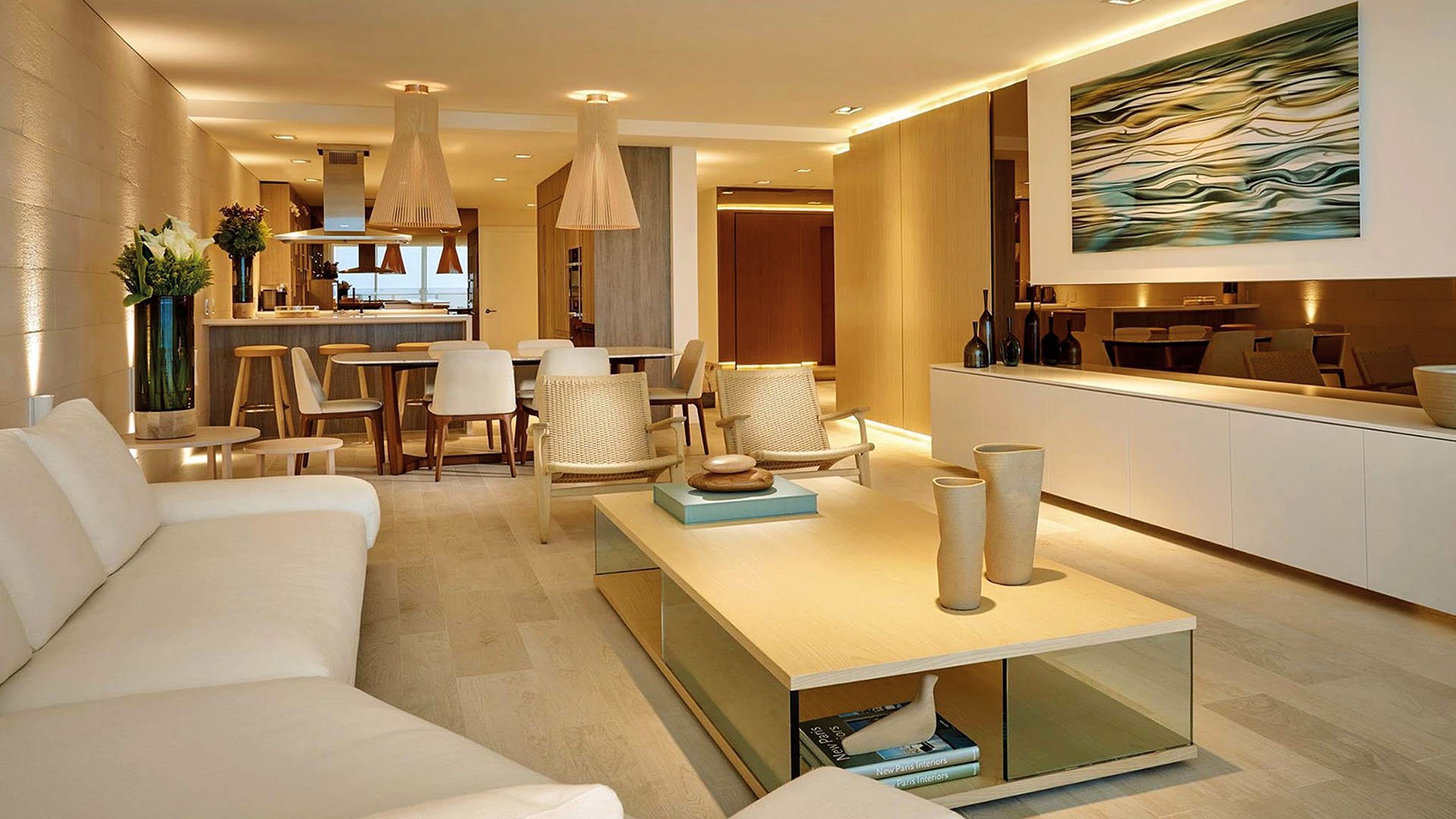
Design Miami is not merely a place to admire collectible chairs, rare lighting or sculptural objects. For the Key Biscayne luxury-home audience, it acts as a seasonal filter for how taste evolves inside private residences. Its most important influence is not theatricality. It is selection. A fair devoted to design trains the eye to distinguish decoration from curation, a fashionable room from a home with a durable point of view.
That matters in Key Biscayne because the island’s strongest homes already have natural advantages: light, water, privacy, garden settings and an indoor-outdoor rhythm that requires little explanation. The design question becomes more exacting. What should be added, what should be restrained and what should remain almost invisible? A residence shaped by the Design Miami mindset is not simply expensive. It is intentional.
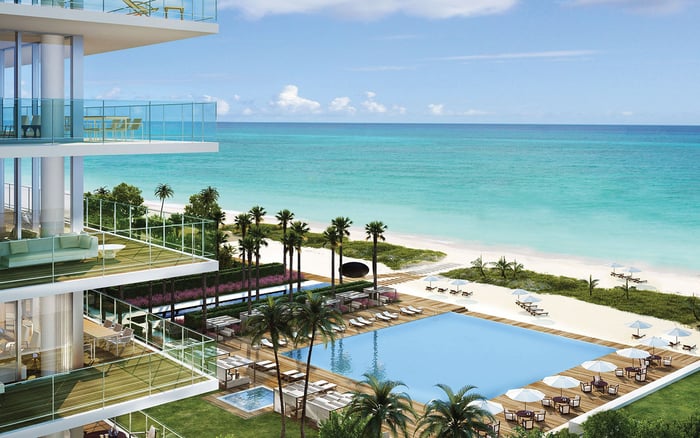
For buyers comparing single-family homes with residences such as Oceana Key Biscayne, the priority is less about copying a showroom than understanding how architecture, art, materials and daily rituals work together. The best interiors do not compete with Biscayne Bay or the Atlantic horizon. They frame them.
In older luxury language, finishes often carried the conversation. Marble, millwork, large kitchens and generous closets were enough to signal quality. Design Miami encourages a more mature reading: an interior should have a collectible point of view without becoming a gallery installation that interrupts family life.
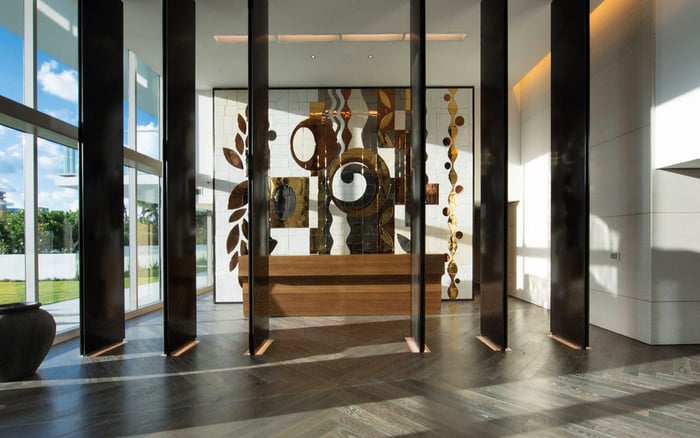
That can appear as a limited-edition lighting piece over a dining table, a hand-finished wall treatment in a foyer, a sculptural console anchoring an entry or a few important objects placed with restraint. The goal is not to fill every surface. It is to create moments that feel discovered rather than staged.
This is where Key Biscayne owners should be especially disciplined. The island’s softness-its palms, gardens and water views-can be overwhelmed by hard spectacle. A more convincing design language favors tactile natural materials, quiet palettes and carefully chosen focal points. In listing language, buyers may reduce this to Oceanfront, Waterview, Terrace and New-construction priorities, but the more refined question is whether the residence has an identity that will still feel composed years from now.
Wellness is often marketed as an amenity, but the Design Miami lens makes it more architectural. In a Key Biscayne home, wellness begins with light quality, acoustics, airiness, circulation and the relationship between interior rooms and outdoor space. A spa bath is pleasant. A floor plan that supports sleep, privacy, movement and calm is more valuable.
This thinking is visible across South Florida’s design conversation, including wellness-oriented residential examples such as The Well Coconut Grove. For a Key Biscayne buyer, the lesson is not to chase a label. It is to ask whether the home supports a sophisticated routine: morning exercise, a shaded breakfast terrace, a quiet office, family gathering areas, recovery spaces and bedrooms protected from the social parts of the house.
The best wellness upgrades are rarely loud. They may be warmer lighting temperatures, better transitions from gym to bath, more thoughtful storage, quieter mechanical systems, shaded outdoor lounges or materials that feel calm to the touch. These choices are easy to underestimate during a fast showing and impossible to ignore once one lives with them.
Key Biscayne has always rewarded outdoor living, but Design Miami sharpens how those spaces should be furnished and composed. A terrace or pool deck should not feel like leftover space after the interior is complete. It should function as an open-air salon, with the same level of proportion, comfort and material discipline as the principal rooms.
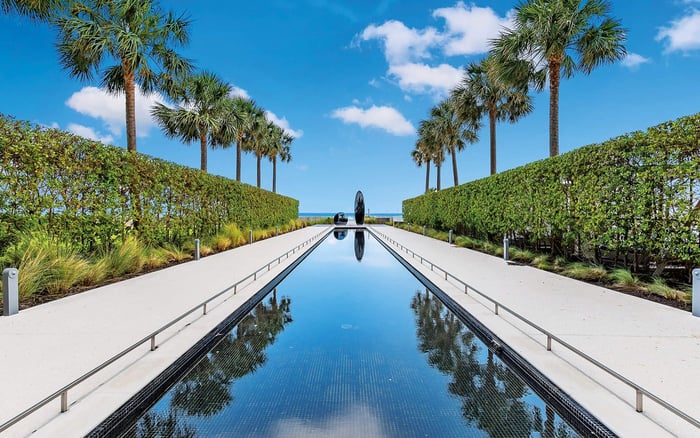
This is especially relevant for waterfront and garden-facing homes. Outdoor furniture is no longer just a durability decision. It is part of the architectural character. Sculptural seating, shaded dining, integrated lighting and landscape that feels edited rather than ornamental can make an exterior space feel collected, not assembled.
Buyers looking beyond the island may notice similar ambitions in residences such as Eighty Seven Park Surfside, where coastal living and design consciousness intersect. For Key Biscayne, the takeaway is clear: the most persuasive outdoor spaces do not merely provide a view. They choreograph how that view is experienced throughout the day.
Design Miami’s influence also favors a quieter form of technology. In ultra-prime homes, the expectation is not more visible screens or complicated controls. It is a residence that responds gracefully. Lighting scenes, climate, shading, audio and security should support the atmosphere without becoming the atmosphere.
For Key Biscayne, where sunlight, humidity and outdoor exposure shape daily life, the best technology is practical as well as elegant. Shading should preserve views while reducing glare. Lighting should flatter art at night and soften the transition from terrace to living room. Climate control should make large open spaces comfortable without noise or visual clutter.
The danger is over-automation. A home that requires explanation at every switch loses some of its luxury. The more enduring approach is intuitive, discreet and serviceable. Design-led buyers should ask not only what the system can do, but whether it makes the home easier to inhabit.
A Key Biscayne buyer influenced by Design Miami should begin with proportion, light and flow before selecting objects. If the architecture is unresolved, collectible pieces can look stranded. If the rooms breathe, even a restrained collection can feel important.
Second, consider how art and design will be lived with. Walls, lighting, humidity control, circulation paths and sightlines all affect whether a home can support serious pieces. This does not mean every residence needs to become a private museum. It means the home should be capable of dignity when important design enters the room.
Third, evaluate flexibility. Families change, collections evolve and seasonal use patterns shift. The most desirable homes are not locked into one aesthetic. They can absorb a new dining table, a different art program or a reimagined office without requiring a full reinvention.
Finally, study restraint in other ultra-private markets. A buyer considering The Residences at Six Fisher Island may be drawn to privacy and exclusivity, but the broader lesson for Key Biscayne is that quiet confidence often outlasts visual drama. The seasonal design calendar, sometimes grouped in buyer shorthand with Art-basel, may create urgency around taste, yet the best homes do not feel seasonal.
Why does Design Miami matter to Key Biscayne homeowners? It influences how sophisticated buyers think about collectible design, lighting, materials and the balance between art and livability.
Should a Key Biscayne home feel like a design gallery? Not necessarily. The strongest homes feel curated but comfortable, with important pieces integrated into daily life.
What interior priority is most important for resale appeal? Durable proportion and flexible rooms matter more than any single decorative trend, because they let future owners adapt the home.
How should buyers evaluate sculptural lighting? Look for pieces that improve atmosphere, scale and evening use rather than fixtures chosen only for visual impact.
Does wellness design require major renovation? Sometimes, but not always. Better lighting, quieter spaces, improved transitions and calmer materials can meaningfully change the experience.
Are terraces more important after a design-led renovation? Yes, when they are treated as true living rooms with shade, comfort, lighting and a clear relationship to the interior.
How can technology support a luxury home discreetly? It should simplify climate, lighting, shading, audio and security without becoming visually dominant or difficult to operate.
What should art collectors consider in Key Biscayne homes? They should study wall space, light exposure, circulation and environmental control before assuming a residence can support important works.
Is restraint a luxury-home advantage in Key Biscayne? Often, yes. The island’s natural setting rewards interiors that frame light and views rather than compete with them.
What is the best way to shortlist comparable options for touring? Start with location fit, delivery status, and daily lifestyle priorities, then compare stacks and elevations to validate views and privacy.
When you're ready to tour or underwrite the options, connect with MILLION.
If branded residences are on your mind — as a home or as an allocation — we would be glad to share what we are seeing, privately.
Begin a quiet conversation