A discreet guide for luxury buyers weighing Key Biscayne’s privacy, resort-like calm, and family orientation against planned access to Miami’s cultural calendar.
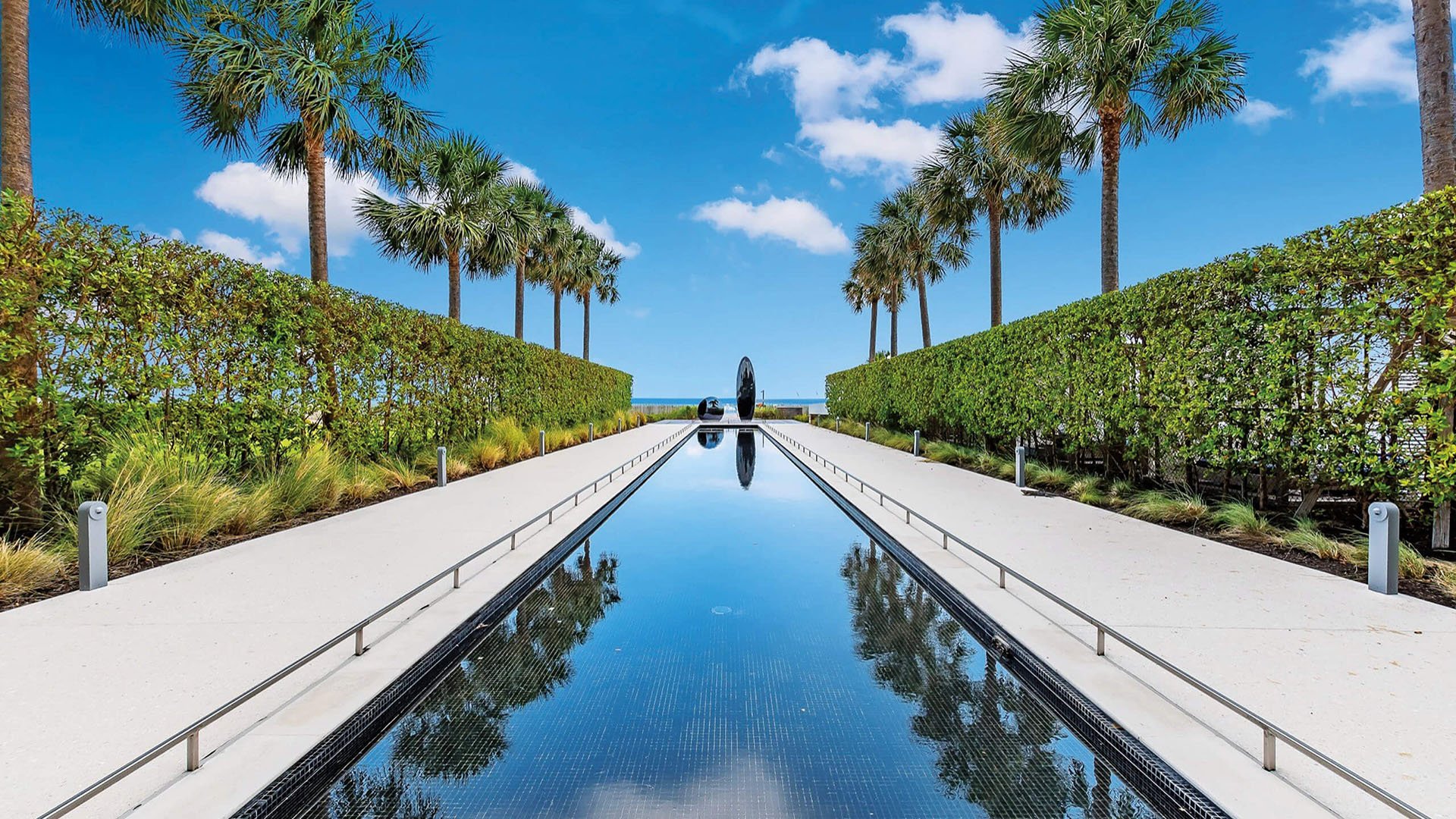
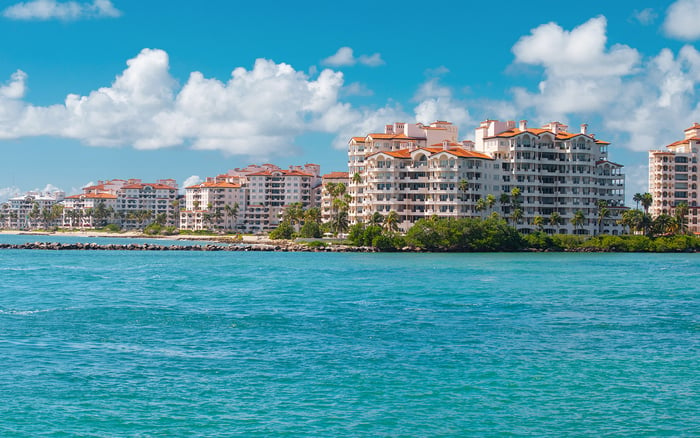
Key Biscayne is not the obvious answer for a buyer who wants culture at the doorstep. That is precisely why it appeals to a particular South Florida luxury client. The island offers a quieter, resort-like rhythm, separated from mainland Miami by the Rickenbacker Causeway, while keeping the city’s museums, performing arts, dining rooms, design events, philanthropic circuits, and seasonal art calendar within intentional reach.
The buyer who chooses Key Biscayne for cultural access is usually not seeking urban immersion. They are seeking recovery space. They may spend an evening at the Adrienne Arsht Center, make a daytime visit to Pérez Art Museum Miami or Frost Science Museum, attend a collector dinner during Miami Art Week, or keep a late reservation across the bay. Then they want to return to a home environment defined by privacy, family calm, water, landscape, and a lower social temperature.
That distinction is essential. Key Biscayne is less about spontaneous gallery-hopping and more about disciplined access. It rewards buyers who curate their week, plan transport, value security, and prefer the ability to leave culture behind at the end of the evening.
The island’s great advantage is psychological distance. Once over the causeway, the pace changes. For many buyers, that transition is not a commute burden. It is part of the appeal. A cultural life based from Key Biscayne tends to be intentional: dinners booked, drivers scheduled, valet arrivals anticipated, and evenings selected rather than improvised.
This makes the island especially compelling for families, seasonal residents, and global buyers who already live with structured calendars. The question is not whether they can access Miami’s cultural core. They can. The question is whether they want their primary residence inside that energy or slightly apart from it.
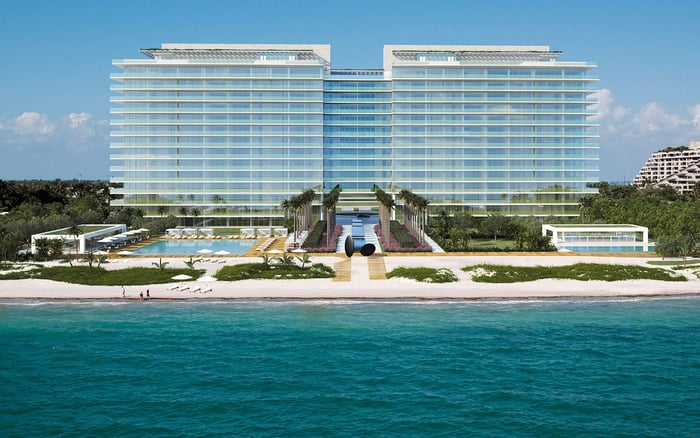
For buyers who want the island address itself, Oceana Key Biscayne is a natural reference point because it keeps the conversation centered on Key Biscayne rather than compromise. It represents the kind of residential decision in which quiet, privacy, and access are weighed together rather than treated as opposing goals.
At the ultra-premium level, distance is rarely the only metric. Predictability matters more. A ten-minute inconvenience can feel larger than a longer, better-managed journey if arrivals, parking, security, and timing are uncertain. Key Biscayne buyers who care about culture should evaluate the full evening sequence: leaving the island, crossing the causeway, arriving at a venue, moving to dinner, and returning home.
This is why concierge thinking matters. Private drivers, household staff coordination, valet relationships, and a realistic understanding of event traffic can turn Key Biscayne from a perceived outlier into a highly functional base. The best cultural buyers do not ask, “How far is it?” They ask, “How reliably can I move through the night?”
That lens also clarifies why some buyers compare Key Biscayne with mainland and beach alternatives. A residence in Una Residences Brickell may speak to buyers who want a more direct relationship with the financial and dining core. Key Biscayne, by contrast, speaks to the buyer who wants that access without surrendering the island’s quieter domestic frame.
Brickell and Downtown offer a different cultural proposition. They place buyers nearer to performing arts, museums, waterfront civic spaces, restaurants, hotels, and weekday professional life. For those who want the city to feel immediate, the mainland can be persuasive.
The tradeoff is atmosphere. Downtown access often comes with a more vertical, kinetic rhythm. A buyer considering One Thousand Museum Downtown Miami is often studying the appeal of architectural presence and urban proximity. A Key Biscayne buyer may admire that energy, yet still prefer to experience it as a destination rather than a constant backdrop.
This distinction is not about better or worse. It is about temperament. Some buyers want culture integrated into daily errands. Others want the city to perform when summoned, then recede. Key Biscayne serves the latter buyer with unusual clarity.
Miami Beach offers the most recognizable version of cultural glamour, particularly for buyers who want proximity to hotels, collectors, design events, private dinners, and the seasonal social calendar. A project such as The Perigon Miami Beach belongs in the comparison set for clients who want beachside refinement with a stronger relationship to that social ecosystem.
Coconut Grove, meanwhile, often enters the conversation for buyers who want a lush, residential setting with mainland convenience. Four Seasons Residences Coconut Grove offers a useful counterpoint for those who like greenery and privacy, but want to remain off the island.
Against both, Key Biscayne is more singular. It is not trying to be Miami Beach. It is not trying to be Coconut Grove. It is a barrier island choice for buyers who see separation as part of the luxury. For search and advisory purposes, Brickell and Downtown alternatives may be evaluated alongside Oceana Key Biscayne, One Thousand Museum Downtown Miami, and select mainland or beach residences, but the lifestyle logic is different.
The best fit is a buyer who already understands Miami as a regional cultural system rather than a single walkable district. They may attend the Arsht Center, visit PAMM and Frost Science, cross to Miami Beach for The Bass, participate in Miami Art Week, or host private dinners connected to Art Basel. They do not need all of this beneath their residence. They need it reachable, curated, and balanced by a private home life.
Key Biscayne is especially strong for buyers who prize school-week calm, weekend beaches, tennis or boating rhythms, and a domestic atmosphere that does not feel like a hotel lobby. It is also attractive to seasonal owners who want to arrive, exhale, and make selective cultural commitments rather than live inside constant social motion.
The buyer who may struggle is the one who values spontaneity above all else. If the ideal night begins with walking downstairs and choosing among several nearby venues, Key Biscayne may feel too removed. If the ideal night begins with a planned departure and ends with a quiet drive back over the water, the island becomes far more compelling.
A cultural-access buyer should evaluate Key Biscayne through three questions. First, does the property support a calm daily life when no event is scheduled? Second, does the household have the logistics to make mainland and beach evenings feel effortless? Third, does the buyer genuinely prefer privacy over proximity?
When all three answers are yes, Key Biscayne becomes one of Miami’s most refined cultural bases. Not because it offers culture at the doorstep, but because it lets the buyer choose culture with precision and return to a setting that feels deliberately apart.
Is Key Biscayne a good choice for buyers who want cultural access? Yes, if the buyer values planned access over walkable immersion. It works best for those who want privacy first and culture by intention.
Is Key Biscayne close to Miami’s major cultural venues? It is connected to mainland Miami by the Rickenbacker Causeway, so access depends on timing, transport planning, and the specific destination.
Who is the ideal Key Biscayne cultural buyer? The ideal buyer wants a calm island home, family-oriented privacy, and selective access to museums, performing arts, dining, and art events.
Is Key Biscayne better than Brickell for culture? It is different. Brickell feels more urban and immediate, while Key Biscayne offers a quieter base with curated trips into the city.
How does Key Biscayne compare with Downtown? Downtown places buyers closer to cultural venues and civic energy. Key Biscayne offers more separation, privacy, and residential calm.
How does Key Biscayne compare with Miami Beach? Miami Beach is stronger for social immediacy and beachside cultural glamour. Key Biscayne is better for buyers who prefer discretion and retreat.
Should buyers consider a private driver? Many luxury buyers find that transport planning matters more than raw distance. A driver can make cultural evenings smoother and more predictable.
Is Key Biscayne suitable for Miami Art Week and Art Basel access? Yes, for buyers who plan ahead. It is better suited to curated attendance than last-minute movement between multiple events.
Does Key Biscayne feel urban? No. Its appeal is a quieter, resort-like barrier island atmosphere rather than dense, walkable city energy.
What is the main tradeoff for cultural buyers? The tradeoff is privacy versus immediacy. Buyers gain calm and separation, but most major cultural outings require planning.
If you'd like a private walkthrough and a curated shortlist, connect with MILLION.
If branded residences are on your mind — as a home or as an allocation — we would be glad to share what we are seeing, privately.
Begin a quiet conversation