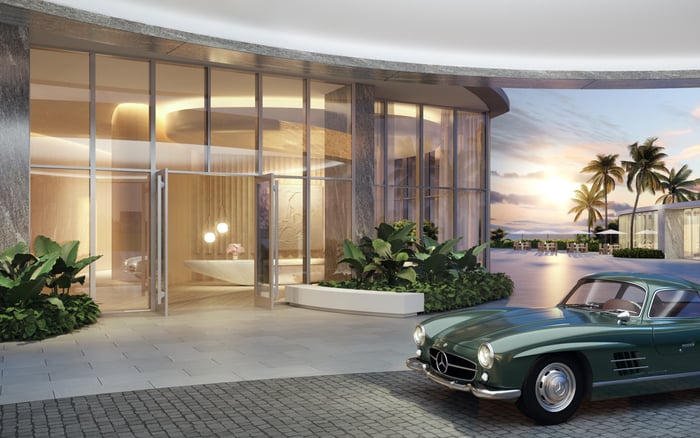
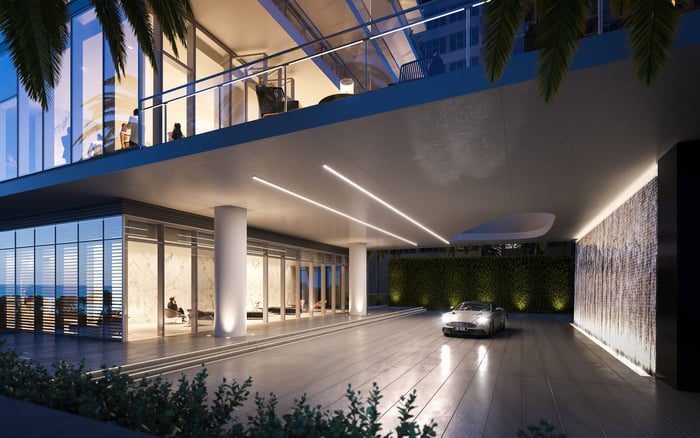
At Oceana Bal Harbour, privacy is not a single amenity but a combination of elevator configuration, legal floor status, sightlines, orientation, and circulation. Buyers considering a premium should verify each element against plans, documents, and real-world conditions.
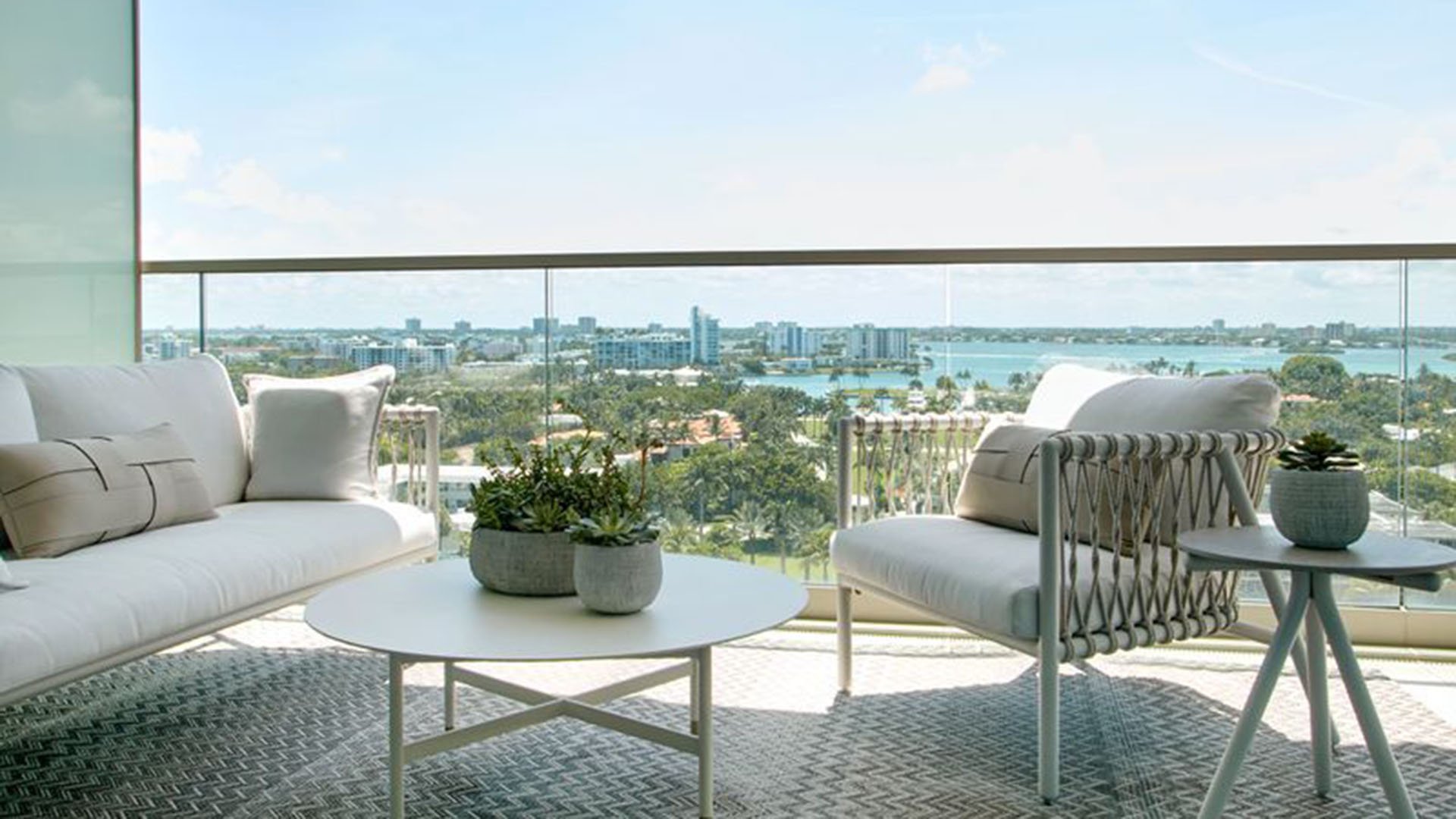
At Oceana Bal Harbour, the appeal of full-floor living is immediate. A residence with expansive water views, direct elevator arrival, broad terraces, and fewer immediate neighbors can feel more like a private home than a conventional condominium. Yet “full-floor” should describe a verifiable physical and legal condition-not simply an elevated level of finish or a private-looking entrance.
Oceana Bal Harbour features private elevator galleries that open directly into residences. This is an important luxury feature, but it does not, by itself, establish that a residence occupies an entire floor. A private elevator foyer may still be on a level with another home, a shared landing, service access, or emergency circulation.
For privacy buyers, the premium should therefore attach to specific attributes: exclusive floor occupancy, controlled elevator access, separation from service routes, protected sightlines, and limited exposure to shared amenity activity. Each warrants individual verification.
The first request should be for the residence’s recorded condominium floor plan, together with the relevant elevator-core plan. These documents should clarify whether the unit legally and physically spans the floor, whether another residence shares the level, and how passenger, service, and emergency routes connect to the home.
Buyers should also determine whether service personnel can reach the residence through a separate entrance and whether any back-of-house corridor, mechanical area, or emergency path adjoins the unit. The goal is not merely an elegant elevator opening. It is predictable control over who can arrive, where they can circulate, and what remains beyond the private envelope.
This discipline applies across Bal Harbour. A buyer comparing Oceana with Rivage Bal Harbour should assess the actual residence and circulation plan rather than assume similar luxury language represents equivalent exclusivity.
Private elevator access appears in Oceana residences below the penthouse levels. One ninth-floor oceanfront residence paired a private elevator foyer with four bedrooms, 4.5 bathrooms, and 2,531 square feet. The example demonstrates why elevator privacy and full-floor status must be evaluated separately.
A high North Tower residence has carried the full-floor “Sky Estate” designation, along with ocean, bay, and skyline views. Such positioning may accurately express the home’s intended stature, but buyers should still confirm floor occupancy through plans and condominium documents. Higher floors can improve separation from ground-level activity, yet height alone does not resolve shared-core access, tower-to-tower visibility, or exposure to neighboring buildings.
In practical terms, request a door-by-door explanation of the floor. Identify every elevator opening, stairwell, service door, utility space, and possible shared threshold. A polished foyer is experiential luxury. Exclusive occupancy is a distinct asset.
Oceana’s residences feature 10-foot floor-to-ceiling glass, extra-wide windows and sliders, and oversized private balconies. These elements frame the Atlantic and Intracoastal setting, but transparency works in both directions. Privacy must be tested from inside the principal rooms and from the terrace itself.
East-west flow-through residences can offer ocean and bay or Intracoastal views within a single home. They can also create different privacy conditions from room to room. An ocean-facing living space may feel open and removed, while a west-facing bedroom or den may have more direct visual relationships with another tower or the mainland skyline. One west-facing residence pairs floor-to-ceiling glass with an approximately nine-foot-deep balcony, illustrating how depth and orientation shape both usability and exposure.
Inspect during bright daylight and after dark, when illuminated interiors become more visible. Stand at the primary bedroom glazing, bathroom windows, kitchen, terrace edges, and seating zones. Then consider possible views from the opposite tower, neighboring buildings, beach path, and pool deck. Buyers who value the discreet oceanfront character of The Surf Club Four Seasons Surfside or the singular tower profile of Regalia Sunny Isles Beach should apply the same unit-specific sightline test here.
Privacy is not limited to keeping outsiders at a distance. Oceana includes layouts in which the primary bedroom is separated from the other bedrooms-a meaningful arrangement for full-time households, guests, children, or live-in staff. Buyers should examine whether daily movement through the kitchen, family areas, secondary bedrooms, and terrace crosses the primary suite’s quiet zone.
Designer-ready positioning and the possibility of Piero Lissoni custom cabinetry contribute to the luxury experience, but finishes do not prove acoustic or spatial separation. During due diligence, consider door placement, bedroom adjacency, terrace access, and the relationship between entertaining rooms and private quarters. If the home will host frequently, test whether guests can move among the arrival, living spaces, powder room, and outdoor areas without entering bedroom corridors.
This is where a well-edited buyer’s guide should be most exacting: privacy is a sequence of thresholds, not a single specification.
Oceana combines a gated entrance with high-tech, multilevel security. It also offers valet service, two underground parking levels, beach and poolside service, an Olympic-style pool, reservable resident cabanas, tennis courts, spa and fitness facilities, private storage, and bicycle areas. These conveniences create a rich residential program-and natural movement by residents, guests, staff, and service teams.
A quiet private showing may not reveal typical circulation. Visit when the pool, beach service, fitness facilities, and valet are active. Listen from the foyer, bedrooms, and terraces. Note where guests wait, how deliveries are handled, and whether amenity users pass near the elevator bank serving the residence. Homes closer to amenity levels deserve particular scrutiny, while upper-penthouse units with private pools introduce their own questions about servicing and access.
The appropriate premium is not simply for fewer neighbors. It is for a demonstrably quieter, more controlled pattern of arrival, occupancy, views, and service.
Before assigning value to full-floor status, obtain the recorded plans and applicable condominium documents. Confirm exclusive floor occupancy, elevator permissions, service access, emergency routes, and every shared threshold. Then conduct separate inspections in daylight, after dark, and during active amenity periods.
Finally, compare the residence with other units in the building. Tower orientation, elevation, balcony depth, bedroom separation, amenity proximity, and elevator configuration can materially alter privacy, even at the same address. A defensible premium should reflect these measurable differences rather than terminology alone.
Does a private elevator mean the residence is full-floor? No. It may indicate direct entry or a private foyer without proving exclusive occupancy of the entire level.
Which document best verifies full-floor status? Request the recorded condominium floor plan and applicable elevator-core plan, then reconcile both with the condominium documents.
Can service staff share access to a supposedly private level? They may use separate or connected service routes, so buyers should confirm all service, emergency, and back-of-house access.
Why should balcony privacy be checked after dark? Interior lighting can make rooms more visible from opposing towers, common areas, and neighboring buildings.
Are higher floors always more private? Not necessarily. Elevation can reduce some activity, but elevator sharing and distant sightlines may remain relevant.
Do flow-through layouts create equal privacy on both sides? No. Ocean-facing and west-facing rooms can have materially different views, exposure, and neighboring sightlines.
How does primary-suite separation affect privacy? Separation from secondary bedrooms can reduce household crossover and create a quieter private zone.
When should buyers test amenity noise? Visit during active pool, beach-service, fitness, and valet periods rather than relying on a single quiet showing.
Do luxury finishes justify a full-floor premium? Finishes support quality and design value, but they do not establish exclusive floor occupancy or controlled circulation.
What should determine the final privacy premium? Base it on verified floor exclusivity, access control, sightlines, service routes, interior separation, and observed activity.
To compare the best-fit options with clarity, connect with MILLION.
If branded residences are on your mind — as a home or as an allocation — we would be glad to share what we are seeing, privately.
Begin a quiet conversation