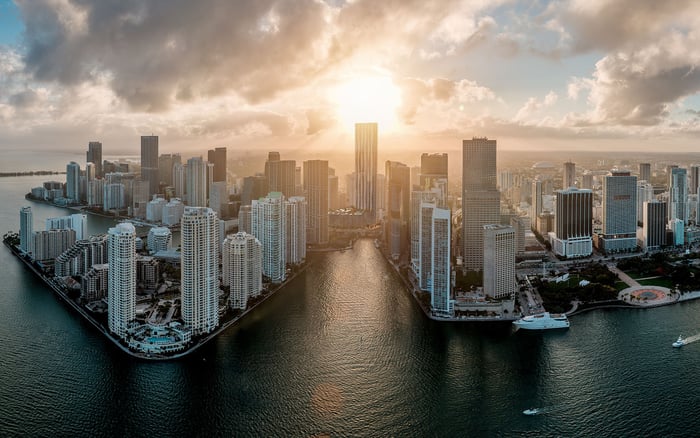
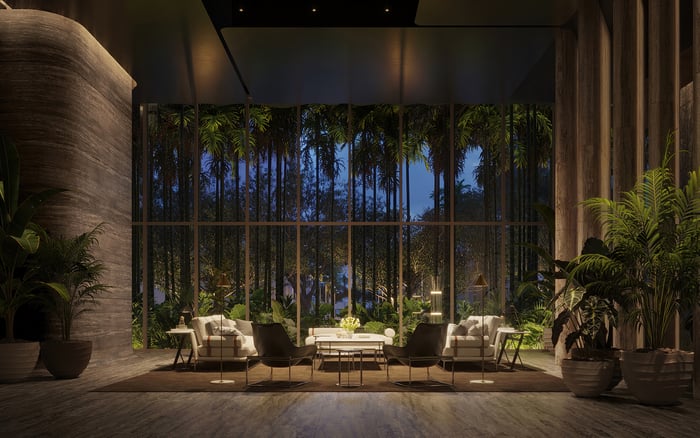
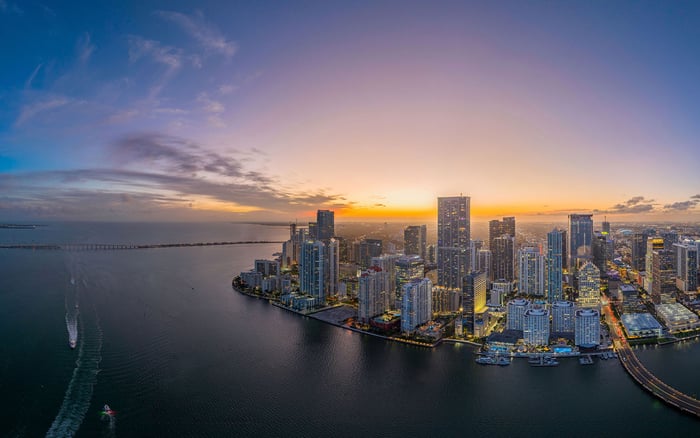
A practical guide for luxury buyers who want to prioritize completed-building certainty before touring South Florida residences, with emphasis on timing, quality, ownership experience, and negotiation clarity.
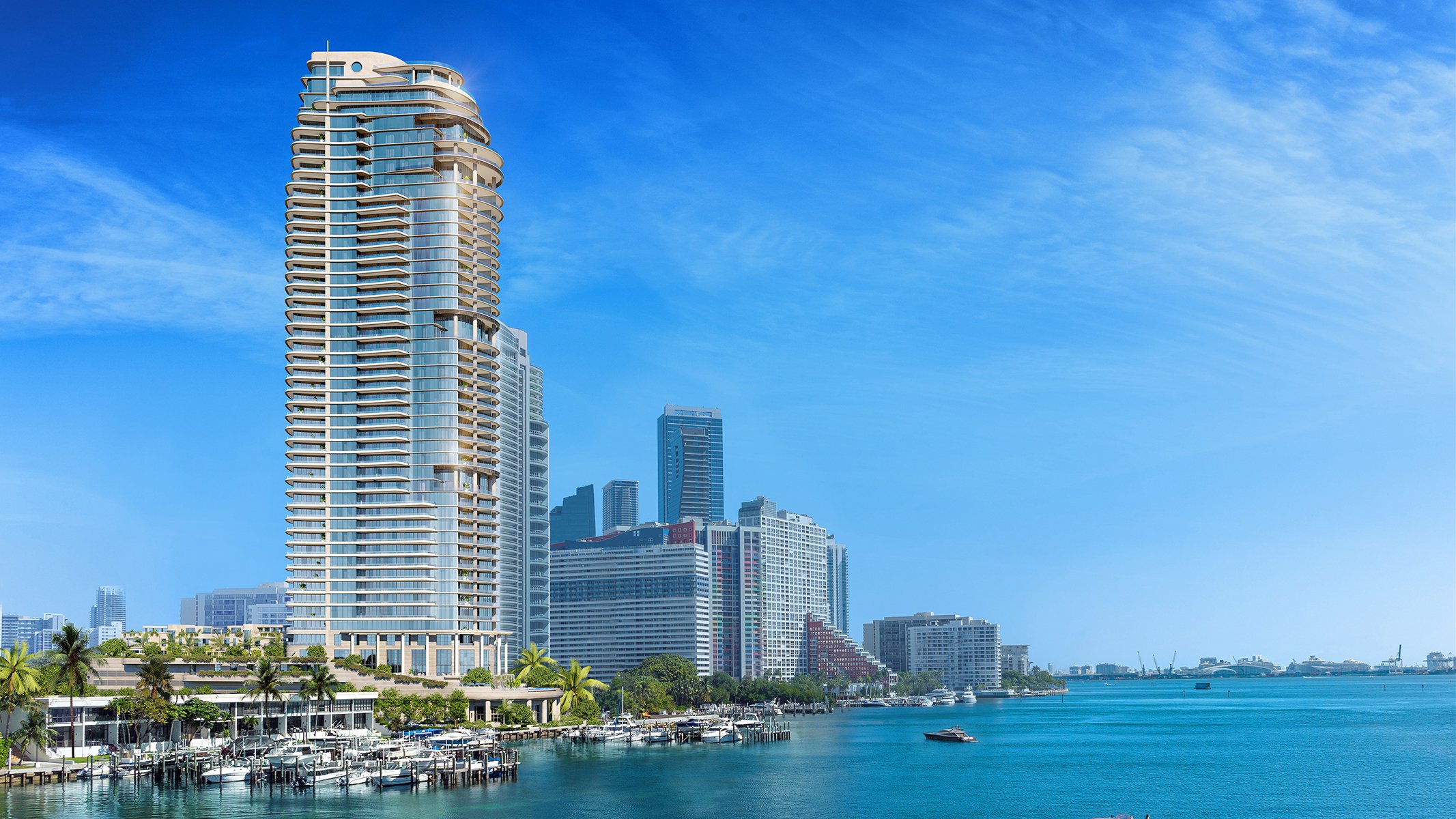
In South Florida luxury real estate, the first tour is often treated as the start of discovery. For sophisticated buyers, it should function more like confirmation. Before walking through a lobby, stepping onto a terrace, or testing the privacy of an elevator arrival, the strongest shortlist has already separated imagination from evidence.
Completed-building certainty is the advantage of evaluating what already exists. It allows a buyer to study proportion, light, arrival sequence, sound, staff rhythm, amenity placement, and neighborhood context without relying on renderings or assumptions. This does not make future delivery irrelevant. It simply changes the order of judgment. The question becomes: which residences deserve your time because the building itself can already answer your most important questions?
That discipline is especially useful in markets where lifestyle, architecture, service, and timing carry equal weight. A residence may be beautiful on paper, but the lived experience is revealed by the completed building. That experience is what a private tour should test, not discover from zero.
A completed residence offers sensory information no presentation can fully replace. Morning light behaves differently from afternoon glare. A bay view changes with weather, boat traffic, neighboring towers, and the angle of the room. Ceiling heights feel generous or constrained only when measured against furniture, art walls, and human movement.
Common areas are just as revealing. The porte cochere should feel calm under pressure. The lobby should have a natural sequence, with privacy preserved rather than performed. Elevators should be intuitive. Amenity floors should feel connected to daily life, not staged as occasional backdrops. Even the quietness of a corridor can signal whether the building has the discretion expected at the upper end of the market.
For buyers comparing Brickell with waterfront enclaves, or Miami Beach with Sunny Isles, these details matter. Each area offers a different version of luxury, but certainty allows you to compare the actual experience rather than the promise of one.
Before scheduling a first visit, define the non-negotiables a completed building can prove. Start with orientation. If the residence depends on sunrise, sunset, water, skyline, or garden views, ask whether those views can be understood in person at the time of day most relevant to your life.
Next, consider arrival. A luxury residence begins well before the front door. The drive, valet choreography, lobby scale, elevator privacy, and transition into the home should all match the way you intend to live. A grand arrival may suit one buyer, while another may value discretion above spectacle.
Then evaluate livability. Split bedrooms, staff or guest accommodations, kitchen placement, terrace depth, storage, and art walls are not abstract preferences. They determine whether a residence can support daily life, entertaining, seasonal use, or multigenerational stays.
Finally, test building culture. Some completed buildings feel resort-like, some residential, some highly social, and some deliberately quiet. The right answer depends on your household. The wrong answer becomes expensive if discovered after emotion has taken over.
Completed-building certainty is not a rejection of New-construction. It is a discipline for understanding risk, timing, and fit. A completed new residence can offer contemporary systems, fresh design language, and immediate physical verification. A completed Resale residence can offer established operations, known building rhythms, and a clearer sense of how the property has matured.
The buyer’s task is not to choose a category first. It is to decide which category can best answer the questions that matter now. If timing is fixed, certainty may be paramount. If personalization is central, a less finished path may still appeal. If Investment logic is part of the decision, certainty can clarify carrying costs, leasing suitability, condition, and market positioning before a tour becomes emotionally persuasive.
The most disciplined buyers often keep both categories in view, but they do not give every option equal time. They reserve private visits for residences where the building, the line, and the lifestyle thesis already make sense.
Amenities are most useful when evaluated as an extension of daily living. A pool deck should be judged by sun exposure, wind, privacy, seating logic, and distance from the residence. A fitness center should be assessed for equipment, natural light, and convenience. Private dining, lounges, wellness spaces, and guest suites should be considered through the lens of how often they will actually be used.
Completed buildings make this assessment practical. You can feel whether an amenity is integrated or remote. You can see whether spaces are serene at peak times. You can understand whether the building is designed first for residents or first for visual effect.
This is where restraint matters. Luxury buyers are often presented with long lists of features. The better question is not how many amenities exist, but which ones improve the way you will live in the residence.
The building does not stand apart from its surroundings. In South Florida, neighborhood certainty can be as important as floor plan certainty. A tower in a financial district, a residence near the sand, and a waterfront home in a quieter enclave each create different daily patterns.
Before the first tour, consider how the area behaves beyond peak beauty. Study the drive at ordinary hours. Think about dining, schools, marinas, airports, clubs, offices, and cultural routines. A perfect residence in the wrong daily geography will rarely remain perfect.
Completed-building certainty helps here because it connects the residence to real movement. The experience from garage to grocery, beach to dinner, or office to terrace becomes tangible. That clarity is particularly valuable for second-home buyers who may otherwise overvalue vacation impressions and undervalue weekday logistics.
By the time a buyer enters the residence, the tour should have a narrow purpose. It should confirm scale, finish, light, privacy, and emotional fit. If the tour must explain too much, the shortlist was likely too broad.
A well-prepared tour also protects negotiation discipline. When a buyer understands why a residence belongs on the shortlist, the discussion can focus on value, timing, inclusions, condition, and terms. When the shortlist is vague, the tour can become theater, and theater is rarely the best foundation for a significant purchase.
Completed-building certainty gives buyers a calmer posture. It allows them to admire without losing judgment. In the ultra-premium tier, that composure is an advantage.
A precise shortlist should include fewer residences, not more. Each should earn its place for a distinct reason: view, location, floor plan, service level, privacy, immediacy, or long-term ownership logic. If two options answer the same need, choose the one with more certainty before touring both.
Create a simple hierarchy. Which residence is the lifestyle benchmark? Which is the value benchmark? Which is the design benchmark? Which is the low-friction choice? This structure turns the first tour into a comparative exercise rather than a wandering one.
For the luxury buyer, time is not the only scarce asset. Attention is scarce too. Completed-building certainty protects both.
Why should completed-building certainty matter before the first tour? It helps you prioritize residences that can already prove light, scale, privacy, service, and daily livability.
Does this mean buyers should avoid pre-construction residences? No. It means completed options should be used as a benchmark for judging promise, timing, and risk.
What should I evaluate first in a completed building? Start with arrival, orientation, views, sound, privacy, amenity access, and the building’s overall rhythm.
How many residences should be on a first-tour shortlist? Fewer is usually better. A focused shortlist allows each tour to answer specific ownership questions.
Is Resale always more certain than New-construction? Not always. A completed New-construction residence can also provide strong certainty if it is ready to experience in person.
How should Investment buyers use completed-building certainty? They can evaluate condition, positioning, usability, and ownership friction before becoming attached to presentation.
Why do amenities need in-person judgment? Their value depends on convenience, atmosphere, privacy, crowding, and how naturally they support daily life.
Does neighborhood context affect building certainty? Yes. Daily routes, nearby services, traffic patterns, and lifestyle access all shape the real ownership experience.
What is the biggest mistake before a first luxury tour? Touring too broadly can blur judgment and allow presentation to outweigh fit, timing, and practical livability.
What is the best way to shortlist comparable options for touring? Start with location fit, delivery status, and daily lifestyle priorities, then compare stacks and elevations to validate views and privacy.
For a discreet conversation and a curated building-by-building shortlist, connect with MILLION.
If branded residences are on your mind — as a home or as an allocation — we would be glad to share what we are seeing, privately.
Begin a quiet conversation