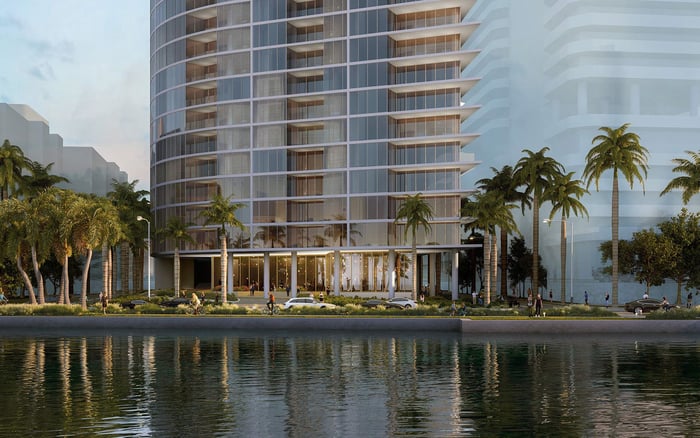
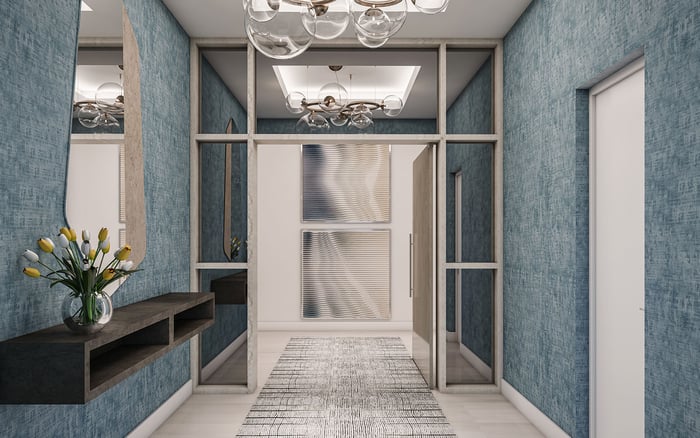
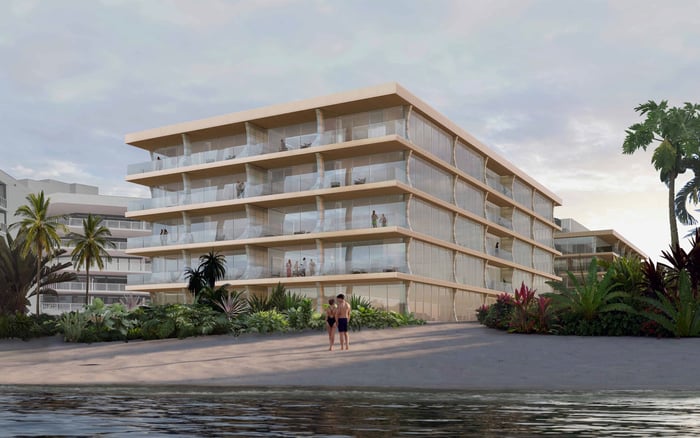
An editorial look at The Berkeley Palm Beach and the lower-floor value question for lock-and-leave luxury buyers prioritizing security, access, privacy, and operational ease.
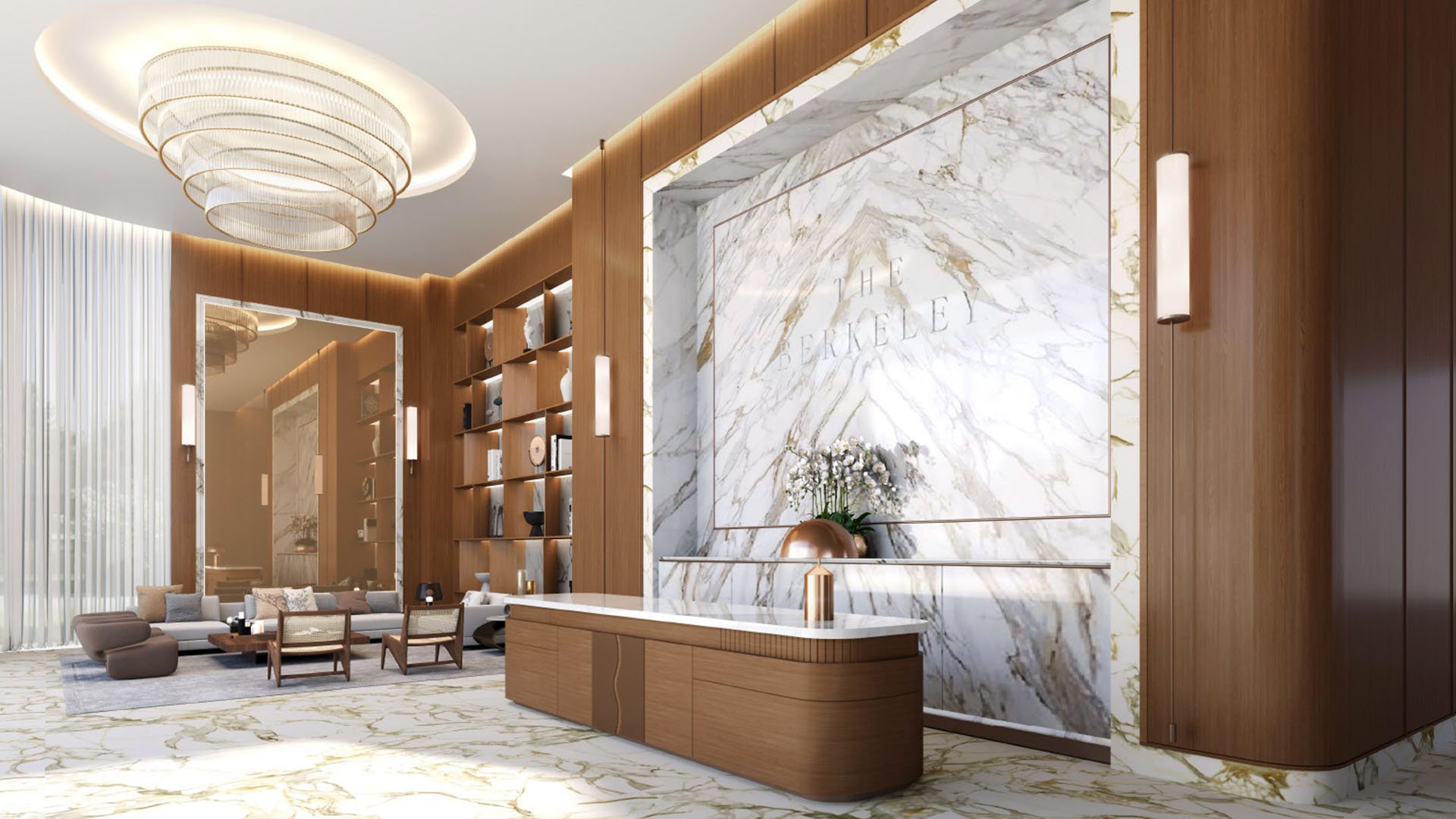
At The Berkeley Palm Beach, the debate over lower-floor value is not simply about altitude. It is about how a residence performs when its owner is not there full time-and how gracefully it receives that owner after a flight, a season away, or a brief absence between commitments.
In the traditional luxury-condo hierarchy, higher floors have long been treated as the default prize. Elevation often suggests broader views, greater separation from the street, and a familiar shorthand for status. Yet the lock-and-leave buyer introduces a more nuanced calculus. For a global, bi-coastal, or seasonal owner, the most valuable residence may not always be the highest one. It may be the one that is simplest to enter, easiest to manage, most predictable to secure, and most pleasant to use day after day.
That is why The Berkeley Palm Beach is a useful lens for a broader Palm Beach-area question. Can a well-positioned lower-floor residence hold under-recognized value when convenience, security, privacy, and service are treated as deliberate luxury attributes rather than compromises?
The lock-and-leave owner is not always optimizing for the same emotional reward as a full-time resident. Views matter, certainly. But so do arrival sequence, elevator convenience, service responsiveness, protected privacy, and confidence during vacancy. In that context, operational simplicity becomes a luxury feature in its own right.
For the owner who arrives frequently and departs just as often, every minor point of friction is magnified. The movement from car to lobby, from lobby to residence, and from residence to daily routine becomes part of the asset. A lower-floor home can offer a more immediate relationship to the building when it is designed and managed with discretion. The goal is not to feel less elevated; it is to feel more in control.
This is where the lower-floor thesis becomes compelling. If a residence trades some view premium for stronger everyday usability, the question is whether the market has fully priced that exchange. In certain buildings, buyers may still over-discount lower floors because they are measuring value through old assumptions rather than lived utility.
Lower-floor value is not automatic. It depends on execution. The strongest cases usually combine privacy buffers, well-conceived terraces, intelligent sightline management, and a calm relationship between private residences and shared spaces. If those elements are weak, the lower-floor discount may be justified. If they are strong, the discount may become the opportunity.
Terrace quality is especially important. A lower-floor terrace can feel more connected to landscape, arrival, and daily rhythm, but only if it is protected from exposure and noise. The difference between a terrace that feels like an outdoor room and one that feels like leftover space is central to how buyers perceive value.
Security is equally important. Lock-and-leave buyers need to know the residence is secure when vacant, and that the building itself is organized around predictable day-to-day operations. The emotional luxury is not only what one sees from the window. It is the confidence that the home remains composed, monitored, and ready.
In search shorthand, this is a Palm Beach and West Palm Beach conversation shaped by lower floors, second-home use, new-construction expectations, and investment discipline. Those labels may sound technical, but together they describe a precise buyer mindset: someone who wants beauty without operational burden.
Luxury buyers often speak about views because views are easy to describe. Convenience is harder to photograph, but it can be more decisive over time. A residence that reduces friction on every arrival can feel increasingly valuable to an owner who uses the property in intervals rather than continuously.
That is the lock-and-leave logic behind the lower-floor opportunity. A shorter, simpler path through the building can matter. So can proximity to the building’s service ecosystem, provided that relationship is designed with privacy. Predictability in the daily experience may not announce itself during a sales presentation, but it becomes clear through ownership.
The Berkeley Palm Beach question, then, is not whether lower floors should be valued exactly like upper floors. They should not be. The question is whether the differential is rational-or whether buyers still apply a blanket discount that fails to account for ease of use.
For some owners, a higher-floor residence delivers the emotional maximum. For others, a lower-floor residence may offer the practical maximum. The sophisticated buyer understands the distinction and prices accordingly.
Lower-floor living asks more of design. Privacy cannot be implied; it must be created. Landscape, setbacks, terrace depth, glass treatment, circulation planning, and the placement of shared spaces all contribute to whether the home feels protected or exposed.
This is particularly relevant in the Palm Beach context, where discretion is part of the luxury language. A lock-and-leave owner does not want a residence that feels overly visible upon return, nor one that sacrifices calm for convenience. The ideal lower-floor home has an easy relationship with the building without becoming part of the building’s public life.
The best lower-floor narrative is therefore not defensive. It does not apologize for being lower. It explains why that position can be advantageous when supported by privacy, secure operations, and thoughtful daily access. In the right setting, lower-floor living can feel intimate, grounded, and quietly efficient.
South Florida buyers also weigh building standards with particular care. In a coastal environment, confidence in modern construction and resilience is part of the ownership decision, especially for residences that may sit vacant for stretches of time. The issue is not simply storm anxiety. It is the larger desire for predictability in a region where climate, maintenance, and building operations are always part of the luxury equation.
For lower-floor buyers, that confidence is central. A lock-and-leave residence must feel manageable when occupied and secure when empty. Owners want to know that the building’s systems, access control, and operational culture support their absence as much as their presence.
This is where value and peace of mind intersect. A lower-floor residence can be compelling when it belongs to a building that frames resilience, access, and security as part of the ownership proposition rather than as background infrastructure.
The investment question is subtle. Lower floors will typically be compared with upper floors through the language of view, prestige, and perceived scarcity. But if the buyer pool includes a meaningful number of seasonal or lock-and-leave owners, usability deserves a clearer valuation.
A well-positioned lower-floor residence may appeal to buyers who are less concerned with panoramic elevation and more focused on the quality of ownership. That includes speed of arrival, the sense of privacy, the reliability of security, and the ability to resume life immediately after returning.
If the market continues to treat these attributes as secondary, lower-floor homes may remain underappreciated. If buyers increasingly recognize them as core luxury drivers, the pricing gap may narrow selectively. Not all lower-floor residences will benefit. The ones most likely to do so are those where design and operations make convenience feel intentional.
At The Berkeley Palm Beach, the lower-floor question should be evaluated through experience rather than assumption. Buyers should consider how the residence feels on approach, how the terrace relates to surrounding space, how privacy is protected, and how the building supports an owner who may be away more often than present.
The strongest lower-floor case is not based on bargain hunting. It is based on fit. If a residence offers the right balance of access, privacy, security, and daily simplicity, it may deliver a form of luxury that is less theatrical but highly durable.
For the Palm Beach-area buyer, that is the central idea. Elevation remains valuable, but it is not the only measure of sophistication. Sometimes the more intelligent purchase is the one that understands how life is actually lived.
Why might a lower-floor residence appeal to a lock-and-leave buyer? It can offer easier access, simpler daily routines, and strong usability for owners who arrive and depart frequently.
Does lower-floor value mean views no longer matter? No. Views still matter, but some buyers may weigh security, convenience, and predictability just as heavily.
What is the main risk with lower-floor residences? The main risk is weak design execution, especially if privacy, terrace quality, or circulation feels compromised.
Why is security so important for this buyer profile? Lock-and-leave owners need confidence that the residence remains protected and well managed while vacant.
Can operational simplicity be considered luxury? Yes. For part-time owners, fewer points of friction can be as meaningful as a dramatic architectural feature.
What should buyers examine during a visit? They should study arrival flow, privacy buffers, terrace usability, sightlines, and the relationship to shared spaces.
Are lower floors always better value? No. Value depends on whether the building makes convenience, privacy, and security feel intentional.
How does South Florida’s coastal context affect the decision? Buyers often place added weight on resilience, modern standards, and predictable building operations.
Is this mainly an investment question or a lifestyle question? It is both, because lifestyle utility can influence how future buyers understand value.
What is the core takeaway for The Berkeley Palm Beach? The lower-floor opportunity depends on whether usability is priced as a luxury attribute, not a compromise.
For a confidential assessment and a building-by-building shortlist, connect with MILLION.
If branded residences are on your mind — as a home or as an allocation — we would be glad to share what we are seeing, privately.
Begin a quiet conversation