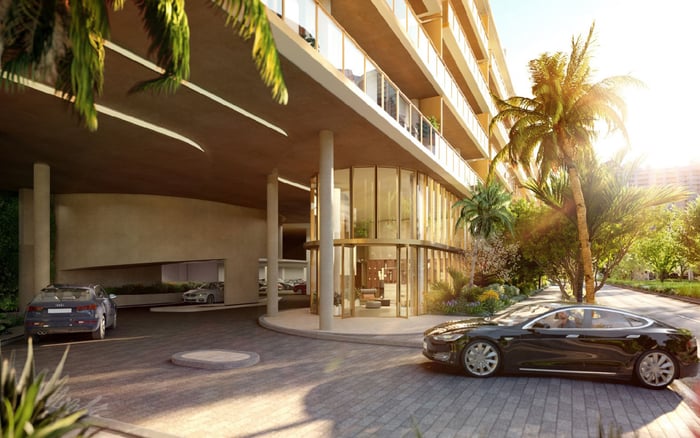
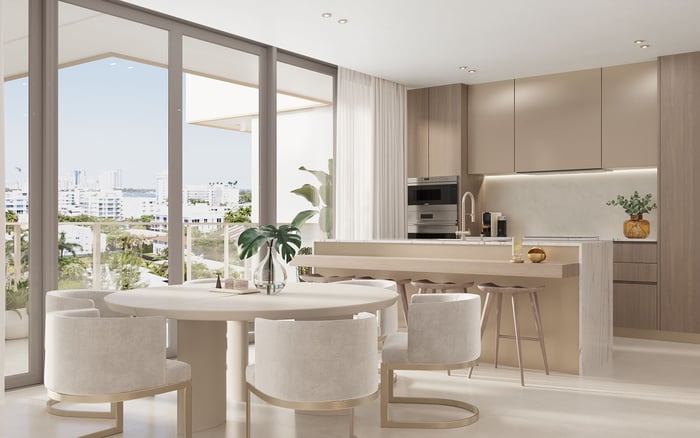
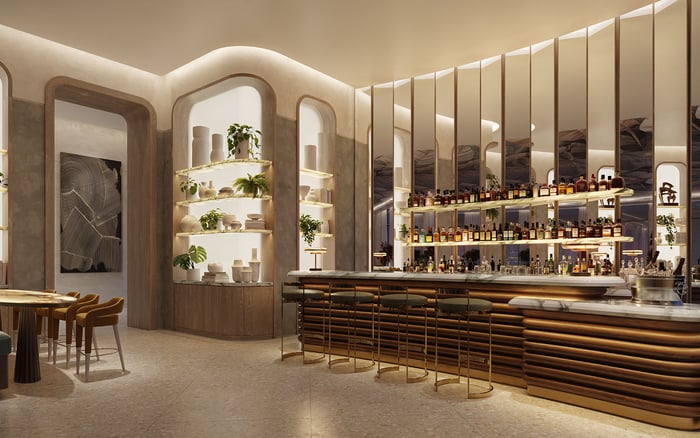
In Downtown Miami, terrace value depends less on advertised square footage and more on comfort through heat, humidity, sun, wind, rain, shade, and storm-season practicality.
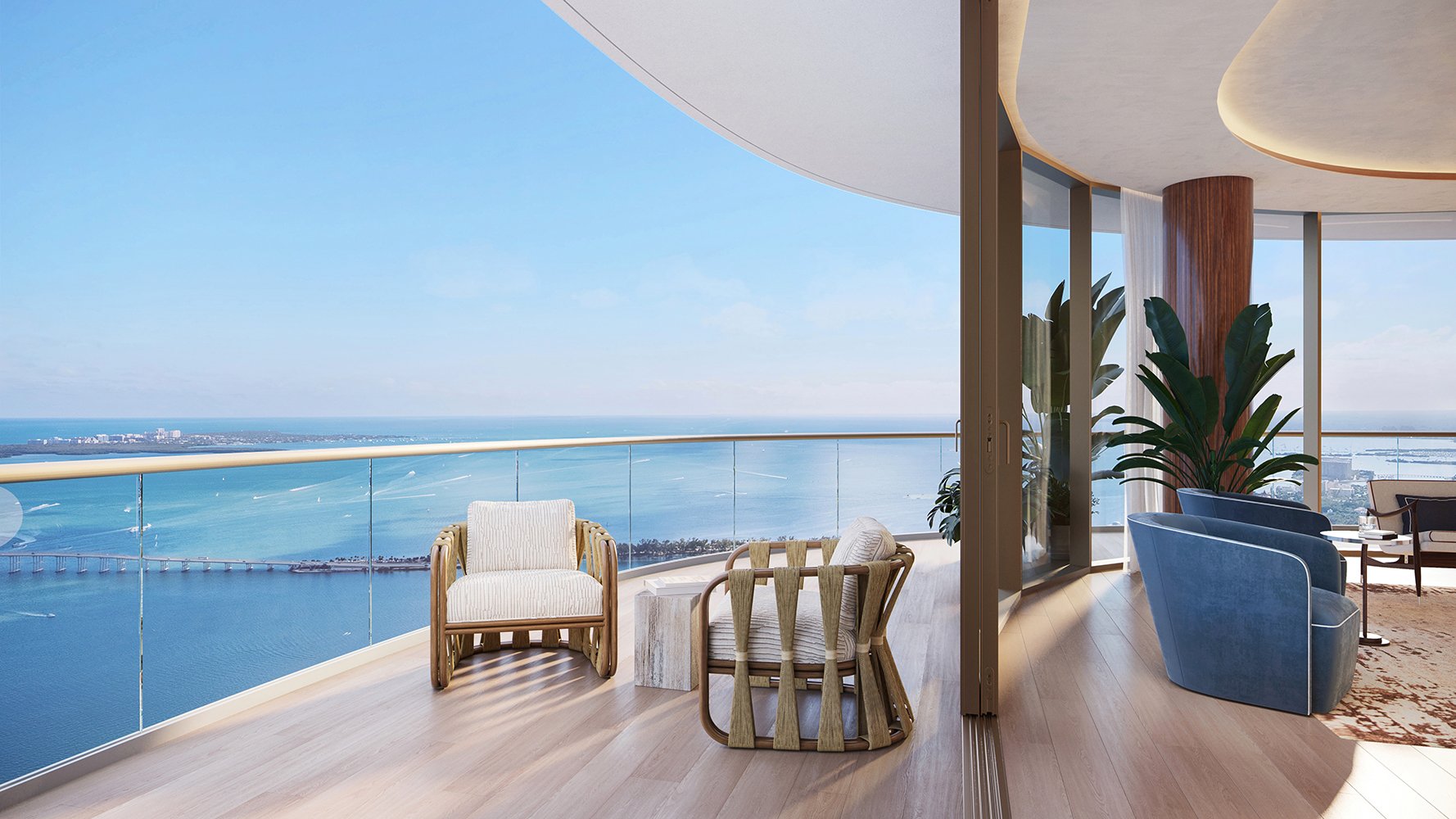
In Downtown Miami, the terrace is often the emotional close: Biscayne Bay light, skyline drama, a glass of wine before dinner, and the promise of indoor-outdoor living high above the city. Yet the most valuable outdoor space is not always the largest one. It is the one that can be used repeatedly, comfortably, and safely throughout the year.
Terrace and balcony value should be treated as climate-dependent value. Air temperature is only the starting point. Humidity, direct sun, reflected heat from paving, wind, rain, privacy, railing height, door performance, and usable depth all determine whether a terrace functions as a true living room or becomes a beautiful photograph.
Heat index is especially important in Miami because humidity changes how hot the body feels. A terrace can feel materially hotter than the thermometer suggests, particularly when air movement is limited or surfaces retain heat. In full sunshine, unshaded south- and west-facing outdoor areas can feel more demanding during the hours many owners want to entertain.
That is why buyers comparing Downtown Miami residences such as Aston Martin Residences Downtown Miami should look beyond renderings and ask a simple question: at what times of day will this outdoor room feel elegant, and at what times will it feel punishing?
Orientation is the first filter. East-facing terraces may be brighter and warmer in the morning. West-facing terraces can be spectacular at sunset, but they are also exposed during hot afternoon and early evening hours. South-facing terraces may receive extended sun depending on the season and the building’s geometry. North-facing outdoor rooms can feel more forgiving, although view, wind, and privacy still matter.
A buyer should model the sun path by season, then visit at the exact hour of intended use. If the plan is breakfast outdoors, test the terrace in the morning. If the plan is laptop work, go at midday and check glare on a screen. If the plan is sunset dining, stand there between late afternoon and early evening, not at noon during a polished sales presentation.
The architectural section matters as much as the compass. Deep overhangs, recessed terraces, side walls, and fins can reduce direct solar exposure. A shallow slab with dark flooring and little shade can absorb and reradiate heat. Lighter paving, fixed shade, thoughtful planting where allowed, and nearby vegetation can also make outdoor surfaces and surrounding air feel more comfortable.
In Brickell, where towers often frame long bay and skyline views, comparisons among buildings such as Baccarat Residences Brickell should include terrace depth, overhang protection, and whether the furniture layout shown in marketing images actually fits the clear usable width after columns, railings, and door swings.
South Florida’s wet season is humid, storm-prone, and more revealing than the postcard months. A winter showing can make almost any terrace feel graceful. A summer visit can show whether shade is sufficient, whether the floor becomes uncomfortable underfoot, whether drains clear quickly, and whether wind-driven rain reaches the seating area.
Buyers should request more than one visit when the terrace carries a meaningful price premium. A morning visit, an afternoon visit, and an evening visit can reveal three different properties. So can a summer visit and a winter visit. The goal is not to avoid Miami’s climate; it is to understand the usable hours for the lifestyle being purchased.
For waterfront residences, this is especially relevant. The view may justify a premium, but the durable premium usually comes from a combination of view, shade, wind protection, privacy, and furniture depth. A large terrace that cannot hold a dining table comfortably, or that requires constant retreat indoors, should not be valued the same way as a smaller outdoor room that works beautifully most days.
Downtown projects such as Casa Bella by B&B Italia Downtown Miami invite buyers to think carefully about how interior design and exterior livability meet. The best terrace is not an appendage; it is an extension of the residence’s daily rhythm.
Wind becomes more consequential with height and coastal exposure. A high-floor terrace should never be judged by a lower-floor amenity deck or a calm model setting. The question is not merely whether the building is engineered for structural wind loads. Buyers should ask whether the tower was evaluated for wind comfort, because structural safety does not automatically mean a terrace will feel pleasant for morning coffee, children’s play, or seated dining.
This is particularly important in slender or very tall towers, where elevation can amplify exposure. When considering vertical Downtown Miami icons such as Waldorf Astoria Residences Downtown Miami, buyers should ask how wind, pressure, and door operability are addressed at the residence level. A heavy sliding door that is difficult to open on breezy days can quietly reduce daily use.
Coastal buildings can involve wind-driven rain, corrosion, storm exposure, and maintenance realities. Exterior doors, windows, shutters, railings, drains, furniture, finishes, and planters all belong in the due diligence conversation. Buyers should review applicable building documentation, association materials, and inspection guidance before assigning a premium to exposed outdoor space.
Loose furniture, umbrellas, planters, grills, and décor can become hazards in severe wind. Before assuming a terrace can be staged like a private rooftop lounge, ask management what is permitted, how storm preparation is enforced, where items must be stored, and whether grills, wind screens, heaters, fans, or awnings are allowed.
Start with dimensions. Ask for the exact terrace depth and clear usable width, not only total outdoor square footage. Columns, railings, façade angles, drains, and door tracks can reduce the real furnishing zone. A terrace that is seven feet deep may live very differently from one that is four feet deep, even if the plan does not make that obvious.
Then test use cases. Morning coffee tolerates more sun than midday laptop work. Exercise requires shade, hydration access, and a quick retreat indoors. Children’s play needs protection from heat and wind. Dinner needs enough depth for chairs to pull out safely and enough wind control that table settings stay in place. Storm-season storage needs a practical plan.
Finally, separate view value from usable value. A spectacular outlook may be worth paying for, but it should not automatically convert every square foot of exterior area into livable space. The strongest terrace premiums tend to attach to outdoor rooms that combine view, shade, manageable wind, privacy, easy door operation, durable finishes, and reasonable association rules.
What is the first thing to evaluate on a Downtown Miami terrace? Start with comfort, not square footage. Heat, humidity, sun, wind, rain, and shade determine whether the space will be used regularly.
Are west-facing terraces bad in Miami? Not necessarily, but they need careful testing. Visit during the late afternoon and early evening, when sun exposure and heat can be most intense.
Why does humidity matter for terrace usability? Humidity can make the body feel hotter because cooling becomes less efficient. That affects work, dining, exercise, and children’s play outdoors.
Should I visit during summer before buying? Yes, if the terrace is part of the value proposition. Wet-season visits reveal heat, rain, drainage, and wind issues that winter showings can conceal.
How important is terrace depth? Very important. Clear usable depth determines whether dining chairs, loungers, planters, and circulation can coexist comfortably.
Do high-floor terraces always have better value? Not always. Higher elevation may improve views but can also increase wind exposure, so daily comfort should be tested separately.
What should I ask about sliding doors? Ask to operate them during breezy conditions. Door weight, pressure, seals, tracks, and maintenance can affect everyday access.
Can I add umbrellas or wind screens later? Only if building rules allow them. Confirm association policies for awnings, umbrellas, planters, fans, heaters, grills, and screens before purchase.
Does a shaded terrace support resale better? Often, yes, when shade is paired with view, privacy, usable depth, and wind protection. Size alone is a weaker premium.
How should I compare two similar terraces? Compare them by use case: coffee, work, dining, entertaining, storage, and storm preparation. The better terrace is the one with more usable hours.
For a tailored shortlist and next-step guidance, connect with MILLION.
If branded residences are on your mind — as a home or as an allocation — we would be glad to share what we are seeing, privately.
Begin a quiet conversation