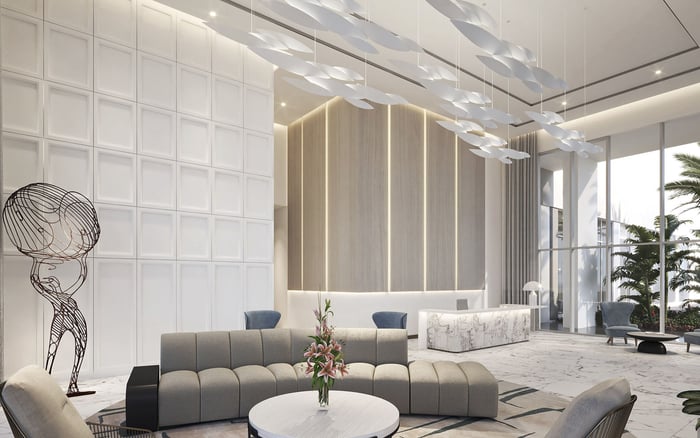
Sixth & Rio Fort Lauderdale illustrates a more residential reading of South Florida luxury, where boutique scale, riverfront setting, walkability, and neighborhood integration matter as much as resort-style amenity theater.
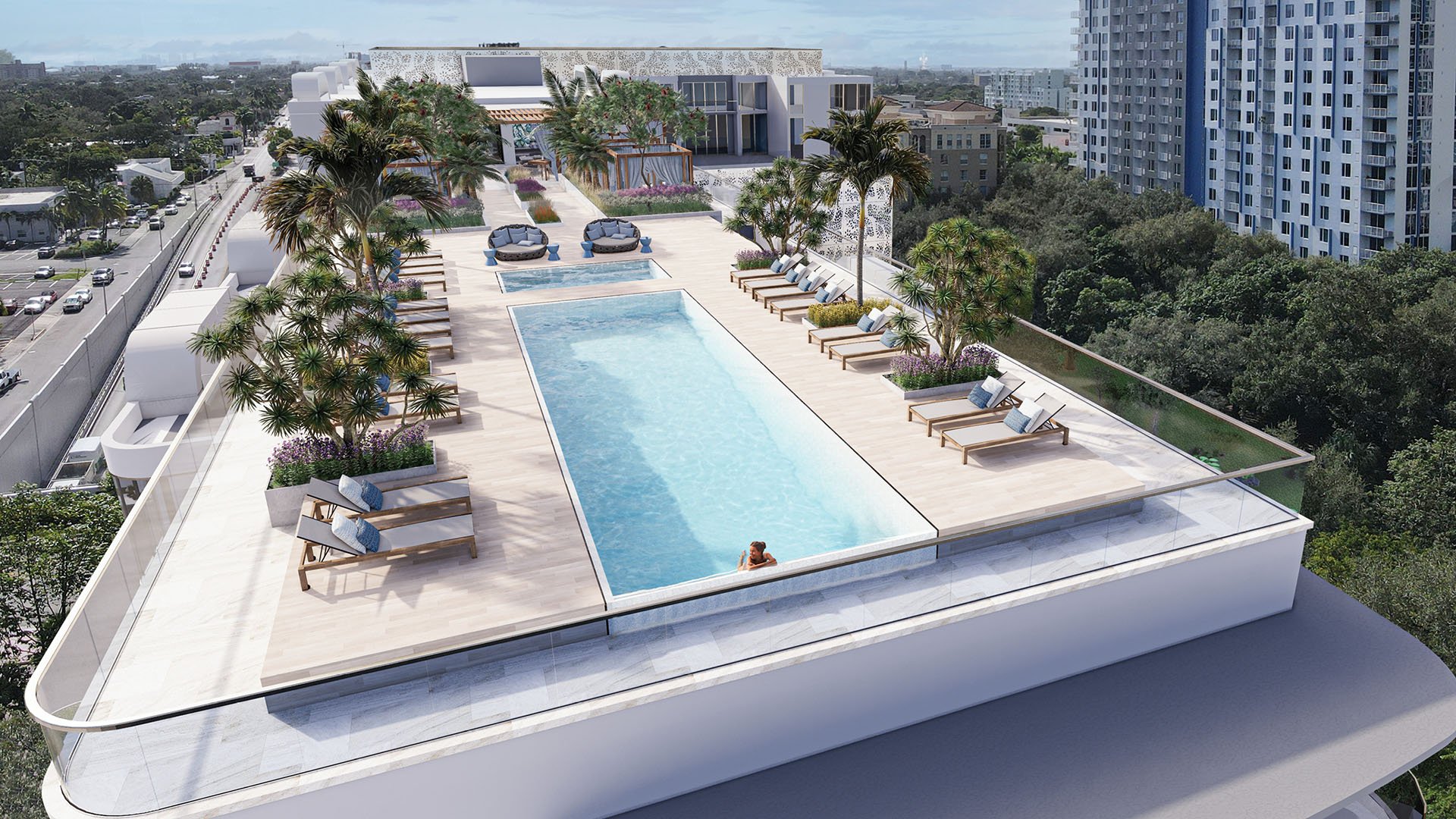
South Florida luxury is often described through the language of escape: winter sun, weekend arrivals, and seasonal rituals. In Fort Lauderdale, however, a more permanent idea of ownership has become increasingly important. The question is no longer only where a buyer wants to be in February. It is where a buyer can live well in May, September, and every ordinary Tuesday in between.
That is the context in which Sixth & Rio Fort Lauderdale becomes an instructive project. Positioned as a boutique, riverfront condominium in Fort Lauderdale, its relevance extends beyond a waterfront address. Its appeal is tied to the way it frames home as a year-round base rather than a seasonal perch. For buyers comparing the South Florida coastline, that distinction matters.
Full-time living asks more of a condominium. It requires privacy without isolation, access without congestion, and amenities that support daily rhythm rather than exist only for presentation. Sixth & Rio enters that conversation with a residentially scaled building concept, a walkable setting, and a location near the intersection of Rio Vista, Tarpon River, and Fort Lauderdale’s urban downtown.
Boutique is not simply a stylistic label. In a primary-residence context, boutique scale can shape how a building feels from morning to evening. A smaller, more residentially conceived condominium may appeal to buyers who value calm arrivals, a more intimate atmosphere, and a setting that feels connected to its neighborhood rather than removed from it.
Sixth & Rio’s distinction rests partly on that contrast. It is not framed as a large resort-style tower. Instead, the project emphasizes livability, privacy, and neighborhood integration. That positioning is particularly relevant in Fort Lauderdale, where luxury buyers can choose among beachfront, marina-oriented, branded, and urban-adjacent residences.
The presence of larger and more resort-forward addresses, such as Four Seasons Hotel & Private Residences Fort Lauderdale, gives buyers a spectrum of choices. Sixth & Rio sits on another part of that spectrum: quieter, riverfront, and more explicitly residential in tone. For an end-user, that may be less about compromise than precision.
Waterfront living in Fort Lauderdale carries a particular resonance. The city’s identity is closely tied to waterways, boats, bridges, and the softer pace that comes from living near water. Yet the most compelling version of waterfront living for a full-time resident is not always the most remote one. It is often the setting that preserves the lifestyle benefit of water while remaining connected to restaurants, services, cultural routines, and the civic texture of the city.
Sixth & Rio’s riverfront positioning gives it that kind of lifestyle angle. It offers a water-oriented setting while keeping the residence connected to Fort Lauderdale’s urban core. This is a different proposition from a purely seasonal waterfront retreat, where seclusion might be the dominant luxury. Here, the value is in the combination: riverfront atmosphere, walkability, and proximity to the everyday energy of the city.
That balance helps explain why the project is a useful lens for the market. Fort Lauderdale luxury is not only about scale or spectacle. It is also about how a residence performs. Can it support dinner nearby without a production? Can it allow an owner to live close to the city without feeling absorbed by it? Can the waterfront be part of ordinary life rather than just a view?
Location is central to the Sixth & Rio conversation because the project sits near the intersection of Rio Vista, Tarpon River, and Fort Lauderdale’s urban downtown. Those references carry different associations. Rio Vista suggests established neighborhood character. Tarpon River brings a more local, river-adjacent identity. Downtown introduces the practical advantages of an urban setting.
For buyers considering full-time South Florida living, this blend is significant. A residence can be close to the city without feeling like a conventional urban tower. It can be walkable without sacrificing a sense of privacy. It can be waterfront without depending solely on leisure as its reason for being.
Nearby luxury alternatives add further context. Riva Residenze Fort Lauderdale reinforces the appeal of residential life tied to Fort Lauderdale’s waterways, while St. Regis® Residences Bahia Mar Fort Lauderdale speaks to another expression of high-end Fort Lauderdale ownership. Sixth & Rio’s differentiator is the way it brings boutique scale into a downtown-adjacent neighborhood context.
Lifestyle is sometimes used too broadly in luxury real estate, but for full-time buyers it becomes highly specific. It is the distance between home and dinner. It is how the building feels when guests are not visiting. It is whether the lobby, circulation, and amenity culture read as part of a private residence or a hotel environment. It is the difference between impressive and livable.
Sixth & Rio is framed around livability, privacy, and neighborhood integration instead of spectacle-driven amenities alone. That does not diminish the importance of amenity quality. Rather, it suggests a hierarchy. For a primary residence, the best amenities are those that become part of routine, not merely part of a sales narrative.
This is where the project’s walkable setting becomes important. Walkability in Fort Lauderdale does not need to mimic a dense northeastern city to be meaningful. It simply needs to support a full-time urban lifestyle: easier evenings, closer errands, and a more natural relationship between home and neighborhood. For buyers who want South Florida to be their base rather than their getaway, that is a fundamental shift.
Fort Lauderdale’s luxury condominium market contains multiple identities. There is the beachfront resort model, the branded-residence model, the marina-oriented model, and the quieter boutique model. The city is large enough, and nuanced enough, to support several definitions of luxury at once.
A beachfront address such as Auberge Beach Residences & Spa Fort Lauderdale sits within the broader coastal conversation, while Sixth & Rio points attention inland toward the riverfront and downtown-adjacent neighborhoods. Neither reading cancels the other. Together, they show how buyers are becoming more exacting about fit.
For some, the decisive factor will be immediate beach adjacency. For others, it will be a building that feels more residential, more private, and more integrated with day-to-day city life. Sixth & Rio is relevant because it speaks to the second buyer: the one who wants elegance without excess scale and a South Florida residence that functions as a year-round home.
The most important takeaway is not that one model of Fort Lauderdale luxury is superior to another. It is that the full-time buyer should evaluate a condominium differently from a seasonal owner. Daily life makes certain qualities more valuable: building scale, privacy, walkability, neighborhood context, and the ability to feel at home beyond the winter calendar.
Sixth & Rio brings those qualities into a compact thesis. It combines boutique scale, riverfront positioning, a walkable setting, and adjacency to the neighborhoods and urban core that define this part of Fort Lauderdale. That combination helps explain why it belongs in any serious conversation about full-time South Florida living.
For buyers accustomed to thinking of luxury primarily as grandness, Sixth & Rio suggests a subtler measure. Luxury can also be proportion. It can be ease. It can be the feeling that a building belongs to its place, and that the owner can belong there too-not just for a season, but for the full rhythm of the year.
What is Sixth & Rio Fort Lauderdale? It is positioned as a boutique, riverfront condominium in Fort Lauderdale with a residentially scaled concept.
Why is Sixth & Rio relevant to full-time living? Its appeal centers on livability, privacy, walkability, and neighborhood integration rather than seasonal use alone.
Where is Sixth & Rio positioned within Fort Lauderdale? It is near the intersection of Rio Vista, Tarpon River, and Fort Lauderdale’s urban downtown.
Is Sixth & Rio more of a resort-style tower? No. Its positioning emphasizes boutique residential scale rather than a large resort-style tower model.
Why does boutique scale matter for primary residents? Boutique scale can support a quieter, more private daily environment that feels less transient and more residential.
What role does the riverfront setting play? The riverfront gives the project a water-oriented lifestyle while keeping it connected to Fort Lauderdale’s urban core.
Is walkability part of the project’s appeal? Yes. Its walkable setting supports a more full-time urban lifestyle in Fort Lauderdale.
Who is the likely buyer for this type of condominium? It suits buyers seeking a year-round South Florida home with privacy, access, and neighborhood connection.
How does Sixth & Rio differ from larger coastal products? Its boutique scale and downtown-adjacent riverfront context help distinguish it from larger high-rise condominium offerings.
What should buyers compare when considering Sixth & Rio? They should compare building scale, waterfront setting, walkability, privacy, and how well the residence supports daily life.
If you'd like a private walkthrough and a curated shortlist, connect with MILLION.
If branded residences are on your mind — as a home or as an allocation — we would be glad to share what we are seeing, privately.
Begin a quiet conversation