A buyer-focused guide to evaluating discreet residential security in Hallandale Beach, from arrival sequencing and staffing to waterfront access, privacy culture, and due diligence before contract.
In Hallandale Beach, the most sophisticated residential security is rarely the loudest. It is the sequence that works before anyone has to announce it: a composed arrival, a team that reads context, elevators that do not invite wandering, amenity doors that close softly behind the right people, and a privacy culture that feels natural rather than performative.
For buyers in the ultra-premium market, that distinction matters. Theatrical security can look impressive during a brief tour, but it may not translate into daily ease. Discreet security is different. It reduces uncertainty without adding drama. It protects the resident experience while preserving the resort-like calm that makes coastal living desirable in the first place.
That is especially relevant when evaluating residences such as 2000 Ocean Hallandale Beach or Shell Bay by Auberge Hallandale, where buyers often compare privacy, service, design, and access as one integrated lifestyle decision. The question is not simply whether a property is secure. The sharper question is whether security has been designed into the way the building lives.
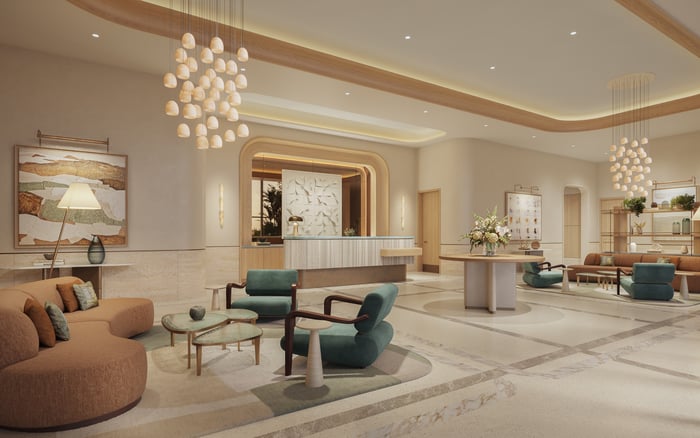
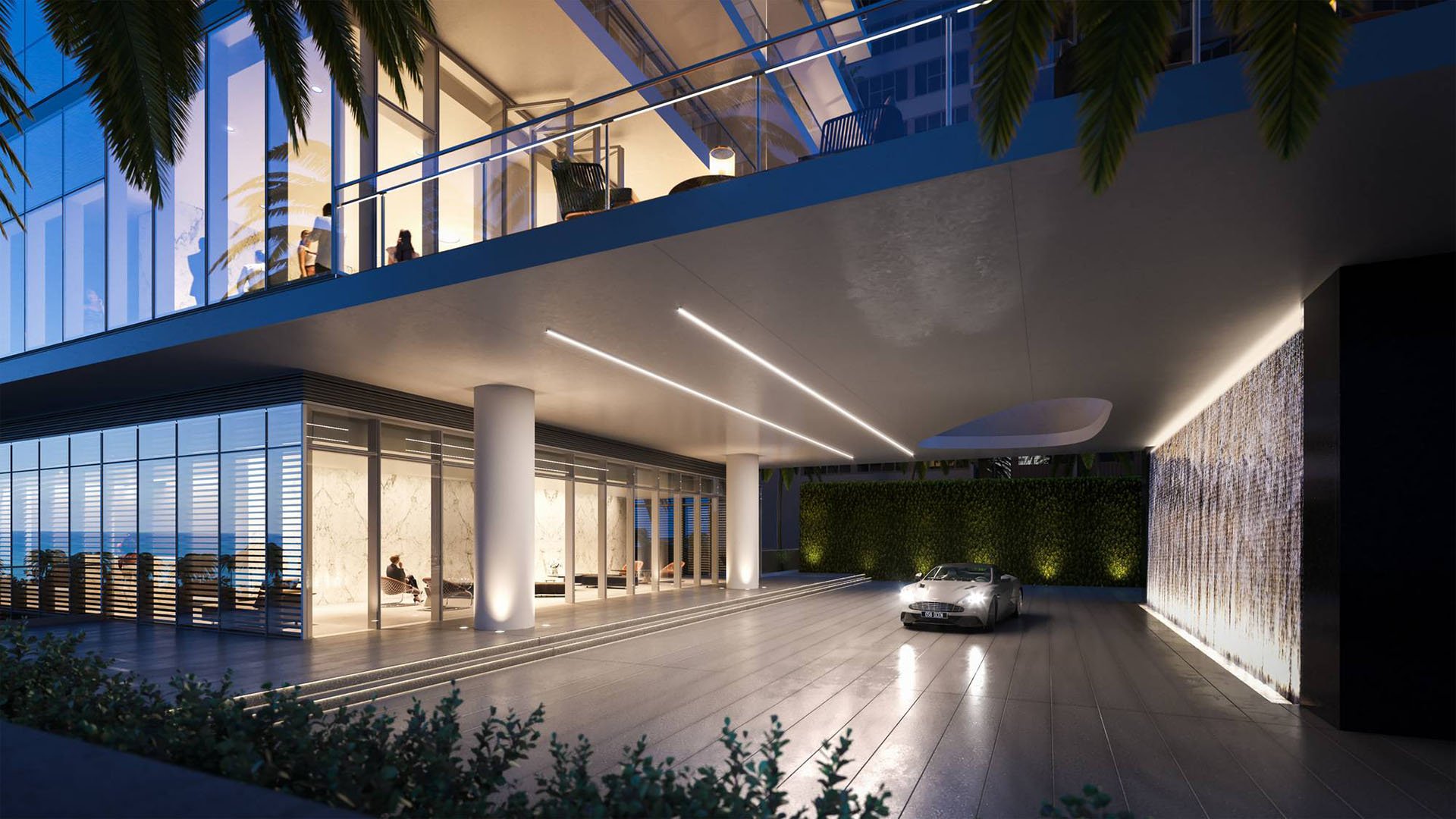
A polished sales presentation can make any lobby feel controlled. A buyer should study the full arrival sequence instead. Start at the street. Notice whether the approach feels intuitive, whether vehicles have a natural place to pause, and whether the first point of contact is calm or confused. A discreet building does not need aggressive signage or a hard stop to communicate that access is managed.
Then follow the resident path. How does valet or self-parking connect to the lobby? Where do guests wait? Is there a clear transition from public-facing space to resident-only space? Are staff members observing without hovering? The best systems feel choreographed, not improvised.
For buyers, the small handoffs are often more revealing than the visible hardware. A guard desk can be theatrical. A seamless handoff from arrival to elevator, with no awkward gaps and no unnecessary exposure, is more meaningful. Buyers should ask to experience the route they would actually use on a normal weekday evening, not only the most photogenic path prepared for a tour.
Discreet security is layered. No single feature should carry the full burden. A well-considered residence may combine trained personnel, controlled access points, visitor protocols, elevator management, camera coverage, package handling, and clear emergency communication. The strength is in how these elements work together.
Theatrical security tends to overemphasize what can be seen immediately: uniforms, barriers, visible screens, and dramatic thresholds. Those elements may have a role, but they are not a substitute for operating discipline. A buyer should ask how guests are verified, how recurring vendors are approved, how deliveries are managed, and how staff distinguish among residents, guests, service providers, and unknown visitors.
This is especially important in amenity-rich coastal buildings. A residence may have multiple points of attraction: pool decks, wellness areas, dining spaces, club rooms, parking areas, and service corridors. If security is strong only at the lobby, the building may feel less controlled once daily life begins.
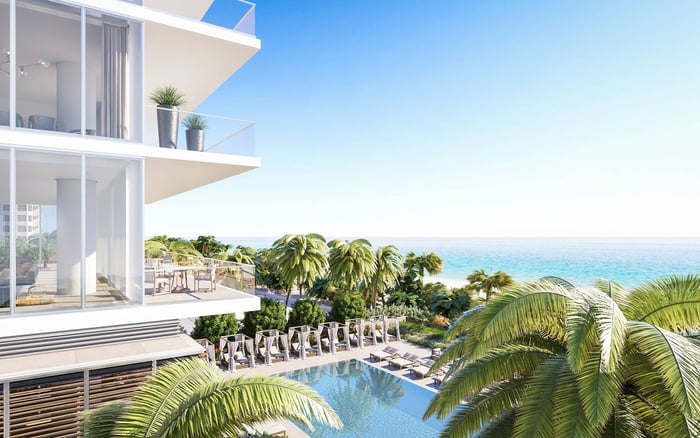
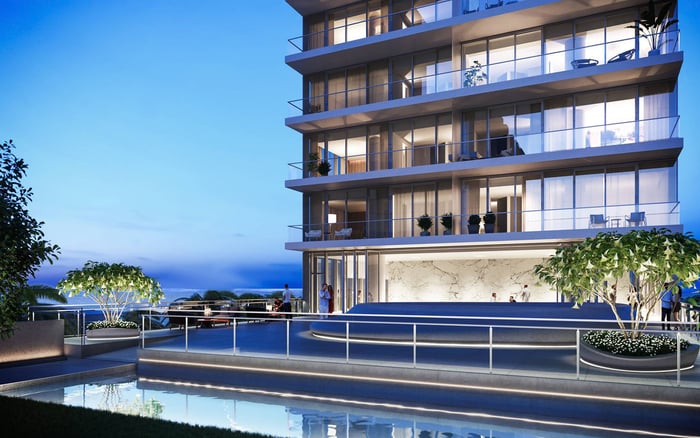
Waterfront living is one of the defining aspirations of Hallandale Beach, but waterfront privacy must be evaluated carefully. Buyers should understand how pool decks, beach-adjacent paths, marina-related areas, terraces, and exterior amenity zones are managed. The goal is not to create a fortress. The goal is to make transitions feel natural while keeping resident areas meaningfully protected.
Ask how the building separates residents, guests, staff, and service providers in outdoor spaces. Are there soft boundaries that feel elegant, or does the property rely on obvious restrictions after the fact? Is access controlled at doors leading back into the residence? Are amenity areas monitored in a way that preserves comfort rather than creating a resort-checkpoint atmosphere?
When comparing Hallandale with nearby coastal markets, buyers may also tour residences such as Bentley Residences Sunny Isles or Four Seasons Hotel & Private Residences Fort Lauderdale to understand different expressions of privacy, hospitality, and arrival design. The useful comparison is not which building looks more guarded. It is which one makes privacy feel effortless.
Security in a luxury building is as much human as architectural. Beautiful doors and advanced systems matter, but staff culture determines whether the experience feels gracious or intrusive. A buyer should observe tone, pacing, eye contact, and discretion. Are staff members alert without being conspicuous? Do they speak about residents respectfully? Do they avoid unnecessary names, unit references, or personal details in public areas?
This is where discreet security becomes a lifestyle value. High-profile residents, seasonal owners, executives, and families often want protection from friction as much as protection from access. They do not want every arrival to feel like a production. They want the building to know how to manage privacy quietly.
During due diligence, ask who supervises front-of-house personnel, how training is handled, and how incidents are escalated. The answers should sound operationally mature, not improvised. If the response depends entirely on one charismatic employee, that is different from a repeatable building standard.
Before purchasing, buyers should examine the documents and policies that shape daily access. Guest registration, contractor hours, private event rules, short-term guest handling, pet access, delivery procedures, move-in procedures, and amenity reservations all influence the security experience. A building can feel refined on tour yet become frustrating if the rules are vague or inconsistently enforced.
Pay close attention to elevator and corridor privacy. In a luxury residence, the journey from lobby to home should feel controlled. Buyers should ask whether guest access is limited to approved floors, how service personnel move through the building, and how after-hours access is handled. The answer should balance convenience and control.
Also consider the board or management culture. Security that feels discreet requires consistency. If policies are enforced differently depending on the day, the person at the desk, or the resident involved, the building may feel less private over time.
The best security often disappears into habit. After a month of ownership, you should not feel as though you are living inside a stage set of protection. You should feel that arrivals are smooth, guests are handled correctly, service providers do not wander, packages are not a source of anxiety, and amenities remain comfortable.
For Hallandale Beach buyers, this is a meaningful lens. The market rewards beauty, views, wellness, service, and design, but long-term satisfaction often depends on how calmly a property manages the invisible work of privacy. Discreet security is not about hiding standards. It is about embedding them so well that residents can live freely.
A serious buyer should visit more than once, vary the time of day, and pay attention to the spaces between the showpiece moments. The lobby photo matters less than the resident pathway. The desk matters less than the handoff. The promise matters less than the daily rhythm.
What does discreet security mean in a luxury condominium? It means layered access control, trained staff, and privacy protocols that operate quietly without making the property feel guarded for display.
Why is theatrical security a concern for buyers? It can create a sense of protection without proving that daily access, vendors, guests, and amenities are managed consistently.
What should I observe first during a Hallandale Beach tour? Start with the arrival sequence, including the street approach, valet or parking flow, lobby transition, elevator access, and corridor privacy.
How should waterfront areas be evaluated? Ask how outdoor amenities, pool decks, exterior doors, and shoreline-facing spaces are monitored while preserving a relaxed residential atmosphere.
Are visible guards a sign of better security? Not necessarily. Visible personnel can be helpful, but training, protocols, coordination, and discretion are more important than visual intensity.
What questions should I ask management before purchasing? Ask about visitor verification, vendor approval, package handling, incident escalation, staff training, elevator controls, and after-hours procedures.
Should security policies affect resale confidence? Yes. A building known for calm privacy, consistent operations, and low-friction access can be more appealing to discerning future buyers.
How can I test whether security is truly discreet? Visit at different times and watch how the building handles ordinary movement, including guests, deliveries, staff transitions, and amenity access.
What role does staff culture play? Staff culture is central because discretion, judgment, and consistency determine whether security feels refined or intrusive.
Is this a priority for seasonal owners? Yes. Seasonal owners often depend on reliable procedures, controlled access, and a staff culture that protects privacy when they are present or away.
To compare the best-fit options with clarity, connect with MILLION.
If branded residences are on your mind — as a home or as an allocation — we would be glad to share what we are seeing, privately.
Begin a quiet conversation